Resistance Band Pull Apart 45 Degrees
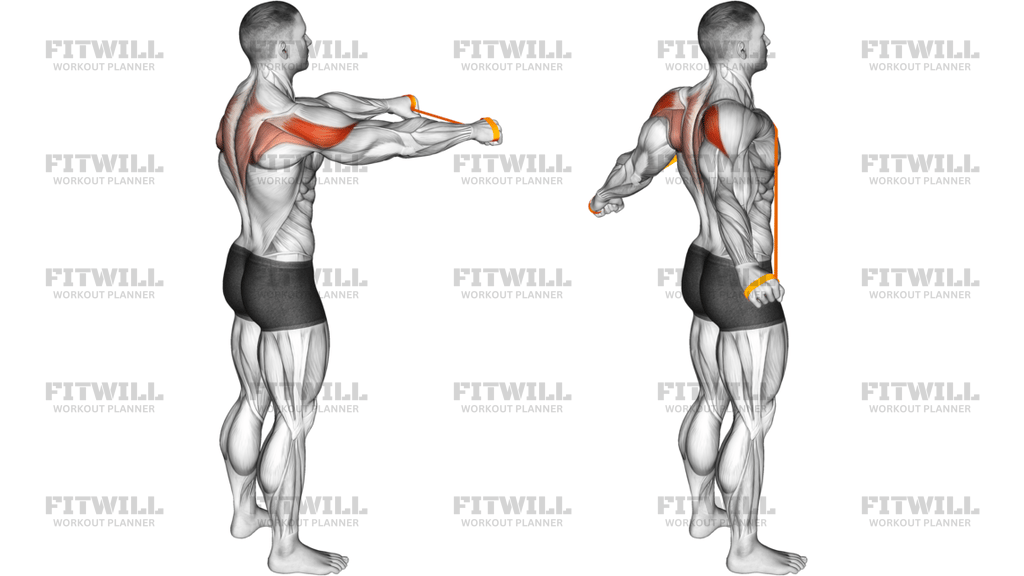
Resistance Band Pull Apart 45 Degrees is a standing band drill for the rear shoulders and upper back. The arms stay long in front of the body and open on a diagonal line, so the band pulls the shoulders into horizontal abduction without turning the movement into a row. That 45-degree angle matters: it keeps the line of pull close to the shoulder plane, which usually feels cleaner on the joints than forcing the hands straight out wide or straight overhead.
The exercise primarily trains the delts, especially the rear portion, while the mid traps, rhomboids, and triceps help stabilize the arms and shoulder blades. It is useful when you want better scapular control, more endurance in the upper back, or a simple shoulder-prep drill before pressing and pulling work. Because the band gives continuous tension, the hardest part is usually the opened position and the slow return, not the start.
A good rep begins with the band held under control at about shoulder height or slightly below it, arms long, chest tall, and ribs stacked instead of flared. From there, the hands open apart and a little backward along the 45-degree path while the shoulder blades move without shrugging up toward the ears. The finish should feel like a strong open position across the back of the shoulders, not a big arch through the low back.
This movement rewards precision more than load. A lighter band that lets you keep straight arms, steady wrists, and a quiet torso will train the target muscles better than a heavy band that forces you to lean, shrug, or bend the elbows into a row. If you are using it as activation work, the goal is crisp reps and clean shoulder positioning. If you are using it as accessory work, the goal is to keep tension constant and own the return as much as the opening phase.
Resistance Band Pull Apart 45 Degrees fits well in warmups, upper-body accessory blocks, postural work, or shoulder-friendly conditioning circuits. It is beginner-friendly as long as the resistance stays light enough to preserve the diagonal path and shoulder control. The safest version is the one where the band opens smoothly, the neck stays relaxed, and the shoulders move through a controlled range that you can repeat rep after rep.
[ Workout Log & Planner ]
Put your next workout in Fitwill
Keep your plan and training log ready when you are.


Instructions
- Stand tall with your feet about hip-width apart and hold the band in both hands at shoulder height or slightly below it.
- Keep your arms mostly straight in front of your chest with a small softness in the elbows and light tension already on the band.
- Stack your ribs over your pelvis, relax your neck, and set your shoulders down without leaning backward.
- Brace your midsection, then exhale as you open the band apart and slightly back on a diagonal 45-degree path.
- Keep the hands traveling at the same height so the movement stays on the shoulder plane instead of turning into a row or fly.
- Open until the band is tight and the shoulder blades are controlled, but do not shrug or let the low back arch.
- Pause briefly in the open position and feel the rear shoulders and upper back doing the work.
- Inhale as you return slowly along the same diagonal path, keeping tension on the band instead of letting it snap back.
- Reset the shoulders and repeat for the planned number of reps with the same clean path on every repetition.
Tips & Tricks
- If the band starts above shoulder height, the pull often turns into an upper-trap shrug; keep the line of pull near shoulder level.
- Think about spreading the band apart rather than squeezing your shoulder blades hard together at the start.
- A light bend in the elbows is fine, but if the elbows keep bending, the set has turned into a row.
- Keep your ribs down when the band gets tight so you do not turn the rep into a standing back extension.
- Use a band that lets you pause in the open position without your wrists drifting backward or your chest collapsing.
- Slow down the return; the eccentric phase is where the upper back often loses position first.
- If your neck takes over, lower the band tension and think about keeping the collarbones wide and the shoulders heavy.
- Stay tall through the heels and do not rock the torso to help the band open.
- The cleanest rep usually ends just before the shoulders start to roll forward or the hands drift out of plane.
Frequently Asked Questions
What muscles does Resistance Band Pull Apart 45 Degrees train?
It mainly trains the rear delts, with help from the mid traps, rhomboids, and triceps as the band opens.
Why is this version done at 45 degrees instead of straight out to the sides?
The diagonal path keeps the movement in a more shoulder-friendly plane and tends to bias the rear shoulder and upper back cleanly.
Should my arms stay straight during the pull apart?
Mostly yes. Keep only a small bend in the elbows so the band does not turn into a row.
How high should I hold the band?
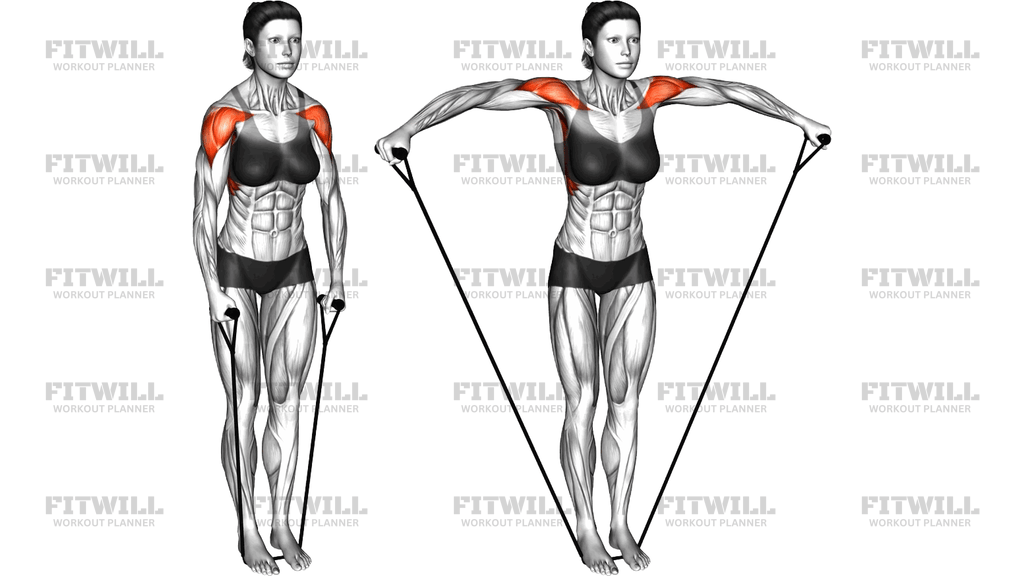
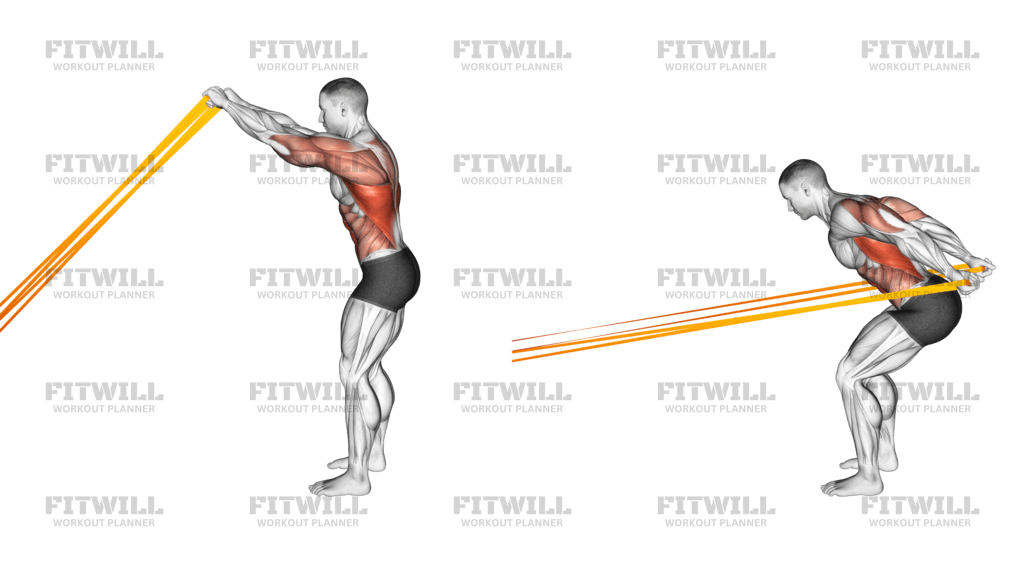
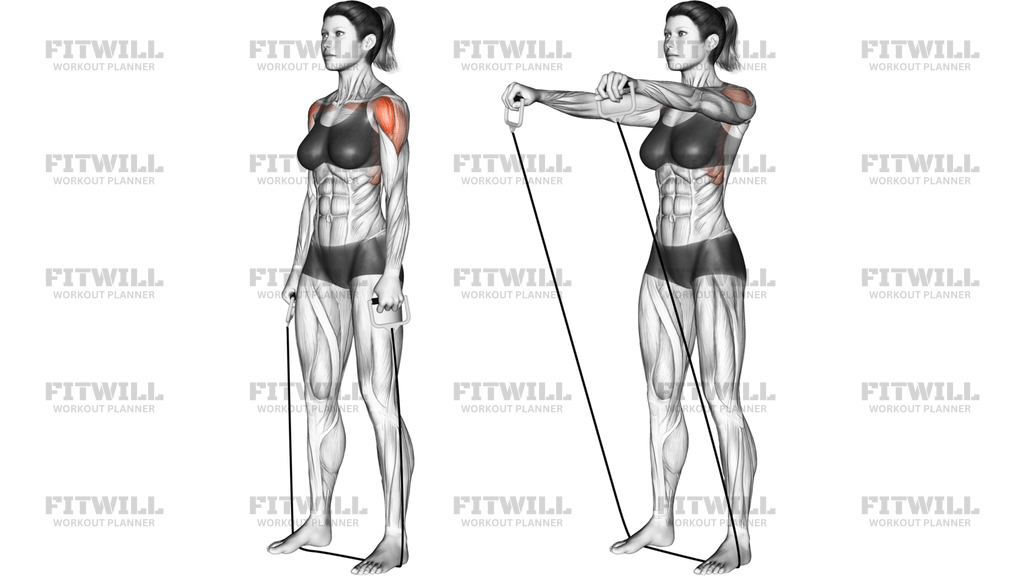
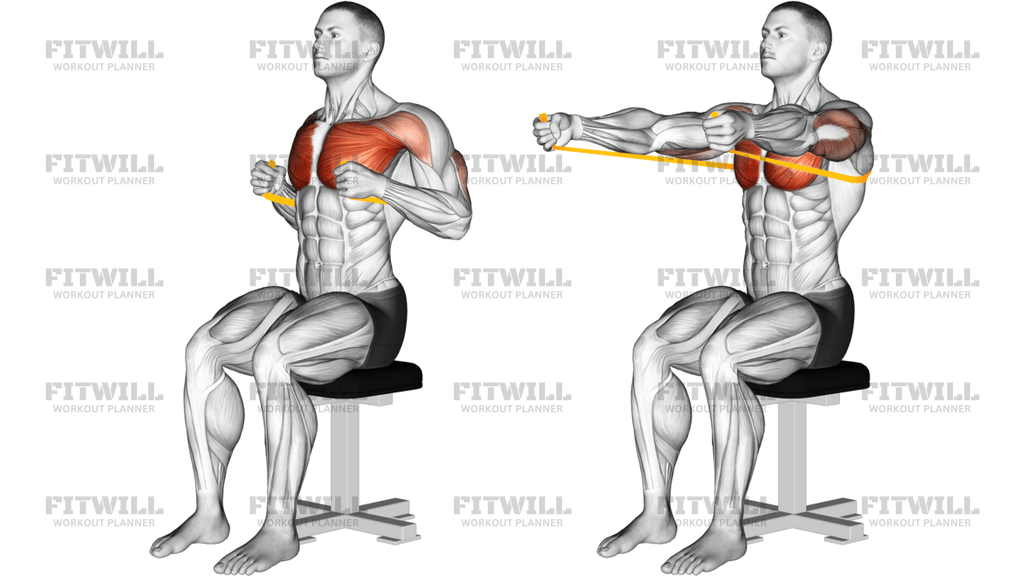
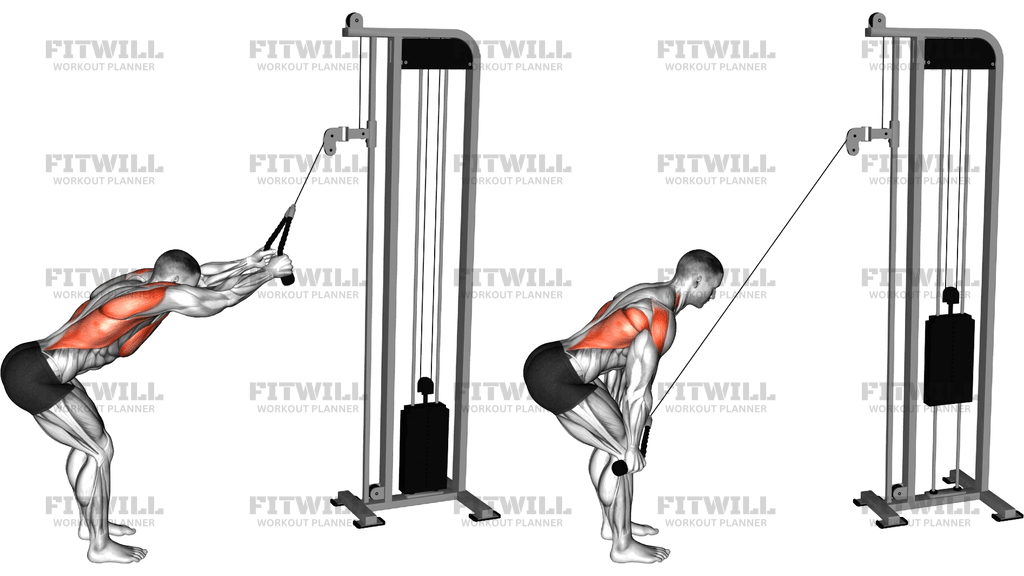
Hold it around shoulder height or slightly below so the pull follows the same diagonal plane shown in the image.
Can beginners use this exercise?
Yes. Start with a light band and focus on a slow opening and controlled return before adding tension.
What should I feel working most?
You should feel the back of the shoulders and the upper back, not a big arch in the low back or a shrug in the neck.
What is the biggest form mistake?
The most common error is turning the movement into a row by bending the elbows, leaning back, or shrugging the shoulders.
Where does this exercise fit in a workout?
It works well in warmups, shoulder-prep circuits, and upper-body accessory work where you want controlled band tension.