Swimming March
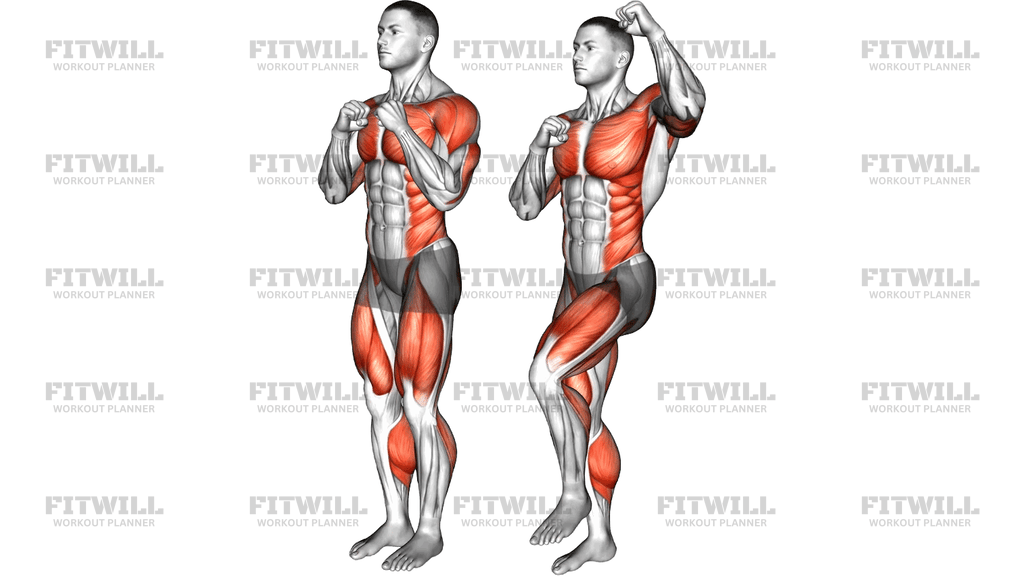
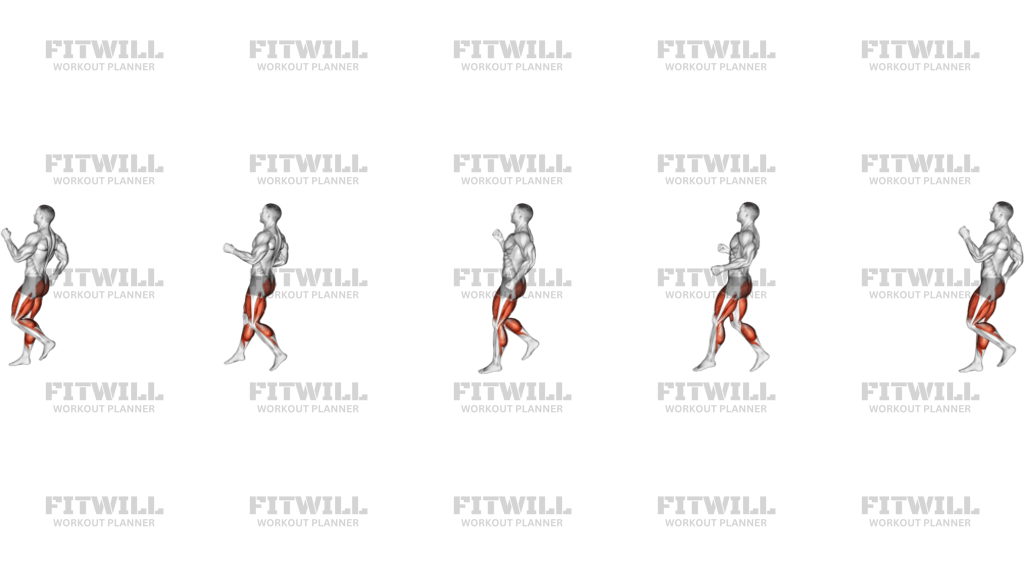
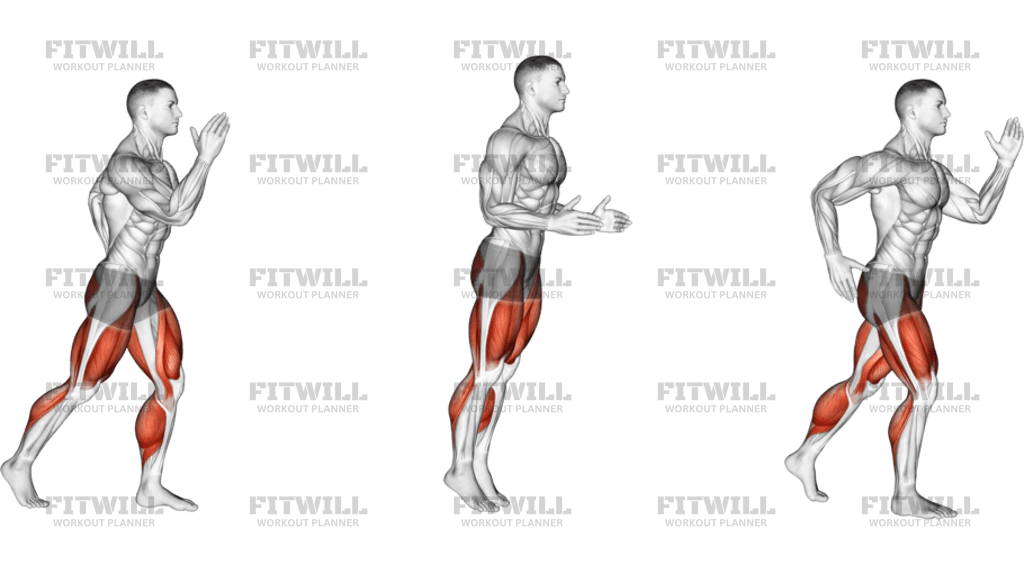
Swimming March is a standing, body-weight rhythm drill that combines an in-place march with alternating swimming-style arm pulls. You stay tall on your feet, drive one knee up at a time, and sweep each arm down and back as if pulling through water, so the whole body works in a coordinated cross-pattern. The result is a low-impact conditioning move that raises your heart rate while teaching your arms and legs to oppose each other cleanly.
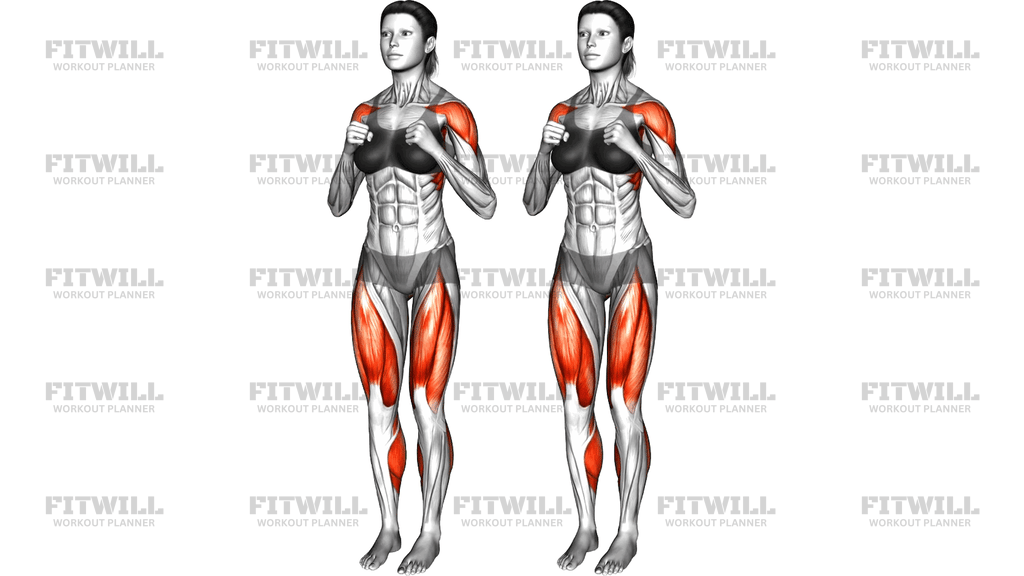
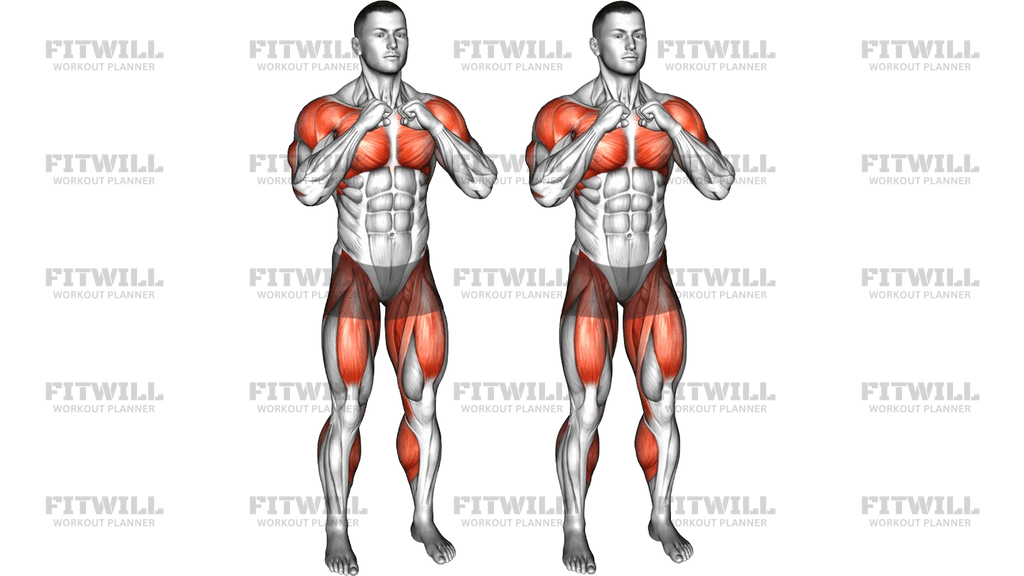
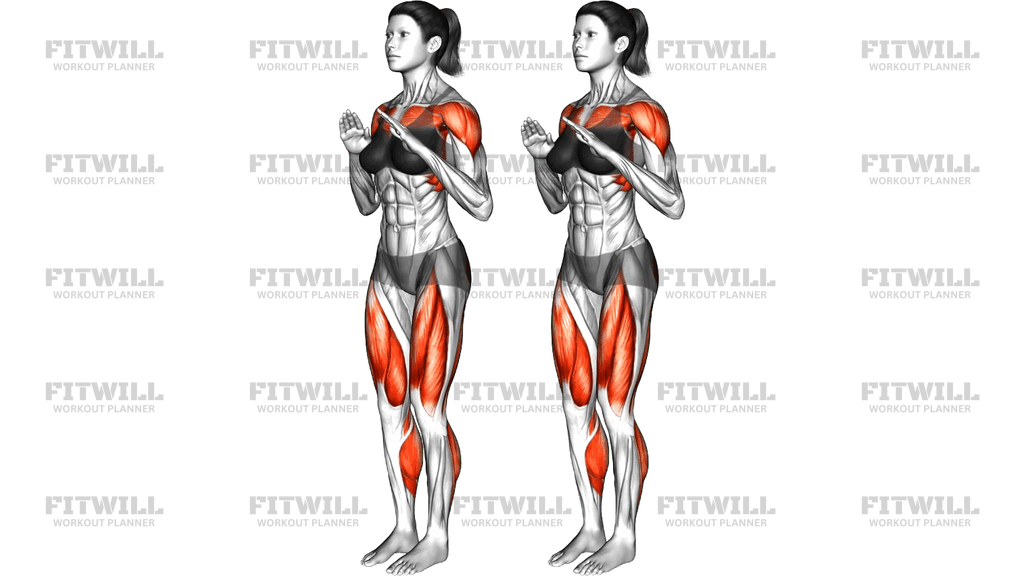
This movement earns its place in warm-ups, low-impact cardio intervals, and rehabilitation-style conditioning because it loads the body gently. The marching legs work the quadriceps, hip flexors, and calves, while the pulling arms light up the shoulders and upper back. Holding an upright torso the entire time keeps the deep core engaged as a stabilizer, which is exactly why it transfers well to walking, running, and everyday movement.
Setup matters more than it looks. Because there is no equipment to anchor you, your posture is the only structure in the drill. Feet under the hips, ribs stacked over the pelvis, and eyes forward give the knees a straight track to lift along and let the arms sweep without the torso twisting or leaning. If you slouch or brace on your lower back, the march loses its rhythm and the hip flexors start doing work the legs should share.
To execute it well, think of the arms and legs as opposite pairs: when the right knee lifts, the left arm pulls down; when the left knee lifts, the right arm pulls. Keep each knee drive deliberate, roughly to hip height, and land on the ball of the foot with a soft, quiet contact rather than a heavy stomp. The arm pull should finish near the hip, elbow passing close to your side, like the end of a freestyle stroke.
Swimming March fits neatly at the start of a workout to raise core temperature, in the middle of a low-impact cardio circuit, or as an active recovery option between harder sets. Because it needs no equipment and stays in one spot, it also works in small spaces where walking or jogging is not practical.
The main safety point is control over speed. A rushed march makes people lean back, hold their breath, and slap their feet down. Start at a pace you could hold while speaking comfortably, breathe steadily on every knee lift, and only speed up once the pattern feels automatic.
[ Workout Log & Planner ]
Put your next workout in Fitwill
Keep your plan and training log ready when you are.


Instructions
- Stand with your feet directly under your hips, arms bent at the elbows and held in front of your chest with your hands relaxed.
- Roll your shoulders back and down, lift through the crown of your head, and soften your knees slightly so you are ready to move.
- Brace your core lightly by drawing your lower ribs toward your hips, as if preparing for a gentle push to the belly.
- Shift your weight onto your left foot and drive your right knee up toward hip height, keeping your torso tall.
- As the right knee lifts, sweep your left arm down and back past your hip in a swimming pull, elbow brushing your side.
- Lower the right foot to the floor under control, landing softly on the ball of the foot, and immediately march the left knee up while the right arm pulls down.
- Continue alternating knees and arms in this opposite-hand, opposite-knee pattern for your target time or repetitions.
- Exhale on each knee lift and inhale as the foot returns to the floor, keeping the breathing rhythm even.
- To finish, slow the pace for a few steps, place both feet flat, and let your arms drop to your sides before moving on.
Tips & Tricks
- If your knees drift outward or inward as they lift, imagine each knee traveling up a straight rail in front of its own hip.
- Avoid swinging the pulling arm wide; the elbow should pass close to your ribs so the shoulder does the work, not momentum.
- A common fault is leaning the chest back as the knee rises. Fix it by keeping your ribs stacked over your pelvis and glutes lightly engaged.
- Keep the foot strike quiet. Loud, heavy stomping means you are dropping the leg instead of lowering it under control.
- Match the arm pull to the same-side timing you would use when walking — opposite arm to opposite knee — so the pattern carries over to gait.
- If hip flexors cramp, reduce the knee height to shin or mid-calf level for the first week and build up gradually.
- Look at a fixed point ahead of you rather than down at your feet; dropping the head rounds the upper back and shortens the arm pull.
- Start with 30-second rounds. Extend the time before you increase the speed, since rhythm quality matters more than pace here.
Frequently Asked Questions
What muscles does Swimming March work?
The marching leg action primarily targets the quadriceps and hip flexors, with the calves absorbing each soft landing. The swimming-style arm pulls engage the shoulders and upper back, while the core stabilizes your upright posture throughout.
Is Swimming March suitable for beginners?
Yes. It is low-impact, requires no equipment, and the pace is fully self-controlled. Beginners can start with smaller knee lifts and 20-30 second rounds before progressing.
How high should I lift my knees during Swimming March?
Aim for roughly hip height at full intensity, but anything from mid-calf upward is effective. Choose a height you can hold for the whole round without your lower back arching or your torso leaning.
Why do the arms move opposite to the knees in Swimming March?
The opposite arm-to-knee pattern mirrors natural gait, training coordination that carries over to walking and running. It also keeps the torso from twisting since the arm pull counterbalances each knee drive.
Can I use Swimming March as a warm-up?
Absolutely. It raises your heart rate, mobilizes the hips and shoulders, and rehearses the cross-body pattern used in most lower-body exercises, making it an efficient 2-3 minute warm-up.
What is the most common mistake in Swimming March?
Rushing the pace until the chest leans back and the feet stomp down. Slow the tempo, keep the ribs over the pelvis, and land softly on the ball of each foot to correct it.
What can I substitute if standing balance is difficult during Swimming March?
Hold onto a sturdy chair back or wall with one hand and shorten the knee lifts, or perform a seated march while keeping the same alternating arm pulls. Both preserve the rhythm with less balance demand.
How long should I perform Swimming March in a cardio circuit?
Thirty to sixty seconds works well as a station in a circuit. For steady low-impact conditioning, string together 3-5 rounds of one minute with short rests between.
Is Swimming March safe for people with knee discomfort?
The low-impact, controlled nature makes it gentler than jumping or running, but knee height and foot strike should stay pain-free. Reduce the range, slow the tempo, and stop if discomfort appears rather than pushing through.