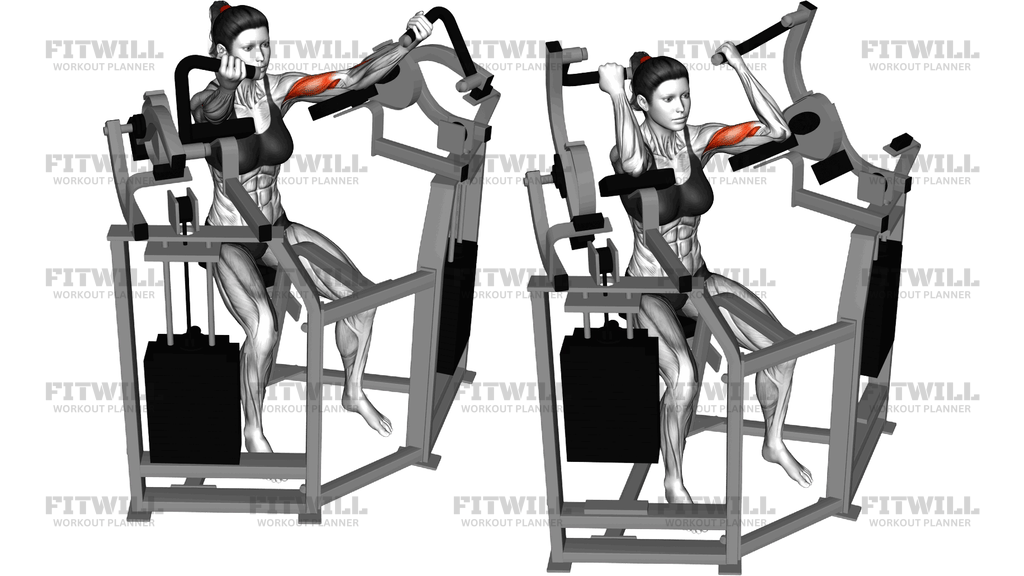
Lever Single Arm Preacher Curl (Plate Loaded)
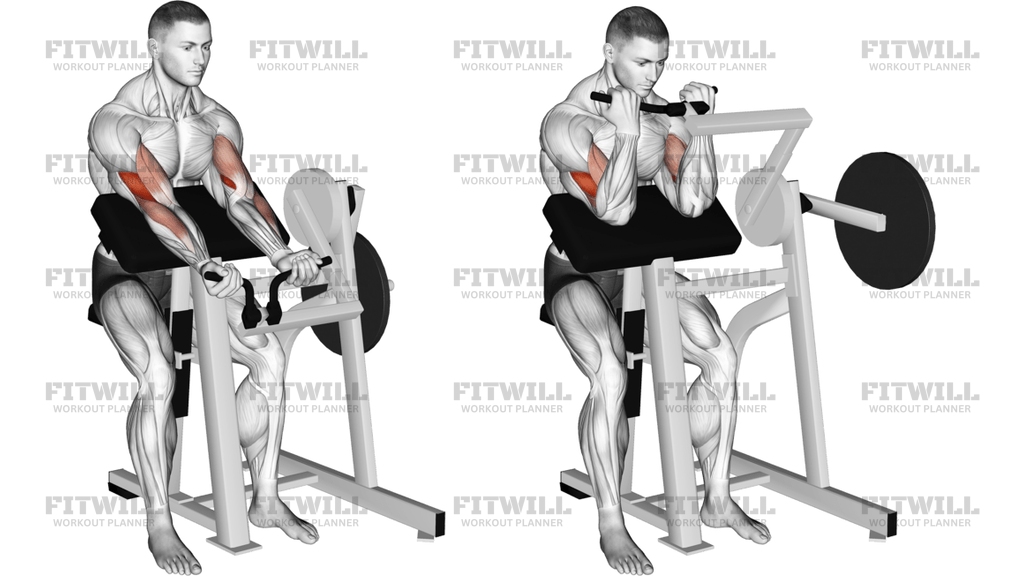
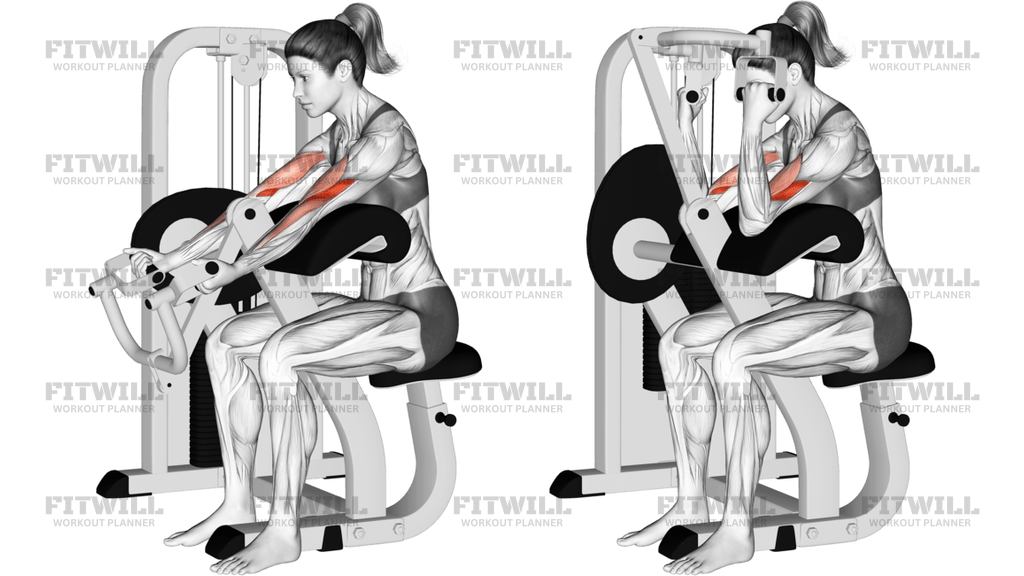
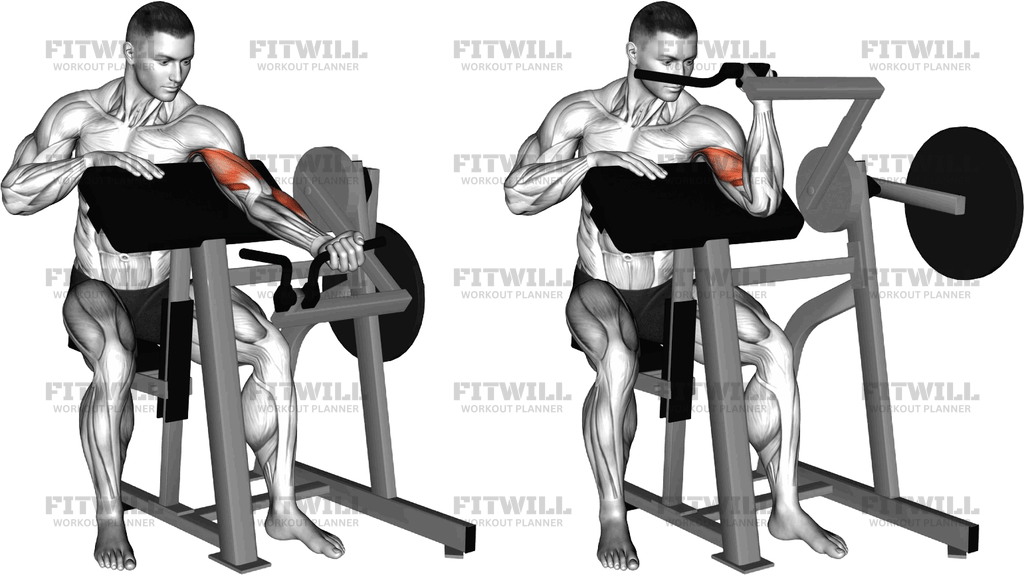
The Lever Single Arm Preacher Curl (Plate Loaded) is a machine-based biceps isolation exercise performed one arm at a time on a plate-loaded leverage unit with an angled preacher pad. You sit at the machine, rest the back of your working upper arm firmly against the pad, and grip the lever's handle with a supinated (palms-up) hold. Because the handle travels along a fixed arc, the resistance stays directed against your curl throughout the entire range, including the stretched position at the bottom where free weights tend to lose tension.
This movement is a strong choice for lifters who want to address one arm at a time and clean up left-to-right strength differences. Working single-arm also lets you keep your free hand planted on the machine or pad for stability, which makes it easier to hold an upright torso and resist the temptation to rock or swing. The leverage design keeps the elbow pinned in place, so the biceps do the work instead of momentum from the shoulders or trunk.
The primary target is the biceps brachii, with meaningful contribution from the brachialis underneath it and the brachioradialis and forearm flexors working to hold the handle. Since the pad fixes the upper arm in front of the body, the long head of the biceps works from a stretched position, which many lifters find harder to load safely with a barbell. The angle also removes most shoulder involvement, keeping the effort where it belongs.
Setup matters more here than on a standing curl. Adjust the seat so that when your working arm lies across the pad, the pad sits just under the armpit and your armpit is snug against the top edge of the pad. If the seat is too low your shoulder lifts and the elbow drifts; too high and you lose the stretch at the bottom. Load plates onto the lever's sleeve modestly at first, since the fixed arc makes the movement feel harder at the start of each rep than a dumbbell curl of the same weight.
Execute the rep by curling the handle up and slightly back toward your shoulder until your elbow is fully flexed, squeezing at the top, then lowering under control until the arm is nearly straight. Keep your chest tall, wrist neutral and in line with the forearm, and let the non-working hand brace against the machine for balance. Common use cases include hypertrophy accessory work after heavy pulls, rehabilitation-friendly strength rebuilding after the elbow has been cleared for loading, and finishing the arms with focused, low-skill single-joint work.
[ Workout Log & Planner ]
Put your next workout in Fitwill
Keep your plan and training log ready when you are.


Instructions
- Adjust the seat height so that when you sit down, your working upper arm rests flat along the angled preacher pad with the armpit tight against the top of the pad.
- Load an appropriate weight plate onto the lever's plate sleeve and secure the collar before sitting into position.
- Sit facing the pad, place your working hand on the lever handle with a palms-up grip, and lay the back of that upper arm fully against the pad.
- Set your non-working hand on the machine frame or pad for support and brace your core with your chest tall and shoulders relaxed.
- Start with the arm nearly straight along the pad and take a breath in, keeping the wrist straight and aligned with the forearm.
- Exhale as you curl the handle up and back toward your shoulder, bending the elbow until it is fully flexed and you feel a strong biceps contraction.
- Pause briefly at the top and squeeze the biceps without letting the shoulder or torso shift forward.
- Inhale as you lower the handle slowly along the same arc until the elbow is just short of locked out, keeping tension on the biceps at the bottom.
- Complete all repetitions on one arm, then switch hands and match the rep count on the other side.
- After the set, guide the lever down with control, release the handle, and unload the plates before standing up.
Tips & Tricks
- If your shoulder hikes up at the bottom of the rep, the seat is likely too low — raise it until the pad supports the upper arm without lifting the armpit off the top edge.
- Avoid bouncing the handle out of the stretched position; the fixed leverage arc concentrates tension there, and rebounding shifts load into the elbow joint.
- Keep the wrist in a straight line with the forearm. Curling with a cocked or bent wrist is one of the fastest ways to develop forearm discomfort on this machine.
- Do not let the elbow slide off the pad as fatigue sets in — if it keeps drifting forward, the weight is too heavy for controlled single-arm reps.
- Because the lever path removes the sticking point, expect to handle less plate than your dumbbell preacher curl; judge progress by rep quality, not load comparisons.
- Start with your weaker arm first and match the reps with the stronger arm to balance out side-to-side differences over time.
- A slight, natural bend at the top of the movement is fine, but avoid shrugging the working shoulder to chase extra height on the handle.
- Use a controlled two- to three-second lowering phase — the eccentric on this machine is where the stretched-position tension pays off.
- If your forearm fatigues before your biceps, try a lighter load with higher reps rather than gripping harder, which only shifts strain into the wrist flexors.
Frequently Asked Questions
Which muscles does the Lever Single Arm Preacher Curl (Plate Loaded) work?
The biceps brachii is the primary mover, with the brachialis and brachioradialis assisting and the forearm flexors working to hold the handle. The preacher pad pins the upper arm, so shoulder contribution is minimal.
Is this exercise suitable for beginners?
Yes. The fixed lever path makes it one of the more forgiving curl variations to learn, and single-arm work lets beginners focus on feeling each rep. Start light and prioritize a smooth, controlled lowering phase.
How should the seat be set up for the Lever Single Arm Preacher Curl (Plate Loaded)?
Adjust the seat so the back of your working upper arm lies flat against the angled pad with your armpit snug against the top edge. Your elbow should stay on the pad through the entire range of motion.
Why does this machine feel harder than a dumbbell preacher curl at the same weight?
The leverage arm holds tension against your curl through the whole arc, including the stretched bottom position where a dumbbell's resistance drops off. Compare effort and rep quality rather than plate numbers across the two exercises.
Should I train both arms in the same set or alternate?
Complete all reps on one arm before switching, and start with your weaker arm so you can match the work exactly. Alternating within a set usually leads to uneven rest and inconsistent reps.
Can I replace this exercise with a dumbbell preacher curl?
You can, but you will lose the fixed arc and the constant tension at the stretch, and your free hand cannot brace on the machine. It is a reasonable substitute when the machine is busy, though the two are not identical.
What is the most common mistake on this machine?
Letting the elbow lift off the pad and pulling the shoulder forward to finish reps. Once the arm leaves the pad, the set loses its isolation value, so lower the weight and keep the arm anchored.
Is it safe for the elbows?
When loaded reasonably and performed with controlled tempos, the pad-supported position is gentle on the elbow because the joint stays fixed. Avoid bouncing out of the fully stretched position and stop if you feel sharp joint pain.
How heavy should I go on the Lever Single Arm Preacher Curl (Plate Loaded)?
Choose a load you can control through a slow lowering phase for 8 to 15 clean reps per arm without the elbow leaving the pad. Since you are working one arm at a time with a fixed path, modest loading produces better results.