Lever Belt Romanian Deadlift (Straight Bar)
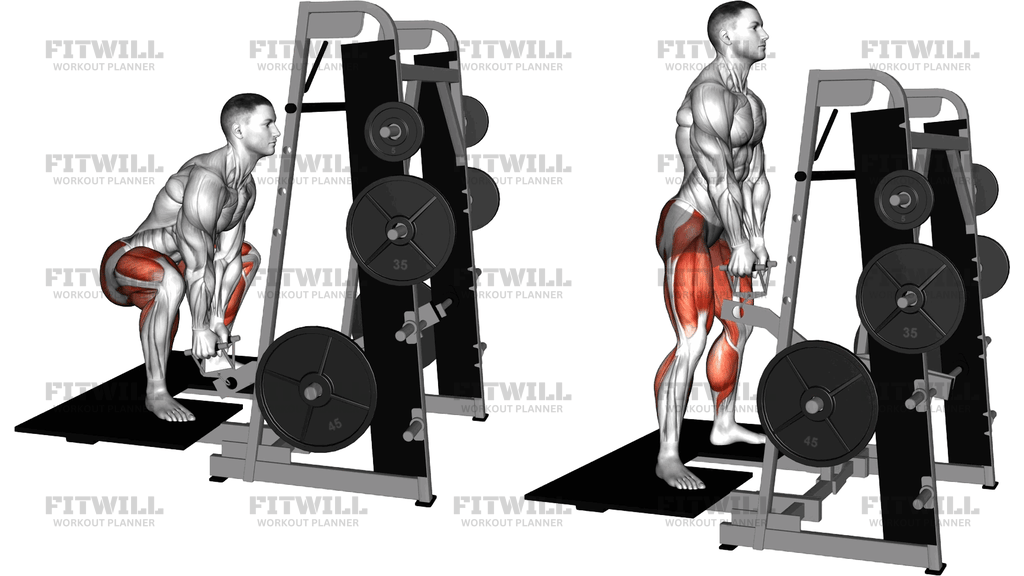
The Lever Belt Romanian Deadlift (Straight Bar) is a plate-loaded machine version of the classic barbell Romanian deadlift. You stand on the machine's platform facing the weight stack, take a straight-bar handle that connects to the lever arm at a low position, and hinge forward at the hips with a soft knee bend before driving back up to standing. Because the resistance travels along a fixed lever path, the machine removes the balance demands of a free-weight bar while keeping the same hip-hinge pattern that makes the RDL so effective for the back of the body.
This movement is a strong choice for lifters who want the hamstring and glute stimulus of a deadlift variation without managing a barbell from the floor. It works well for people rebuilding after time away from heavy hinging, for lifters who struggle to feel their hamstrings during barbell RDLs, and as a finishing movement on leg days when grip and lower-back fatigue from free weights would otherwise cut the set short. The fixed path also makes it easier to keep tension on the hamstrings from rep to rep.
The main muscles worked are the hamstrings, which lengthen under load as you push your hips back, and the glutes, which drive you back to standing. The lower back works isometrically to hold your spine in a neutral position throughout the hinge, and the forearms and grip handle the holding demand on the bar. Because the lever arm guides the weight, the stabilizing burden is lower than with a barbell, letting the target muscles do most of the work.
Setup matters more than it might seem. Stand far enough back from the machine that the bar clears your knees and thighs at the bottom, keep your feet about hip-width apart, and let the handle hang directly below your shoulders. If your stance is too close, the lever arm will pull you forward and round your lower back at the bottom of the rep. Set your belt position and bracing before the first rep so you are not fidgeting under load mid-set.
To execute well, unlock your knees slightly, brace your trunk, and push your hips straight back while letting the bar slide down close to your legs. Stop when you feel a strong stretch across the hamstrings — usually when the bar is around shin height or just below the knee, depending on your build — then squeeze the glutes and drive the hips forward to stand tall. Do not hyperextend at the top; finish with ribs down and glutes engaged.
A few practical points will keep this movement productive. Control the lowering phase for two to three seconds instead of letting the lever drop, keep your neck neutral rather than craning upward, and treat any rounding of the lower back as a signal to reduce depth or weight. Start with moderate loads to learn how the machine's resistance curve feels at the stretched position, then build gradually.
[ Workout Log & Planner ]
Put your next workout in Fitwill
Keep your plan and training log ready when you are.


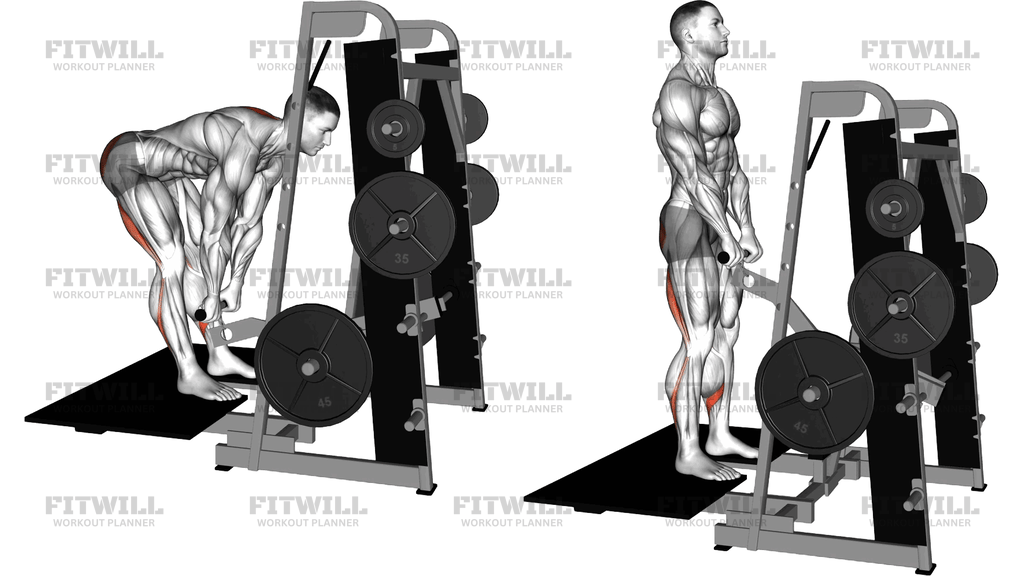
Instructions
- Stand on the machine's platform facing the weight stack, feet about hip-width apart, with enough space behind your heels that the lever arm will clear your legs.
- Grip the straight-bar handle attached to the low lever arm with a shoulder-width, arms-fully-extended grip, and step back slightly so the bar hangs just in front of your thighs.
- Set a soft bend in both knees and keep it fixed for the whole set.
- Brace your core, pull your shoulders back and down, and keep your chest proud with a neutral neck before initiating the rep.
- Push your hips straight back and hinge forward, letting the bar travel down close to the front of your legs as the lever arm lowers.
- Descend until you feel a firm stretch in your hamstrings, typically when the bar reaches around shin level, without letting your lower back round.
- Drive your hips forward and squeeze your glutes to return to a tall standing position, arms staying straight throughout.
- Exhale at the top after each rep, then inhale and re-brace before lowering into the next repetition.
- Lower under control on every rep rather than letting the machine's weight pull you down, and complete all reps before releasing the handle and stepping off the platform.
Tips & Tricks
- If the bar drifts away from your legs during the descent, you are likely squatting instead of hinging — push the hips back and let the knees stay nearly still.
- A rounded lower back at the bottom usually means you went deeper than your hamstrings allow; shorten the range before you add weight.
- Because the lever arm has its own resistance curve, the hardest point may differ from a barbell RDL — use the first few reps of a lighter set to find where the tension peaks.
- Do not lock the knees hard at the top or lean back past vertical; both shift load away from the glutes and onto the spine.
- Keep the shoulder blades retracted for the entire set; letting them roll forward turns the hinge into a lat-dominated pull and shortens the hamstring stretch.
- The fixed path lets you focus purely on the hip hinge, so use a deliberate two- to three-second lowering phase to reinforce the pattern.
- If your grip gives out before your hamstrings, use lifting straps on the heavier sets rather than shortening the range.
- Check that both feet stay flat on the platform; shifting weight onto the toes during the hinge reduces hamstring tension and can pull you off balance.
- Record a side-view video occasionally — the machine's frame can hide a soft back position that is obvious on camera.
Frequently Asked Questions
What muscles does the Lever Belt Romanian Deadlift (Straight Bar) work?
The hamstrings are the primary movers, with the glutes driving the return to standing. The lower back works to hold the spine neutral and the forearms handle the gripping demand.
Is the machine version easier than a barbell Romanian deadlift?
The fixed lever path removes balance and stabilization demands, so most people find it easier to control. The hamstring and glute work remains substantial, though the overall systemic load is lower than a heavy barbell pull.
How deep should I hinge on the Lever Belt Romanian Deadlift (Straight Bar)?
Descend until you feel a strong hamstring stretch, usually when the bar is around shin height. Depth depends on your hamstring flexibility and back position — stop before your lower back rounds.
Where should my feet be placed on the platform?
Stand about hip-width apart with your heels far enough back that the straight bar clears your knees and thighs at the bottom. If the bar scrapes your shins or pulls you forward, step back a little.
Why do I feel this more in my lower back than my hamstrings?
That usually means the spine is losing its neutral position or the hips are not traveling back far enough. Reduce the weight, shorten the range, and rehearse the hinge slowly until the hamstring stretch is clearly the limiting sensation.
Can beginners use this exercise?
Yes, and it is often a good first hinge for beginners because the machine guides the path while they learn the hip-hinge pattern. Start light and prioritize the lowering phase over the amount of weight used.
Should my knees bend during the Lever Belt Romanian Deadlift (Straight Bar)?
Keep a small, fixed knee bend of roughly 15 to 20 degrees throughout. If the knees keep bending as you descend, the movement becomes a squat pattern and the hamstrings lose their stretch.
What can I substitute if my gym has no leverage machine with a low straight bar?
A barbell or dumbbell Romanian deadlift trains the same pattern with free weights, and a cable Romanian deadlift using a straight-bar attachment offers a similar guided resistance if your gym has a low pulley.
How should I breathe during the set?
Inhale and brace before each descent, hold the brace through the hinge, and exhale as you stand into the top position. Reset the brace between reps rather than holding one breath for the whole set.
Is it safe to use lifting straps on this movement?
Yes. Since the goal is hamstring and glute loading rather than grip training, straps are a reasonable option on heavier sets once your grip becomes the limiting factor.