Kneeling Thoracic Spine Extension
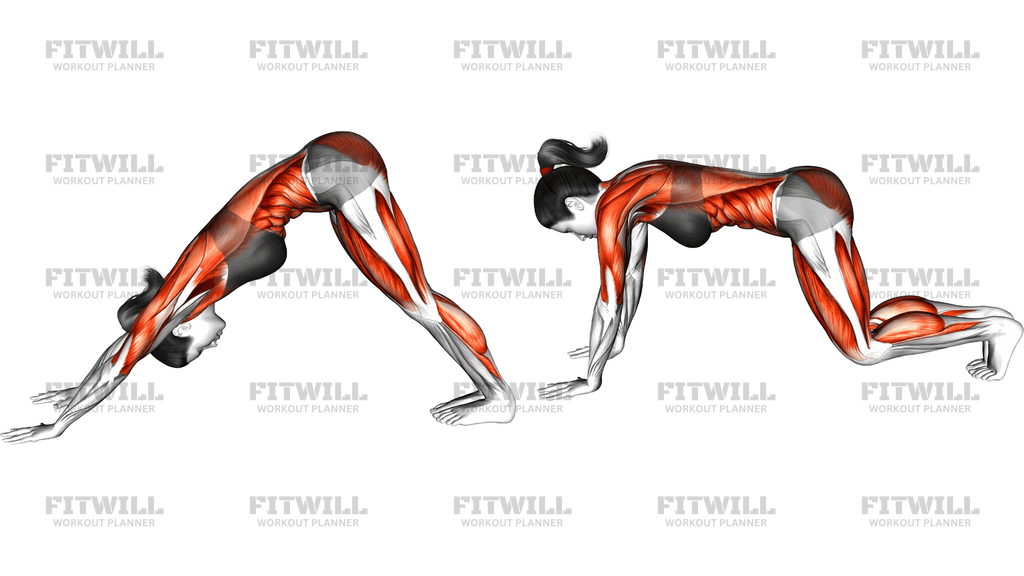
The Kneeling Thoracic Spine Extension is a bodyweight mobility drill performed on all fours that targets the middle segment of your spine — the twelve vertebrae between your ribcage and your neck. From a quadruped position with hands under shoulders and knees under hips, you brace your abdominal muscles and slowly arch the mid-back upward, letting the chest sink and the shoulder blades spread apart. The kneeling setup matters because it locks the pelvis and lower body in place, which forces the movement to come from the thoracic spine instead of the hips or lower back.
This is one of the best accessible drills for anyone whose upper back has become stiff from long hours of sitting, driving, or working at a desk. When the thoracic spine loses its natural ability to extend, the shoulders tend to roll forward and the lower back or neck often compensates during pressing, overhead, and everyday reaching movements. Practicing this exercise regularly helps restore that extension range while gently activating the spinal extensor muscles that hold you upright.
Execution is slow and deliberate. Start in a neutral spine with a long, flat back and your gaze down at the floor. Exhale, engage your core as if bracing for a light punch, and push the floor away through your palms as you round and lift the mid-back toward the ceiling. The head follows the spine naturally, drifting down between the arms without forcing the chin to the chest. Pause briefly at the top, feeling the stretch between and around the shoulder blades, then inhale as you return to neutral with control.
The key distinction from a full cat-cow is the braced core and the isolation of the mid-back. Squeezing the abdominals prevents the lumbar spine from sagging, so the arching and lengthening happens where you actually want it. Think of moving one specific section of the spine while the rest stays quietly anchored.
Use this drill as a warm-up before upper-body training, as a movement break during long workdays, or as part of a dedicated posture and mobility routine. It is gentle enough for beginners and demanding enough in control requirements to stay useful for experienced lifters. Move within a comfortable range, avoid forcing the neck, and expect progress in range and smoothness over weeks of consistent practice rather than in a single session.
[ Workout Log & Planner ]
Put your next workout in Fitwill
Keep your plan and training log ready when you are.


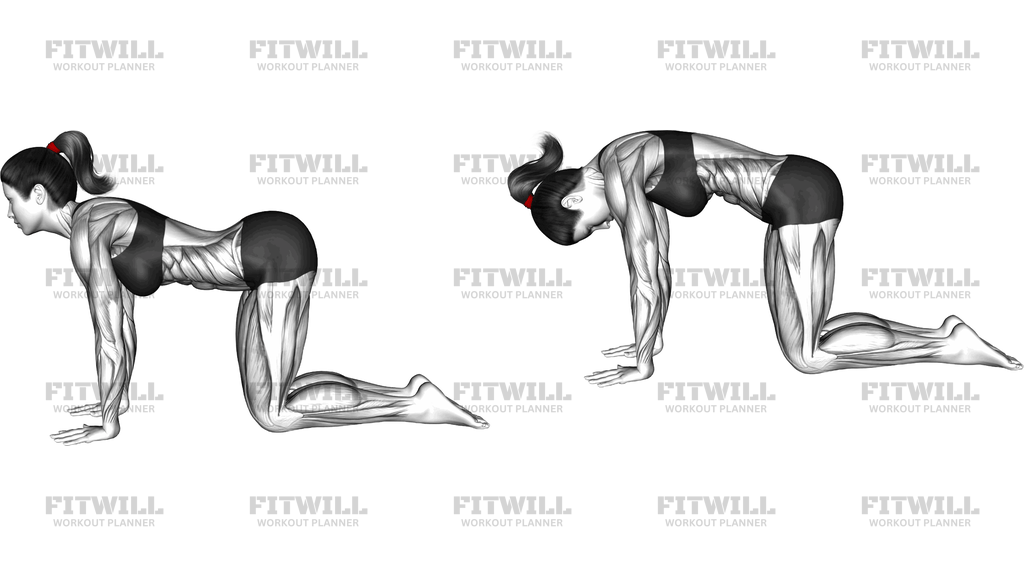
Instructions
- Kneel on an exercise mat and place your hands flat on the floor directly under your shoulders, fingers spread and pointing forward.
- Set your knees directly under your hips with the shins resting on the mat, and adjust until your weight feels even between hands and knees.
- Flatten your back into a neutral position by imagining a straight line from the crown of your head to your tailbone, and let your eyes look down at the floor.
- Brace your abdominal muscles lightly, as if tightening them to protect your lower back, and keep this tension for the whole set.
- Exhale slowly and press your palms into the floor, arching the middle of your back upward toward the ceiling while your chest sinks slightly inward.
- Let your head follow the spine and drift down between your arms, keeping the neck relaxed rather than forcing the chin toward your chest.
- Hold the arched position for two to three seconds, feeling the shoulder blades spread apart across your upper back.
- Inhale and reverse the motion with control, lowering the mid-back back to the neutral starting position without letting the lower back sag.
- Complete 8 to 12 slow repetitions, then sit back on your heels briefly to reset before the next set if needed.
Tips & Tricks
- The most common mistake is letting the arch come from the lower back. Keep the abdominal brace active from the first rep so the rounding is visibly concentrated between the shoulder blades.
- If your wrists ache in the quadruped position, make fists and rest on your knuckles or place a folded towel under the heels of your hands to reduce wrist extension.
- Do not pull your head down aggressively with your neck; the head should simply ride along with the spinal curve. Imagine a string attached to the back of your skull gently drawing it back.
- Pad your knees with a mat or folded towel if the floor feels hard, because knee discomfort will distract you from the movement itself.
- Aim for smooth, even arching rather than a sudden collapse at the top. Moving slowly through the middle range builds more control than rushing to the end range.
- If one side of your back feels stiffer and the arch looks uneven, slow down even further and gently direct the arch toward the stiff region instead of defaulting to the easy side.
- Keep your arms straight but not locked; softly active elbows let you push the floor away and drive the arch through the upper back.
- Pair the extension with its opposite motion — a gentle chest lift — as a separate drill if your routine calls for full spinal mobility, but keep this exercise focused on the extension phase and a controlled return to neutral.
Frequently Asked Questions
Which muscles does the Kneeling Thoracic Spine Extension work?
It primarily mobilizes the thoracic spine while engaging the erector spinae and muscles of the upper back, including the middle trapezius and rhomboids. The abdominals stay active the entire time to lock the lower back in place.
How is Kneeling Thoracic Spine Extension different from the cat-cow stretch?
Cat-cow cycles through both spinal flexion and extension with a moving pelvis. This drill holds the pelvis steady with a braced core and concentrates on the extension motion of the mid-back, making it more targeted for thoracic stiffness.
Is Kneeling Thoracic Spine Extension suitable for beginners?
Yes. It requires no equipment beyond a mat and is low load, so beginners can start right away. The main learning point is keeping the lower back quiet while the mid-back does the arching, which usually takes a few sessions to feel clearly.
Why do I feel this mostly in my lower back instead of my upper back?
That usually means the abdominal brace has relaxed and the lumbar spine is doing the arching. Reset with a flatter back, tighten your abs, and try smaller, slower arches focused strictly between your shoulder blades.
How many reps and sets of Kneeling Thoracic Spine Extension should I do?
Eight to twelve slow repetitions for two to three sets works well, either as a warm-up before training or as a standalone mobility break. Each rep should take about four to six seconds with a brief pause at the top.
Can I do this exercise if kneeling hurts my knees?
Place a folded towel or a cushioned mat under your knees and shins. If kneeling remains uncomfortable, a similar thoracic extension can be performed seated with hands behind the head, though the quadruped setup gives the best pelvic stability.
Should my head drop all the way down at the top of the movement?
Let the head follow the natural curve of the spine, but do not force the chin to the chest. Forcing the neck adds strain without improving thoracic extension range.
When is the best time to use Kneeling Thoracic Spine Extension?
It works well as a warm-up before pressing, pulling, or overhead lifting, and also as a mid-day reset if you sit for long periods. Avoid doing it immediately after eating, since the compressed kneeling position can feel uncomfortable.
Can Kneeling Thoracic Spine Extension help with a rounded upper-back posture?
It can be a useful part of a broader routine, because it trains the extension range that prolonged sitting tends to reduce. For lasting posture changes, pair it with strengthening work for the upper back and regular breaks from sitting rather than relying on any single stretch.