Short Pendulum Side Leg Lift
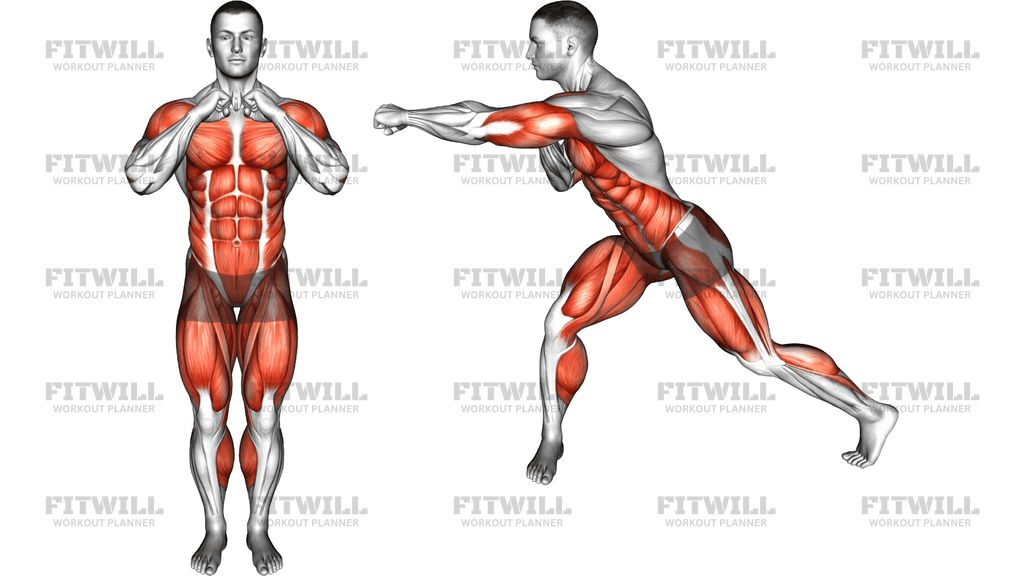
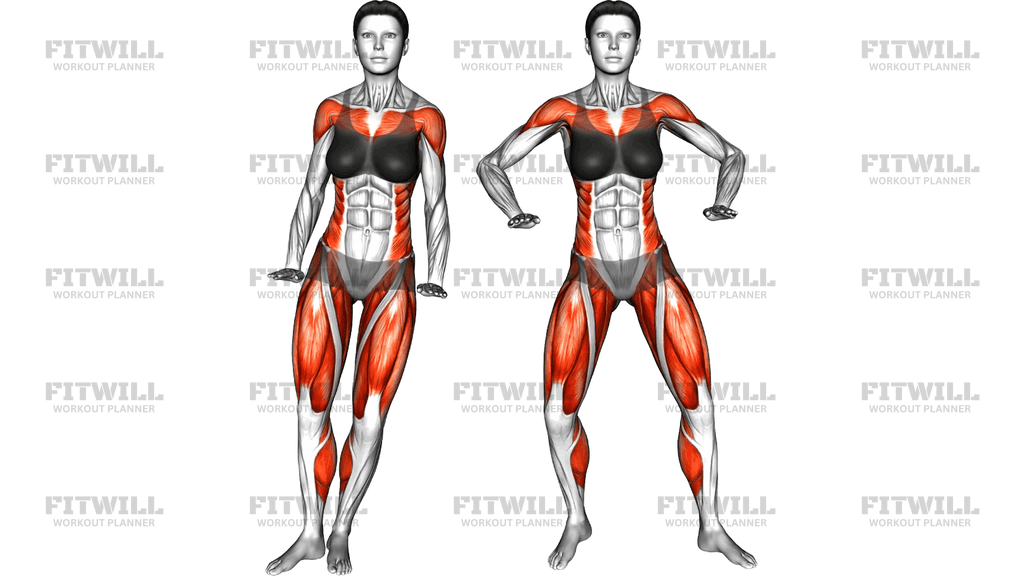
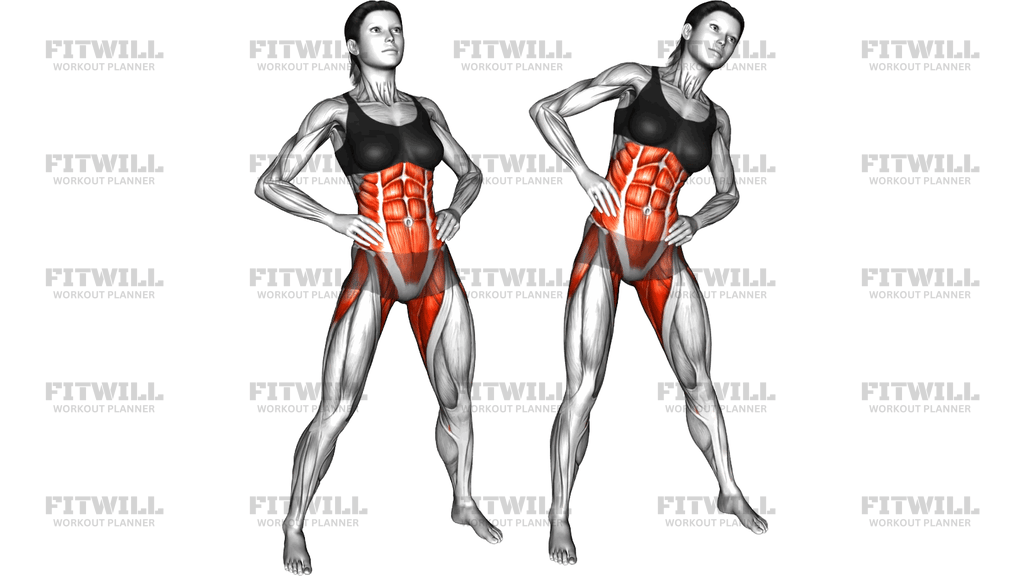
The Short Pendulum Side Leg Lift is a standing bodyweight movement that trains the muscles on the outside of the hip through a small, controlled arc of the leg. You stand with a wide, softly bent stance, clasp your hands in front of your chest for balance, then shift your weight onto one leg and swing the opposite leg out to the side through a short pendulum range before drawing it back in. Because the range is deliberately short, the emphasis stays on precise hip control rather than how high you can raise the foot.
This exercise is especially useful for anyone who wants stronger, more responsive hips without equipment. Runners, walkers, and people who spend long hours sitting often have lazy hip abductors, and that weakness shows up as knee wobble, hip drop, or poor single-leg balance. The Short Pendulum Side Leg Lift targets the gluteus medius and the muscles of the outer hip, while the standing leg's inner thigh, quad, and glute work hard to keep you stable over a moving base of support.
The setup matters more than it might seem. A wide stance with soft knees lowers your center of gravity and gives you room to shift side to side, while the clasped hands at chest height act as a counterweight that helps you stay tall instead of leaning. Keep the torso upright and the ribs stacked over the pelvis; if you flare the ribs or collapse sideways, the waist and back start doing work the hips should own.
To perform it well, plant your weight firmly over one foot, engage the core, and let the free leg travel out to the side in a smooth, pendulum-like sweep of only a foot or so. The toes can stay relaxed and lightly pointed forward or gently turned out, and the movement should come from the hip joint, not from tipping the torso. Pause briefly at the end of the lift, then lower the leg with the same control you used to raise it. Complete your repetitions on one side before switching, or alternate legs if you prefer a rhythmic feel.
Because it requires no equipment and very little space, this movement fits easily into warm-ups, active recovery days, desk-break routines, and lower-body or glute circuits. It also makes an excellent teaching progression toward single-leg strength work such as side-lying leg lifts, standing cable hip abductions, or single-leg squats. Move slowly enough that you can feel the outer hip working on every rep; speed is the enemy of this exercise.
[ Workout Log & Planner ]
Put your next workout in Fitwill
Keep your plan and training log ready when you are.


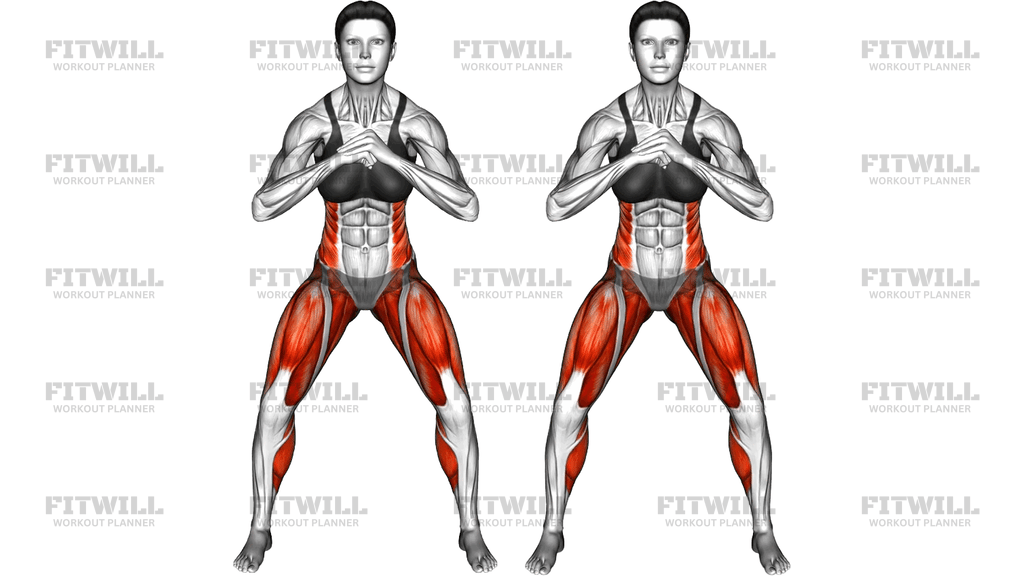
Instructions
- Stand with your feet wider than hip-width apart and turn your toes out slightly.
- Clasp your hands together in front of your chest at sternum height and soften both knees so they track over your toes.
- Brace your core gently, as if preparing for a light tap to the stomach, and keep your chest tall and shoulders relaxed.
- Shift your weight fully onto your right leg, pressing the right foot evenly into the floor while keeping that knee softly bent.
- Lift your left leg out to the side in a short, smooth pendulum arc, raising it only a foot or so off the floor without leaning your torso away.
- Pause for one breath at the top of the lift, feeling the outer hip and glute of the moving leg do the work.
- Lower the left leg back toward the floor under control, resisting the urge to let it drop or swing.
- Exhale as you lift the leg and inhale as you lower it, keeping the breathing steady throughout the set.
- Complete all repetitions on the left side, then shift your weight onto the left leg and repeat on the right.
- Between sets, stand with weight on both feet, unclasp your hands, and shake out the hips before resetting your stance.
Tips & Tricks
- The most common mistake is lifting the leg high enough that the torso tips sideways — keep the arc short and your shoulders level over the hips.
- If your standing knee caves inward, imagine spreading the floor apart with that foot and press the big toe down as you shift your weight.
- Keep the clasped hands quiet at chest height; swinging the arms turns the exercise into a momentum exercise instead of a hip exercise.
- Don't lock the standing knee. A soft, bent knee keeps the quad and inner thigh engaged and protects the joint during each weight shift.
- Point the toes of the lifting leg mostly forward. Rotating the whole leg open lets the lower back take over and hides weakness in the outer hip.
- If balance is shaky, stand next to a wall or chair and rest one fingertip on it rather than widening or speeding up your movements.
- You should feel the outer hip of the lifting leg and the inner thigh of the standing leg at the same time; if you feel only your waist, reduce the range.
- Slow the lowering phase down to a two-count — most people control the lift but let gravity catch the leg on the way down.
- Warm up the hips with a few gentle standing hip circles before starting so the first reps of the Short Pendulum Side Leg Lift aren't stiff.
Frequently Asked Questions
What muscles does the Short Pendulum Side Leg Lift work?
The main muscles are the hip abductors on the outside of the moving leg, especially the gluteus medius. The standing leg's inner thigh, quad, and glute work to stabilize, and the obliques help keep the torso upright.
Why is the lift kept to a short pendulum range instead of raising the leg high?
A short arc keeps the movement in the hip joint where the abductors are strongest. Raising the leg higher usually forces the torso to lean and the lower back to side-bend, which shifts work away from the hips.
Is the Short Pendulum Side Leg Lift suitable for beginners?
Yes. Because it uses only body weight and a small range of motion, it's an accessible way to build hip stability. Beginners can stand near a wall and touch it lightly for balance until the weight shift feels secure.
Why are my hands clasped in front of my chest during this exercise?
The clasped hands act as a small counterweight at chest height, which helps you stay tall and centered as you shift from leg to leg. Keep them still rather than swinging them with the leg.
Should I feel this in my inner thigh of the standing leg?
Some inner thigh and quad work in the standing leg is normal, since those muscles control the side-to-side weight shift. Sharp discomfort in the groin or knee is not — reduce the width of your stance and soften the bend if that happens.
How many repetitions should I do per side?
Start with 8 to 12 controlled lifts per leg for 2 to 3 sets. If your form breaks down or the torso starts leaning, stop the set rather than pushing through extra reps.
What can I use instead if standing balance is too difficult?
A side-lying leg lift on a mat trains the same outer-hip muscles with the floor providing stability. You can also hold a chair back or wall with one hand and perform the same short pendulum lift.
Can I add ankle weights or a resistance band to this exercise?
Yes, once you can complete all sets without leaning or losing balance. Add light ankle weights first, and place a loop band just above the knees only if you can still keep the knees from caving during the weight shift.
Where should the Short Pendulum Side Leg Lift fit into my workout?
It works well as an activation drill in a lower-body warm-up or as a higher-rep finisher in a glute and hip circuit. Because it isn't heavily fatiguing, it can also be done on recovery days.