Barbell California Press
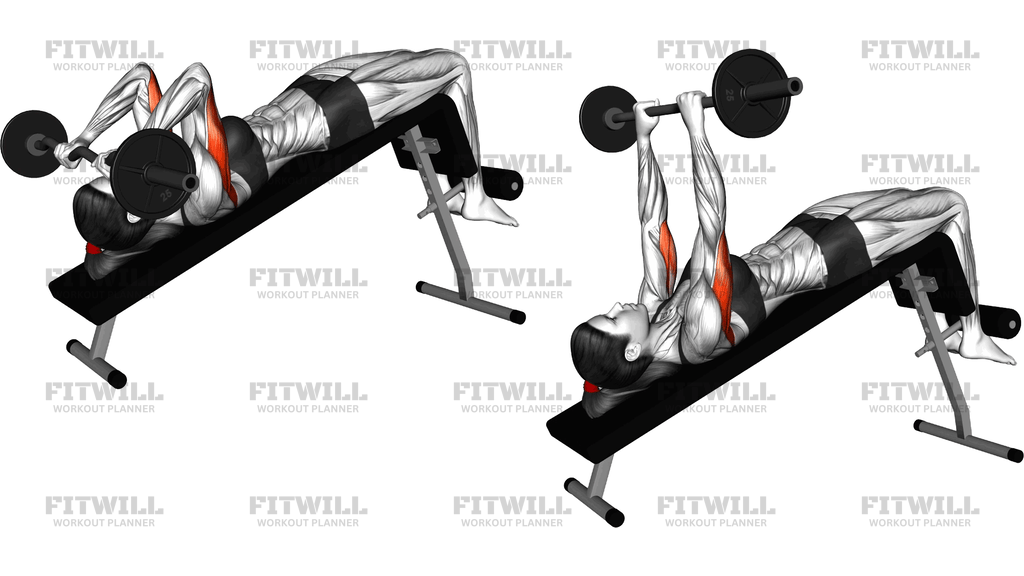
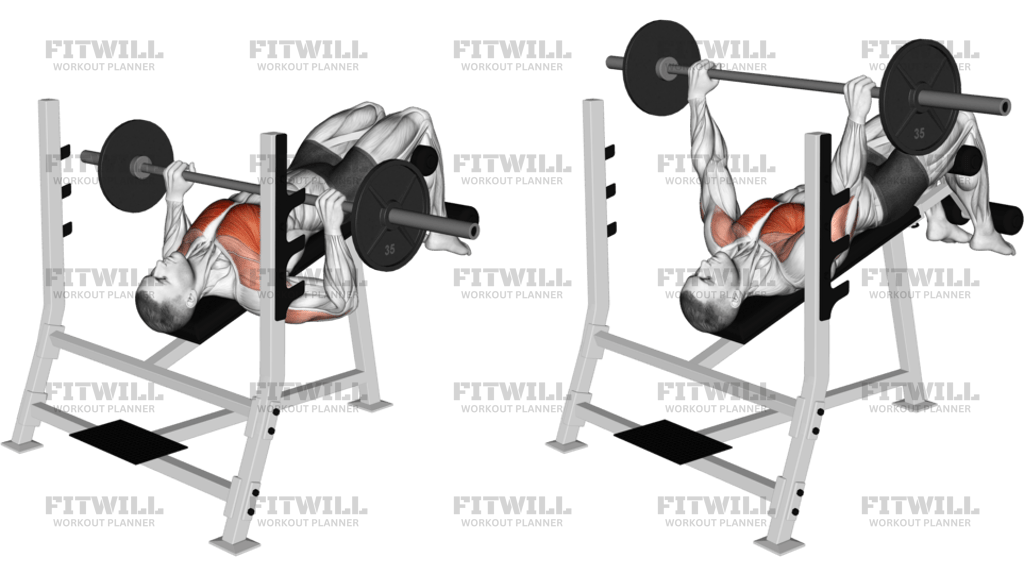
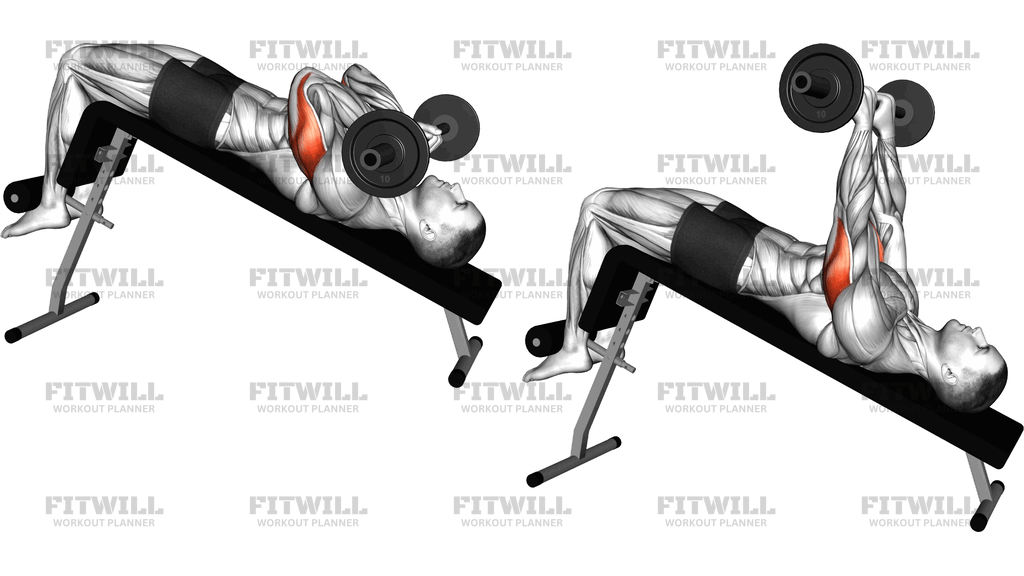
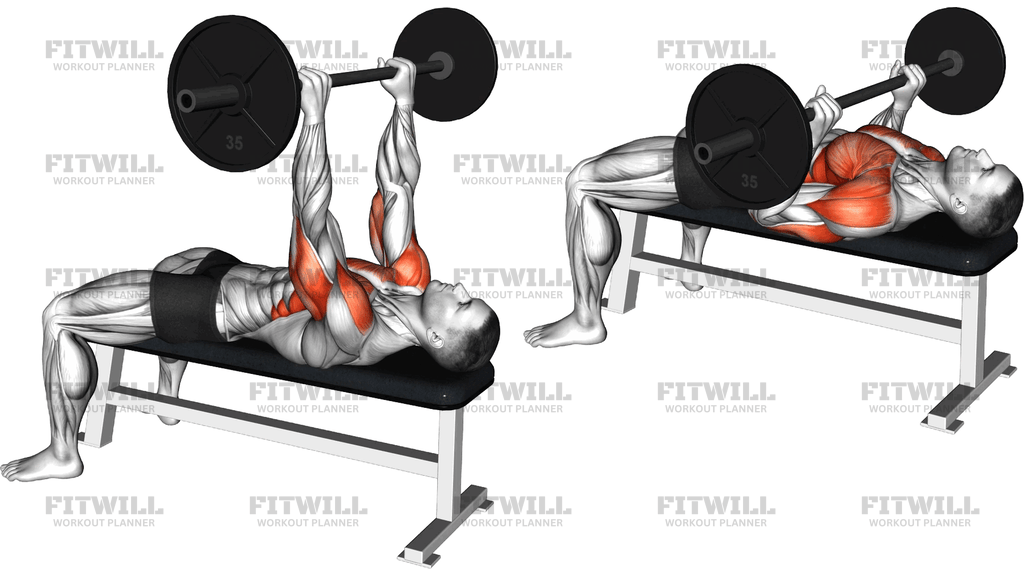
The Barbell California Press is a hybrid between a close-grip bench press and a skull crusher, performed lying on a flat bench with a shoulder-width or slightly narrower grip. Instead of lowering the bar to your mid-chest like a standard press, you bring it down toward your chin or upper chest while keeping your elbows tucked and angled toward your head. This small change in bar path shifts a large share of the workload onto the triceps, with the upper chest and front delts assisting throughout.
This lift earns its place in a program when your bench press stalls at lockout or your elbows complain about heavy skull crushers. Because the bar stays under control and the elbows remain supported by the bench rather than floating in space, many lifters find it more joint-friendly than strict lying triceps extensions while still loading the triceps heavily. Powerlifters use it to build lockout strength, and general lifters use it to add arm size with pressing-type loading.
Setup matters more here than in a regular bench press. A grip that is too narrow multiplies stress on the wrists and elbows, while a grip that is too wide turns the movement back into a plain close-grip press and dilutes the triceps work. Aim for roughly shoulder width, wrists stacked over the bar, and elbows tracking close to the torso rather than flaring out to the sides.
Execution is simple but demands control. Lower the bar slowly along a slight arc until it hovers just above your chin or upper chest, keeping the angle at your elbows fairly open instead of cramming them shut. Press back up along the same path to full lockout, squeezing the triceps at the top without letting the bar drift toward your forehead.
The main safety point is honesty about load: because the bar travels near your face and throat, use a weight you can control for every rep and always use collars. If you train alone and near failure, a spotter or a power rack with safety arms set just below your chest is worth the extra setup time. Start with a lighter load than your close-grip bench press and build from there.
[ Workout Log & Planner ]
Put your next workout in Fitwill
Keep your plan and training log ready when you are.


Instructions
- Set a loaded barbell over a flat bench and lie back with your head directly under the bar, eyes level with the bar path.
- Grip the bar at roughly shoulder width, slightly narrower than a standard bench press, with wrists stacked straight over the bar.
- Plant both feet flat on the floor, squeeze your shoulder blades down and back, and lightly arch your upper back while keeping your hips on the bench.
- Unrack the bar and bring it directly over your lower chest with your arms fully extended to establish the starting position.
- Brace your core and take a breath before the first rep, keeping your ribcage down and shoulders pinned to the bench.
- Lower the bar in a controlled, slightly arced path toward your chin or upper chest, keeping your elbows tucked in and angled toward your head rather than flaring wide.
- Stop when the bar is just above your chin or upper chest without bouncing or resting it on your body.
- Press the bar back up along the same path to full lockout, extending your elbows completely and squeezing the triceps at the top.
- Exhale as you press up, then inhale again at the top before starting the next rep, keeping the rhythm steady.
- After your final rep, guide the bar back over your chest and rack it securely, or hand it off to a spotter before sitting up.
Tips & Tricks
- If your wrists ache at setup, widen your grip a thumb-width at a time. A true California Press needs a controlled position, not the narrowest possible grip.
- The most common mistake is lowering the bar to the mid-chest like a close-grip bench press. Track it toward the chin and upper chest or the lift loses its triceps bias.
- Letting the elbows flare outward turns the movement into a general press and loads the shoulder joint awkwardly. Keep them angled in toward your body on every descent.
- Do not bounce the bar off your chin or chest. The stretch reflex feels productive but robs the triceps of tension and puts the bar closer to your throat than you want.
- Cut the range slightly if your shoulders pinch at the bottom. Stopping an inch higher with a controlled pause usually still challenges the triceps fully.
- Expect to handle noticeably less weight than in a close-grip bench press. If your numbers match, the elbows are probably drifting and your chest is taking over.
- Keep your shoulder blades retracted for the whole set. If your shoulders roll forward at lockout, reduce the weight and reset your position between reps.
- Use collars every time. An uneven plate slide while the bar hovers near your face is the worst-case scenario for this lift.
- Spotting here is different from a bench press: stand at the head of the bench with a mixed grip ready, since the bar path is short and stays near the neck.
Frequently Asked Questions
Which muscles does the Barbell California Press work?
The triceps are the primary movers, since the close grip and high bar path keep elbow extension under constant load. The upper chest and front delts assist, which is why they light up alongside the arms during the press.
How is the California Press different from a close-grip bench press?
Both use a narrow grip, but the California Press lowers the bar toward the chin or upper chest instead of the mid-chest. That path keeps tension biased toward the triceps rather than letting the chest dominate the lift.
How is it different from skull crushers?
In a skull crusher the elbows hinge freely and the bar lowers to the forehead, isolating the triceps more strictly. In the Barbell California Press the upper chest and delts share the work, and many lifters tolerate it better at heavier loads.
How wide should my grip be?
Start about shoulder width, roughly a hand-width narrower than your regular bench press grip. Going narrower rarely improves triceps involvement but sharply increases stress on the wrists and elbows.
Is the Barbell California Press safe to do alone?
It can be, but the bar travels near your face and throat, so treat it with respect. Use collars, keep loads moderate, and if you train to failure, set the bar in a power rack with safety arms or use a spotter.
Where exactly should the bar touch or stop on each rep?
Lower it under control to just above your chin or the very top of your chest, then reverse without bouncing. Letting it rest on your body releases tension and invites a sloppy rebound toward your neck.
Can beginners do this exercise?
Yes, provided they first learn a basic bench press and are comfortable unracking a barbell while lying down. Beginning with just the bar or a light load to learn the chin-height path is the smart approach.
Why do my elbows hurt during California Presses?
Usually the grip is too narrow, the load is too heavy, or the elbows are being yanked to full lockout aggressively. Widen slightly, reduce the weight, and press to a strong but not violent lockout.
What can I substitute if I do not have a barbell?
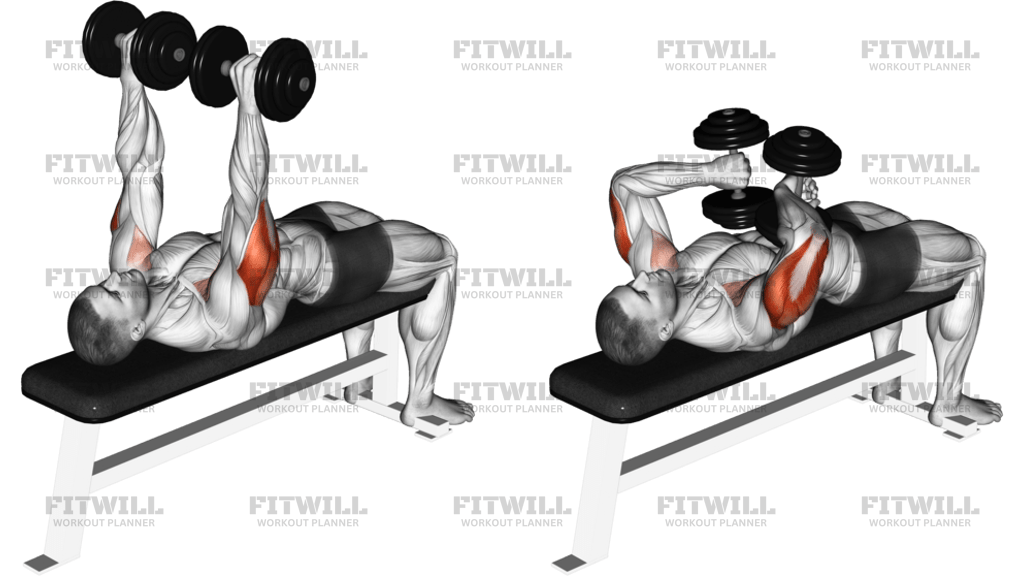
Dumbbells work well held close together over the chest with the same chin-height lowering path. A close-grip bench press is also a reasonable stand-in, though it shifts more emphasis back toward the chest.
Should I use a bench with uprights or a flat bench only?
Uprights or a rack make setup and safety easier because you can unrack and re-rack the bar without a long carry. If you only have a flat bench, have a partner hand you the bar rather than lifting it into position yourself.