Dumbbell Sliding Rear Lunge Single Arm Press
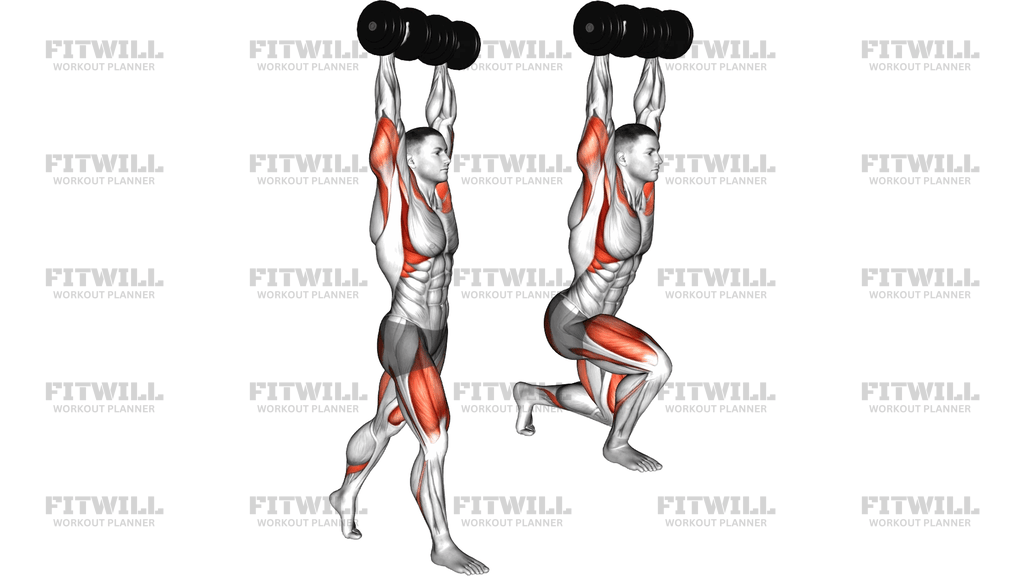
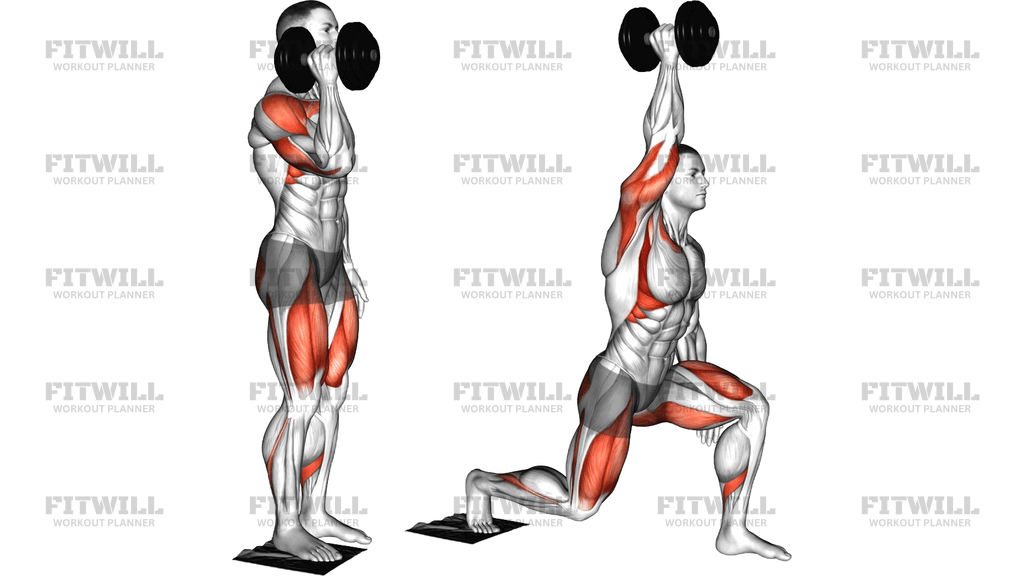
The Dumbbell Sliding Rear Lunge Single Arm Press combines a reverse lunge with a one-arm overhead press, with one foot sliding backward on a smooth surface or towel rather than stepping. You start standing with a single dumbbell held at shoulder height, then slide one foot straight back until you reach a deep rear lunge while pressing the dumbbell toward the ceiling on the same side. As you slide the foot back in to stand, you lower the weight under control to your shoulder. This turns two familiar movements into one coordinated, full-body pattern.
This exercise earns its place in a program because it demands things that a regular lunge and a seated press do not. The sliding foot has to stay connected to the floor, which forces your front leg, glutes, and hip stabilizers to control the descent instead of letting gravity catch you. At the same time, pressing a dumbbell overhead with one arm while your base narrows challenges your core to resist side-bending and rotation. The result is a movement that trains the shoulders and triceps while building genuine hip and trunk stability.
It suits intermediate lifters and active people who already own a solid bodyweight reverse lunge and a comfortable single-arm press. Because the load is a single dumbbell and the speed is controlled, it works well as a strength and stability finisher, a warm-up primer for lower body days, or a time-efficient full-body movement when you only have one dumbbell available. Athletes who need coordinated upper and lower body power under control, such as racket sport or field sport players, tend to benefit from this pattern.
Setup details matter more here than in most lunges. The sliding foot needs a smooth floor and a towel or slider disc beneath it, the standing foot stays planted with the toes pointing forward, and the dumbbell rests at the shoulder with the elbow tucked rather than flared. If your stance is too narrow, you will wobble; if the sliding foot travels too far forward or offline, the lunge loses depth and the press loses its stable base. Take a moment to set the feet roughly hip-width apart before every rep.
Execution should feel like one smooth sequence: slide the foot back, sink the back knee toward the floor, and press the dumbbell so it finishes stacked over the shoulder at the top of the lunge. Reverse the order on the way in, pulling the dumbbell back to the shoulder as the sliding foot returns. Keep the front heel down, the front knee tracking over the toes, and the ribs stacked over the pelvis. Move slowly enough that the back leg does the braking, not momentum.
Common mistakes include pressing before the lunge is deep enough, letting the overhead arm drift forward of the ear, and rushing the return so the sliding foot skids. If balance is the limiting factor, use a lighter dumbbell and hold on to nothing at all, since reaching for support usually hides the stability problem the exercise is meant to solve. Stop the set when your knee tracking or the press path starts to break down, not simply when your legs feel tired.
[ Workout Log & Planner ]
Put your next workout in Fitwill
Keep your plan and training log ready when you are.


Instructions
- Stand tall with a dumbbell held at your right shoulder, elbow tucked close to your ribcage, and place your left foot on a towel or slider on a smooth floor with your feet about hip-width apart.
- Set your right foot flat and firm with the toes pointing forward, keep your chest tall, and let your left arm hang relaxed at your side.
- Brace your abs as if preparing for a light push to the ribs, and pull your shoulder blades down so the pressing shoulder stays stable.
- Slide your left foot straight back along the floor while bending your right knee, keeping your torso upright and your weight over the planted front heel.
- As you sink toward the lunge, press the dumbbell straight up until your right arm is locked out with the weight stacked over your shoulder and ear.
- Pause briefly at the bottom with the back knee just above the floor and the front shin roughly vertical, feeling tension in the front-leg glutes and thigh.
- Lower the dumbbell back to your shoulder with control as you slide the left foot forward to return to standing.
- Exhale as you press and slide back, inhale as you return to the start, keeping the breath steady rather than holding it through the whole rep.
- Complete all reps on one side, then switch the dumbbell to the left hand and slide the right foot back for the same number of reps.
- Reset your stance between reps if the feet drift, and set the dumbbell down before fatigue forces your knee or press path off line.
Tips & Tricks
- Think of the lunge and the press as one timed wave rather than two separate actions; pressing too early leaves you pushing a weight over a base that is still moving.
- If your back foot slides diagonally, mark a straight line with the towel's direction or practice the sliding lunge with no weight until the foot tracks backward in one path.
- Keep the front heel glued to the floor; lifting it usually means you slid the rear foot too far back for your current hip mobility.
- Watch for the torso leaning toward the non-working side as the weight goes up; fight that by squeezing the glutes on the sliding-leg side and keeping both hips square.
- A dumbbell at the shoulder with a flared elbow invites strain; keep the elbow under the wrist and slightly in front of the shoulder blade so the press path stays vertical.
- Use a smooth floor with a real towel or slider; a grippy rubber mat will catch the foot and turn the movement into a jerky step-back lunge.
- Slow the return down deliberately, since pulling the dumbbell back to the shoulder while the foot slides home is where most people dump tension and lose the core benefit.
- Start with a dumbbell you could press about ten to fifteen times; balance and coordination fail before strength in this pattern, and too heavy a weight shows up as a wobbly press.
- If your standing knee caves inward at the bottom of the lunge, consciously drive it toward the pinky-toe side to keep the thigh and glutes engaged.
Frequently Asked Questions
Which muscles does the Dumbbell Sliding Rear Lunge Single Arm Press work?
The front shoulders and triceps handle the press, while the quads and glutes of the front leg drive the lunge. The obliques and deep core work hard throughout to keep your torso from twisting or side-bending under the single-sided load.
Why does one foot slide back instead of stepping?
The sliding foot keeps constant tension on the floor, which forces your front leg and hips to control the descent and return with no momentum. It also shifts load away from the back knee compared with a hard step-and-plant, making it friendlier to sensitive knees.
Should I press with the same arm as the sliding leg or the opposite one?
The standard setup presses with the arm on the same side as the sliding foot, as shown in the movement, which increases the balance and anti-rotation demand. If you are new to the pattern, you can press with the opposite arm to make it slightly easier before progressing to the same-side version.
What can I use if I do not have a slider disc?
A small towel on a smooth floor, a paper plate on carpet, or a smooth-soled shoe on a polished surface all work. Just make sure the foot glides smoothly in both directions without catching, or the lunge will turn into a stumbling step.
Is the Dumbbell Sliding Rear Lunge Single Arm Press suitable for beginners?
Beginners should first own a solid bodyweight reverse lunge and a single-arm shoulder press separately. Once both feel comfortable, use a light dumbbell and a shallow lunge depth, and build the full coordinated version from there.
How deep should the rear lunge go?
Aim to sink until the back knee hovers just above the floor while the front heel stays down and the front shin stays close to vertical. If depth costs you knee position or a steady press path, shorten the slide and rebuild depth over time.
Why does my torso lean away from the pressing arm?
That lean is your body trying to shorten the leverage of the overhead weight, and it means the obliques and hip stabilizers are losing the fight. Reduce the dumbbell weight, slow the press down, and squeeze the glutes on both sides to keep the ribs stacked over the pelvis.
Can I do this exercise with two dumbbells?
Two dumbbells remove the anti-rotation challenge that makes this version valuable and make balance considerably harder overhead. Keep it single-arm, or use both hands on one light dumbbell if you want extra stability while learning the lunge pattern.
Is it safe for my knees and lower back?
With a controlled slide, a front heel that stays down, and a knee that tracks over the toes, the movement is generally knee-friendly because the sliding foot absorbs less impact than a planted step. Protect your lower back by bracing before each rep and keeping the press stacked over the shoulder rather than drifting forward.