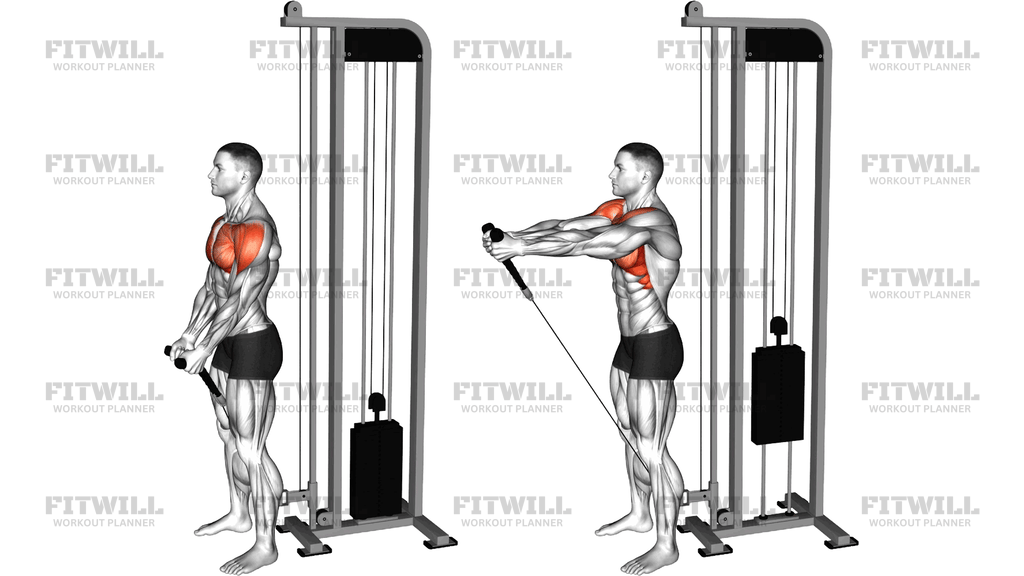
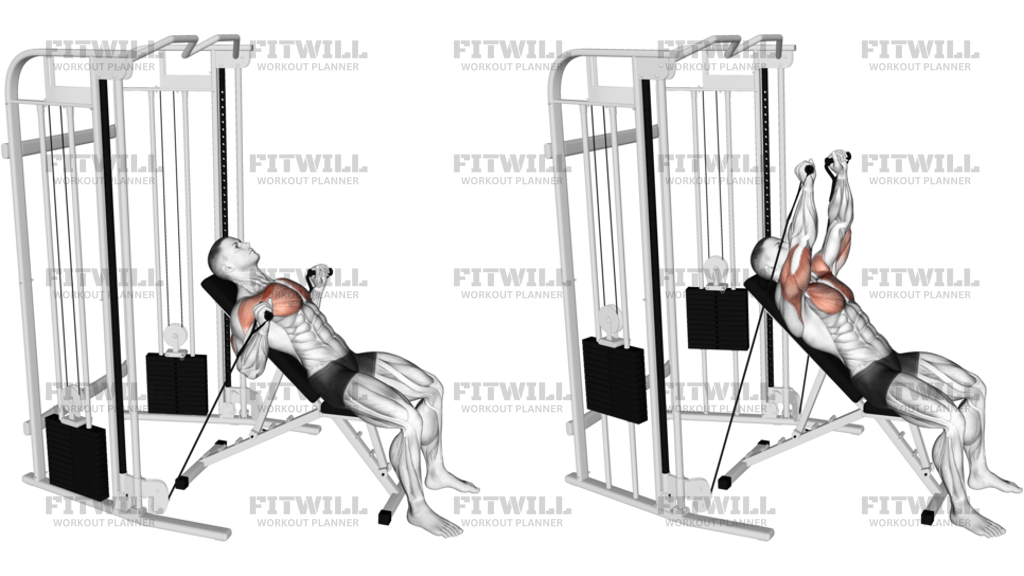
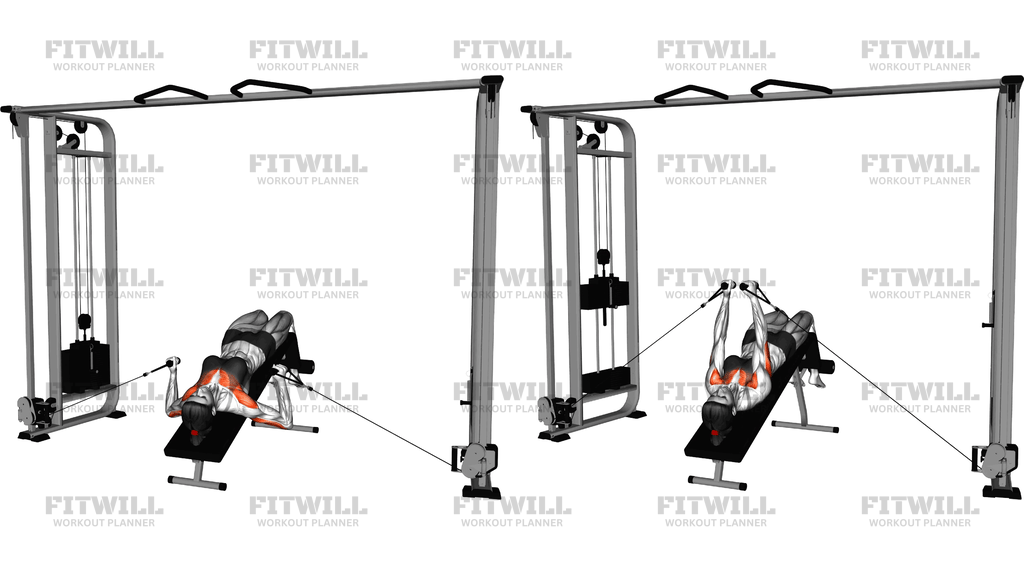
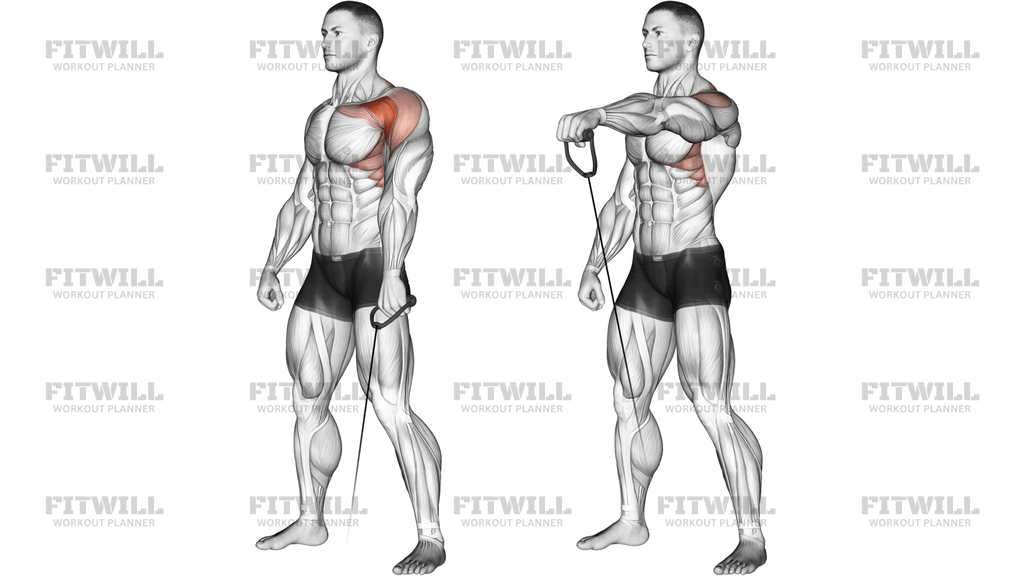
Cable Single Arm Military Press
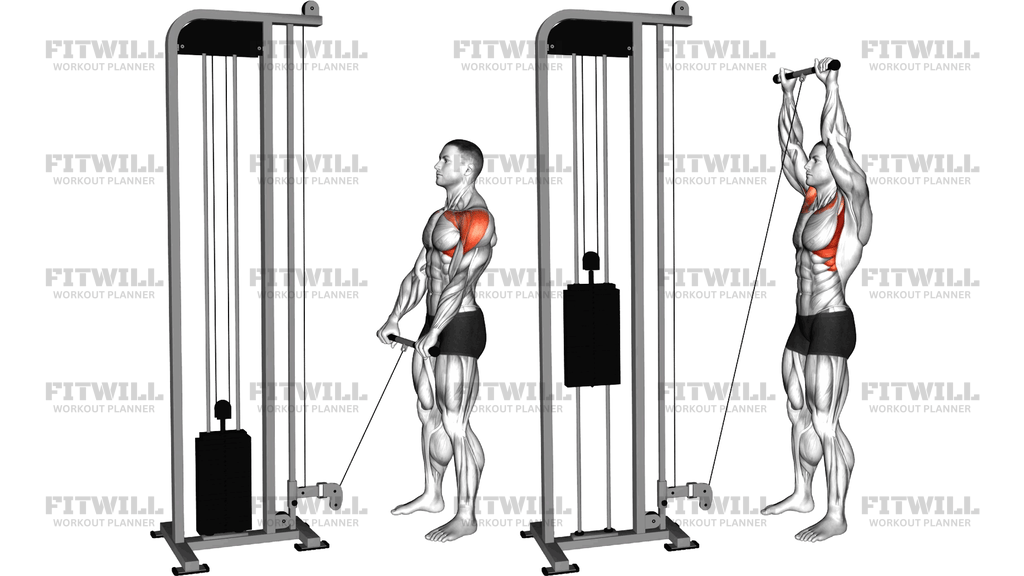
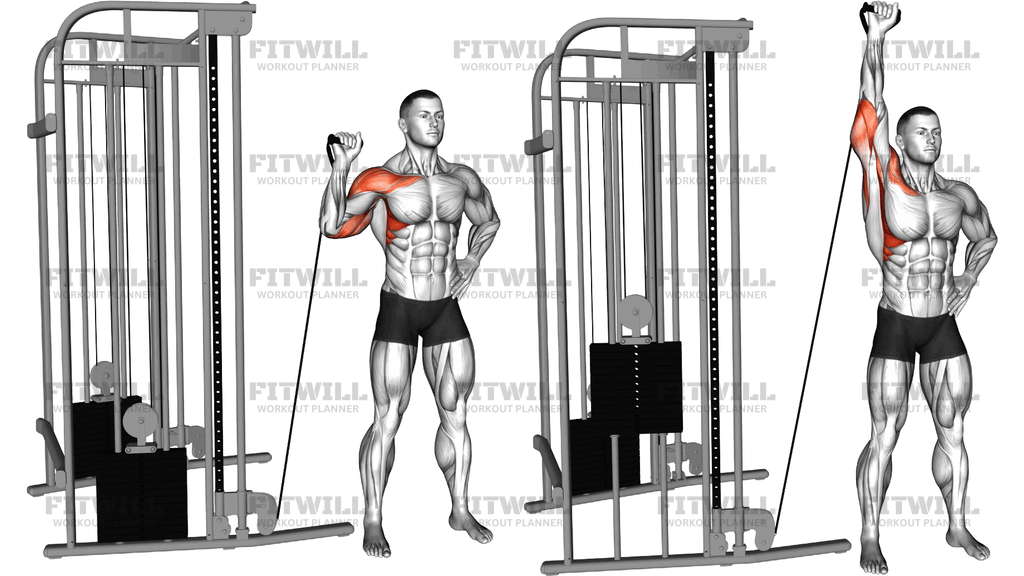
The Cable Single Arm Military Press is a standing overhead press performed one side at a time using a single handle attached to a low pulley. You grip the handle at shoulder height with your elbow bent and pressed close to your torso, then press straight up until your arm is fully extended overhead, letting the cable run behind your arm as you lift. The other hand typically rests on your hip or hangs at your side to keep your torso honest.
Working one arm at a time changes the character of the overhead press in two useful ways. First, the offset load pulls you toward the working side, so your obliques and deep core have to brace continuously to keep your ribs stacked over your pelvis. Second, the cable's line of pull gives you constant tension at the bottom of the rep, where a barbell or dumbbell press often lets the shoulder momentarily unload.
The primary work goes to the front and side of the shoulder, with the triceps finishing each lockout and the upper traps and serratus assisting near the top. Because you are standing, your legs, glutes, and trunk are also part of the exercise rather than just a seat for the weight.
This setup suits lifters who want to address left-to-right strength differences in the shoulders, people who find a bar overhead uncomfortable on one side, or anyone whose home or gym setup includes an adjustable cable column but limited free weights. It is also a common choice in rehab-adjacent training because the weight stack allows small, precise jumps in load.
Setup details matter more than they first appear. Set the pulley at its lowest position so the cable tension rises as you press, stand far enough from the machine that the handle does not drag against the stack, and keep the cable running behind your arm, not across your body. A stance about hip-width apart with a soft knee bend gives you a stable base without turning the press into a push jerk.
Execute it by pressing the handle up and slightly back so the wrist finishes stacked over the elbow and shoulder, then lower with control until the elbow returns to your side and the shoulder stays packed. Avoid leaning away from the working arm or twisting your hips to help the weight up; if that happens, the load is too heavy for the core demand this exercise is meant to create.
[ Workout Log & Planner ]
Put your next workout in Fitwill
Keep your plan and training log ready when you are.


Instructions
- Attach a single handle to the lowest pulley of the cable machine and select a light starting weight on the stack.
- Stand facing slightly away from the machine, feet about hip-width apart, and grab the handle with a neutral grip so the cable runs behind your upper arm and outside your shoulder.
- Bring the handle up to shoulder height and tuck your elbow close to your side, forearm vertical, with your free hand resting on your hip or opposite shoulder.
- Brace your abs and glutes, keep your ribs down, and set your gaze forward so your head stays neutral.
- Press the handle straight up and slightly back until your arm is fully extended overhead, keeping the wrist stacked over the elbow.
- Pause briefly at the top with the biceps near your ear, then lower the handle under control until your elbow returns to your side.
- Exhale as you press up and inhale as you lower the handle back to the start.
- Complete all reps on one side, then switch hands and match the rep count on the other side before adjusting the stack.
Tips & Tricks
- The most common fault on this exercise is leaning your torso away from the working arm as the handle rises. Stand tall and imagine a string pulling the crown of your head toward the ceiling; if you still drift, drop the weight one plate.
- Keep the cable tracking behind your arm and outside your shoulder. If the cable crosses in front of your body, you are standing too far to one side of the pulley, and the press path will twist your shoulder.
- Do not flare your elbow out to the side at the start. The elbow should sit close to your ribs with the forearm vertical, which keeps the shoulder joint in a comfortable position under tension.
- Let the handle rise slightly behind your head at lockout rather than pushing it forward over your face. This lines the weight over your mid-foot and spares the lower back.
- Resist the urge to do a partial press and bounce out of the bottom. The cable keeps tension on the shoulder at chest height, and that stretched position is one of the main reasons to choose this over a dumbbell press.
- If your wrist bends backward at the top, grip the handle with your knuckles facing up and think about punching toward the ceiling instead of lifting with the palm.
- Match reps exactly between sides by starting with your weaker arm. The offset cable load makes strength differences obvious, and letting the strong side set the standard keeps progress even.
- On the last rep, control the handle all the way down to your side before releasing your grip, rather than letting the stack yank your arm back toward the machine.
Frequently Asked Questions
Which muscles does the Cable Single Arm Military Press work?
The front and side of the shoulder do most of the pressing, the triceps extend the arm at lockout, and the obliques and deep core work hard to stop the offset cable load from pulling your torso sideways. The upper traps assist near the top of the press.
Why is the handle attached to a low pulley instead of one at shoulder height?
A low pulley makes the resistance increase through the lift as the cable angle changes, and it lets the weight pull your arm down and slightly behind you, which loads the shoulder at the bottom of the rep where a dumbbell press loses tension.
Is the Cable Single Arm Military Press suitable for beginners?
Yes, as long as you start light and prioritize keeping your torso upright. Because the weight stack allows small jumps and the handle path is guided by the cable, many beginners find it easier to control than a heavy barbell overhead press.
How is this different from a dumbbell single-arm overhead press?
The cable pulls from a fixed low point behind you, so the resistance direction changes throughout the rep and tension stays constant at the bottom. A dumbbell simply pulls straight down, which makes the start of each rep easier and the core demand slightly lower.
Should my free hand be on my hip or hanging at my side?
Either works, but placing the free hand on your hip gives you a tactile cue to keep your torso from rotating and makes it easier to notice if you start leaning away from the working arm.
How far should I stand from the cable machine?
Stand far enough out that the cable clears the weight stack and runs behind your upper arm at a slight upward angle. If the handle scrapes the stack or the cable pulls you backward, adjust your distance before adding weight.
What should I do if my lower back arches during the press?
Squeeze your glutes, exhale fully at the top of each rep, and slightly reduce the load. Arching usually means the weight is heavy enough that you are extending your spine to help drive the handle overhead.
Can I substitute the Cable Single Arm Military Press if my gym has no cable column?
A standing single-arm dumbbell press is the closest substitute, though you lose the constant bottom-position tension. A resistance band anchored low behind you can also reproduce the upward, backward pull of the cable.
Is it safe to press with a neutral grip on this exercise?
The neutral grip with the elbow tucked at your side is generally a shoulder-friendly position because the upper arm stays close to the torso through the first half of the press. If you feel pinching at the top, press slightly more forward and reduce the range rather than forcing full lockout behind your head.