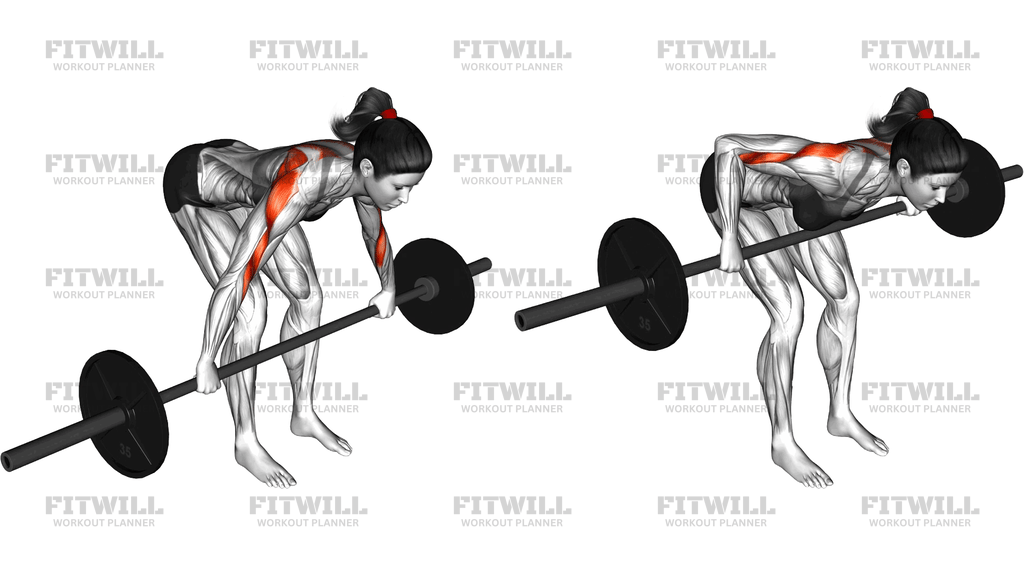
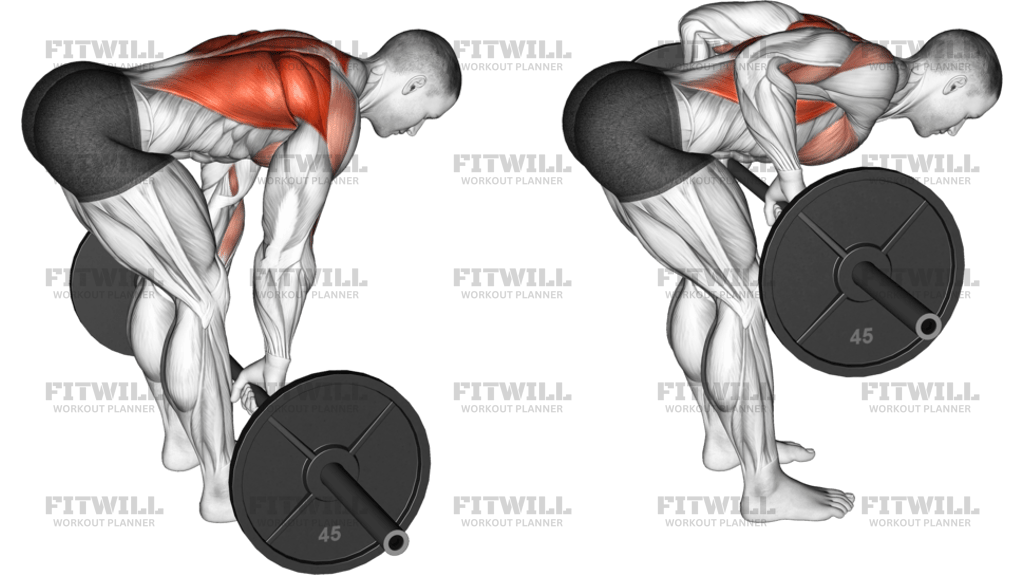
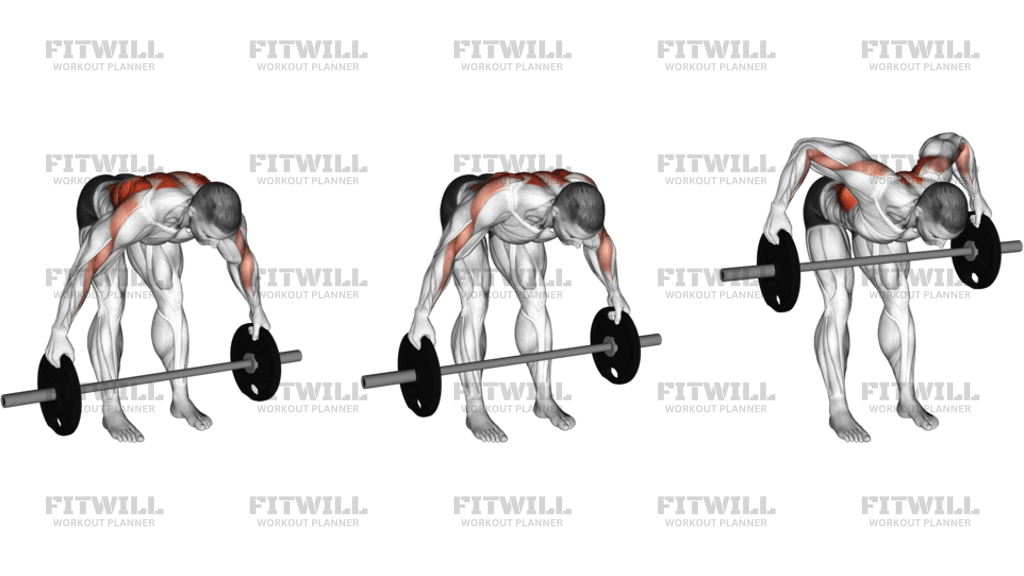
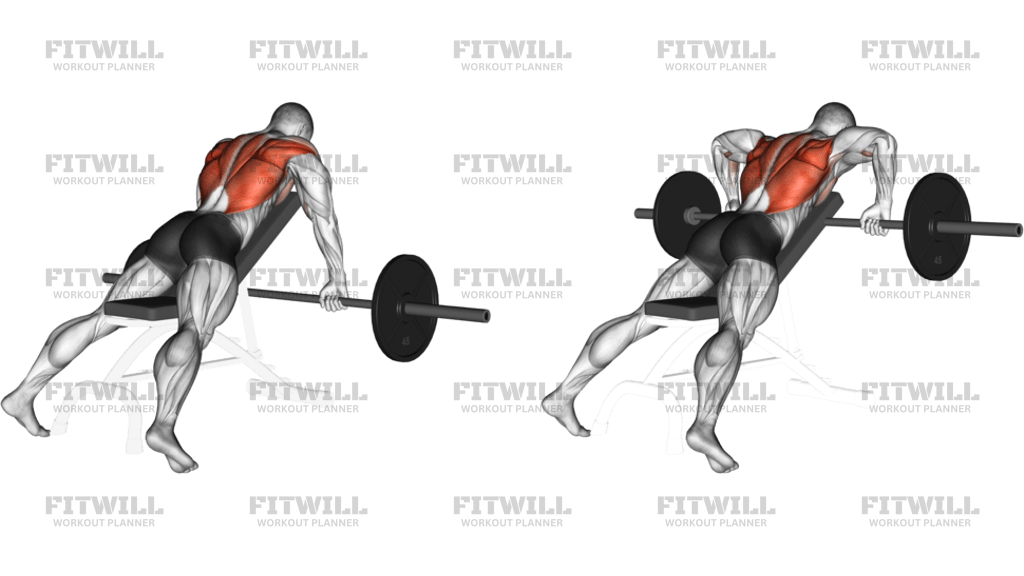
Barbell Bent Over Rear Delt Row
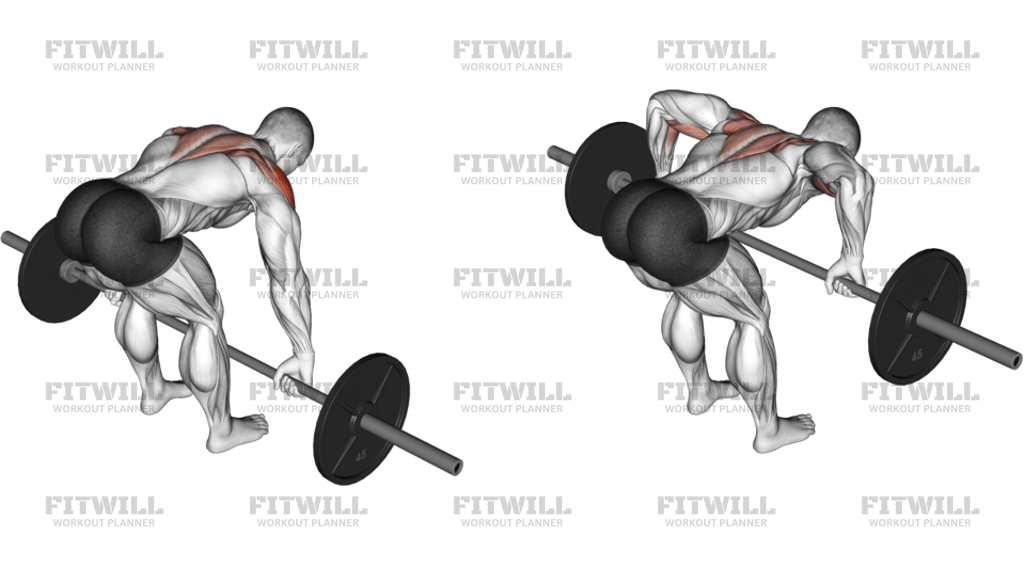
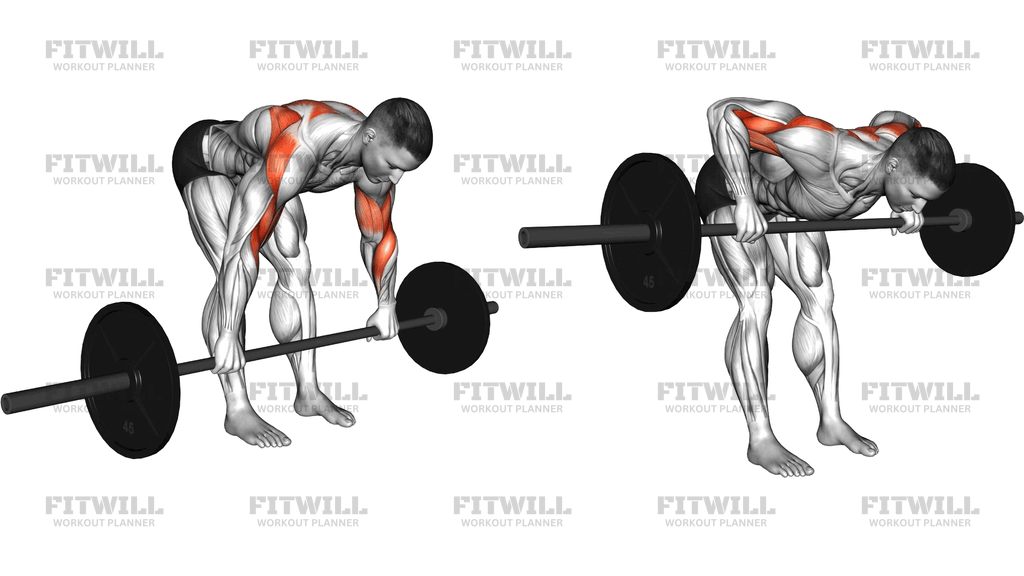
The Barbell Bent Over Rear Delt Row is a horizontal pull performed with a barbell while your torso is hinged forward close to parallel with the floor. Unlike a standard barbell row, where the bar travels toward your lower ribs with elbows tucked, this version deliberately flares the elbows out wide and pulls the bar toward your upper chest. That wider elbow path shifts the workload away from the lats and onto the rear delts, rhomboids, and mid-traps — the muscles responsible for pulling your shoulder blades together and keeping your shoulders healthy.
This is one of the few barbell movements that directly targets the back of the shoulders, an area most lifters undertrain. If you spend a lot of time bench pressing, pressing overhead, or sitting at a desk, your rear delts are probably lagging behind your front and side delts. Building them helps balance your shoulder development, supports better posture, and gives your shoulders that complete, three-dimensional look from the side and back.
Setup matters more here than in most rows. Because you are bent over near horizontal with a barbell in front of you, your lower back and hamstrings are working isometrically the entire time. Your torso angle determines the pulling path: the closer you get to parallel, the better the rear delts line up to do the work. If you stand too upright, the movement drifts toward a conventional row and the rear delt emphasis fades.
To execute it well, hinge at the hips with a soft knee bend, keep a neutral spine, and let the bar hang directly under your shoulders. Pull by driving the elbows up and out to the sides, not by curling the hands toward you. The bar should finish near your upper chest or lower neck, then lower under control to full arm extension before the next rep. The torso should stay locked in place — if your body starts bobbing to move the weight, the set is over.
This exercise fits well on back days or shoulder days, typically for moderate weight in the 8 to 15 rep range. It is especially useful for lifters who have outgrown light rear delt isolation work but find heavy rowing too lat-dominant. Because the bent-over position loads the lower back, treat it as a demanding compound movement: warm up thoroughly, choose loads you can control for every rep, and set it aside in favor of chest-supported variations on days when your lower back is already fatigued.
[ Workout Log & Planner ]
Put your next workout in Fitwill
Keep your plan and training log ready when you are.


Instructions
- Load a barbell with a manageable weight and stand with your feet roughly hip-width apart, positioned so the bar sits over the middle of your feet.
- Grip the bar with an overhand grip slightly wider than shoulder width, then hinge forward at the hips until your torso is close to horizontal, with knees softly bent.
- Let the bar hang straight down under your shoulders with your arms fully extended, and set your shoulders by gently pulling the shoulder blades back without shrugging.
- Brace your core hard, as if bracing for a light punch, to lock your spine into a neutral position before any pulling begins.
- Pull the bar up by leading with the elbows, driving them up and out to the sides until the bar reaches your upper chest or lower neck area.
- At the top, squeeze the shoulder blades together briefly and hold the position without shrugging the weight up with your traps.
- Lower the bar under control back to full arm extension, keeping the elbows tracking outward rather than tucking down.
- Exhale as you pull the bar up, inhale as you lower it, and keep your breathing steady through the set.
- Complete all reps while holding the bent-over position, then stand up fully, rack or set the bar down safely, and rest before the next set.
Tips & Tricks
- Keep your torso angle fixed for the whole set. If your chest rises as you pull, the weight is too heavy and your hips and lower back are turning the row into a sloppy pendulum.
- Think of your hands as hooks. If you feel the front of your arms burning before your rear delts, you are curling the bar instead of driving the elbows back and out.
- Pull toward the upper chest, not the belly. The bar path is what separates this from a standard row — lower paths recruit the lats and steal work from the rear delts.
- Do not round your upper back forward as the set gets hard. Collapsing the chest lets the shoulders roll inward and reduces the rear delt range you can work through.
- Use a lighter load than you would for a regular barbell row. The rear delts are a small muscle and the wide elbow path is a weaker position — expect to use noticeably less weight.
- A slight chin tuck helps stop you from craning your neck up to look forward, which strains the neck when you are bent over at this angle.
- Chalk or lifting straps are reasonable here. A failing grip will cut sets short long before your rear delts are challenged.
- Warm up your hips and hamstrings first. Holding a near-parallel hinge for a full set demands more from the posterior chain than most lifters expect.
- If your lower back fatigues before your shoulders, switch to a chest-supported row variation for your heavier sets and use this movement only for lighter work.
Frequently Asked Questions
Which muscles does the Barbell Bent Over Rear Delt Row work?
The rear delts are the primary movers, with strong contributions from the rhomboids and mid-traps as they pull the shoulder blades together. The biceps assist in the pull, while the lower back, glutes, and hamstrings work statically to hold the bent-over position.
How is the Barbell Bent Over Rear Delt Row different from a regular barbell row?
A regular row uses a narrower grip with tucked elbows pulling the bar toward the lower ribs, which emphasizes the lats and mid-back thickness. The rear delt row uses a wider grip with elbows flared out, pulling the bar toward the upper chest to shift emphasis onto the rear delts.
Can beginners do the Barbell Bent Over Rear Delt Row?
Yes, but beginners should start with a very light bar and practice the hip hinge first, since holding a near-parallel torso position safely is the main skill. Beginners often build the movement pattern more easily with chest-supported or cable rear delt rows before progressing to the free-standing barbell version.
Why does my lower back fatigue before my rear delts feel worked?
Holding a horizontal hinge loads the erector spinae the entire set, so if your lower back is weak or underconditioned it gives out first. Reduce the weight, shorten your sets, or switch to a chest-supported rear delt row until your hinge endurance improves.
Should I use an overhand or underhand grip for this row?
Use an overhand grip with a width slightly beyond your shoulders. An underhand grip pulls the elbows tighter to the body and turns the movement into a lat and biceps row, which defeats the rear delt purpose.
How heavy should I go on the Barbell Bent Over Rear Delt Row?
Use significantly less weight than your standard barbell row — the flared elbow position is much weaker and the rear delts are a small muscle. A load you can control for 8 to 15 strict reps with a fixed torso angle is usually the right working range.
What is the most common mistake in this exercise?
Turning it into a cheat row by rocking the torso up with each rep and shrugging the bar with the upper traps. If your body has to swing, the rear delts are no longer doing the work, so drop the load until the movement is strict.
What can I substitute if I do not have a barbell?
Dumbbell bent over rear delt rows, cable rear delt rows with a rope or straight bar, and chest-supported machine rows with wide elbows all train the same pattern. Each alternative also reduces the demand on your lower back, which many lifters find helpful.
Is it safe to do this row with a rounded back?
No. Rounding your lower back under load in a deep hinge places unnecessary stress on the spinal tissues and removes the stable base your shoulders need to pull from. Keep a neutral spine, and if you cannot hold it, the weight or the duration of your sets is too much.
Where should the bar finish at the top of each rep?
The bar should finish around your upper chest or lower neck, just below collarbone height, with elbows pointing up and out to the sides. If the bar is drifting toward your stomach, your elbows are tucking and the lats have taken over the movement.