Lever Standing Chest Press (Version 2)
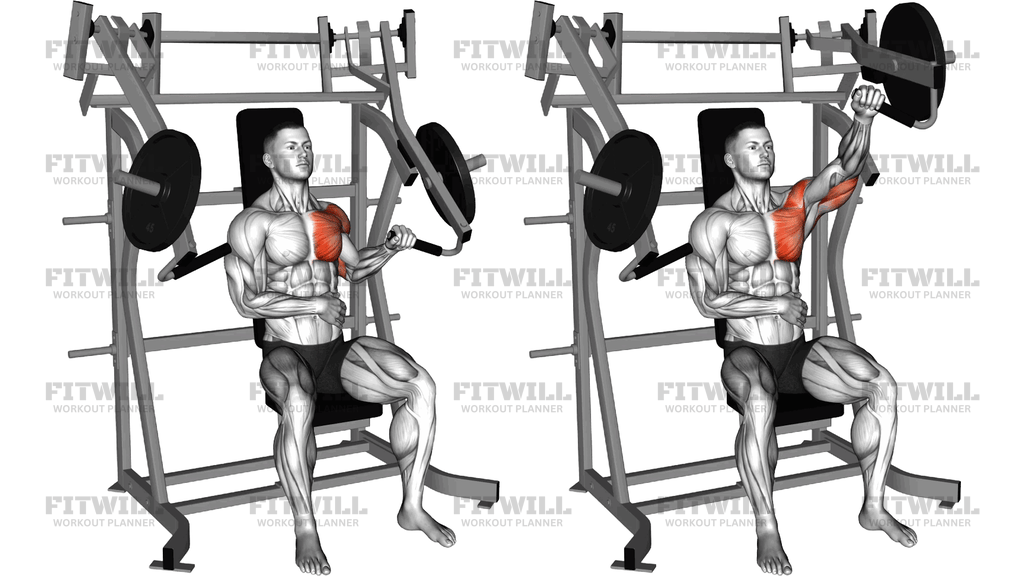
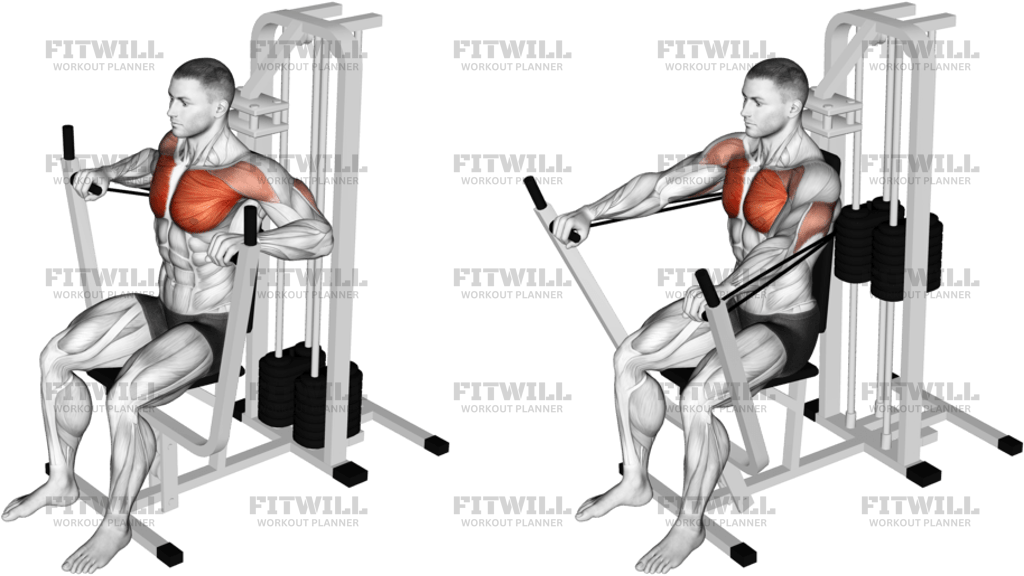
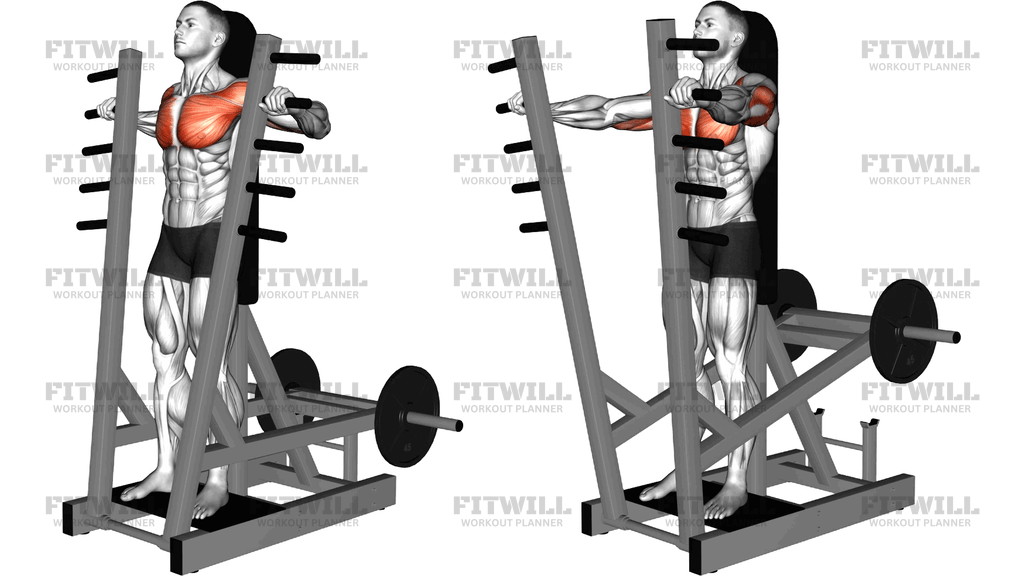
The Lever Standing Chest Press (Version 2) is a plate-loaded machine movement performed upright with your back braced against a vertical pad, pressing two handles forward from chest height until your arms extend in front of you. Unlike a bench press, you are on your feet, which means your torso stays stacked over your hips and the machine's lever arm supplies the resistance through a fixed, forward arc. The upright position changes the feel of the press: your shoulders stay in a more neutral, everyday posture, and the handles converge slightly as you push, mimicking the path of a standing cable press or push-up.
This exercise suits lifters who want direct chest work without lying down or stabilizing a free-weight bar. Because the lever path is fixed, you can push hard with less concern about balancing the load, making it a solid choice for beginners learning what a pressing contraction feels like, and for more experienced lifters using it as a finishing movement after heavy bench or incline work. It is also practical for lifters who train alone, since you can bail out of a rep safely by simply letting the lever arm travel back under control.
The primary muscles worked are the pectorals, with the front delts assisting at the start of the press and the triceps locking out the extension at the end. The serratus anterior and the stabilizers around the shoulder blade contribute as your arms reach forward. Standing also lightly engages your legs, glutes, and core to keep your torso from drifting off the pad, though the machine does most of the stability work for you.
Setup matters more on this machine than it might seem. Handle height should line up with the middle of your chest, and your back, shoulders, and hips should stay in contact with the vertical pad throughout the set. If the seat platform or foot placement puts the handles above shoulder line, you shift stress toward the front delts; too low and the press starts to feel more like a dip. Take a moment to adjust your stance so the handles fall naturally at mid-chest before you add weight.
To execute well, grip the handles with your palms facing down or slightly inward, elbows roughly at chest height and angled a little below the shoulders. Press forward and slightly together, exhaling as you push, and stop just short of locking your elbows hard. Let the handles travel back until your elbows sit slightly behind your torso, keeping the movement smooth rather than letting the weight stack or lever arm yank your shoulders forward.
You will see this movement used in hypertrophy-focused chest days, in machines-only training setups, and in gyms where lifters rotate pressing angles to hit the chest from different positions. Keep the loads moderate enough that your lower back does not arch off the pad, and treat the standing position as an anchor point rather than a chance to use body English to move the weight.
[ Workout Log & Planner ]
Put your next workout in Fitwill
Keep your plan and training log ready when you are.


Instructions
- Stand on the machine's foot platform with your back flat against the vertical pad and your feet about hip-width apart, weight spread evenly across both feet.
- Grip the two handles at a height where they line up with the middle of your chest, palms facing forward or angled slightly inward.
- Set your elbows at chest height, angled slightly below shoulder level, and pull your shoulder blades down so your upper back stays snug against the pad.
- Brace your core and lightly tighten your glutes so your torso does not slide or arch as the lever arm loads.
- Press both handles forward and slightly inward, exhaling as you push, until your arms are extended in front of your chest.
- Stop just short of a hard elbow lockout so tension stays on the chest rather than dumping into the elbow joints.
- Pause briefly at full extension, squeezing the handles toward each other without shrugging your shoulders up.
- Inhale and let the handles travel back along the same arc until your elbows are slightly behind your torso, keeping the return slow and controlled.
- Do not let the weight relax your shoulders forward at the stretch position; keep light tension in your chest before starting the next press.
- After your final rep, guide the lever arm back fully, release one handle at a time only once the weight is settled, and step off the platform.
Tips & Tricks
- If your shoulders roll forward at the bottom of the rep, the handles are set too high or you are using too much weight; lower the handle position one notch or reduce the load until the stretch stays comfortable.
- Keep your lower back from arching off the pad by bracing your abs before each press; if you find yourself leaning into the push, the weight is beyond what your chest can move cleanly.
- Aim your elbows slightly downward rather than straight out to the sides; this keeps the shoulder joint in a friendlier angle for a standing press and reduces front-shoulder strain.
- Push the handles toward each other as they come forward instead of pressing in parallel tracks; the added convergence biases the chest contraction at the top.
- Do not bounce out of the stretched position. Let the lever arm decelerate for a beat before reversing, or the machine's momentum will do the work at the hardest point of the rep.
- Because you are standing, a slight knee bend can help you stay planted; fully locked knees make it easier to sway and borrow momentum from your legs.
- If one arm drifts ahead of the other, slow the tempo down and match the handle positions in a mirror before adding more plates.
- Keep your head resting lightly against the pad rather than jutting forward to watch the handles; a forward head position usually comes with a rounded upper back.
- Use this machine for higher-rep finishing sets after free-weight pressing; the fixed path lets you push close to fatigue without a spotter.
Frequently Asked Questions
Which muscles does the Lever Standing Chest Press work?
The pectorals are the primary movers, with the front delts helping initiate the press and the triceps completing the extension. Standing upright also lightly recruits your core and legs to keep you anchored to the pad.
How is the Lever Standing Chest Press different from a seated machine chest press?
The standing position keeps your torso vertical and stacked over your hips, so there is less backrest support behind your shoulder blades and a slightly different pressing angle. Many lifters find the standing version feels closer to a push-up or cable press than to a bench press.
What height should the handles be set at?
Set the handles so they line up with the middle of your chest when your elbows are at chest height. Too high shifts work toward the front delts, and too low turns the movement into something closer to a dip.
Is the Lever Standing Chest Press good for beginners?
Yes. The fixed lever path removes the balance demands of a barbell or dumbbells, so a beginner can focus on feeling the chest contract and learning a clean pressing groove with a low injury risk if form slips.
Why do my shoulders shrug up during the press?
This usually happens when the weight is too heavy or the handles sit too high, forcing you to recruit the upper traps. Drop the load, pull your shoulder blades down before each set, and keep your head resting against the pad.
Should I lock out my elbows at the end of each rep?
Extend fully but stop just short of a hard, aggressive lockout. Full extension finishes the triceps' work, but slamming into lockout shifts tension away from the chest and loads the elbow joint unnecessarily.
What can I use if my gym does not have this machine?
A standing cable chest press with two handles offers a similar upright position and converging path, and a regular seated machine chest press or push-up covers the same basic pattern with a different setup.
How should I breathe during the Lever Standing Chest Press?
Exhale as you press the handles forward and inhale as you let them return. Avoid holding your breath through the whole set, especially since the standing position already raises the demand on your core.
Can I use body English to help move heavier weight on this machine?
It is not worth it. Driving through your legs or arching off the pad takes work away from the chest and can strain your lower back; if you need momentum, the weight is too heavy for your current strength.
Is it safe to train close to failure on this exercise?
Generally yes, because the lever arm cannot fall on you the way a barbell can. Still, guide the handles back under control on the final reps and release the machine only after the weight has fully settled.