Spine Lumbar Extension Articulations
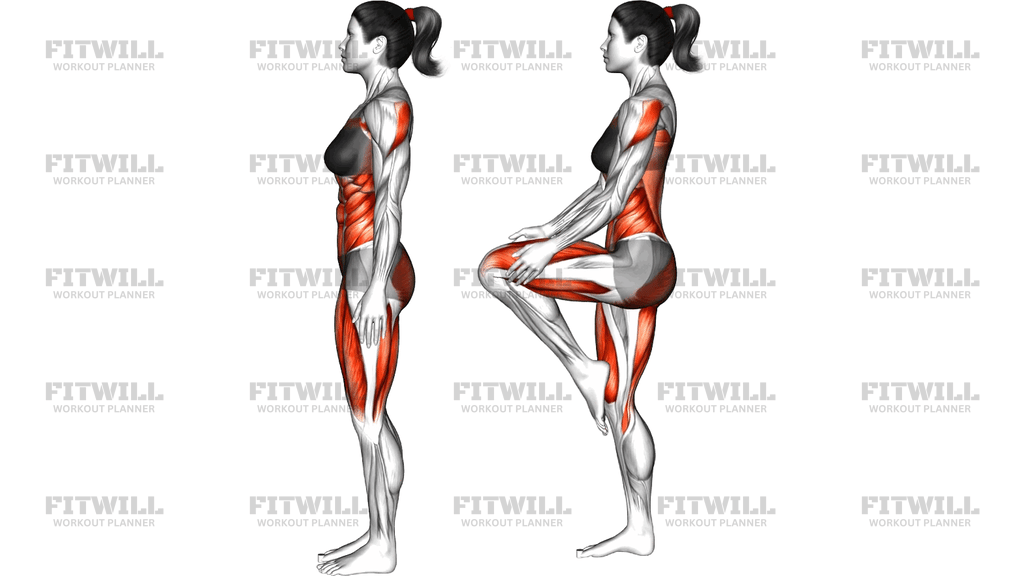
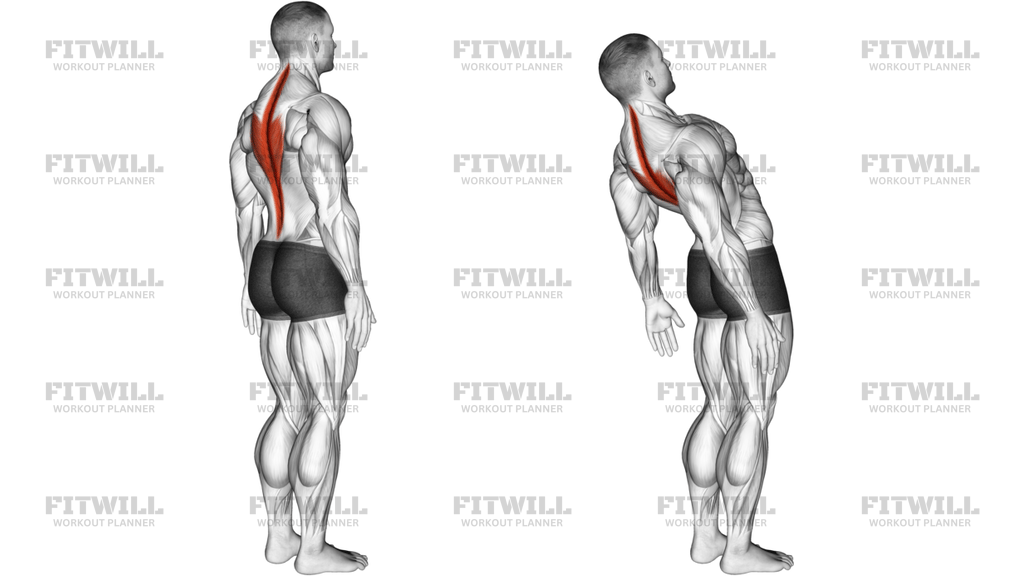
Spine Lumbar Extension Articulations is a standing bodyweight drill for teaching controlled spinal extension instead of dumping the body backward. The image shows an upright stance that finishes in a gentle backward lean, but the real goal is to articulate the spine smoothly while the feet stay planted, the knees stay soft, and the pelvis stays organized. It is a mobility and control exercise more than a strength exercise, and the quality of the rep matters far more than the size of the range.
This movement is useful when you want better awareness of how the ribs, pelvis, and head line up as the spine moves from neutral into extension. It can fit into a warm-up, a mobility reset, or an accessory block before back-dominant training. The back extensors, glutes, and deep core work together to keep the motion clean, but the drill should still feel light and deliberate rather than braced like a heavy lift.
A good rep starts by stacking the body first. Stand tall, settle your weight evenly through both feet, soften the knees, and keep the chest from flaring early. From there, lengthen upward, then let the upper back and lumbar spine open gradually into extension. The movement should travel through the spine in a controlled arc, not snap from the hips or collapse through the low back.
On the return, reverse the same path with patience. Come back through extension to neutral without twisting, jerking, or leaning on momentum. Breathing should stay calm and continuous so the ribs can move without losing control of the pelvis. If the low back feels pinchy or compressed, reduce the range and make the articulation smaller instead of forcing the finish position.
Use this exercise to build cleaner posture, better spinal coordination, and more confidence moving through extension under bodyweight. It works best when the movement is precise, repeatable, and pain-free. If the torso stops feeling organized, the set is already too aggressive. The purpose is not to chase a dramatic backward bend, but to own the path from upright posture into a controlled extension and back again.
Fitwill
Log Workouts, Track Progress & Build Strength.
Achieve more with Fitwill: explore over 9600 exercises with images and videos, access built-in and custom workouts, perfect for both gym and home sessions, and see real results.
Start your journey. Download today!




Instructions
- Stand tall with your feet about hip-width apart and your knees softly unlocked.
- Keep your weight centered over both feet and let your arms hang relaxed by your sides.
- Stack your ribs over your pelvis before you start the first repetition.
- Inhale and lengthen through the crown of your head to create space between the vertebrae.
- Begin extending by opening the chest and upper back slightly before letting the lumbar spine follow.
- Lean back only as far as you can keep the glutes lightly active and the feet flat on the floor.
- Pause briefly in the end range without clenching the neck or throwing the head back.
- Exhale and return along the same path until you are back in a tall neutral stance.
- Reset your posture between reps if the pelvis tips forward or the motion turns into a hip thrust.
Tips & Tricks
- Keep the knees soft so the extension comes from the spine instead of locking the legs and hinging at the hips.
- Let the chest open gradually; if the ribs flare hard on rep one, the range is already too big.
- Think of moving one section of the spine at a time instead of folding into one large arch.
- Keep the chin gently tucked so the neck does not become the only place that moves backward.
- Squeeze the glutes lightly at the top to keep the low back from taking all of the extension.
- Use a small, clean range if you feel pinching in the lumbar area or compression at the back of the waist.
- Breathe out as you return to neutral so the ribs can come down without losing control.
- Stop the set when the motion starts coming from momentum, not from a controlled spinal articulation.
Frequently Asked Questions
What does Spine Lumbar Extension Articulations train?
It trains controlled spinal extension, posture awareness, and the ability to move from neutral into a gentle back bend without losing alignment.
Can beginners perform this exercise?
Yes. Beginners should keep the range small and focus on stacking the ribs over the pelvis before they lean back.
Should I feel this in my low back?
You should feel the spinal extensors working, but it should not feel sharp or pinchy in the low back. Shorten the range if it does.
What is the biggest mistake with the standing back lean?
The most common mistake is turning it into a hip thrust or a sudden collapse backward instead of a controlled spinal articulation.
Do I need to keep my feet planted?
Yes. The feet should stay flat and stable so the spine can move without the body drifting forward or backward.
What is a good breathing pattern for this drill?
Inhale as you lengthen and prepare, then exhale as you return to tall neutral so the ribs can lower under control.
Is this more of a mobility exercise or a strength exercise?
It is primarily a mobility and control drill, although the spinal extensors, glutes, and core still have to work to keep the movement clean.
How do I make the movement harder without adding weight?
Slow the tempo, pause at the end range, and keep the articulation precise instead of increasing the lean.