Kneeling Forward Hip Circles
Kneeling Forward Hip Circles is a bodyweight quadruped hip-control drill that asks one leg to move in a smooth forward circle while the shoulders and trunk stay quiet. The exercise is designed to create more awareness at the hip joint, improve coordination around the pelvis, and load the glutes and core with a low-intensity, highly controlled pattern. It is especially useful when you want hip movement without the impact or fatigue of a bigger lower-body lift.
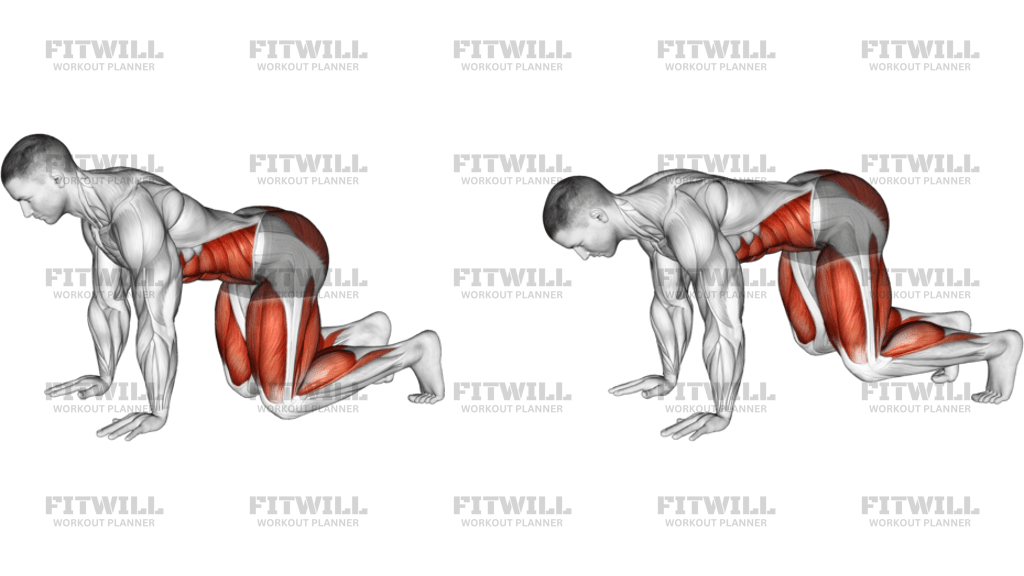
The setup matters more than the size of the circle. Start on hands and knees with your palms under your shoulders, knees under your hips, and your spine long rather than arched. One knee floats just off the floor while the opposite side of the body stays stacked and steady. From there, the moving knee draws a small forward arc, travels around the outside of the hip, and returns to the start without the pelvis twisting or the low back taking over.
Because the movement is slow and circular, the exercise works best when you keep the range modest and the path consistent. The circle should look smooth from rep to rep, not like a swing or a kick. Breath stays easy and deliberate so the trunk can remain braced without bracing so hard that the hip stops moving. That makes the drill useful before squats, deadlifts, lunges, running, and any session where the hips need to feel open but organized.
This is also a good option for corrective work or warm-ups when the hips feel stiff, the glutes are asleep, or the lower back tends to do too much of the work. A cleaner rep usually comes from a smaller circle, a firmer hand position, and a pelvis that stays level as the knee moves. If the motion creates pinching, lumbar compensation, or shoulder discomfort, shorten the range and slow the tempo until the hip can control the entire arc comfortably.
[ Workout Log & Planner ]
Put your next workout in Fitwill
Keep your plan and training log ready when you are.


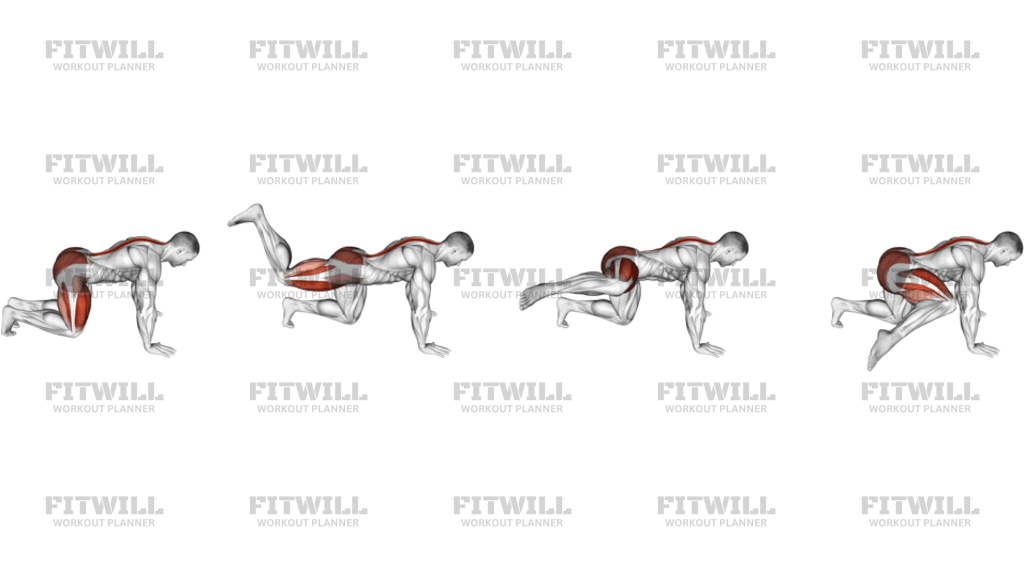
Instructions
- Start on hands and knees with your palms under your shoulders and your knees under your hips.
- Keep your fingers spread and press the floor away so your torso stays stable.
- Lift one knee a few inches off the floor with the knee bent and the foot relaxed behind you.
- Brace lightly through your abdomen and keep your spine long instead of letting your low back sag.
- Sweep the lifted knee forward in a small controlled circle toward the outside of the shoulder.
- Continue the circle around the hip and back behind you without shifting your weight side to side.
- Finish the arc by returning the knee to the starting hover position under control.
- Exhale as the knee moves through the circle and reset before the next rep.
- Switch sides after the planned reps are complete.
Tips & Tricks
- Keep the circle small enough that your pelvis does not rock or rotate.
- If the shoulder drifts behind the wrist, widen your base and re-stack the hands.
- Think of the hip drawing the circle, not the knee swinging the leg around by momentum.
- Pause for a beat in the hover so each rep starts from a quiet, balanced position.
- Do not force the lifted foot high behind you if that makes the low back arch.
- A slower rep usually improves the quality of the circle more than adding more range.
- Keep your neck long and look at the floor slightly ahead of your hands.
- If the knee feels uncomfortable on the floor, use a pad or fold a mat under it.
- Stop the set when your torso starts to shift to one side or the circle becomes sloppy.
Frequently Asked Questions
What does Kneeling Forward Hip Circles train?
It trains hip control, pelvic stability, and coordinated glute-and-core engagement while the lifted leg moves through a small circle.
Can beginners perform this exercise?
Yes. Beginners usually do best with a very small range and a slow pace until they can keep the torso still.
Where should I feel the movement most?
You should feel it around the working hip, with the glutes and deep core helping keep the pelvis from twisting.
Why does the knee stay bent during the circle?
A bent knee keeps the drill focused on hip movement instead of turning it into a long-lever leg swing.
How big should the circle be?
Small enough to stay controlled. If your weight shifts or your low back arches, the circle is too large.
Is this a good warm-up before lower-body training?
Yes. It is commonly used before squats, lunges, deadlifts, or running because it wakes up the hips without adding much fatigue.
What is the most common form mistake?
Most people let the pelvis twist or the low back take over instead of letting the hip control the circle.
How can I make the exercise harder?
Make the circle slightly larger only if you can keep the trunk quiet, or slow the tempo to increase control demand.