Standing Rotational Hip Stretch
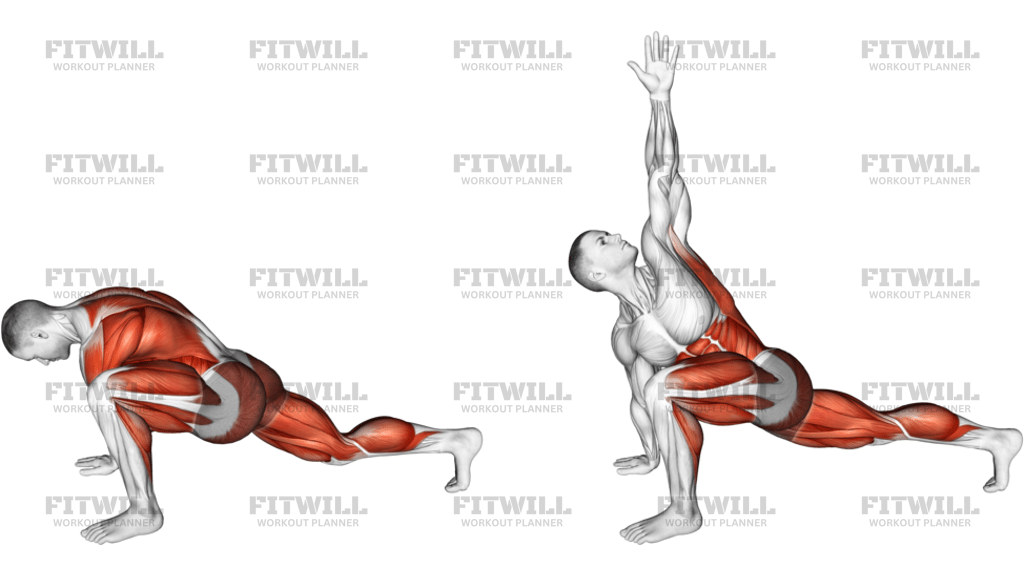
Standing Rotational Hip Stretch is a standing hip mobility drill that uses a box, bench, or elevated platform to open the hip on one side while the other leg supports your body weight. The raised leg is placed across the support with the knee bent and the hip turned out, which lets you work into the outer hip, glute, and surrounding stabilizers without getting down on the floor. It is useful when you want a controlled stretch that still feels athletic and easy to reset between sides.
The setup matters because the height of the support and the position of the standing foot determine how much of the stretch comes from the hip versus the lower back. A good rep begins with the standing knee softly unlocked, the pelvis tall, and the ribs stacked over the hips before you add any rotation. If the support is too high or the torso collapses forward, the stretch becomes a balance test instead of a useful hip opener.
During the movement, let the elevated hip open gradually as you rotate the torso and pelvis over the supported leg. The goal is not to force the knee down or twist aggressively, but to find a smooth line of tension through the glute, outer hip, and deep hip rotators on the raised side. Small adjustments in foot angle, trunk lean, and pelvic rotation usually matter more than pushing harder.
This stretch fits well before squats, lunges, running, change-of-direction work, or any lower-body session where you want the hips to feel freer without losing control. It also works well as a cooldown when the hips feel stiff from prolonged sitting or heavy leg training. Keep the motion pain-free, breathe steadily into the tight side, and reset with the same posture you used at the start instead of rushing to the next side.
For most people, the best result comes from a calm, repeatable range rather than a dramatic end position. You should feel the working side lengthen and open while the standing leg, trunk, and core keep you balanced. If one side feels significantly tighter, use the same setup on both sides and let the tighter hip dictate the range. The exercise should leave you feeling more mobile, not pinched, jammed, or unstable.
Fitwill
Log Workouts, Track Progress & Build Strength.
Achieve more with Fitwill: explore over 9600 exercises with images and videos, access built-in and custom workouts, perfect for both gym and home sessions, and see real results.
Start your journey. Download today!




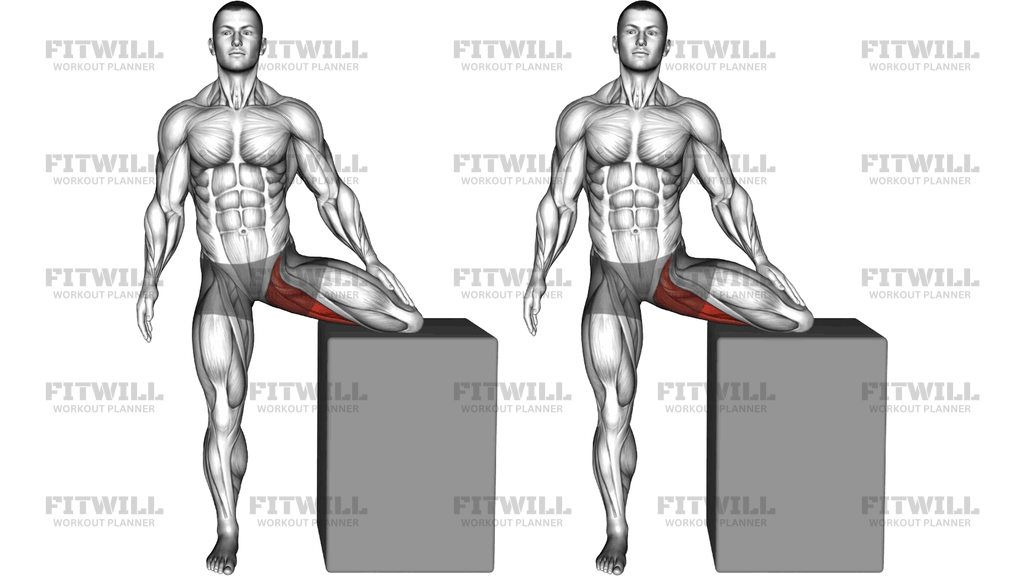
Instructions
- Stand beside a bench, box, or other stable support and place one ankle across it so the raised knee can relax outward.
- Keep the standing foot planted, the standing knee softly bent, and your ribs stacked over your pelvis before you move.
- Square your hips first, then begin to rotate the pelvis and torso toward the elevated leg.
- Hinge forward only as far as you can keep the spine long and the standing foot steady.
- Let the raised hip open gradually until you feel a clear stretch through the outer hip and glute.
- Breathe out as you settle into the end range instead of forcing the position.
- Pause briefly, then ease back to the tall starting stance under control.
- Switch sides and match the same setup, range, and tempo on both hips.
Tips & Tricks
- The bench or box height should let the raised hip open without forcing the standing leg to lock out.
- A small bend in the standing knee usually keeps the pelvis more stable than a completely straight stance.
- If you feel the stretch mostly in your lower back, reduce the trunk twist and keep the ribs stacked over the hips.
- Turning the toes of the raised leg slightly outward can make it easier to find the outer-hip stretch.
- Think about rotating from the pelvis over the supported thigh, not cranking the shoulders alone.
- A long exhale often helps the glute and deep hip rotators relax into the position.
- Do not drop aggressively into the end range; a slow hinge gives you more control and less pinching.
- If the elevated knee feels uncomfortable, lower the support height or shorten the range immediately.
Frequently Asked Questions
What does Standing Rotational Hip Stretch target most?
It mainly targets the outer hip, glute, and deep hip rotators on the raised-leg side.
Do I need a bench or box for the raised leg?
Yes. A stable bench, box, or step gives the supported leg a place to rest while you rotate into the stretch.
Where should I feel the stretch?
You should feel it most in the outer hip and glute of the elevated leg, with only mild tension elsewhere.
What is the most common mistake with the rotation?
People usually twist too hard from the upper body and lose the stacked pelvis position.
Is this exercise okay for beginners?
Yes, as long as the support height is manageable and the range stays pain-free.
Should my standing leg stay straight?
No. A slight bend usually makes it easier to balance and keeps the pelvis from tilting forward.
When should I use this stretch in a workout?
It works well in a warmup before lower-body training or in a cooldown after squats, lunges, or running.
What should I change if I feel pinching in the front of the hip?
Reduce the rotation, lower the support height, and keep the torso taller so the hip can open without jamming.