Back Lever
Back Lever is a bodyweight strength hold performed on parallel bars or similar hand supports. The body hangs face-down with the arms straight, shoulders extended behind the torso, and the trunk held rigid so the hips, ribs, and legs stay in one long line. It is an advanced gymnastics-style position, but the training value is not just the final hold itself: the setup teaches shoulder extension strength, scapular control, and full-body tension that carry over to other pulling and hanging movements.
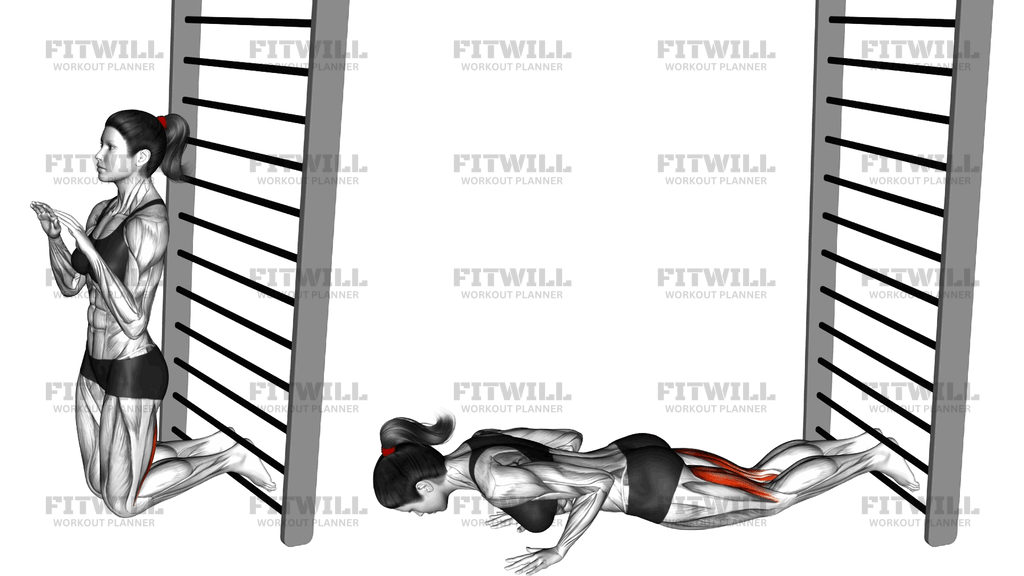
The image matters here because the exercise is defined by its line, not by how hard you yank into position. In the full version, the hands stay fixed on the bars while the body rotates until it is parallel to the floor. The shoulders need to stay active and depressed, the elbows stay locked, and the pelvis needs to stay tucked so the lower back does not take over. That is why cleaner progressions such as tuck, advanced tuck, one-leg, and straddle are often used before a full back lever.
A good back lever feels like organized tension from the hands to the toes. The lats, rear delts, long head of the triceps, abdominals, and glutes all work to keep the torso from folding. If the shoulders shrug, the chest opens too much, or the hips sag, the hold stops being a back lever and turns into a loose unsupported position. The goal is not to survive the position; it is to keep the body shape locked while breathing shallowly and staying braced.
Because the shoulder is placed into a deep extension angle, setup and progression matter more than ego. Start with a variation you can hold without pain and without losing the hollow body shape. Use a controlled entry and exit, especially if you are lowering from support into the lever. The hold should be crisp, short, and repeatable, with enough rest between efforts to keep each attempt technically clean.
Use Back Lever on days when you want a high-skill isometric for posterior shoulder strength, core stiffness, and straight-arm control. It fits well in a gymnastics block, accessory work, or an advanced bodyweight session. If the shoulders feel pinchy or the elbows bend to compensate, regress the variation or stop the set. This exercise rewards precision more than duration.
[ Workout Log & Planner ]
Put your next workout in Fitwill
Keep your plan and training log ready when you are.


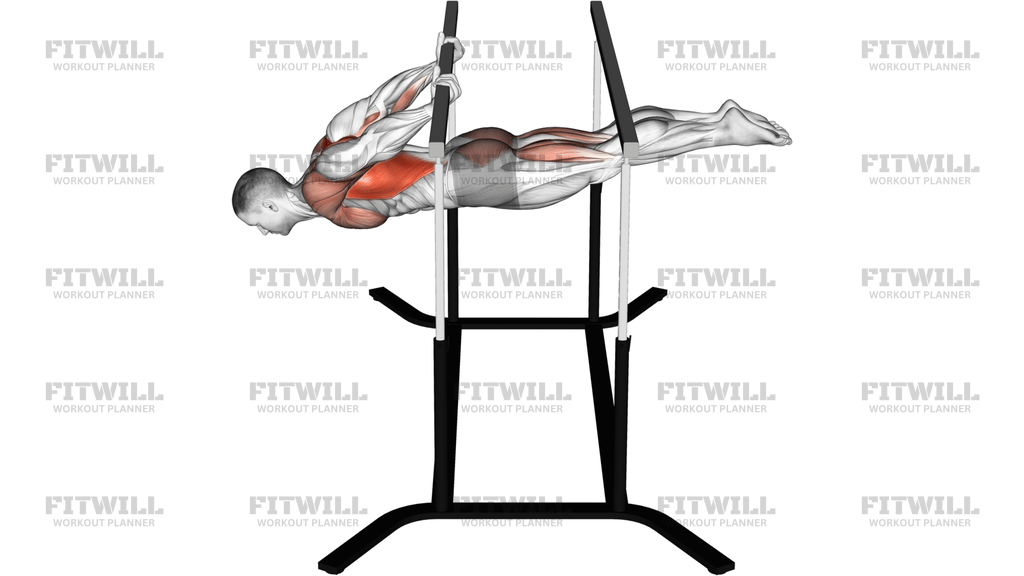
Instructions
- Grip the parallel bars or rings with your hands just outside shoulder width, then start from a strong support or inverted entry position with straight elbows.
- Set your shoulders down away from your ears and lightly pull the bars toward your hips to engage the lats before you move.
- Tuck your ribs and tilt the pelvis slightly under so the lower back stays long instead of arching.
- Rotate the body behind the hands until your torso, hips, and legs are parallel to the floor or as close as your progression allows.
- Keep the elbows locked, the neck neutral, and the eyes fixed on the floor or slightly ahead of the hands.
- Squeeze the glutes and quads so the legs stay straight and the body line does not break at the hips.
- Hold the position for the planned time with short, controlled breaths while maintaining full-body tension.
- Exit by tucking or bending the legs and rotating back to the support position under control before the next hold.
Tips & Tricks
- Treat the hold like a straight-arm strength skill, not a rep you muscle through with bent elbows.
- If the full back lever is too aggressive, stay in tuck or advanced tuck and keep the shoulders and hips aligned.
- Keep the shoulders actively depressed; if they creep toward the ears, the position is already leaking tension.
- A slight posterior pelvic tilt helps keep the ribs down and prevents the low back from overextending.
- Squeeze the glutes hard enough that the legs feel like one rigid lever instead of two loose limbs.
- Do not chase long hold times if the line breaks after a few seconds; short perfect holds build better control.
- Use a slow, deliberate entry and exit so the shoulder angle does not get yanked into position.
- If the elbows soften, end the set and reduce the progression or the lever length on the next attempt.
Frequently Asked Questions
What muscles does the back lever train?
It strongly challenges the lats, rear delts, long head of the triceps, abdominals, and glutes while building straight-arm shoulder strength.
Is the back lever a beginner exercise?
No. Most people need tucked or one-leg progressions first because the full position demands a lot of shoulder extension and core tension.
Should my elbows bend during a back lever?
No. The arms should stay straight so the shoulders and trunk do the work instead of turning it into a bent-arm hold.
Why do my hips drop in the back lever?
Usually the ribs are flaring and the pelvis is not tucked enough. Tighten the glutes and abs and shorten the lever with a tuck or straddle progression.
Do I need parallel bars for this exercise?
Parallel bars are the common setup and are usually easier to control than rings. Rings add instability and make the hold much harder.
How long should I hold a back lever?
Use short holds that stay technically clean, often around 3 to 10 seconds per attempt, rather than chasing a sloppy long duration.
What is the safest way to progress the back lever?
Move from tuck to advanced tuck, one-leg, and straddle before trying the full straight-body position, and only progress when the current version is stable.
What should I do if the shoulder position feels pinchy?
Stop the set and regress the movement. Shoulder discomfort in this position usually means the lever is too long or the shoulder angle is not ready yet.