Frog Reverse Hyperextension On A Bench
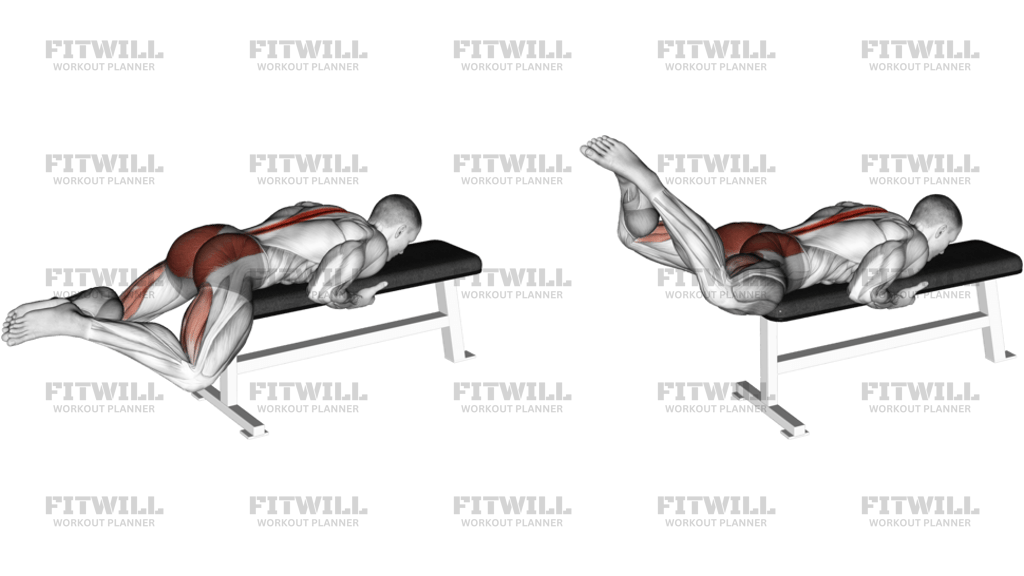
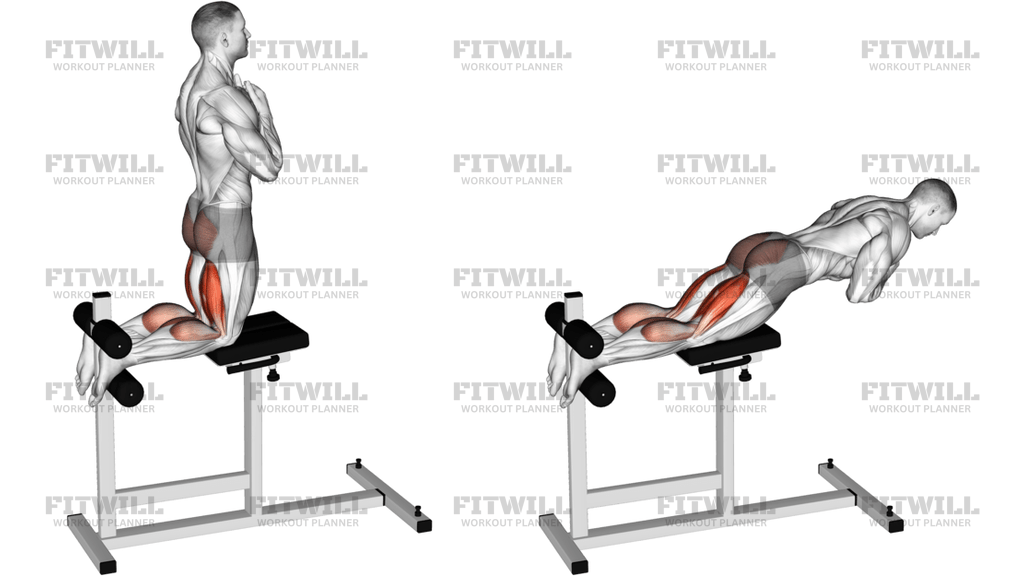
Frog Reverse Hyperextension On a Bench is a bodyweight hip-extension exercise that trains the glutes, hamstrings, and deep trunk stabilizers without asking you to load the spine heavily. It uses the same basic bench setup as a reverse hyperextension, but the bent, frog-style leg position shortens the lever and makes the movement feel more controlled. That makes it useful when you want direct glute work, posterior-chain activation, or a low-complexity accessory movement that still demands clean body position.
The setup matters because the hips need to sit right at the edge of the bench while the chest and upper abdomen stay supported on top of it. From there, the bent knees and turned-out feet let the legs move behind the body while the pelvis stays organized. If the bench is too far under your hips, the movement turns sloppy; if you are too far off the pad, you lose support and start swinging.
Each repetition should come from the glutes lifting the thighs behind you, not from kicking the feet or arching the lower back. The best range is usually a smooth, moderate arc: lift until the thighs are in line with the torso or just above it, then lower with control until the legs are hanging again. A brief squeeze at the top is enough; the goal is a clean hip extension, not a forceful spinal crunch.
Frog Reverse Hyperextension On a Bench works well as warmup activation, accessory volume, or a finisher after bigger lifts like squats, deadlifts, lunges, or hip thrusts. Beginners can use it easily because the bodyweight version gives immediate feedback on control and tempo, but it still rewards strict technique. Keep the neck long, ribs heavy, and breathing steady so the movement stays on the hips instead of turning into momentum.
Because the knees stay bent, this variation usually feels friendlier on the lower back than a long-lever reverse hyperextension and easier to repeat for higher reps. It is a good choice when you want glute tension without complicated setup, especially in home workouts or basic gym circuits. If the bench edge presses uncomfortably into your hips, shift a little farther forward or reduce the lift height before adding more volume.
Fitwill
Log Workouts, Track Progress & Build Strength.
Achieve more with Fitwill: explore over 9600 exercises with images and videos, access built-in and custom workouts, perfect for both gym and home sessions, and see real results.
Start your journey. Download today!




Instructions
- Place a flat bench lengthwise and lie face down with your hips at the front edge, chest and upper abdomen supported on the pad.
- Hold the bench edges or rest your forearms on the pad so your upper body stays still while your legs move.
- Bend both knees about 90 degrees and bring the soles of your feet together in a frog position, letting the knees open wide.
- Let your thighs hang just off the end of the bench so the legs can swing freely without your lower back taking over.
- Brace your abdomen, keep your ribs heavy against the bench, and set your neck in a neutral line.
- Squeeze your glutes to lift both thighs behind you until they reach torso height or slightly above.
- Pause briefly at the top, then lower the legs under control until they hang again without bouncing off the bottom.
- Keep the knees bent and the feet together on every repetition, and reset your brace before the next lift.
- Finish the set by lowering the legs fully, steadying your torso, and stepping down from the bench carefully.
Tips & Tricks
- Keep the hips parked at the edge of the bench; if you slide too far back, the range gets shorter and the rep loses tension.
- Think about lifting your thighs, not throwing your feet upward. That cue helps the glutes start the rep instead of the lower back.
- Hold the knees wide and the soles together through the whole set so it stays a frog reverse hyperextension instead of turning into a straight-leg reverse hyper.
- Use a smaller top range if your pelvis starts rocking or your lower back arches hard at the finish.
- A two- to three-second lowering phase usually works better than dropping the legs and rebounding off the bottom.
- Keep your chest pinned into the bench and your chin slightly tucked so the movement does not turn into a neck-driven shrug.
- If the hamstrings cramp, shorten the set, reduce the top height, and keep the knees bent more consistently.
- This exercise should feel like glutes working hard with some hamstring support, not like a swing from the legs.
- Start with body weight only; add load only if you can keep the same frog position, torso pressure, and smooth tempo.
Frequently Asked Questions
What muscles does Frog Reverse Hyperextension On a Bench work?
It mainly works the glutes and hamstrings, with the core and lower back stabilizers helping keep the torso steady on the bench.
How is Frog Reverse Hyperextension On a Bench different from a standard reverse hyperextension?
Your knees stay bent and the soles of the feet stay together, which shortens the lever and usually shifts more of the work to the glutes.
Where should my hips sit on the bench?
Set your hips right at the front edge so your upper body is supported but your legs can move freely behind the bench without pinching.
Do my knees stay bent the whole time?
Yes. The bent-knee frog position is what gives Frog Reverse Hyperextension On a Bench its feel and keeps the movement from becoming a straight-leg variation.
Why does my lower back take over during Frog Reverse Hyperextension On a Bench?
Usually the top range is too high or the ribs are flaring off the bench. Lower the lift slightly and keep your abdomen braced against the pad.
Can beginners do Frog Reverse Hyperextension On a Bench?
Yes. Body weight is usually enough to learn the setup, the frog leg position, and the controlled hip drive before adding any resistance.
Should my feet stay together or separate?
Keep the soles together or very close together throughout the set so the frog position stays consistent and the legs move as one unit.
How can I make Frog Reverse Hyperextension On a Bench harder?
Add a longer pause at the top, slow the lowering phase, or progress to light ankle weights only after the bodyweight version stays strict.