Push-Up And Triceps Dip On Parallel Bars
Push-Up And Triceps Dip On Parallel Bars is a bodyweight pressing exercise performed on parallel bars, using your hands as the support point and your own body as the load. It blends the mechanics of a deep push-up and a triceps dip, so the torso angle determines whether the work feels more chest-biased or triceps-biased. The movement is useful for building pressing strength, shoulder stability, and control through a deep, unsupported range of motion.
Because the bars let your body travel below hand level, setup matters more than it does in a floor push-up. A slight forward lean, with the legs stretched behind you, shifts more demand into the chest and front deltoids. An upright torso, with the elbows tucked a little closer to the ribs, shifts more of the finish into the triceps. In both versions, the shoulders need to stay packed down so the joint stays organized while you descend.
The cleanest reps start from a locked-out support with steady shoulders, a firm grip, and the wrists stacked over the bars. From there, you lower under control until the upper arms approach parallel to the floor or you reach a pain-free depth that you can own without bouncing. The body should move as one unit instead of folding at the hips or drifting forward and back. That control is what makes the exercise valuable for strength instead of just making the rep look deep.
On the way up, press the bars down and away until the elbows are fully extended and the chest stays lifted rather than collapsing between the shoulders. A smooth inhale on the way down and a forceful exhale on the press helps keep the trunk tight and the rep rhythm steady. If the shoulders shrug, the elbows flare wildly, or the body swings to create momentum, the load is too heavy or the depth is too aggressive for the current set.
Push-Up And Triceps Dip On Parallel Bars fits well in bodyweight strength sessions, pushing accessories, calisthenics work, and upper-body conditioning blocks where you want a demanding press without a bench. It is especially useful for athletes and lifters who need stronger lockout strength, better scapular control, and confidence under bodyweight load. Keep the range pain-free, use assistance if the bottom position is unstable, and treat the bars as a precision setup rather than a place to rush reps.
Fitwill
Log Workouts, Track Progress & Build Strength.
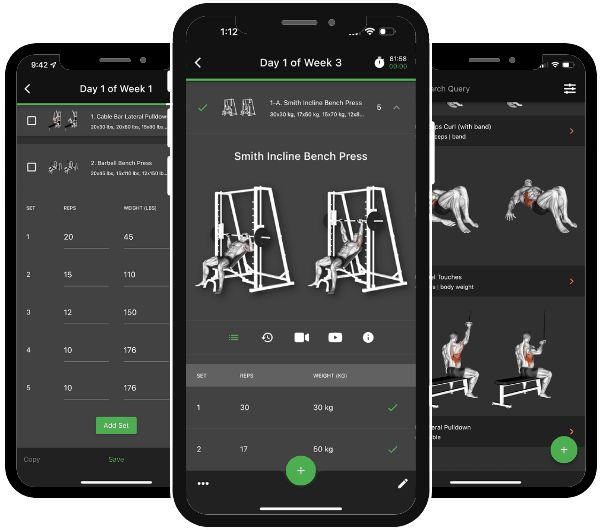
Achieve more with Fitwill: explore over 5000 exercises with images and videos, access built-in and custom workouts, perfect for both gym and home sessions, and see real results.
Start your journey. Download today!


Instructions
- Set the parallel bars about shoulder-width apart and grip them with palms facing in, wrists straight, and shoulders pressed down away from your ears.
- Lift to a straight-arm support between the bars, then set your torso angle: lean slightly forward for more chest work or stay more upright with elbows closer to your sides for more triceps emphasis.
- Stack your chest between the bars, brace your abs and glutes, and keep your legs still so the torso does not swing.
- Inhale and bend your elbows to lower your body under control, letting the shoulders travel just enough to stay stable without collapsing forward.
- Keep lowering until your upper arms are near parallel to the floor or you reach your deepest pain-free position.
- Exhale and press firmly through the bars to straighten your elbows, driving your body back to a strong locked-out support.
- Finish each rep with the shoulders still depressed and the chest tall rather than shrugging into the top position.
- Step down or let the feet contact the floor only after you are fully under control, then reset before the next set.
Tips & Tricks
- A forward torso lean turns the movement into more chest-dominant pressing; a vertical torso with tucked elbows pushes more into the triceps.
- If the bottom position feels unstable, shorten the depth before your shoulders roll forward.
- Keep the bars close enough that your forearms stay mostly vertical; an overly wide setup can irritate the shoulders.
- Do not bounce out of the bottom; pause briefly if you need to remove momentum.
- If your legs swing behind you, squeeze glutes and slightly bend the knees to quiet the lower body.
- Think about pressing the bars down, not throwing your chest upward.
- Use a band, assistance, or partial range if bodyweight alone causes shoulder pinch or loss of control.
- Stop the set when your elbows drift too far out or the top lockout starts turning into a shrug.
Frequently Asked Questions
What muscle does Push-Up And Triceps Dip On Parallel Bars target most?
It primarily trains the chest and triceps, with the front shoulders and stabilizers helping keep the body steady between the bars.
Is Push-Up And Triceps Dip On Parallel Bars more like a dip or a push-up?
It can behave like both. A more upright torso looks and feels like a dip, while a forward lean makes it act more like a deep parallel-bar push-up.
How do I make Push-Up And Triceps Dip On Parallel Bars more chest-focused?
Lean your torso forward, keep the legs extended behind you, and let the elbows flare slightly as long as the shoulders stay comfortable.
How do I make Push-Up And Triceps Dip On Parallel Bars more triceps-focused?
Stay taller through the torso, keep the elbows a little closer to your ribs, and press to a strong lockout without letting the shoulders shrug.
How low should I go on the bars?
Go only until you can keep the shoulders controlled and the rep smooth. For many lifters, that is around upper arms parallel to the floor or slightly below.
Can beginners do Push-Up And Triceps Dip On Parallel Bars?
Yes, but many beginners need band assistance, a reduced range of motion, or a regression before they can own the full bodyweight support position.
What is the most common mistake on the bars?
Dropping too deep and losing shoulder position. If the shoulders roll forward or the elbows flare hard at the bottom, cut the range and slow the descent.
What should I do if my shoulders feel irritated?
Reduce the depth, keep the bars a little closer, and stay more upright. If discomfort persists, switch to a shallower dip or a standard push-up variation.