Standing Leg Tuck Hip Stretch
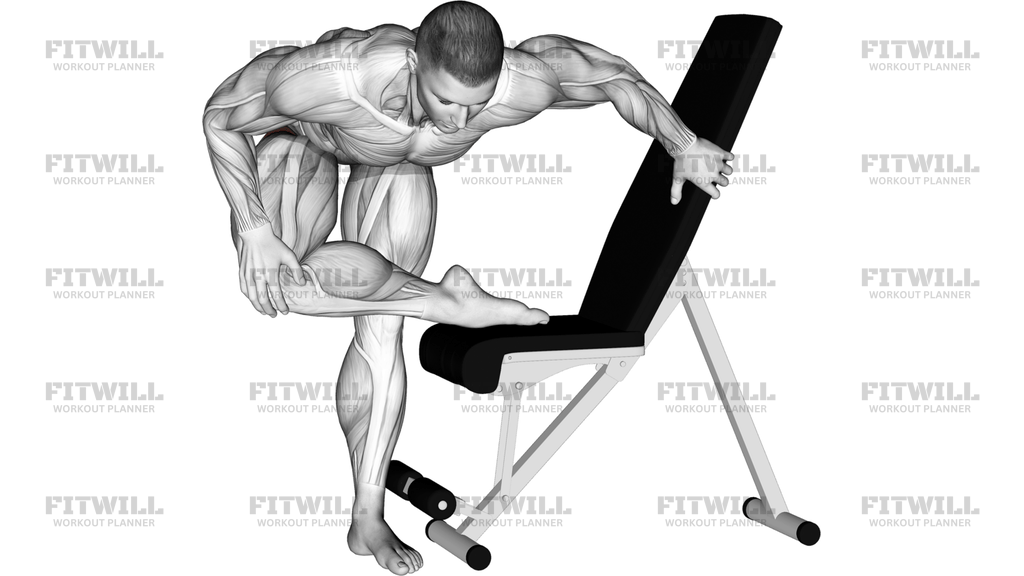
Standing Leg Tuck Hip Stretch is a standing mobility drill for the hips and glutes, usually done with one foot supported on a bench or other stable elevated surface and the other leg carrying your body weight. It opens the bent leg's hip and outer glute while also asking the standing leg and trunk to stay balanced and organized. Because the position is partly a stretch and partly a balance drill, the setup matters as much as the depth you reach.
This movement is useful before lower-body training, after long periods of sitting, or any time one hip feels tighter than the other. The support height, the angle of your torso, and how much you tuck the pelvis all change the sensation, so the best version is the one you can hold calmly without twisting or forcing the range. A small adjustment can turn it from a useful hip opener into a front-of-hip pinch, so the aim is steady pressure rather than maximum depth.
Start by placing one foot across the bench with the knee bent and the leg relaxed enough that the hip can open. Keep the standing foot flat, square your hips, and use one or both hands on the bench for balance before you hinge. From there, lean forward from the hips and gently tuck the pelvis under until you feel the stretch build in the raised leg's glute, outer hip, or deep rotators. Keep the spine long and the chest open enough that the motion comes from the hips rather than a hard round through the lower back.
The stretch should feel controlled and breathable, not like you are fighting for every extra inch. Hold the position long enough to let the hip settle, then come out with the same control you used to enter it. If the stretch shifts into knee strain, low-back tension, or a sharp pinch at the front of the hip, reduce the hinge, lower the bench, or soften the pelvis tuck. That keeps the emphasis on the hip opening the movement was designed to create.
Standing Leg Tuck Hip Stretch fits well in a warm-up, cooldown, or reset between sets when you want to restore hip motion without lying on the floor. It is especially useful for lifters, runners, and people who sit a lot, because it combines a clear glute stretch with single-leg stability work. Move side to side deliberately, stay patient with the range, and let the breathing set the pace instead of chasing a bigger position.
[ Workout Log & Planner ]
Put your next workout in Fitwill
Keep your plan and training log ready when you are.


Instructions
- Stand beside a sturdy bench or box and place one foot across the top so the knee is bent and the lower leg can relax.
- Keep the other foot planted flat on the floor and square your hips toward the elevated leg before you move.
- Lightly hold the bench or the raised leg for balance so you can stay steady without leaning your whole body into the support.
- Brace your torso, lengthen through the spine, and hinge forward from the hips until you feel the stretch start in the raised leg's glute and outer hip.
- If you want more opening, gently tuck the pelvis under as you lean, but keep the motion small and controlled.
- Breathe in quietly as you set the position, then exhale as you settle a little deeper into the comfortable range.
- Hold the stretch without bouncing, keeping the standing knee soft and the planted foot grounded.
- Release the hinge, bring the raised foot back down, and repeat on the other side.
Tips & Tricks
- Keep the bench low enough that the raised hip can stay level; if your pelvis twists, the stretch turns into a balance drill.
- Think long spine, small hinge instead of folding at the waist, which keeps the pressure in the hip rather than the lower back.
- If the front of the hip feels pinched, back off the tuck and reduce the torso angle a few degrees.
- Use the hand on the bench for balance only; leaning hard into it can hide the stretch and make the rep less useful.
- Keep the standing foot planted through the big toe, little toe, and heel so the support leg does not collapse inward.
- A soft knee on the floor side usually makes the stretch smoother than locking that leg straight.
- Hold a little longer on the tighter side, but stop before the hip starts shaking or the low back rounds hard.
- Exhale slowly each time you settle deeper; if you hold your breath, the stretch usually feels sharper.
Frequently Asked Questions
What muscles does Standing Leg Tuck Hip Stretch target most?
It mainly opens the glutes and deep hip rotators of the raised leg. The standing leg, core, and upper back mostly work to keep you steady.
Is Standing Leg Tuck Hip Stretch good before squats or deadlifts?
Yes, it works well as a short warm-up if your hips feel stiff. Keep the hold brief and the hinge small so you open the hip without fatiguing the legs.
How high should the bench be for Standing Leg Tuck Hip Stretch?
Start with a low, stable bench or box that lets your hips stay level. If the raised knee is forced too high or your pelvis twists, the surface is too tall.
Should I feel Standing Leg Tuck Hip Stretch in my lower back?
No, the main sensation should stay in the raised hip and glute. If your low back is doing most of the work, stand a little taller and make the hinge smaller.
Why does my knee hurt on the supported leg?
Knee pain usually means the shin or ankle is being forced into an awkward position on the bench. Adjust the leg so the foot rests more naturally and keep the stretch focused at the hip.
Can I do Standing Leg Tuck Hip Stretch if my balance is poor?
Yes, but keep one hand on the bench and move slowly. A wall, rack upright, or sturdy support can make the position easier to hold.
How is Standing Leg Tuck Hip Stretch different from a seated figure-four stretch?
This version adds single-leg balance and standing hip control, so it feels more active. The seated version is easier to hold for longer, while this one is useful when you want a standing opener.
How long should I hold each side of Standing Leg Tuck Hip Stretch?
Hold each side for about 20-40 seconds or 2-3 slow breaths. If you use it as part of a warm-up, stay on the shorter end and keep the stretch light.