Balance Board
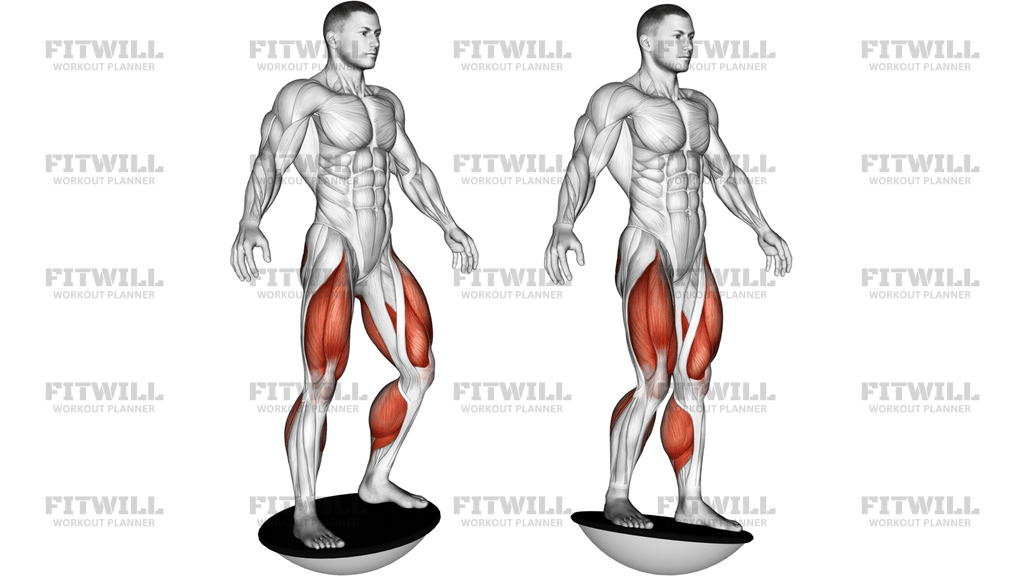
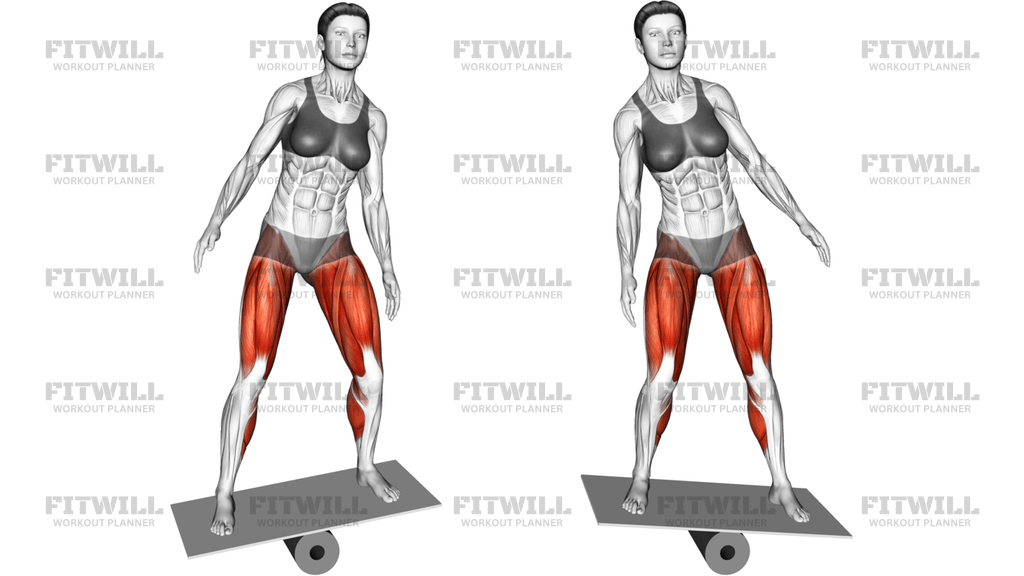
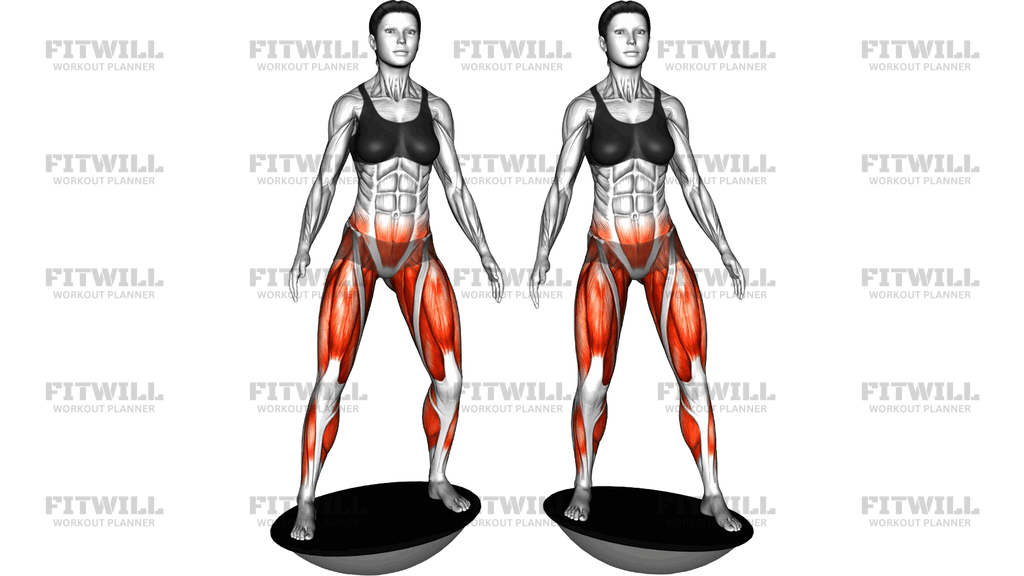
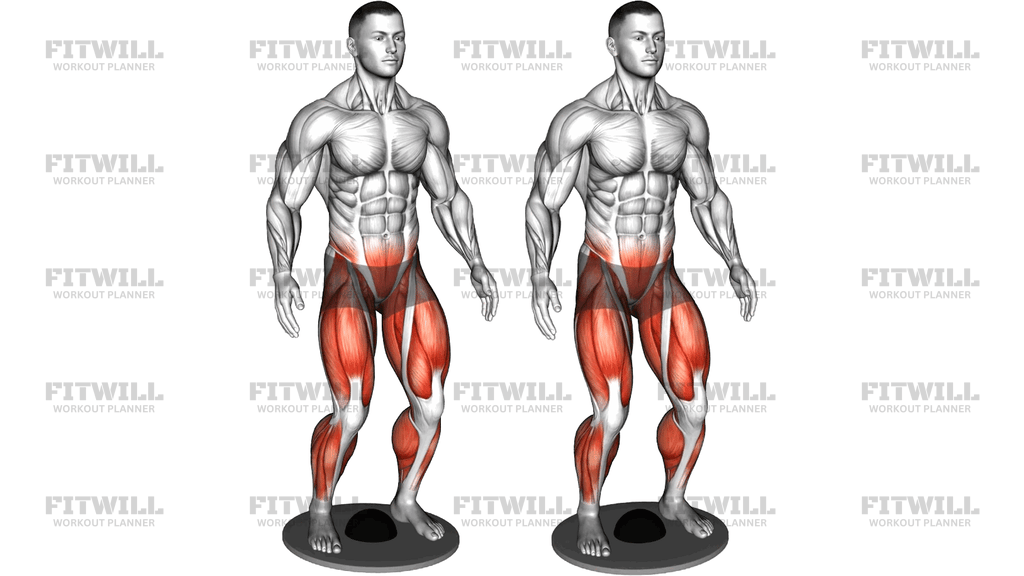
Balance Board is a bodyweight stability drill performed while standing on an unstable board. The goal is to keep the board under control as your feet, ankles, knees, hips, and core make constant small adjustments. It is useful for balance practice, ankle-control work, warmups, and lower-body coordination training.
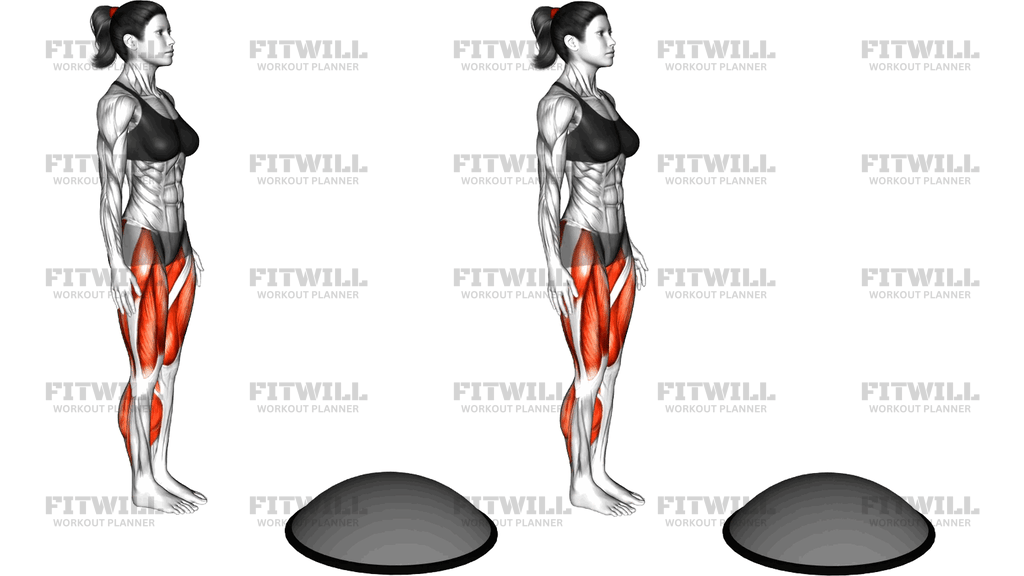
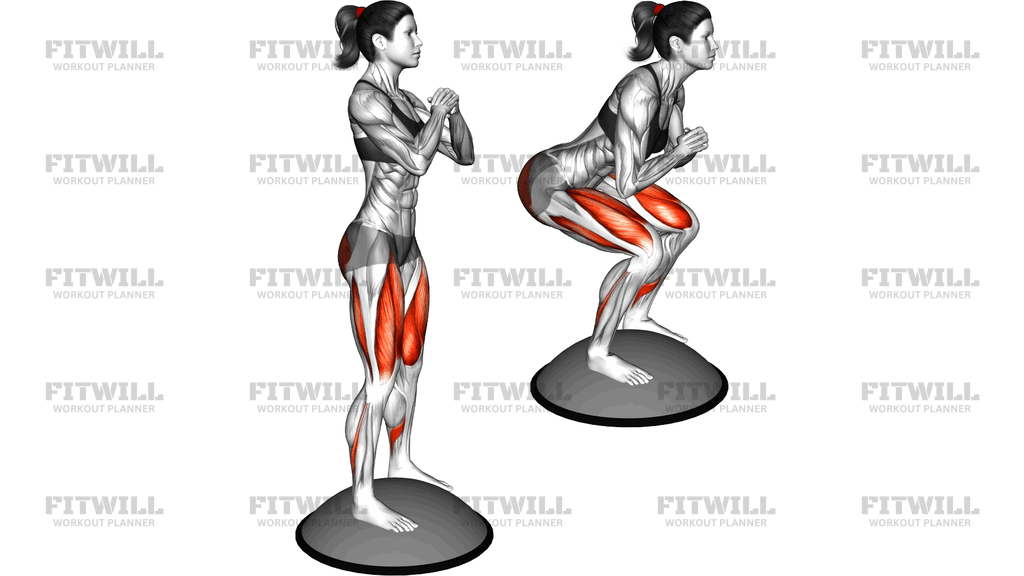
The calves and ankle stabilizers work continuously to control the board, while the quads, glutes, and abs help keep the rest of the body organized. Unlike a heavy strength exercise, the challenge comes from precision and reaction speed. Small shifts through the feet matter more than big movements through the torso.
Set the board on a flat, clear surface with enough room to step off safely. Use a wall, rail, or sturdy object nearby if you are new to the drill. Step onto the board carefully, place the feet about hip-width apart, soften the knees, and look forward so your posture stays tall instead of folded over the board.
Once balanced, make small pressure changes through the feet to keep the board centered. You may hold still, gently rock side to side, shift front to back, or practice controlled circles depending on the board style and your ability. Every variation should stay slow enough that you can step off safely at any time.
Balance Board works well before lower-body training, as a short skill block, or as part of ankle and balance conditioning. Beginners should use short holds near support, while advanced users can remove hand support, increase hold time, or add small knee bends. The drill should feel alert and controlled, not chaotic.
Common mistakes include locking the knees, staring down the whole time, stepping onto the board too quickly, or training in a cluttered area. Keep the knees soft, breathe normally, and use the support option before you need it. If the board repeatedly shoots out from under you, choose an easier board or return to supported holds.
[ Workout Log & Planner ]
Put your next workout in Fitwill
Keep your plan and training log ready when you are.


Instructions
- Place the Balance Board on a flat, clear surface.
- Step onto the board carefully, using a wall or support if needed.
- Stand with your feet about hip-width apart.
- Keep your knees slightly bent and your torso tall.
- Shift your weight slowly to find a centered position.
- Hold balance while keeping the board as controlled as possible.
- Make small side-to-side or front-to-back adjustments as needed.
- Step off carefully when the set is complete.
Tips & Tricks
- Start near a stable support until you feel confident.
- Keep your knees soft instead of locked.
- Look forward rather than down at your feet the whole time.
- Use slow weight shifts before attempting harder variations.
- Keep your core lightly braced.
- Stop if the board feels too unstable to control safely.
- Press through the whole foot instead of gripping only with your toes.
- Step off to the side under control rather than jumping backward if you lose balance.
Frequently Asked Questions
What muscles does the Balance Board work?
It mainly challenges the calves and ankle stabilizers, with help from the quads, glutes, and core.
Is Balance Board Exercise a strength exercise?
It is mostly a balance and stability exercise, but the lower-body muscles work continuously to control position.
Can beginners use a Balance Board?
Yes, but beginners should start near a wall or stable support and use short holds.
How can I make it harder?
Try longer holds, small squats, slower weight shifts, or reducing hand support.
What should I avoid?
Avoid locking your knees, rushing onto the board, or training in a cluttered area where a misstep could be unsafe.
Where should I look while using a Balance Board?
Look forward at a fixed point rather than staring down the whole time. This helps your posture stay tall and your balance reactions become smoother.
How should my feet be positioned on the Balance Board?
Start with your feet about hip-width apart and evenly placed on the board. Adjust only after you can keep the board controlled near support.
How long should I hold a Balance Board position?
Start with short controlled holds of 10 to 30 seconds. Increase time only while you can keep the knees soft and step off safely.