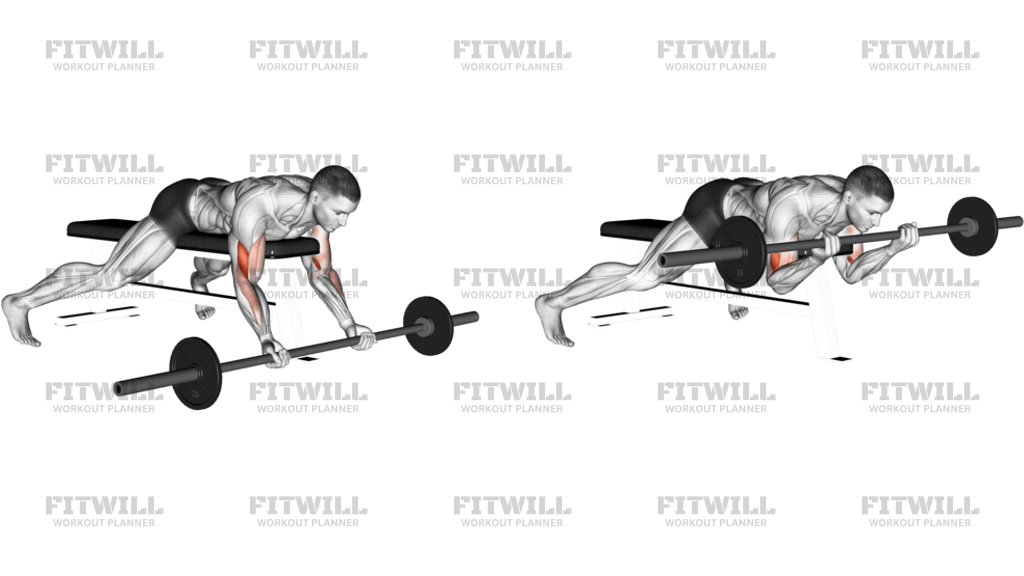
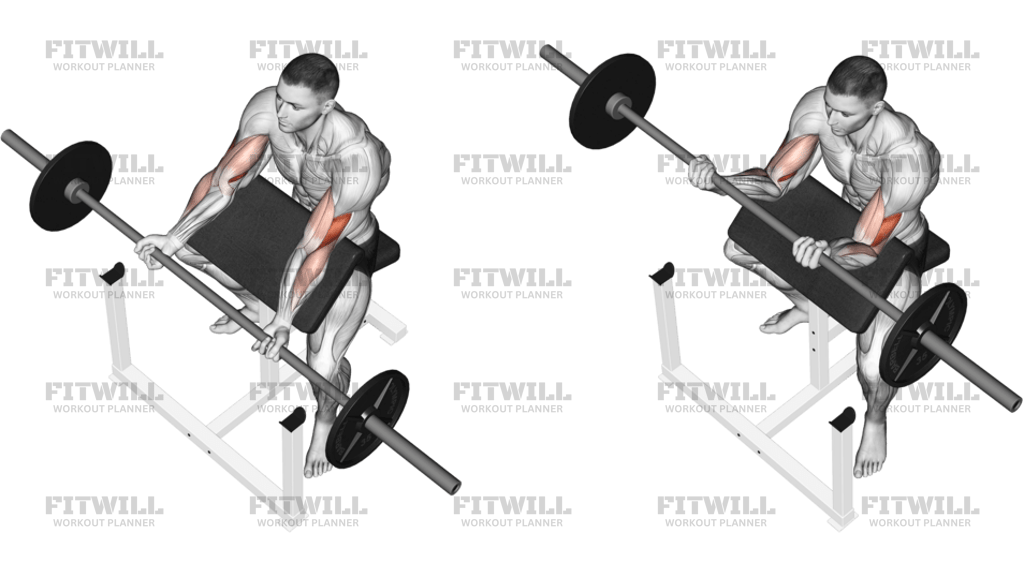
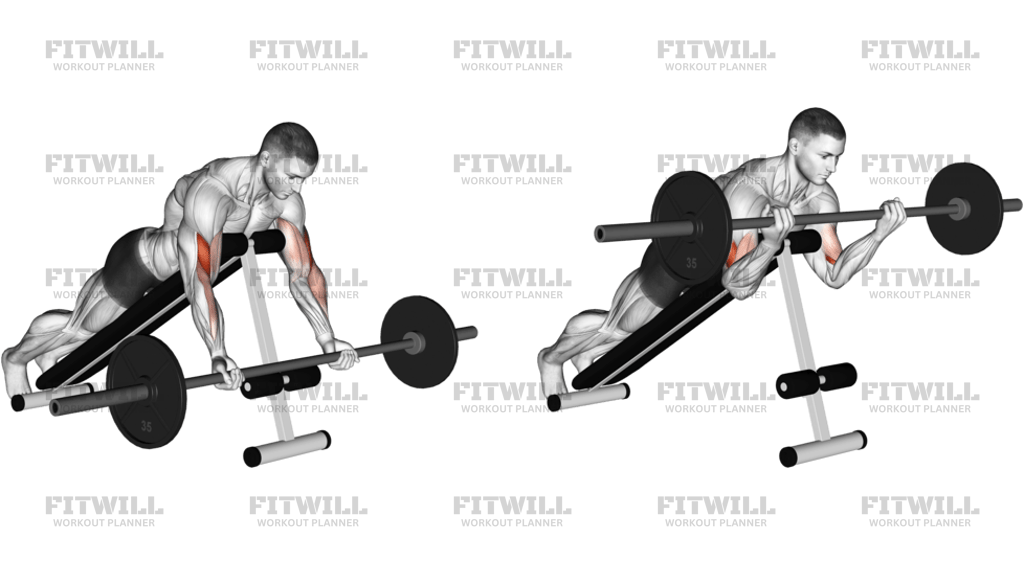
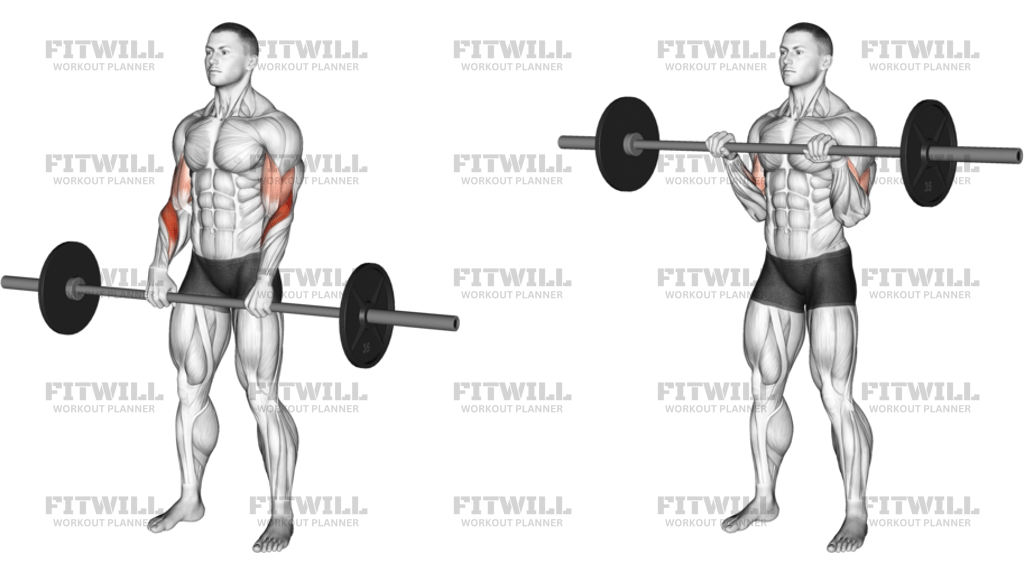
Barbell Reverse Wrist Curl
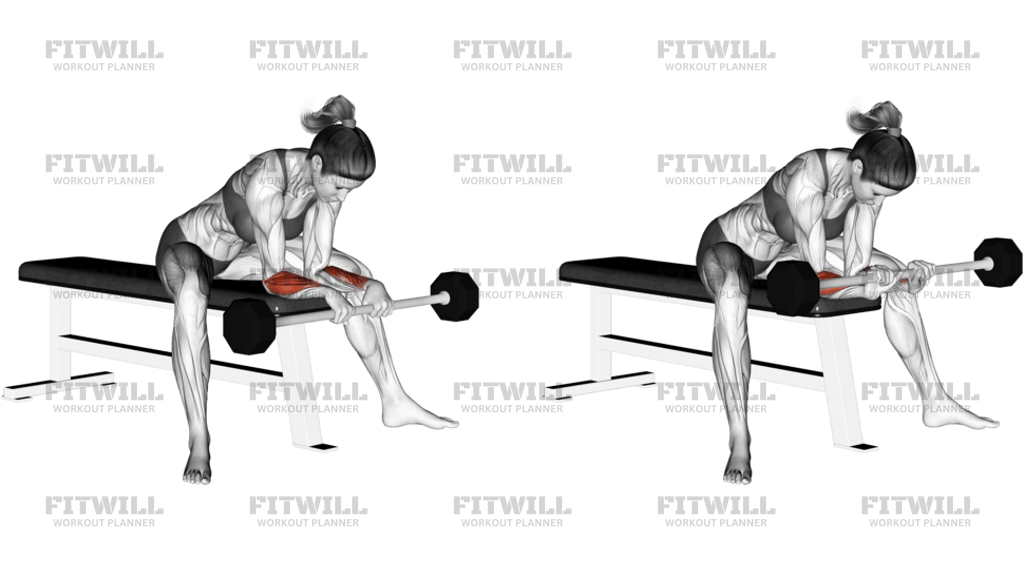
Barbell Reverse Wrist Curl is a forearm isolation exercise performed with a pronated grip and the forearms supported on the thighs or the edge of a bench. The barbell hangs just past the knees so the wrists can move through a short, controlled arc while the elbows and shoulders stay quiet. That setup is the whole point of the movement: it removes cheating options and makes the wrist extensors do the work.
This exercise is most useful when you want stronger, more resilient forearms for lifting, gripping, climbing, racquet sports, or any activity that asks the wrists to hold position under load. Despite the name, the shoulders are not the target here. The main effort comes from the forearm muscles that extend the wrist, with the brachioradialis and biceps helping stabilize the arm so the bar path stays clean.
The setup matters more than on many bigger lifts because the range is small and easy to fake. Sit at the end of a bench or on a flat bench with your forearms braced, palms facing down, and your wrists just beyond the support point. If the elbows slide forward or the hands drift too far into the palms, the movement turns into a shruggy arm curl instead of a wrist-focused set.
Each repetition should start from a controlled stretch in the wrists, then finish with the backs of the hands lifting toward the forearms without bouncing. The bar should stay aligned over the forearms while the fingers and wrists do the moving. A slow lowering phase is especially useful here because the forearm extensors respond well to tension that is steady rather than jerky.
Keep the load conservative enough that you can repeat the same path for every rep. This is an accessory movement, not a place to chase big numbers, and the wrists are usually the first joint to complain when the weight is too heavy. Use it near the end of an upper-body session, after heavy pulling or pressing, or as focused forearm work when grip endurance and wrist control matter.
Fitwill
Log Workouts, Track Progress & Build Strength.
Achieve more with Fitwill: explore over 9600 exercises with images and videos, access built-in and custom workouts, perfect for both gym and home sessions, and see real results.
Start your journey. Download today!




Instructions
- Sit on the edge of a flat bench with your feet planted and your forearms resting on your thighs or on the bench edge, palms facing down.
- Hold a barbell with an overhand grip and let your wrists hang just past the support so the bar sits low in your fingers.
- Keep your elbows pinned in place and let the forearms stay supported instead of floating off the bench.
- Start with the wrists lowered so the knuckles point toward the floor and the forearm extensors are lengthened.
- Extend the wrists to raise the backs of your hands toward your shins and forearms without moving the elbows.
- Pause briefly at the top when the wrists are fully extended and the forearms are still anchored.
- Lower the bar slowly back into the fingers until you feel the forearm stretch again.
- Keep your shoulders relaxed, your torso still, and your breathing steady through every rep.
- Reset the wrists and grip before the next set if the bar starts to slide or the motion becomes sloppy.
Tips & Tricks
- Let the bar sit deep in your fingers at the bottom; if it rests in the palm, you lose the wrist stretch that makes the movement effective.
- Keep the forearms glued to the thighs or bench edge so the elbows do not drift forward and turn the set into a cheat curl.
- Use a light enough bar that the wrists can finish every rep without the forearms bouncing off the support.
- A slower lowering phase usually works better than an aggressive lift here because the extensors are doing small, precise work.
- Do not crank the wrists into pain at the top; stop at the first point where the joint feels compressed rather than stretched.
- If the bar starts rolling toward the thumb side, reduce the load or narrow the range instead of forcing the rep.
- Keep the grip firm but not death-gripped so the hands do not fatigue before the wrist extensors do.
- High-rep sets usually suit this exercise better than low-rep strength work because the range is tiny and the target muscles are small.
Frequently Asked Questions
What muscles does Barbell Reverse Wrist Curl work?
It mainly trains the wrist extensors in the forearms, with the brachioradialis and biceps helping stabilize the arm.
Is Barbell Reverse Wrist Curl the same as a regular wrist curl?
No. A regular wrist curl uses an underhand grip and emphasizes the wrist flexors, while this version uses an overhand grip to target the extensors.
Should the barbell rest in my palms or fingers?
Let it sit low in the fingers so the wrists can move through the full arc. If the bar is buried in the palm, the range gets shorter and the forearms work less.
Do I need a bench for Barbell Reverse Wrist Curl?
A bench or similarly solid support helps a lot because your forearms need something stable to rest on. The edge of a flat bench and your thighs can both work well.
Why do my wrists feel this before my forearms?
If the wrists feel stressed before the forearms burn, the load is probably too heavy or the range is too aggressive. Reduce the weight and keep the motion smaller and smoother.
Can beginners do Barbell Reverse Wrist Curl safely?
Yes, as long as the bar is light and the movement stays controlled. Beginners usually do best with higher reps and a short, pain-free range.
What is the most common mistake with this exercise?
Letting the elbows drift or swinging the bar with the shoulders is the biggest error. The forearms should stay pinned while only the wrists move.
How many reps should I use for Barbell Reverse Wrist Curl?
Moderate to high reps usually work best because the target muscles are small and the range is short. Choose a rep count that keeps every repetition smooth.