Barbell Straight Leg Deadlift
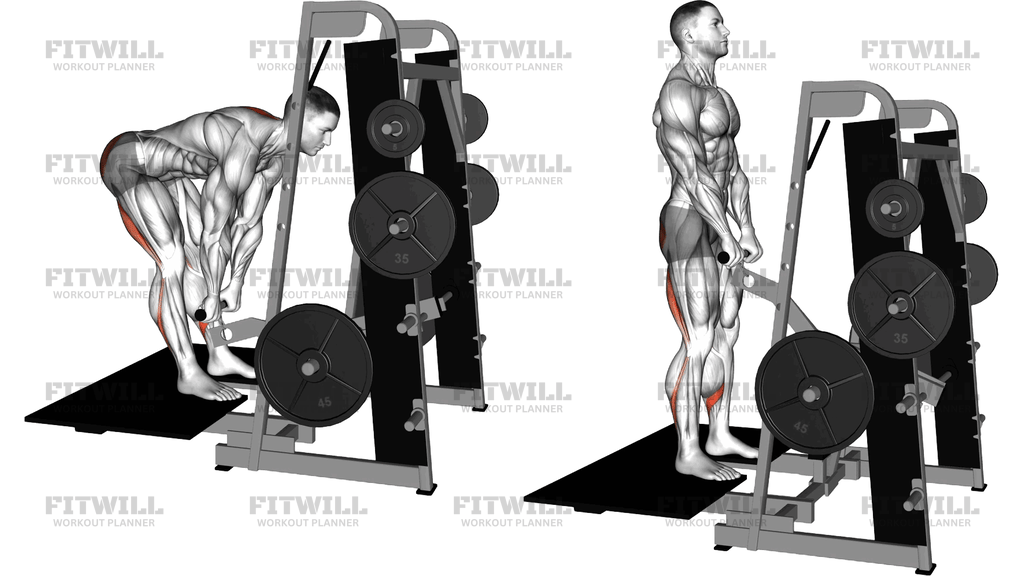
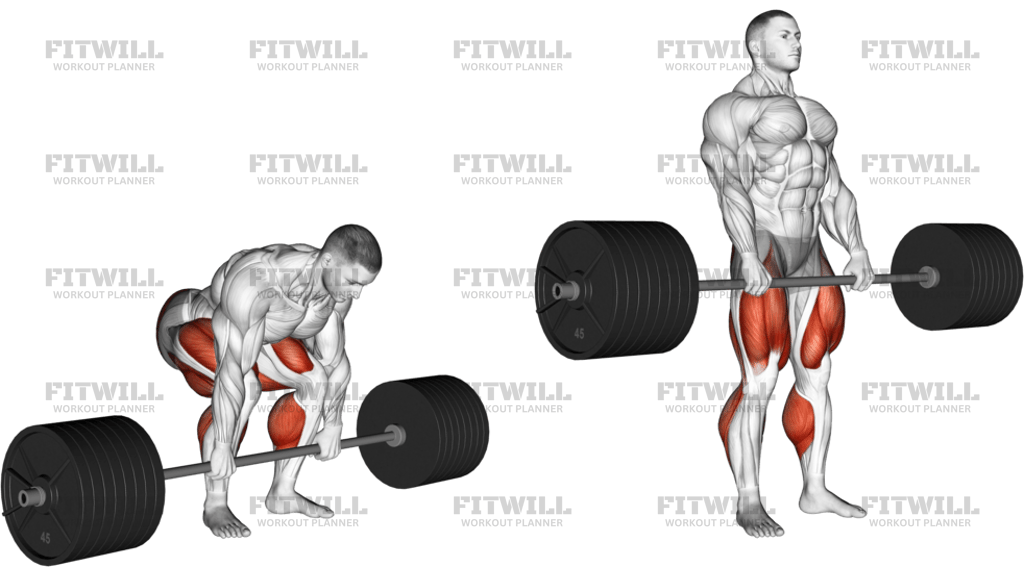
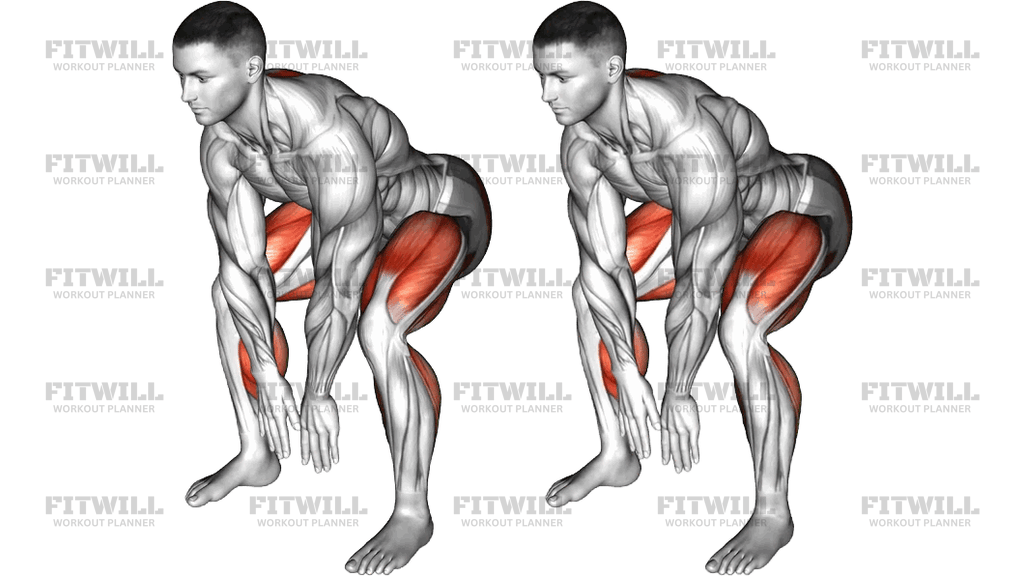
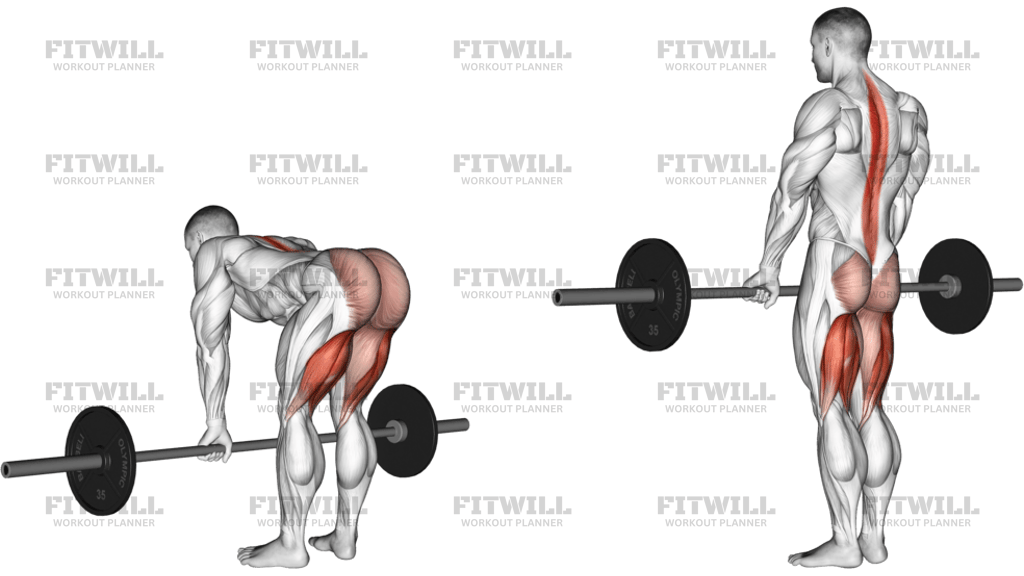
The Barbell Straight Leg Deadlift is a hip-hinge exercise that emphasizes the hamstrings by keeping the knees only slightly bent while the bar travels down the front of the legs. The glutes, adductors, lower back, and core support the hinge and help return the body to standing.
Despite the name, the knees should not be locked hard. A small, fixed knee bend protects the joints and lets the hips move backward as the hamstrings lengthen. The bar stays close to the thighs and shins, and the range is limited by how far you can hinge without rounding the back.
Set up with the bar in front of the thighs, feet about hip width, and the trunk braced. Push the hips back, lower the bar close to the legs, and stop at a strong but controlled hamstring stretch. Stand by driving the hips forward and squeezing the glutes, not by yanking the bar with the lower back.
Use this exercise for hamstring strength, posterior-chain accessory work, or controlled hinge training. It usually fits after heavier deadlifts or squats, or as a main hinge with moderate loads. Keep the reps smooth, avoid bouncing from the bottom, and choose a range that preserves a neutral spine.
[ Workout Log & Planner ]
Put your next workout in Fitwill
Keep your plan and training log ready when you are.


Instructions
- Stand with your feet about hip width and hold the barbell in front of your thighs.
- Set your shoulders back, brace your core, and keep the bar close to your body.
- Keep a slight bend in your knees and maintain that angle through the hinge.
- Push your hips backward as the bar slides down the front of your thighs.
- Continue lowering close to the legs until you feel a controlled hamstring stretch.
- Keep your spine neutral and stop before your back rounds.
- Drive your hips forward to bring the bar back up along the same close path.
- Finish tall by squeezing the glutes without leaning backward.
Tips & Tricks
- Think hips back, not knees forward, so the movement stays a hinge.
- Keep the bar close enough that it nearly brushes your legs the whole time.
- Use a smaller range if your hamstrings pull your pelvis into a rounded position.
- Keep the knees softly bent but fixed rather than locking and unlocking each rep.
- Lower slower than you lift to build control in the hamstring stretch.
- Do not bounce the bar from the bottom range.
- Use straps only if grip limits your hamstring work and your hinge remains clean.
- Start lighter than a conventional deadlift because the straighter-leg position increases leverage.
Frequently Asked Questions
What muscles does the straight leg deadlift target?
It mainly targets the hamstrings, with help from the glutes, lower back, adductors, and core.
Should my legs be completely locked?
No. Keep a small knee bend to protect the joints and maintain control.
How is it different from a Romanian deadlift?
It usually uses a straighter knee position, which can increase the hamstring stretch.
How low should I lower the bar?
Lower only as far as you can keep the spine neutral and feel a controlled hamstring stretch.
Should the bar touch the floor?
Not necessarily. Many lifters should stop above the floor because hamstring mobility determines the safe range.
Where should the bar travel?
Keep it close to the thighs and shins on the way down and back up.
Why do I feel my lower back?
Some stabilizing tension is normal, but the hamstrings and glutes should be the main focus. Reduce load or range if the back takes over.
Is this good for beginners?
Beginners can learn it with light weight if they already understand a hip hinge. Otherwise, start with a dowel hinge or Romanian deadlift.