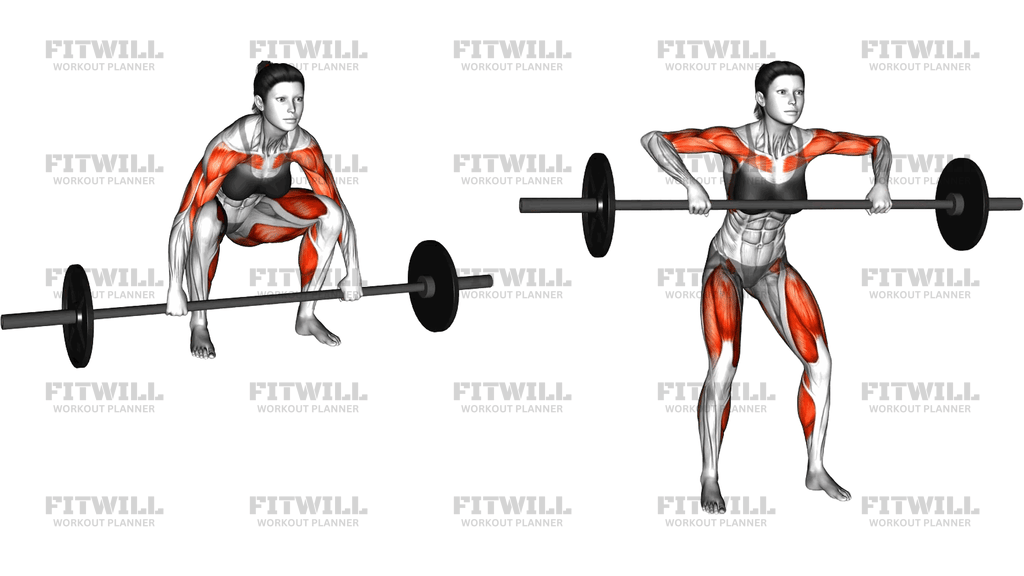
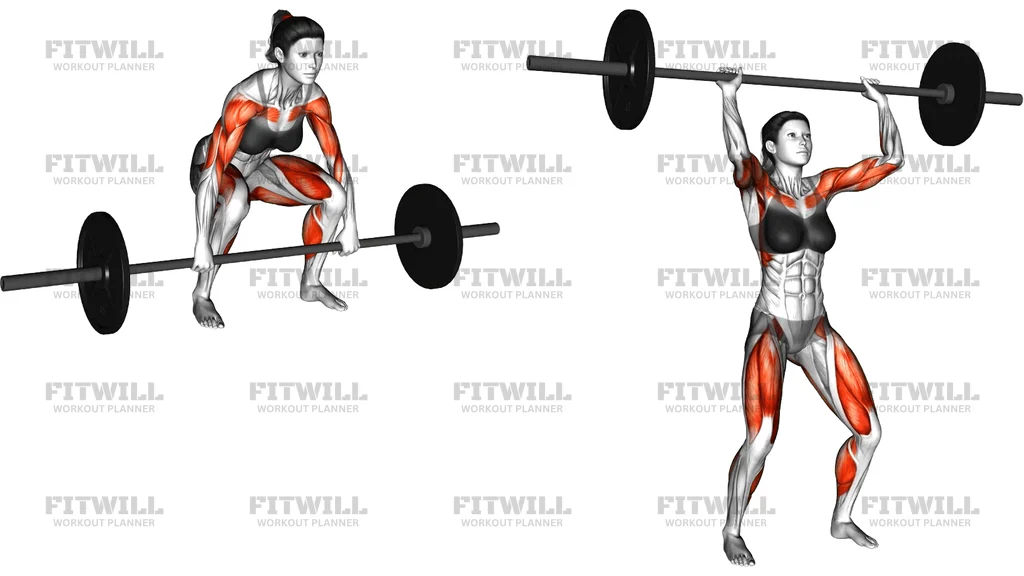
Barbell Weighted Chains Sumo Deadlift
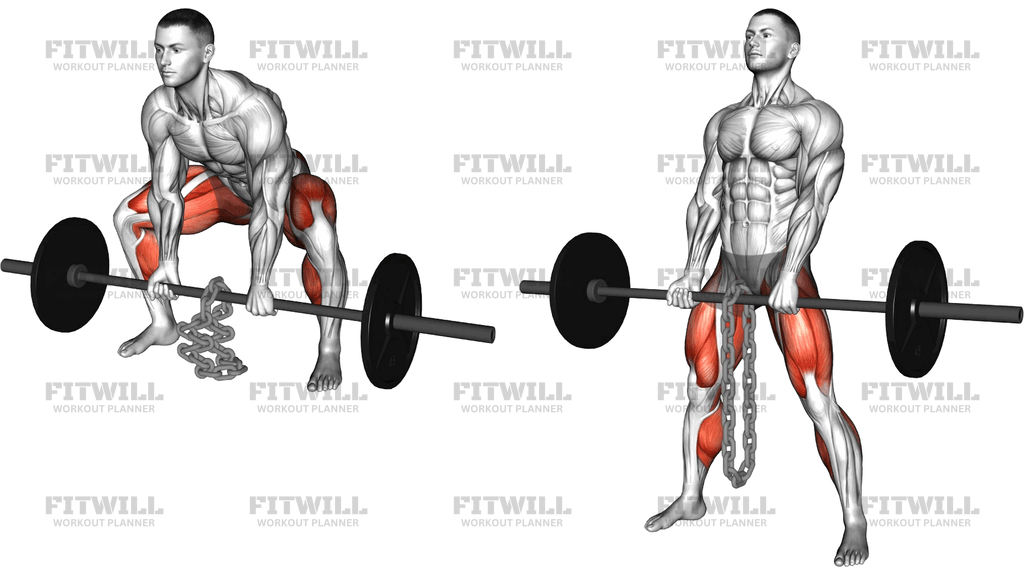
Barbell Weighted Chains Sumo Deadlift is a wide-stance deadlift variation that loads the hips, glutes, inner thighs, and trunk while the chains add resistance as you stand up. The bar starts on the floor, the feet stay turned out and planted wide, and the torso rises from a braced, athletic hinge rather than from a squat-like bounce. That setup matters because the sumo position shortens the pull for some lifters, while the chains change the feel of the rep by making the top portion heavier than the bottom.
The movement is most useful when you want to train lower-body strength, hip extension, and posture under load with a stance that keeps the knees pushed out and the chest organized over the bar. The bar path should stay close to the body from the floor to lockout, and the shoulders should stay packed so the upper back does not collapse as the plates and chains leave the ground. If the chains are set correctly, they should partly rest on the floor at the start and progressively pick up load as you stand, which forces a smoother, more intentional drive through the hardest part of the lift.
Good reps begin before the bar moves. Set the feet wide enough that the shins can stay near vertical, grip the bar inside the knees, pull the slack out, and wedge the hips between the shoulders and the heels before driving upward. That preload helps you feel the bar and the chain tension before the pull starts, which reduces jerking and keeps the first inch of the lift controlled. At the top, finish tall with the glutes, but do not lean back or overextend the lower back just to exaggerate lockout.
Lower the bar by hinging the hips back first, then letting the knees bend as the bar passes the thighs. Keep pressure through the whole foot, keep the knees tracking over the toes, and let the chains settle back to the floor under control before the next rep. This exercise is a strong fit for strength blocks, posterior-chain accessories, or power-focused lower-body sessions when you want a deadlift that rewards position and speed off the floor without turning into a rushed heave.
[ Workout Log & Planner ]
Put your next workout in Fitwill
Keep your plan and training log ready when you are.


Instructions
- Stand with your feet wide, toes turned out, and the bar over the midfoot so your shins can stay close to the bar when you lower into position.
- Grip the bar inside your knees, let the chains hang evenly, and set your hips low enough to feel tension without turning the setup into a squat.
- Pull your chest up, brace your trunk, and wedge your torso between your hips and shoulders before the bar leaves the floor.
- Pull the slack out of the bar and chains first so the lift starts smoothly instead of with a jerk.
- Drive the floor apart with your feet and push your knees out as you stand the bar up close to your legs.
- Keep the bar path tight against your shins and thighs while the chains rise off the floor and add more resistance near the top.
- Lock out by standing tall and squeezing the glutes, but do not lean back or flare the ribs to finish the rep.
- Lower the bar by sending the hips back first, then bending the knees as the bar returns to the floor and the chains settle.
- Reset your breath, tension, and stance before the next repetition so every rep starts from the same position.
Tips & Tricks
- Set the chain length so some links rest on the floor at the bottom; if the chains are fully off the ground before the pull starts, the resistance pattern is no longer the same lift.
- Keep your shins fairly vertical and your knees pushed out so the bar can travel straight up instead of drifting around the knees.
- Think about wedging your hips toward the bar before every rep; that tension helps the bar break from the floor without a yank.
- If the bar pulls your shoulders forward, lower the load and re-pack your lats before the first rep rather than trying to save the set midlift.
- The top of the rep gets harder because of the chains, so do not rush the last third of the pull or turn the lockout into a lean-back finish.
- Use a full-foot pressure pattern with the big toe, little toe, and heel all planted so the wide stance stays stable.
- Lower with intent and let the chain noise settle under control; dropping the bar between reps makes the next setup inconsistent.
- Choose a stance width that lets your hips drop between your knees without your lower back rounding to reach the bar.
- If your knees cave inward on the way up, reduce the load before you add more chain tension.
Frequently Asked Questions
What does Barbell Weighted Chains Sumo Deadlift train most?
It mainly trains the hips and glutes, with strong involvement from the inner thighs, hamstrings, spinal erectors, and core.
Why add chains to a sumo deadlift?
Chains make the lift lighter off the floor and heavier near lockout, so you have to keep driving through the top instead of just breaking the bar loose.
How wide should my stance be on this version?
Wide enough that your hands fit inside your knees and your shins can stay fairly vertical, but not so wide that you lose balance or round to reach the bar.
Where should the bar start in the setup?
The bar should sit over the midfoot with the chains arranged evenly so the pull starts from the same place every rep.
Should the chains stay on the floor during the whole rep?
No. A few links should stay grounded at the bottom, then more of the chain should lift as you stand so the resistance increases gradually.
Is this a squat or a deadlift?
It is a deadlift pattern. The hips start back, the chest stays braced, and the bar travels up from the floor rather than dropping into a deep squat.
What is the biggest form mistake with this exercise?
Common mistakes are letting the knees collapse inward, yanking the bar off the floor, or leaning back hard at the top to fake a stronger lockout.
Can beginners use this exercise?
Yes, but only with light chains and a load that lets you set the wedge, keep the bar close, and finish every rep without losing position.