Cable Front Raise
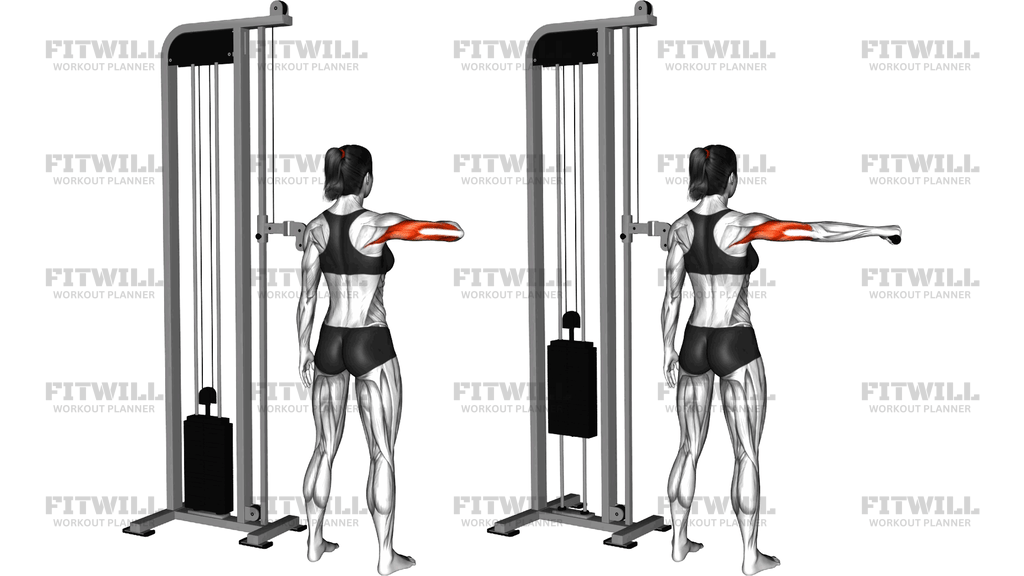
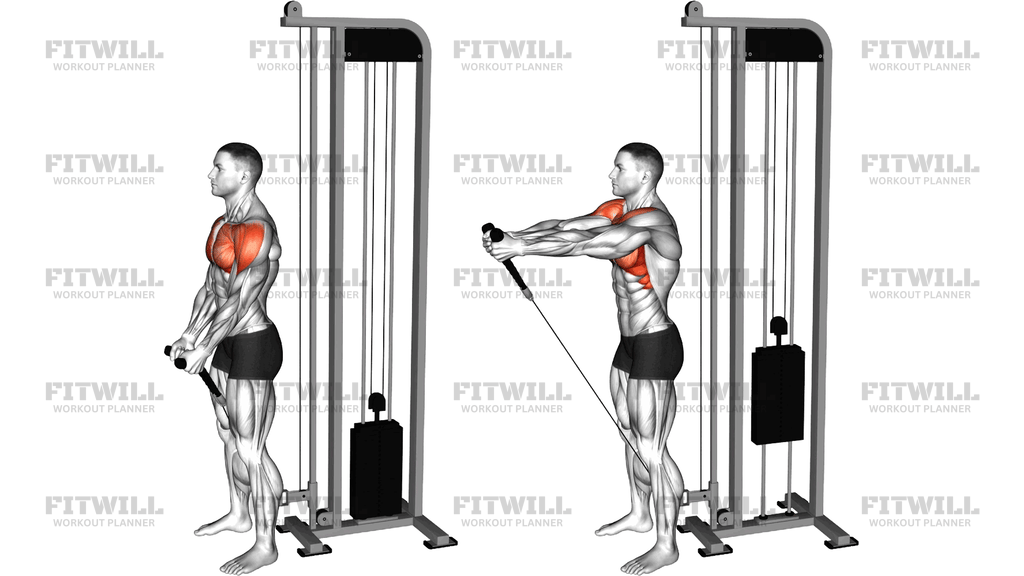
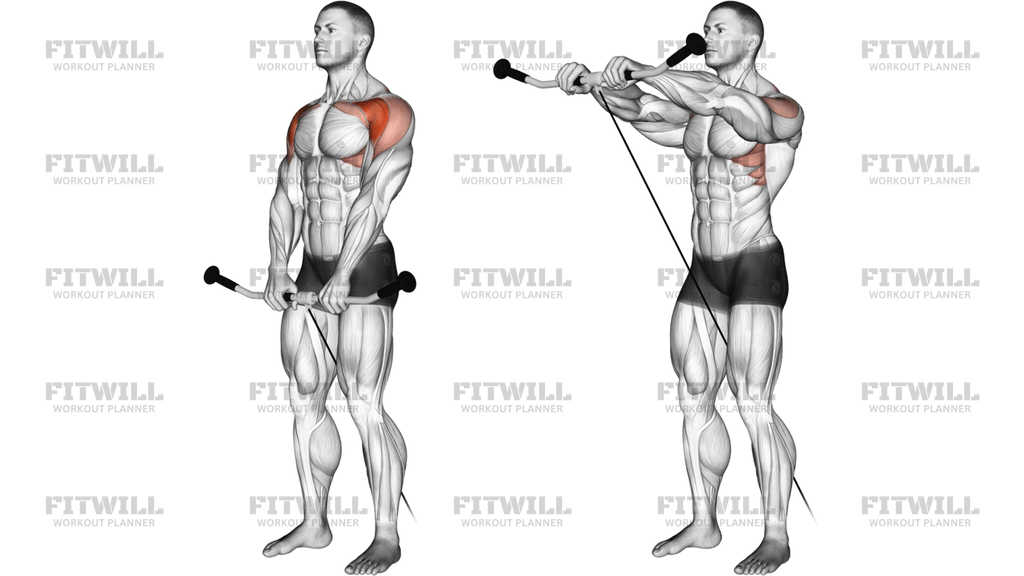
Cable Front Raise is a direct front-delt isolation movement that uses constant cable tension to train shoulder flexion through a smooth, controlled arc. It is especially useful when you want to build the front of the shoulders without relying on a heavy press, or when you want a cleaner way to load the lifting path that starts near the thigh and finishes in front of the body.
The exercise is small on paper but very specific in practice. The cable keeps tension on the shoulders almost the entire time, so the quality of the setup matters more than trying to swing the handle higher. When the torso stays tall and the rib cage stays quiet, the load shifts toward the Deltoids and away from momentum, lower-back sway, and shrugging.
Set the pulley low, take a step or two away from the stack, and let the cable run slightly behind the working side so the arm starts with tension at the bottom. A light staggered stance helps keep balance, especially on single-arm sets. The hand should travel in front of the body with only a small elbow bend, and the shoulder should finish near shoulder height or a pain-free top range rather than chasing extra height.
Cable Front Raise is often used as an accessory after pressing, as part of a shoulder session, or as a lower-load option when barbell or dumbbell front raises feel too easy at the bottom. It can also be a helpful teaching exercise for lifters who want to feel the front shoulder work without leaning back or bouncing the weight. The best reps look smooth from start to finish, with the neck relaxed, the torso still, and the return phase just as controlled as the lift.
If the front of the shoulder feels pinchy, shorten the range slightly, lighten the load, and keep the hand a little farther from the body line so the cable does not pull the humerus into an awkward position. Cable Front Raise should feel like clean shoulder work, not a tug-of-war with the lower back or traps.
[ Workout Log & Planner ]
Put your next workout in Fitwill
Keep your plan and training log ready when you are.


Instructions
- Set a single handle on the lowest pulley and stand a step or two in front of the cable so the line of pull stays behind the working arm.
- Plant your feet in a slight stagger, soften both knees, and keep your torso tall with your ribs stacked over your pelvis.
- Hold the handle with one hand in front of the thigh and let the shoulder settle down away from the ear before you start.
- Brace your midsection and keep the non-working hand relaxed at your side or lightly on your hip for balance.
- Lift the arm forward in a smooth arc with a soft elbow bend, leading with the hand rather than swinging the torso.
- Raise the handle to shoulder height or the highest pain-free point where the shoulder still stays down and the neck stays relaxed.
- Pause briefly at the top without letting the upper traps take over, then lower the handle slowly until the arm returns near the front of the thigh.
- Keep the cable under control on every rep, then finish the set by easing the handle back to the stack and switching sides if needed.
Tips & Tricks
- If the handle drifts across your body, reposition your feet so the cable tracks straight in front of the working shoulder instead of pulling from the side.
- A slightly staggered stance usually makes the bottom half cleaner because it reduces the temptation to lean back and turn the raise into a sway.
- Stop the ascent when the front of the shoulder is working hard but the upper traps are still quiet; going higher often turns this into a shrug.
- Keep the wrist stacked over the knuckles so the handle does not fold the wrist back as the cable tension increases.
- Use a lighter load than you would on a dumbbell front raise; the cable is hardest where the arm starts, so ego weight gets sloppy fast.
- If your lower back arches as the hand rises, exhale and tighten the ribs before the next rep instead of trying to lift higher.
- A small pause at the top helps keep the motion honest and prevents the cable from bouncing you through the return.
- If the shoulder feels better with a slight diagonal path instead of a perfectly vertical one, let the hand travel just inside the line of the shoulder.
Frequently Asked Questions
What does Cable Front Raise train most?
It mainly trains the front of the shoulders, with the upper chest and core helping stabilize the lift.
Should I stand facing the cable or away from it?
Usually you stand a step in front of the low pulley so the cable runs from behind the working arm and keeps tension on the bottom half of the raise.
How high should the handle go in Cable Front Raise?
Stop around shoulder height or a pain-free top range if the shoulder starts to shrug, pinch, or arch the lower back.
Is Cable Front Raise better with one arm or both?
Single-arm reps usually make it easier to keep the torso still and the cable path clean, especially when you are learning the movement.
Why does Cable Front Raise feel different from a dumbbell front raise?
The cable keeps tension on the shoulder through more of the range, so the bottom position feels more loaded and the motion often feels smoother.
What if I feel my upper traps taking over?
Lighten the load, lower the shoulder before each rep, and stop the raise before you start shrugging the handle upward.
Can beginners use Cable Front Raise?
Yes, as long as the load is light enough to keep the torso tall and the arm path controlled.