Cable Seated Supine-Grip Row
Cable Seated Supine-Grip Row is a seated cable row performed with an underhand grip. The supine grip changes the arm path a little and usually brings more biceps help into the pull, while still keeping the upper back and lats as the main drivers of the movement.
The primary targets are the upper back and lats, with the biceps and rear shoulders assisting the pull. It works best when the spine stays neutral, the shoulders stay down, and the elbows drive back toward the torso instead of the body leaning into the stack. That makes Cable Seated Supine-Grip Row useful for back training, arm-assisted rowing, and a different hand position from the more common neutral-grip row.
Set the row station, sit with your feet braced, and take an underhand grip on the handle before the first rep. Start with the arms fully extended and the chest tall, then row the elbows back toward the torso line until the handle reaches around the mid-torso. Pause briefly at the contraction, then return slowly to the start without bouncing or letting the torso swing forward and back.
Cable Seated Supine-Grip Row works well as a back accessory when you want a rowing pattern that feels different on the arms and elbows than a neutral or overhand grip. It can be a good variation for people who like the underhand position, and it often makes the biceps more noticeable during the pull. Good reps are controlled, smooth, and repeatable, with the elbows leading and the torso staying quiet.
If the wrists feel uncomfortable or the body starts to rock, reduce the load and keep the finish around the mid-torso line. The goal is a strict underhand row that keeps the back in charge.
[ Workout Log & Planner ]
Put your next workout in Fitwill
Keep your plan and training log ready when you are.


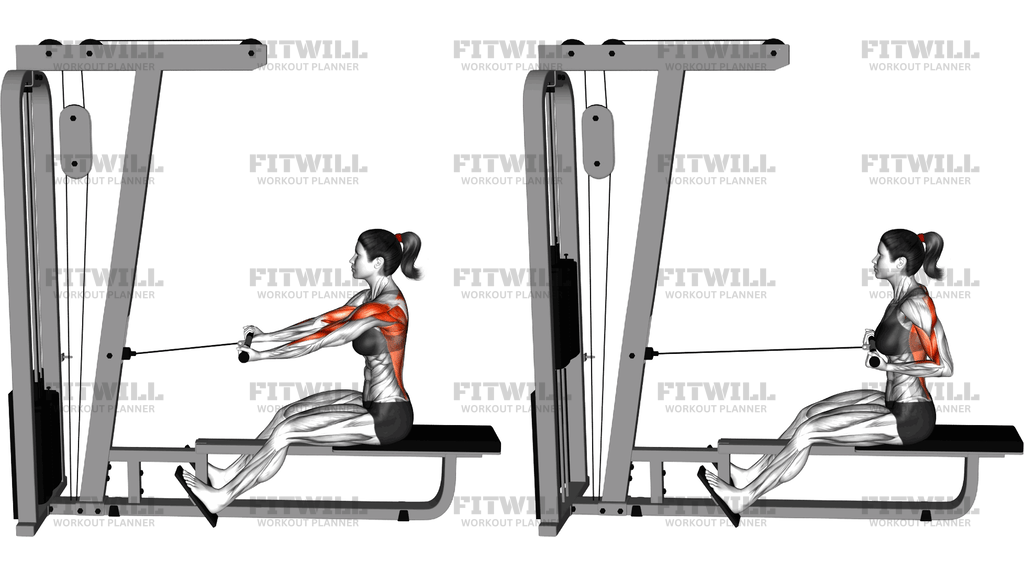
Instructions
- Set the cable row station and choose a handle that lets you take an underhand grip comfortably.
- Sit with your feet braced and your spine neutral before the first rep.
- Start with your arms fully extended and your chest tall.
- Row the elbows back toward the torso line instead of leaning into the stack.
- Pause briefly when the handle reaches around the mid-torso.
- Return slowly to full extension while keeping the torso quiet.
- Keep the wrists comfortable and the shoulders down through the set.
- Repeat for the planned reps with a smooth, repeatable rhythm.
Tips & Tricks
- Use a grip width that keeps the wrists comfortable; an underhand row should not feel like a wrist battle.
- Keep the torso mostly still so the row stays in the back and not in a body-sway pattern.
- Lead with the elbows and let the hands follow the line of pull.
- The underhand grip tends to bring the biceps in more, so do not let them take over completely.
- Use a moderate load that allows a clean pause at the torso without bouncing.
- If the shoulders creep up, reset the chest tall and lower the weight before the next set.
- The return should stay slow enough that you can feel the lats and upper back lengthen under control.
- This variation usually works best when the range ends around the mid-torso rather than very low on the body.
Frequently Asked Questions
What does the supine grip change in Cable Seated Supine-Grip Row?
It usually increases biceps involvement and changes the elbow path a bit.
What muscles does Cable Seated Supine-Grip Row work?
It mainly works the upper back and lats, with the biceps and rear shoulders helping the pull.
Can beginners do Cable Seated Supine-Grip Row?
Yes, as long as they use a lighter load and keep the form controlled.
Should I pull to my chest or waist in Cable Seated Supine-Grip Row?
Usually toward the mid-torso line for this variation.
What is the most common mistake in Cable Seated Supine-Grip Row?
Using body swing to finish the reps instead of rowing with the back.
Is Cable Seated Supine-Grip Row better than a neutral-grip row?
It is a useful alternative, not inherently better.
What rep range works well here?
Moderate rep ranges are common because it is a controlled rowing variation.