Reverse Cable Fly
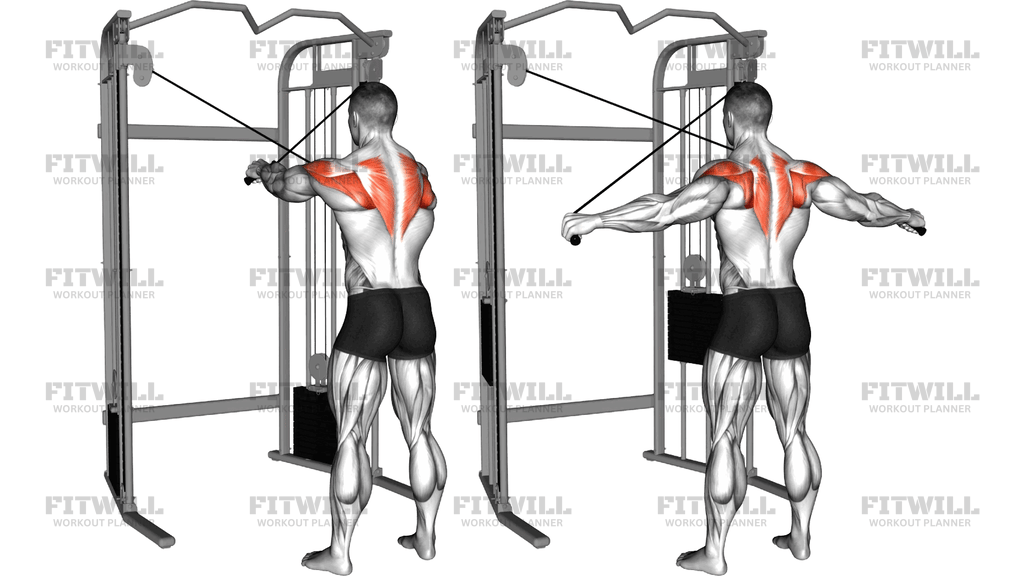
Reverse Cable Fly is a rear-delt and upper-back exercise that uses cable resistance to train horizontal abduction with a smooth, constant pull. The setup asks you to stay organized while the arms open out to the sides, which makes it especially useful when you want the posterior shoulder to work without the jerky finish that sometimes shows up in free-weight fly variations. Done well, the rep feels controlled, balanced, and very clear in the back of the shoulders.
The primary target is the posterior deltoid, with the rhomboids, middle trapezius, and infraspinatus helping guide the movement and stabilize the shoulder blades. That means the exercise is about more than just moving the hands apart. The shoulder blades should stay controlled as the chest remains quiet, the neck stays relaxed, and the elbows lead the arc. When the path is right, the rear delts light up without the traps taking over.
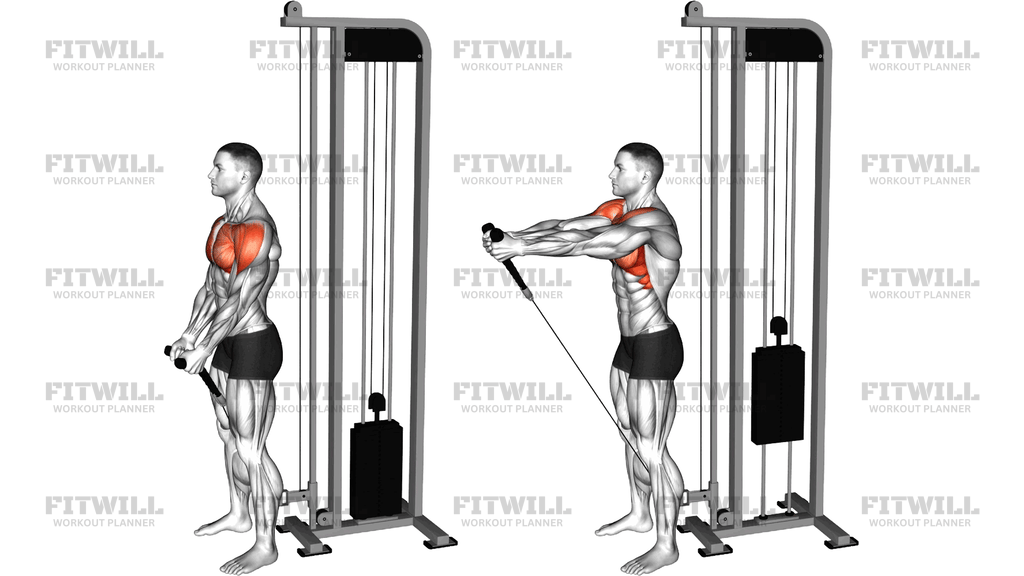
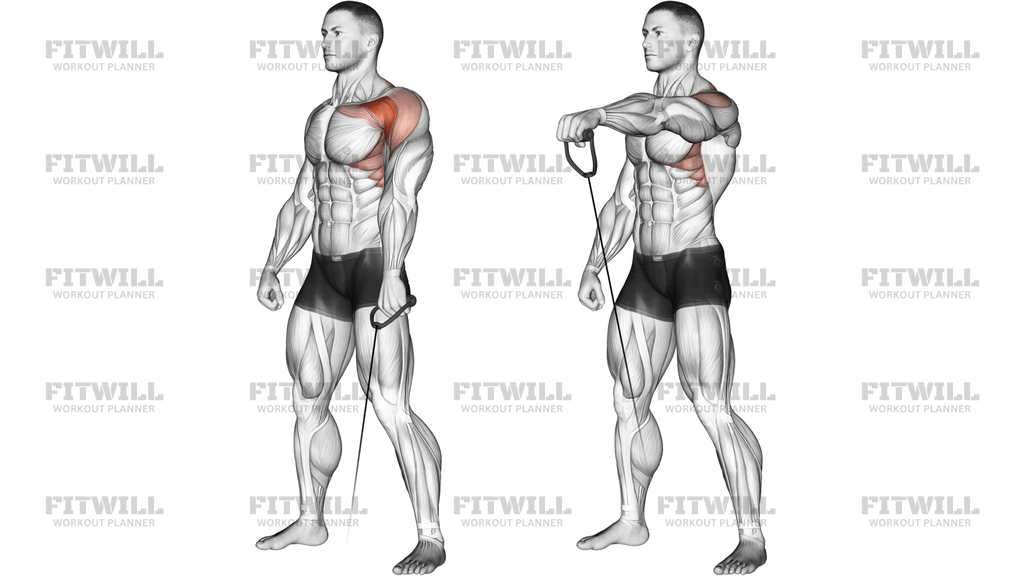
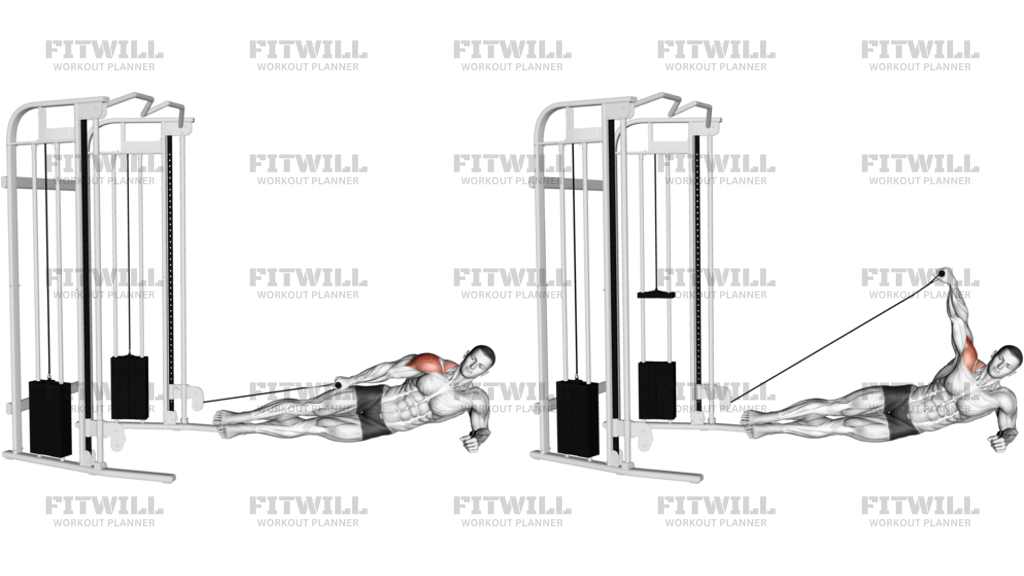
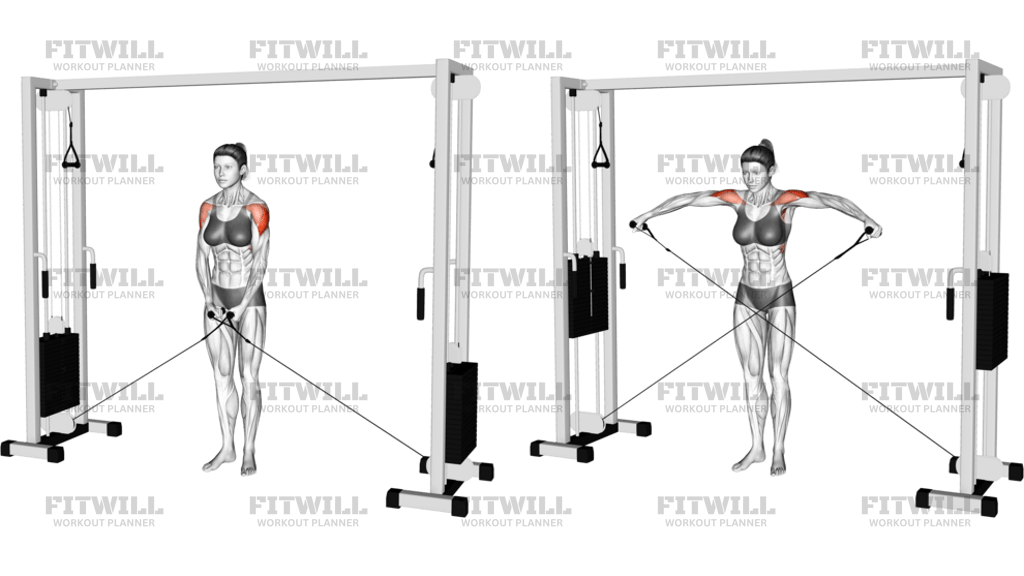
Set the cable handles at about upper-chest height and stand between the cables with a light crossed grip or whatever start position lets you create even tension on both sides. Step back until the cables are just pulling your arms forward, then brace your core and keep your chest neutral. The start position should feel stable and slightly open, not like you are being dragged into a shrug or a lower-back arch.
As you open the arms, think about moving the elbows outward in a smooth reverse-fly arc while the shoulders stay down. Pause briefly when the shoulder blades are under control and the rear delts are fully engaged, then return slowly without letting the cables slam you back to the start. The return phase is important because it keeps the tension on the back of the shoulders instead of letting momentum do the job for you.
Reverse Cable Fly is a strong accessory choice on upper-body days, especially after pressing or rowing work when the rear delts need direct attention. It also fits well in posture-focused blocks or higher-rep shoulder work. Use moderate load, keep the elbows soft, and stop the set when the torso starts leaning or the shoulders start shrugging. Small, clean reps usually give better rear-delt work than a heavy, noisy swing.
[ Workout Log & Planner ]
Put your next workout in Fitwill
Keep your plan and training log ready when you are.


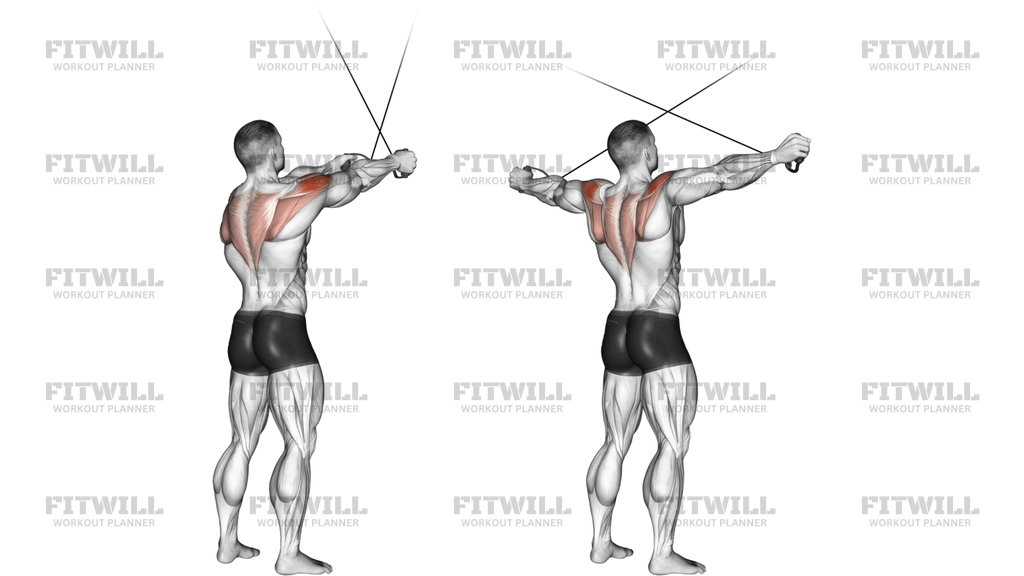
Instructions
- Set the cable handles at about upper-chest height.
- Stand between the cables and take the start position with light, even tension.
- Step back far enough that the handles want to pull your arms forward.
- Brace your core and keep your chest neutral.
- Keep the shoulders down and let the elbows stay softly bent.
- Open the arms outward in a smooth reverse fly arc.
- Pause briefly when the rear delts and upper back are fully engaged.
- Return slowly to the start without letting the stack slam the arms closed.
- Repeat with the same controlled tempo on every rep.
Tips & Tricks
- Think about opening from the elbows, not flinging the hands wide.
- Keep the shoulders away from the ears so the traps do not dominate the set.
- Use a load that lets you pause briefly without losing the shoulder position.
- A slight bend in the elbows usually keeps the joint path cleaner and easier on the shoulders.
- Slow lowering makes the rear delts work harder and keeps the movement honest.
- If the lower back is arching, reduce the load and stand a little taller.
- Keep the neck soft and the gaze forward instead of craning into the rep.
- Stop the set when the motion stops looking like a rear-delt fly and starts looking like a body swing.
Frequently Asked Questions
What muscle does Reverse Cable Fly target most?
It primarily targets the posterior deltoids.
Does it train upper back too?
Yes, the rhomboids and middle trapezius assist strongly.
Should I go heavy on this movement?
Most people get better results with moderate load and strict control.
Is Reverse Cable Fly good for posture?
It can help support posture by strengthening the rear shoulders and upper back.
Can beginners perform it?
Yes, if they start with light resistance and keep the motion controlled.
What is a common mistake?
Shrugging or swinging the torso instead of controlling the shoulder opening.
Should hands go behind the torso?
Only as far as you can keep the shoulders controlled without compensation.
How many reps are typical?
Moderate to higher rep ranges are common because the exercise responds well to strict volume.