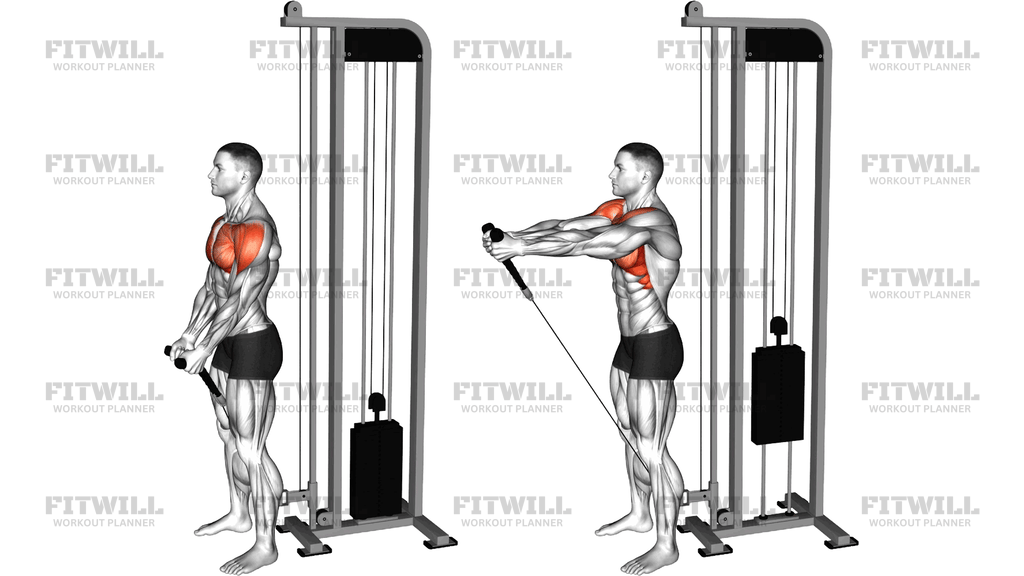
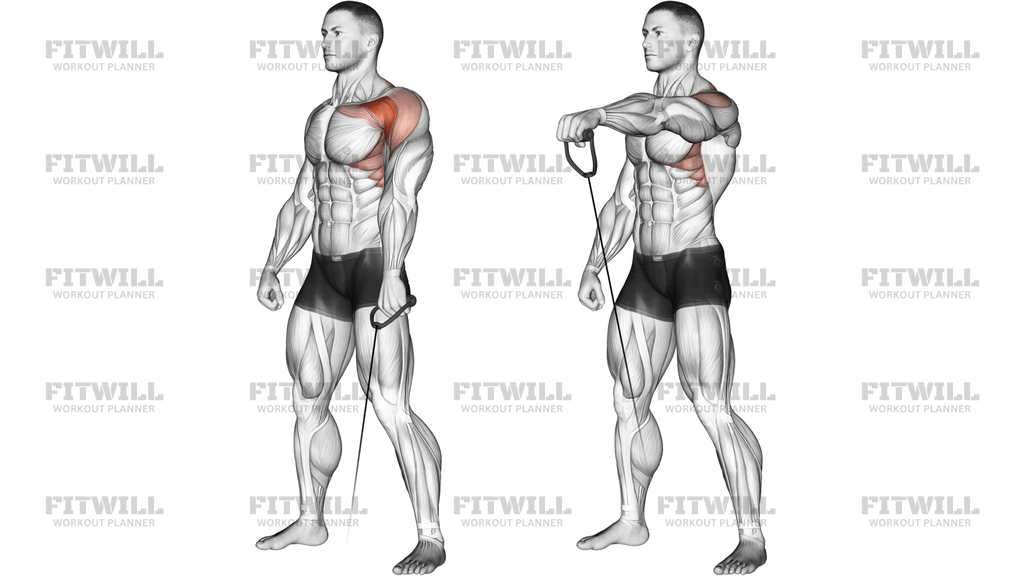
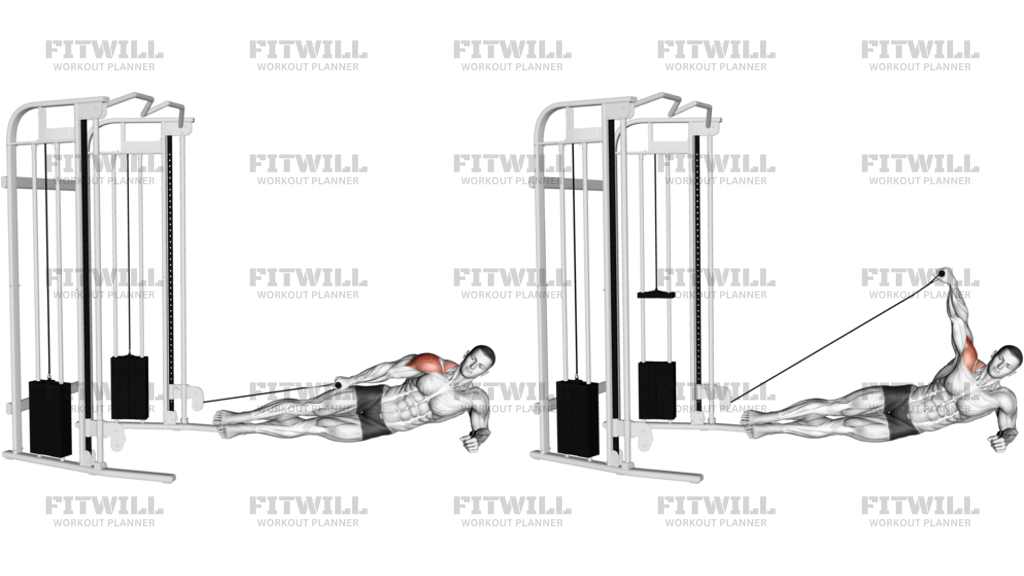
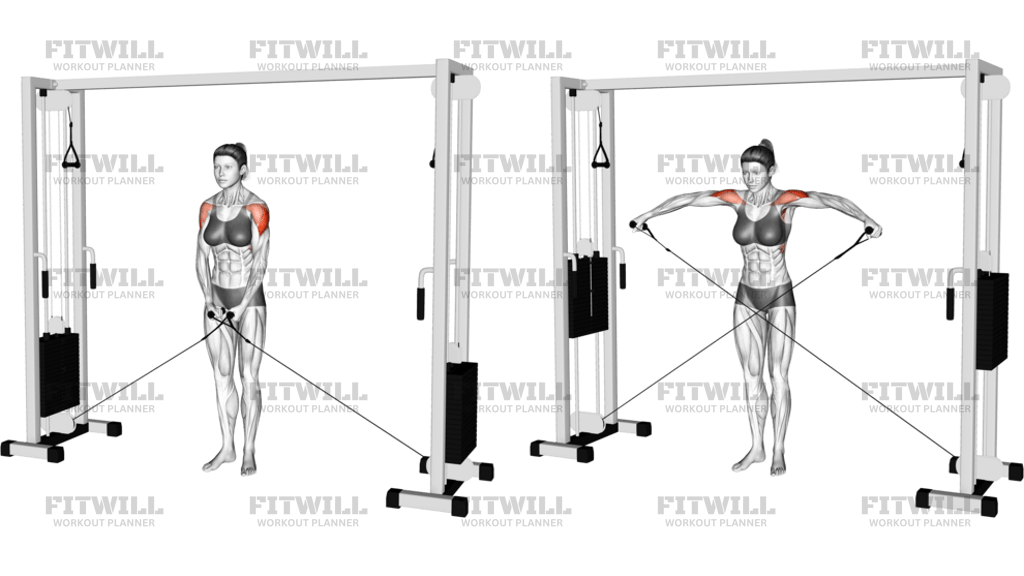
Cable Rope Standing Rear Delt Row
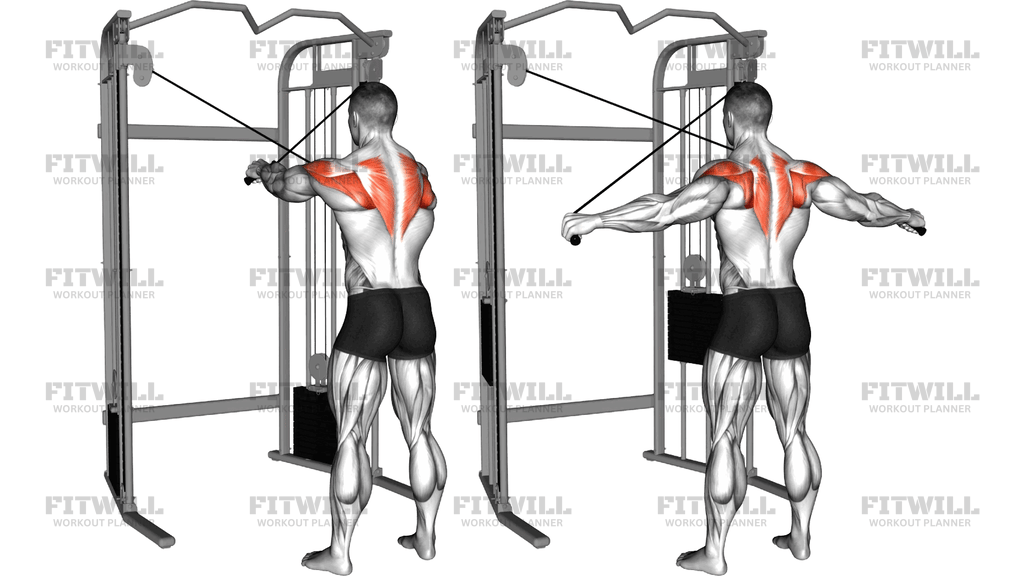
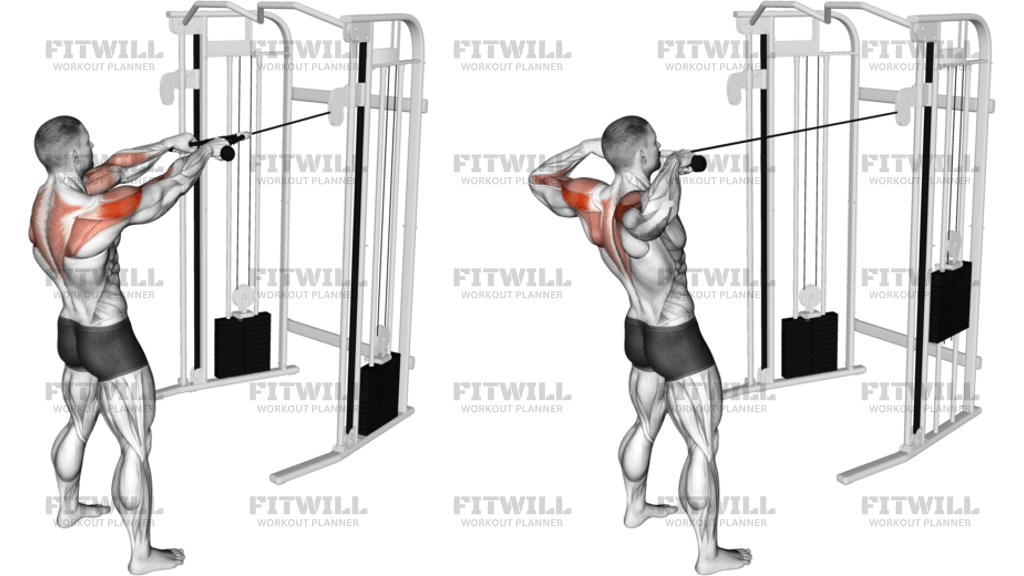
Cable Rope Standing Rear Delt Row is a rope-based pulling exercise that shifts the row toward the back of the shoulders and upper back. The cable gives you a clean line of pull, but the real point is how the elbows travel: the row should stay high enough and wide enough that the rear delts contribute strongly instead of turning the lift into a standard lat row. When the rep is right, the upper back feels engaged and the rear shoulder finishes the pull.
The primary target is the posterior deltoid, with the rhomboids, middle trapezius, and biceps brachii helping drive and stabilize the movement. That means the chest should stay proud, the neck should stay quiet, and the shoulders should not shrug upward to finish the rep. A slight rope separation at the top can help the shoulder blades and rear delts find a stronger squeeze, but the motion should still feel controlled rather than jerky.
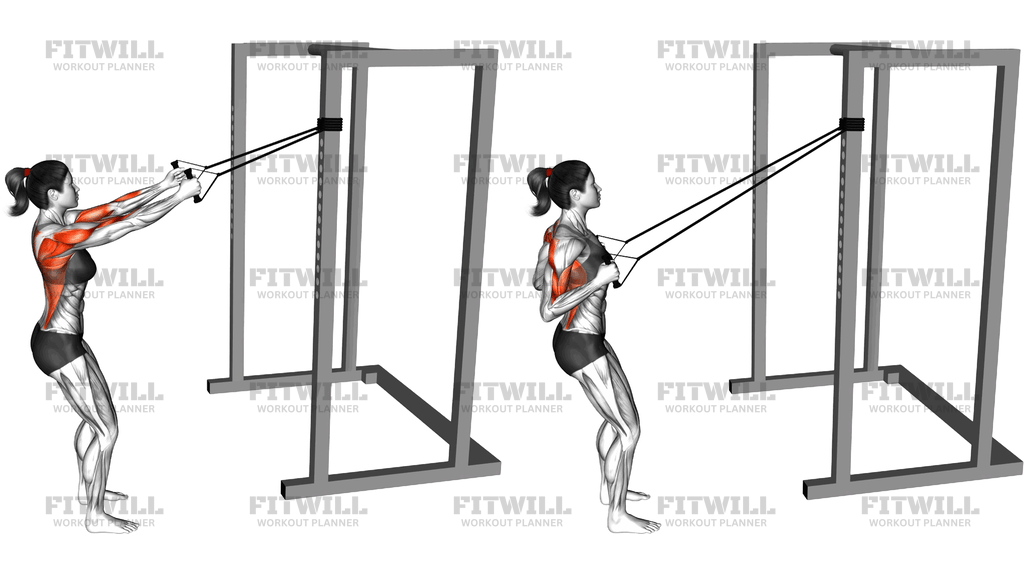
Set the rope at chest height and stand facing the machine with a balanced stance. Step back enough to create tension before the first rep, then brace your core and keep the torso tall. The start position should feel ready to row, not like you need to lean back to create room. If the lower back starts arching just to make the handle move, the load is too heavy or the line of pull is off.
Row the rope toward the upper chest or face line with the elbows high and wide. Separate the rope ends slightly at the finish, pause briefly in the contracted position, and then return slowly to the start. The return matters because it keeps tension on the rear delts and upper back instead of letting the stack pull you back in a rush. The best reps are smooth and deliberate, with the rear shoulders doing more of the finish than the hands.
Cable Rope Standing Rear Delt Row works well on upper-body days when you want direct rear-shoulder volume, especially after pressing or when posture-focused pulling is a priority. It also fits nicely in higher-rep accessory blocks because the cable keeps the tension predictable. Use a moderate load, keep the elbows from dropping, and stop the set when the shoulders start shrugging or the torso starts swinging.
[ Workout Log & Planner ]
Put your next workout in Fitwill
Keep your plan and training log ready when you are.


Instructions
- Set the rope attachment to about chest height.
- Stand facing the machine with a balanced, athletic stance.
- Step back until the rope already has light tension.
- Brace your core and keep your chest up before the first rep.
- Row the rope toward the upper chest or face line.
- Keep the elbows high and wide as you pull.
- Separate the rope ends slightly at the finish if that matches the setup.
- Pause briefly in the contracted position.
- Return slowly to full reach without letting the stack yank you forward.
Tips & Tricks
- Think about pulling with the rear delts and upper back, not just the hands.
- Keep the shoulders down so the traps do not take over the finish.
- A moderate load usually works better than a heavy swingy row.
- Control the return so the rear delts stay under tension longer.
- If the low back is arching, shorten the stance and reduce the weight.
- A small rope split at the top can make the rear-shoulder squeeze easier to feel.
- Keep the neck relaxed and the gaze forward.
- Stop the set when the motion starts to look like a body swing.
Frequently Asked Questions
What does this row target most?
It primarily targets the posterior deltoids.
Does it work upper back too?
Yes, the rhomboids and middle traps assist strongly.
How is it different from face pulls?
The movement is similar, but this version usually emphasizes a more row-like path into the rear delts.
Can beginners perform this?
Yes, as long as they keep the load light and the torso steady.
Should I separate the rope at the top?
A slight separation often helps the rear-shoulder squeeze.
What is a common mistake?
Turning it into a heavy body-swing row or letting the traps shrug the shoulders up.
How many reps are common?
Moderate to higher reps are common for rear-delt focused work.
Why do my traps dominate?
You may be shrugging, so lower the load and keep the shoulders down.