Cable Supine Reverse Fly
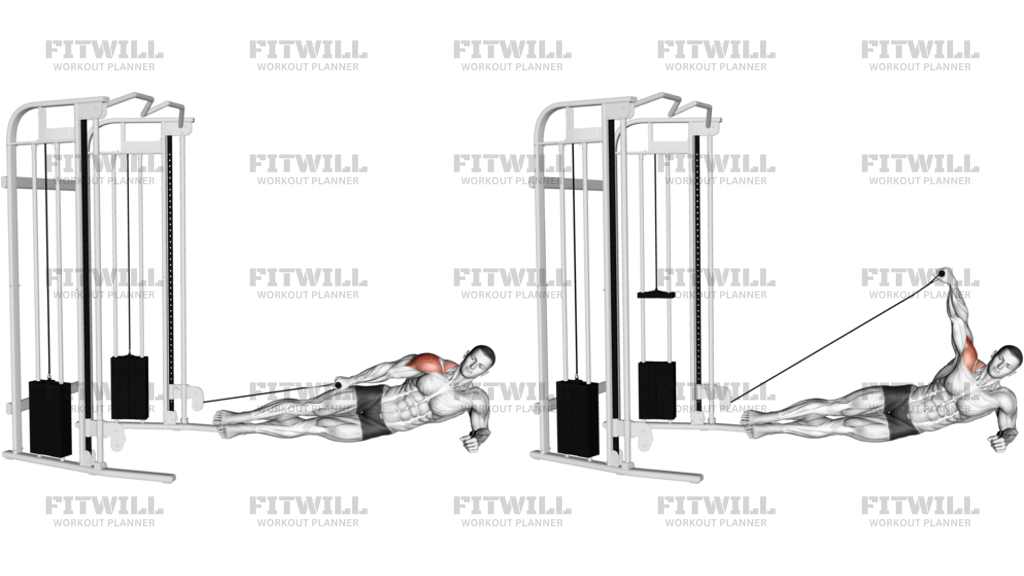
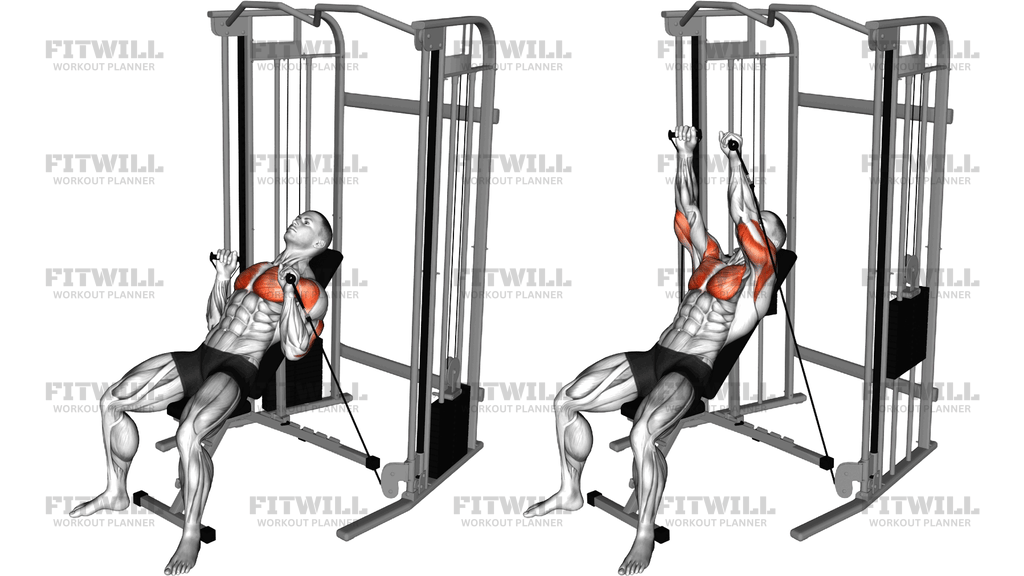
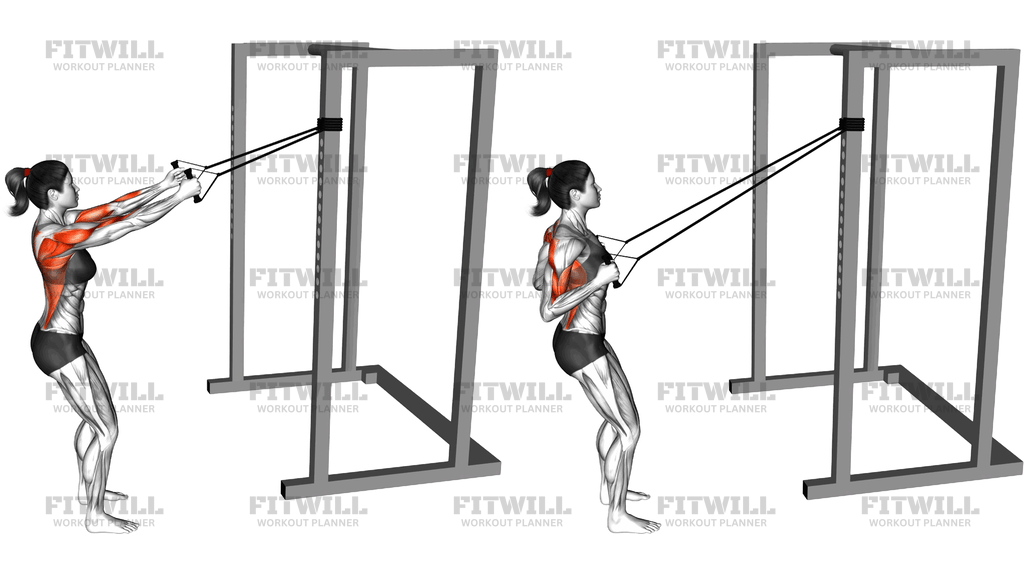
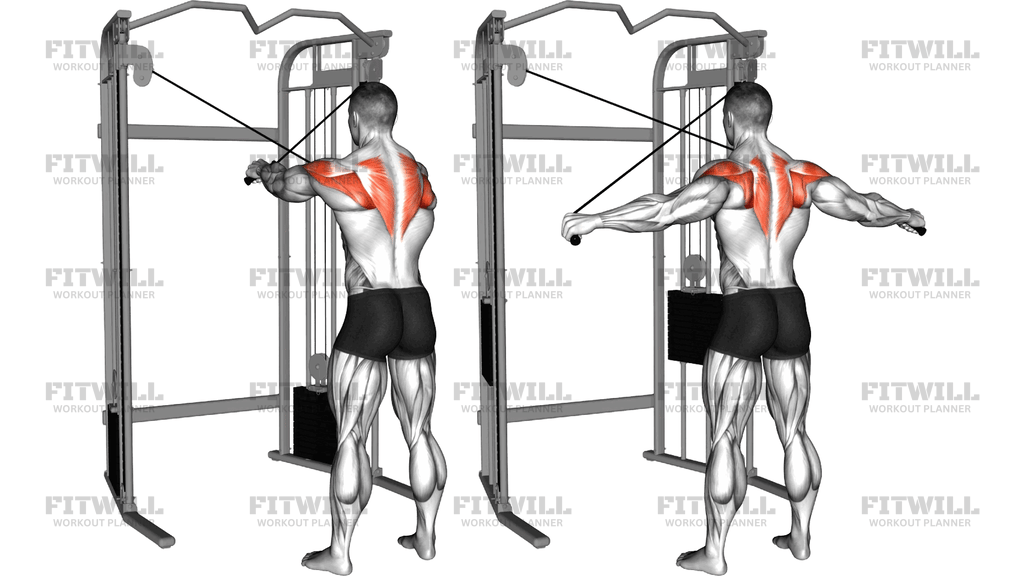
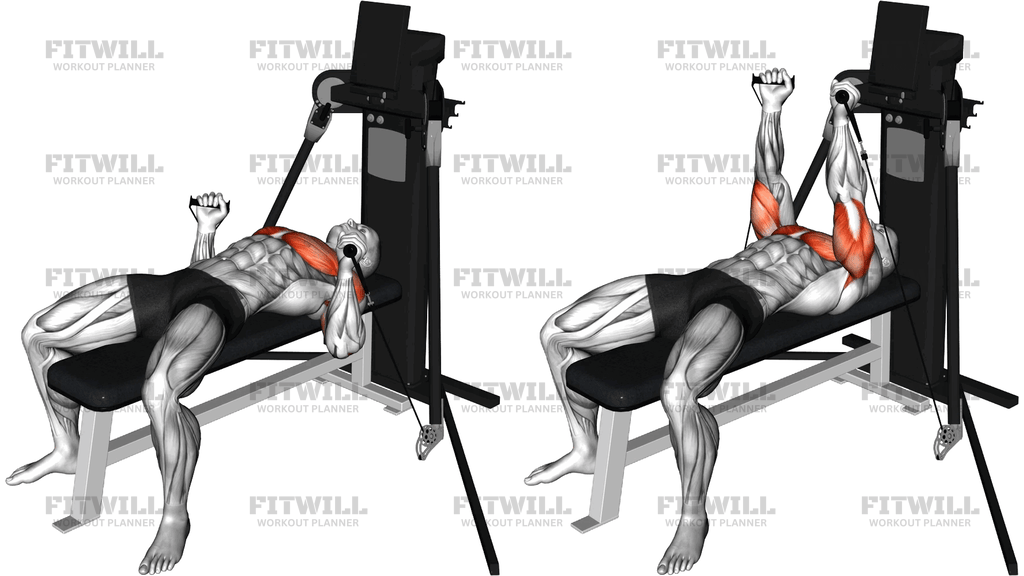
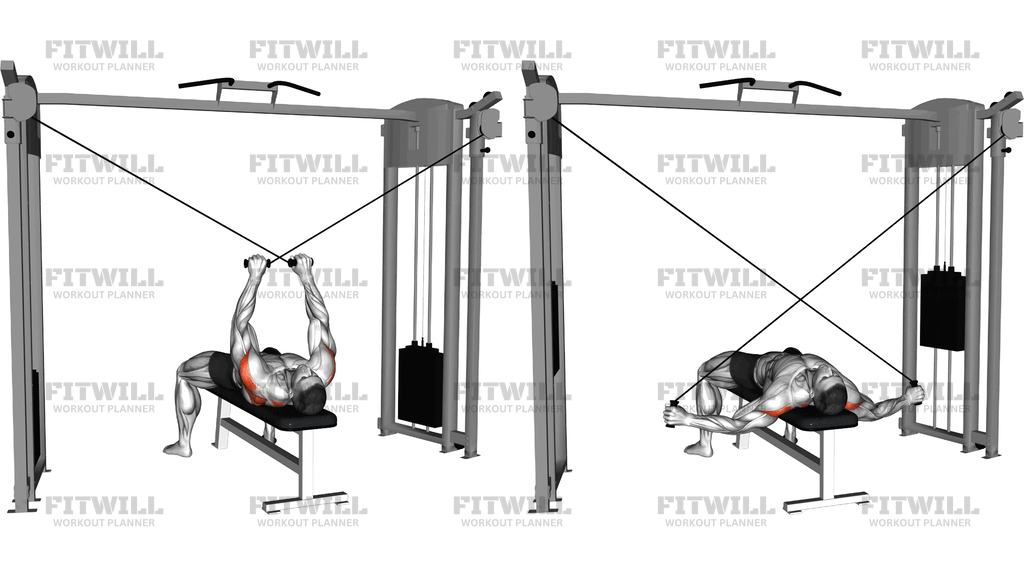
Cable Supine Reverse Fly is a rear-shoulder isolation exercise performed while lying on a bench or floor to reduce body sway and make the shoulder work easier to feel. The supine position strips away a lot of the momentum that can sneak into standing rear-delt work, so the exercise becomes a cleaner way to train horizontal abduction and upper-back control. The cable still gives you constant tension, but the body is more pinned down, which makes the rep feel more precise.
The primary target is the posterior deltoid, with the rhomboids, middle trapezius, and infraspinatus helping stabilize and guide the movement. That means the chest stays quiet, the neck stays relaxed, and the arms open in a controlled reverse-fly arc. The elbows should keep a slight bend, but the angle should stay nearly the same so the motion stays about the shoulder rather than the elbow.
Set the cable handles so the line of pull feels natural and lie supine between the cables on a bench or floor mat. Grip the handles with a light elbow bend and settle the shoulders down before the first rep. The setup should feel stable, with the trunk supported and the arms ready to move without needing to brace against standing balance. If you have to reach or twist to catch tension, adjust the cable position before starting the set.
Open the arms outward in a smooth reverse-fly path, pause briefly at the end of the pull, and return slowly to the start. The return matters because it keeps the rear delts under tension and avoids a sloppy bounce off the bottom. Since the torso is supported, the movement should feel especially clean and repeatable. The best reps are small enough to stay controlled but long enough that the rear shoulder still gets a strong squeeze.
Cable Supine Reverse Fly works well as a rear-delt accessory, a posture-focused drill, or a finishing movement after pressing and rowing. It is especially useful when you want to isolate the rear shoulder without standing balance becoming part of the challenge. Use moderate resistance, keep the wrists quiet, and stop the set when the shoulders start shrugging or the elbows start changing shape too much.
[ Workout Log & Planner ]
Put your next workout in Fitwill
Keep your plan and training log ready when you are.


Instructions
- Set the cable handles so the line of pull feels natural.
- Lie supine on a bench or floor between the cable lines.
- Grip the handles with a slight bend in the elbows.
- Set your shoulders down and keep your neck relaxed.
- Brace your core while the torso stays supported.
- Open the arms outward in a smooth reverse-fly arc.
- Pause briefly at the end of the pull.
- Return slowly to the start position.
- Repeat with the same controlled elbow angle each rep.
Tips & Tricks
- Use moderate resistance so the rear delts stay in control.
- Keep the neck relaxed and the shoulders away from the ears.
- Lead the motion from the elbows rather than the hands.
- Avoid changing the elbow angle too much during the rep.
- Do not bounce off the bottom or whip the arms open.
- The supported position should make the movement feel cleaner, not faster.
- Pause briefly at the end to feel the rear-delt squeeze.
- Control both directions so the set stays honest.
Frequently Asked Questions
What muscle is primary in this exercise?
The posterior deltoid is the primary target.
Why perform it in a supine position?
The supine setup can reduce momentum and improve isolation.
Does it train upper back too?
Yes, the rhomboids and middle trapezius assist strongly.
Can beginners do this movement?
Yes, with light load and controlled form.
Should elbows be straight?
No, keep a slight bend and a stable elbow angle.
What is a common mistake?
Shrugging the shoulders or using too much weight.
How many reps are typical?
Moderate to higher reps are common for rear-delt work.
Can Cable Supine Reverse Fly help posture balance?
Yes, strengthening the rear shoulder and upper back can support posture.