Cable Standing Up Straight Crossovers
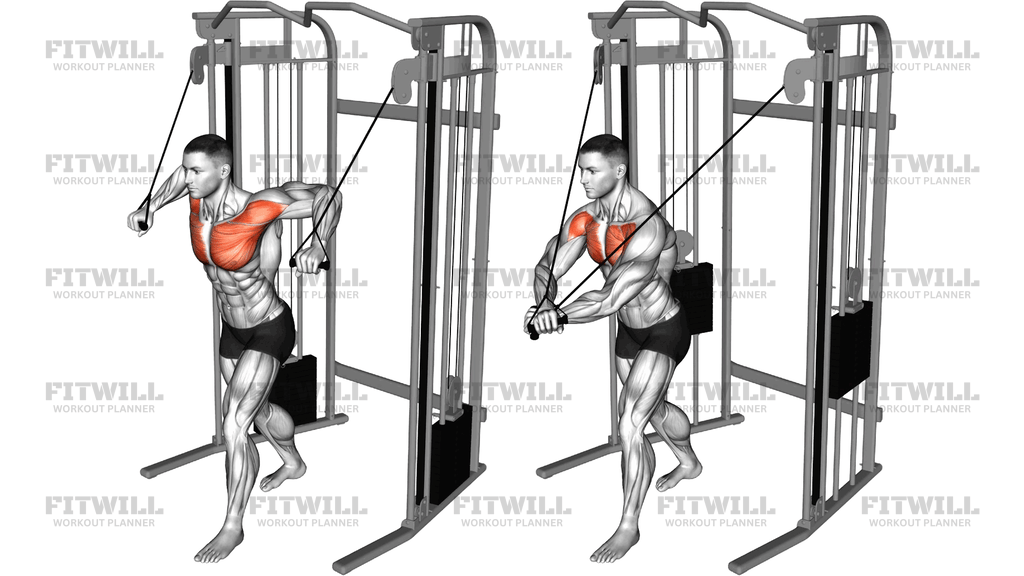
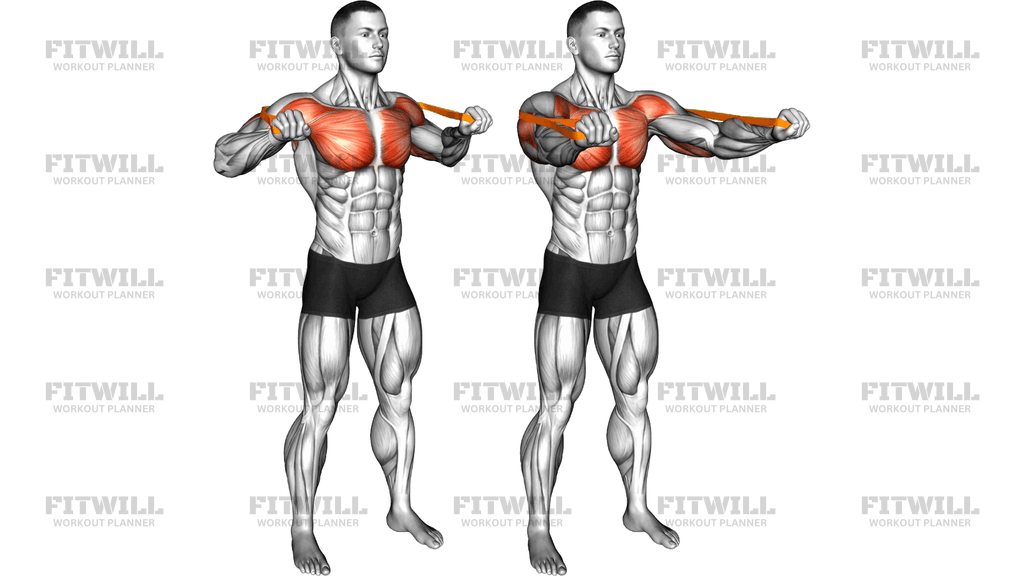
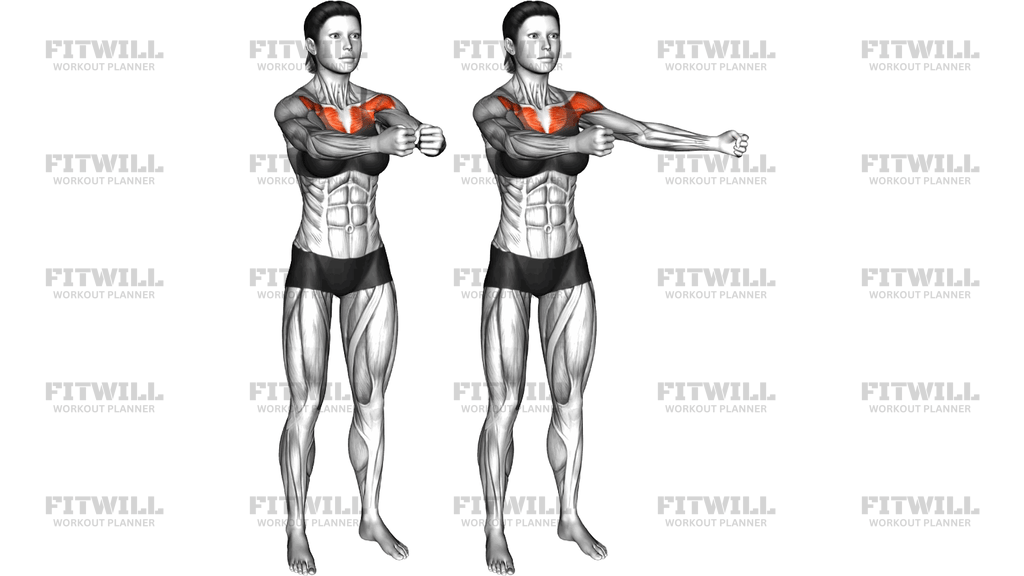
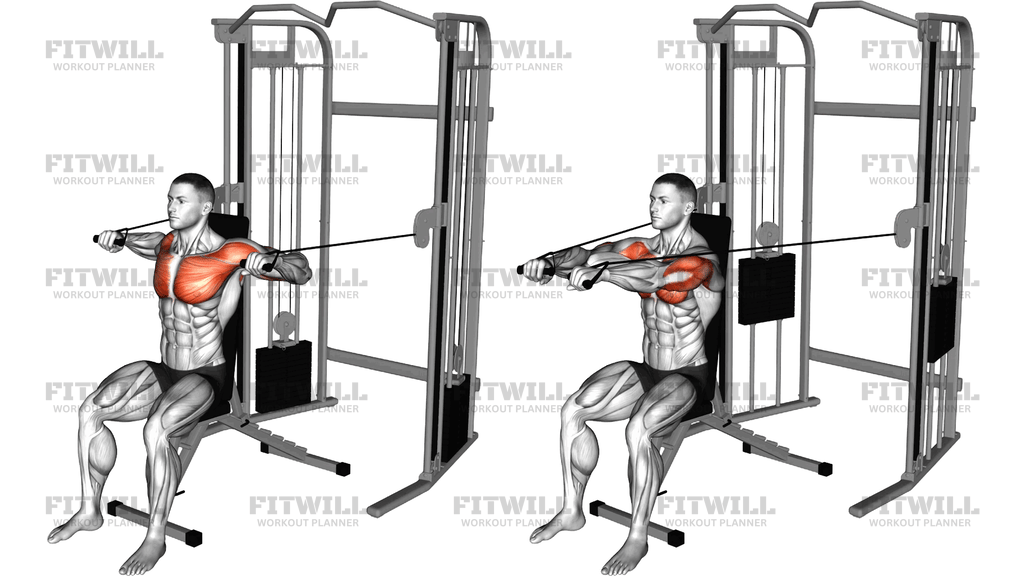
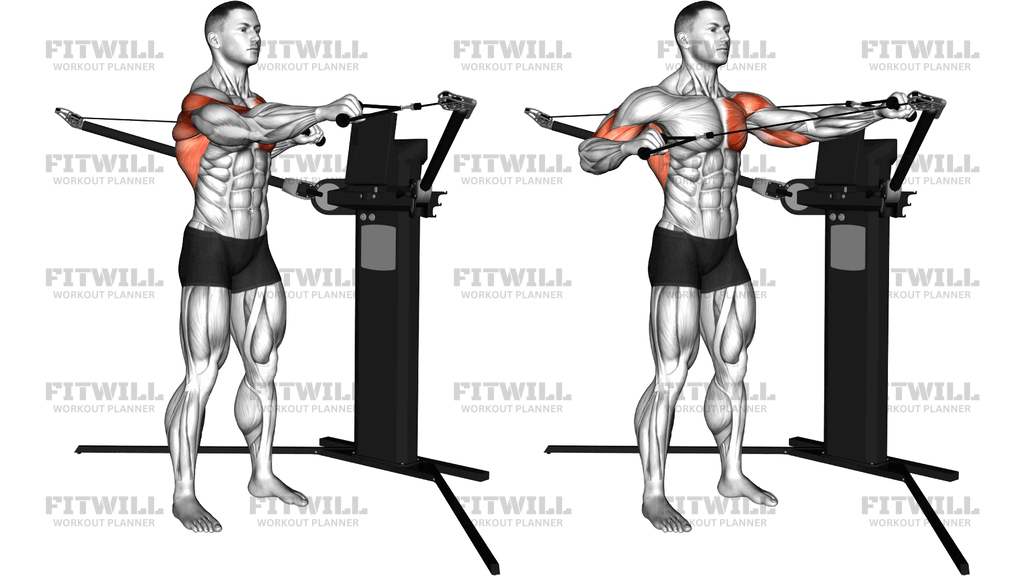
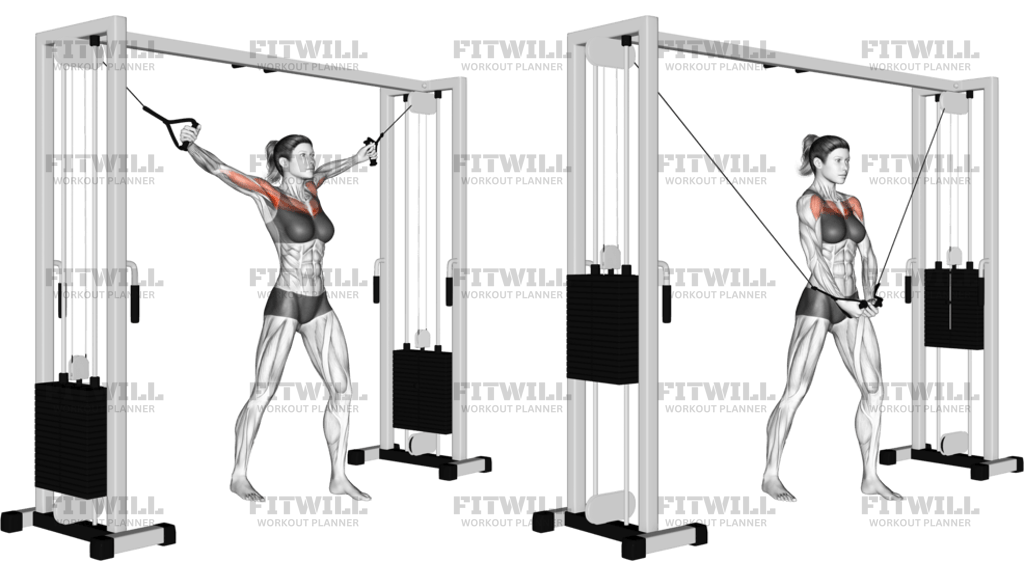
Cable Standing Up Straight Crossovers are a standing cable chest exercise that keeps the torso tall while the arms sweep from a wide open position to a controlled crossover in front of the body. The setup shown here uses a cable machine with handle attachments and a high pulley position, so the line of pull keeps tension on the chest through both the opening and closing phases. It is a useful choice when you want constant resistance without lying on a bench or relying on momentum.
The main training emphasis is the chest, especially the pectoralis major, with the front delts, triceps, and core helping stabilize the shoulders and trunk. Because the body stays upright, the exercise demands more posture control than a bench-based fly. That makes the stance, rib position, and shoulder position important: if you lean, shrug, or overarch, the cables start to drive the movement instead of the chest.
A clean rep begins with the pulleys set high, a stable stance, and a slight bend in the elbows that stays nearly fixed through the set. From the open position, the hands travel in a wide arc down and inward until they meet in front of the lower chest or upper waist, depending on the pulley height and your arm length. Keep the chest lifted, the neck relaxed, and the shoulder blades controlled rather than pinned hard together.
This exercise works well as accessory chest work, as a cable-based fly variation in hypertrophy training, or as a controlled finish after heavier pressing. It is also useful when you want to keep tension on the chest without a large load. The most common mistakes are turning it into a front-delt raise, shortening the range too much, or swinging the torso to force the handles together.
Use a load that lets you keep the path smooth, the elbows softly bent, and the return phase slow enough to feel the chest lengthen under control. If the shoulders feel pinched, reduce the range slightly and keep the handles a little lower in front of the body. Done well, this is a precise standing chest movement that trains horizontal adduction with a strong posture demand and a very clear squeeze at the finish.
[ Workout Log & Planner ]
Put your next workout in Fitwill
Keep your plan and training log ready when you are.


Instructions
- Set the cable pulleys high and attach a handle to each side before standing between the towers.
- Grasp a handle in each hand, step forward into a tall stance, and keep a small bend in both elbows.
- Open your arms wide with the hands slightly behind the line of your chest and the shoulders down, not shrugged.
- Brace your midsection, lift your chest, and keep your ribs stacked over your pelvis so you do not lean back.
- Sweep the handles down and inward in a wide arc until the hands meet in front of your lower chest or upper waist.
- Squeeze the chest for a brief moment at the crossover without collapsing the shoulders forward.
- Return the handles slowly along the same arc until you feel the chest open again and the cables stay under control.
- Breathe out as you bring the handles together, inhale as you open back up, and keep repeating for the planned reps.
Tips & Tricks
- Keep the elbow angle nearly fixed so the movement comes from shoulder adduction, not a press or a triceps extension.
- If the shoulders start to shrug, lower the weight and think about keeping the neck long while the chest stays lifted.
- Use a slightly staggered stance if it helps you stay tall and prevents you from rocking forward on the crossover.
- Do not let the handles crash together; the last few inches should still feel controlled through the chest.
- A shallow arch in the upper back is fine, but a big lean-back turns the rep into a body swing and shifts tension away from the pecs.
- Let the hands travel in a gentle downward curve instead of pulling straight across at shoulder height.
- Stop the descent or shorten the range if the front of the shoulder feels pinched at the open position.
- Choose a load that still lets you slow the return, because the eccentric phase is where this variation keeps the chest under tension.
Frequently Asked Questions
What does Cable Standing Up Straight Crossovers train most?
It mainly trains the chest, especially the pectoralis major, with the front delts and triceps helping stabilize the arm path.
Why are the cables set high for this version?
The high pulley position creates the downward-and-inward crossover path shown in the image and keeps tension on the chest through the full arc.
Should my elbows stay bent the whole time?
Yes. Keep a soft, fixed bend so the shoulders move the handles while the elbows do not turn the rep into a press.
How far should I bring the handles together?
Bring them together in front of the lower chest or upper waist, but only as far as you can do it without shrugging or leaning.
What is the most common mistake on this exercise?
Most people use too much weight, then rock the torso or let the shoulders roll forward at the finish.
Can beginners use standing cable crossovers?
Yes, if they start light and focus on staying tall, keeping the elbows soft, and controlling the return.
What should I feel if the setup is correct?
You should feel the chest working hard, with the shoulders assisting but not taking over the movement.
Can I change the angle of pull?
Yes, but keep this version high-to-low if you want the same standing crossover path shown in the image.