Cable Rope Seated Face Pull
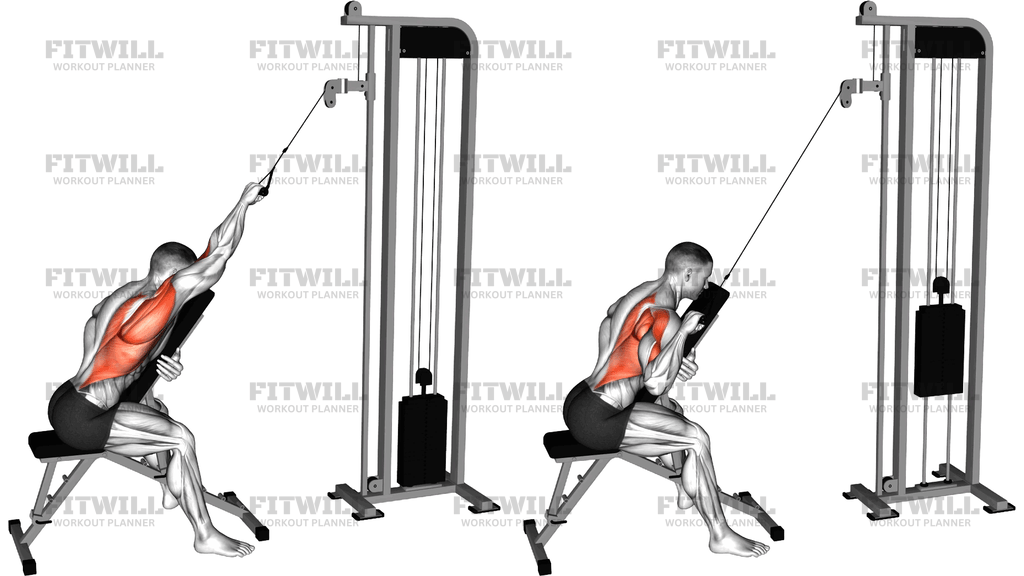
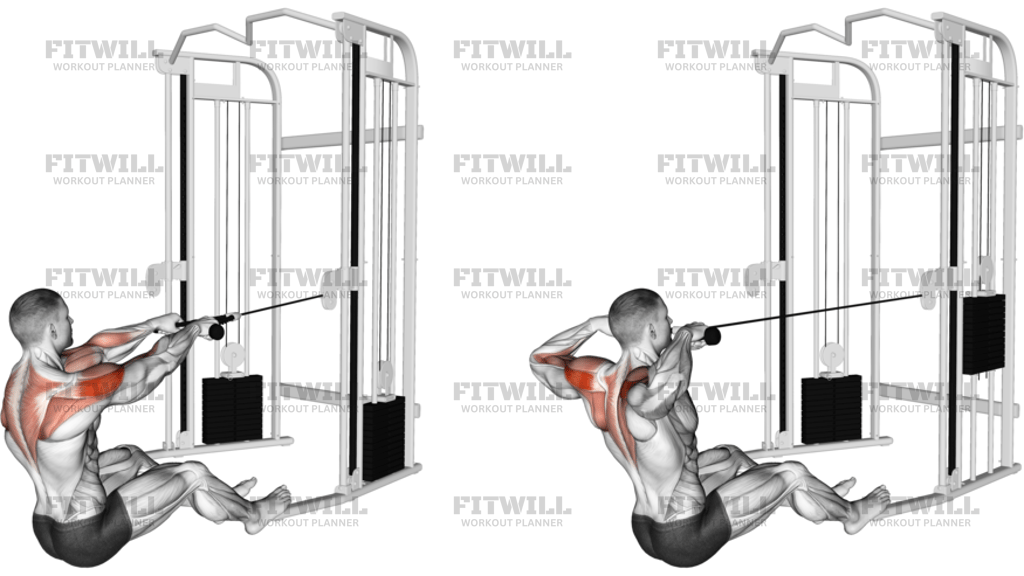
Cable Rope Seated Face Pull is a seated cable exercise that trains the upper back, rear shoulders, and scapular stabilizers with a line of pull aimed toward the face. In the image, the lifter sits on the floor facing the cable machine, holds the rope ends with the elbows high, and finishes each rep by drawing the hands back near the cheeks while the shoulder blades retract. That setup matters because the cable angle, torso position, and elbow path decide whether the movement stays on the rear delts and traps or turns into a jerky arm pull.
This variation is especially useful when you want cleaner shoulder mechanics than you get from upright rows or heavy pulling variations. The primary emphasis is on the trapezius, with strong help from the rhomboids, rear delts, and the muscles that rotate the shoulders externally at the end of the pull. Done well, it builds the upper-back strength that supports posture, pressing balance, and shoulder health without needing maximal load.
The setup should be deliberate. Sit tall, plant the legs in front of you, and take enough distance from the pulley that the arms can start straight without the stack slamming into place. Keep the rib cage down and the neck long before you begin. If the torso leans back hard or the shoulders shrug up toward the ears, the cable is usually too heavy or the line of pull is too low.
Each repetition should travel from straight arms to a controlled pull where the hands separate and the elbows finish high and slightly out to the sides. Think about bringing the rope toward the nose, forehead, or upper face while the shoulder blades come together and down. The end position should feel like an upper-back squeeze, not a lower-back swing. Return slowly until the arms are long again and the shoulders stay organized.
Use Cable Rope Seated Face Pull as accessory work, as part of a warm-up for pressing days, or in a back-shoulder session where posture and control matter more than load. It works best with moderate to light resistance, crisp pauses, and clean repeats. Because the exercise is simple to scale, beginners can learn it early, but the benefit comes from strict positioning rather than chasing a bigger stack.
[ Workout Log & Planner ]
Put your next workout in Fitwill
Keep your plan and training log ready when you are.


Instructions
- Set the cable pulley at about face height and attach the rope so you can pull both ends apart at the finish.
- Sit on the floor facing the machine with your legs in front of you and your torso tall.
- Take the rope in both hands, step or scoot back until your arms are straight, and start with tension already on the cable.
- Keep your ribs stacked over your pelvis and your chin slightly tucked before the first pull.
- Pull the rope toward your face while driving your elbows high and out to the sides.
- At the finish, separate the rope ends and squeeze your shoulder blades together without shrugging.
- Pause briefly with the hands near the cheeks or forehead and the upper back fully engaged.
- Return the rope forward in a controlled arc until the arms are straight again and the shoulders stay quiet.
- Breathe out as you pull, inhale as you extend, and stop the set if your torso starts rocking.
Tips & Tricks
- Choose a load that lets you pull the rope to your face without leaning backward to create extra distance.
- Keep the elbows slightly higher than the hands so the rear delts and mid traps do the work instead of the biceps.
- Finish by separating the rope ends and turning the thumbs slightly behind you rather than just yanking the handle straight back.
- If the shoulders rise toward the ears, lower the weight and think about pulling the shoulder blades down as they come back.
- Do not let the wrists bend back and take over the pull; keep the knuckles and forearms in line with the rope.
- A short pause at the face makes this exercise much harder and keeps the rep honest.
- Keep the neck long and avoid jutting the head forward as the hands come in.
- Use a slow return so the cable does not snap your shoulders forward at the start of the next rep.
Frequently Asked Questions
What muscle does Cable Rope Seated Face Pull target most?
The main target is the trapezius, especially the middle and lower portions, with strong help from the rear delts and rhomboids.
Can beginners perform this exercise?
Yes. It is beginner-friendly if the cable is light enough to keep the elbows high, the torso still, and the rope path clean.
Where should the rope finish on each rep?
The rope should travel toward the face, usually around the nose, forehead, or upper cheek level, with the hands splitting apart at the end.
Should I lean back while pulling?
A small amount of body angle is fine, but the exercise should not turn into a row. If you need to rock back to move the cable, the load is too heavy.
What is the main setup cue for this seated version?
Sit tall on the floor, set tension before you start, and keep the ribs stacked so the pull comes from the upper back instead of the lower back.
What does the split-hand finish do?
Separating the rope ends encourages external rotation and better rear-delt and upper-back engagement at the top of the movement.
What are the most common mistakes?
Shrugging the shoulders, using too much load, leaning back to cheat the pull, and finishing with the hands low instead of near the face.
When is this exercise most useful?
It works well on back days, shoulder days, or before pressing sessions when you want more scapular control and upper-back activation.