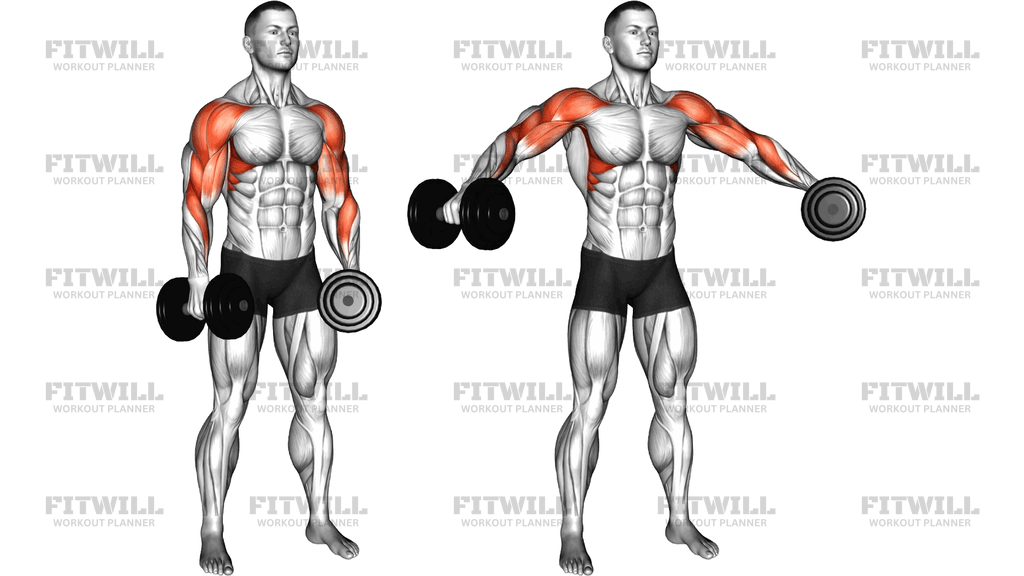
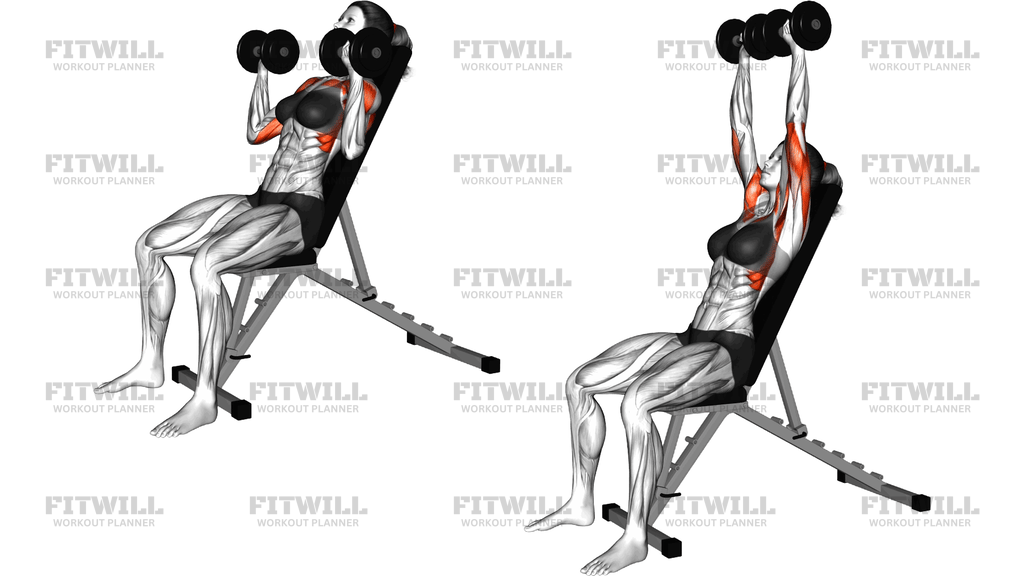
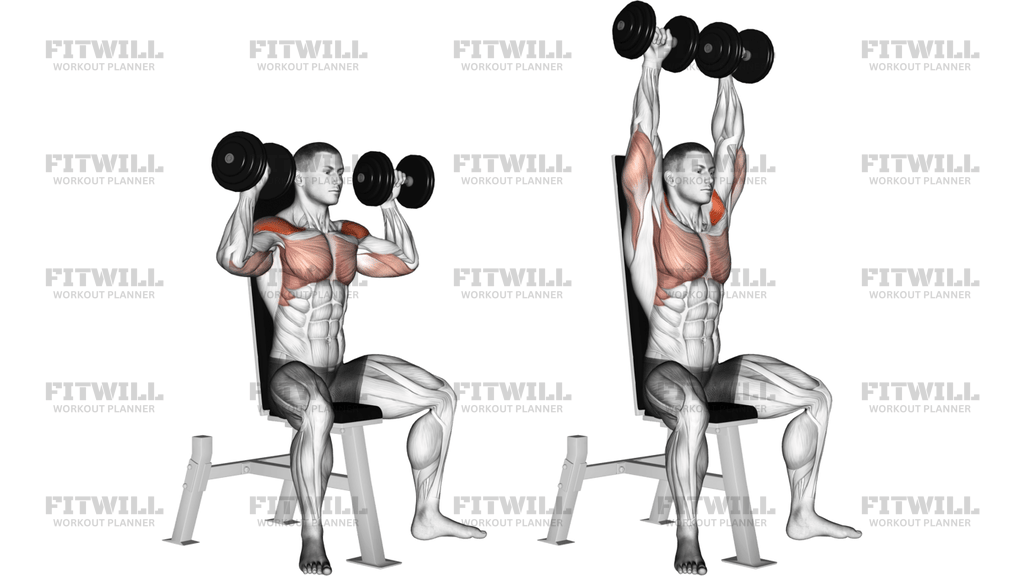
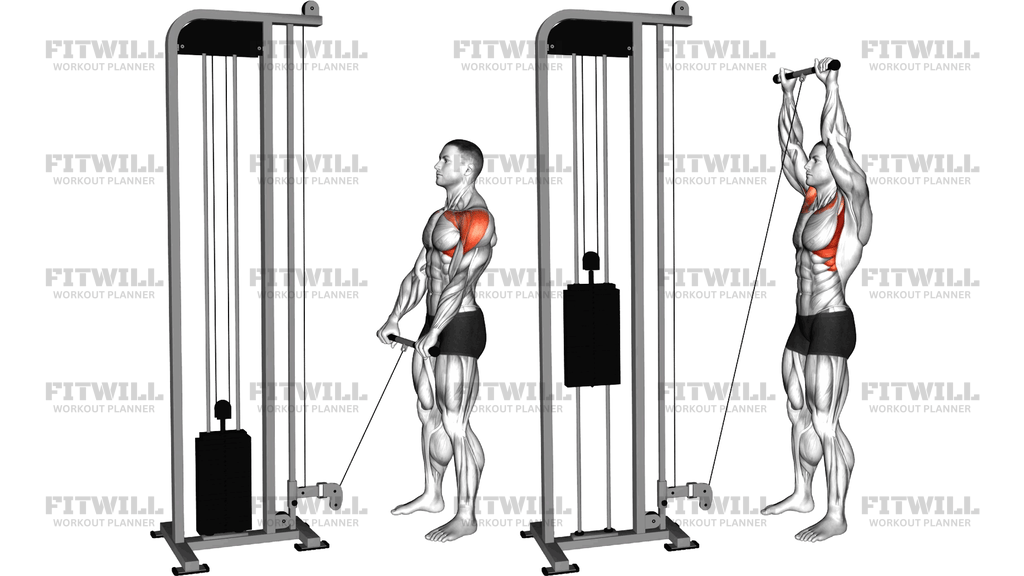
Dumbbell Alternate Side Press
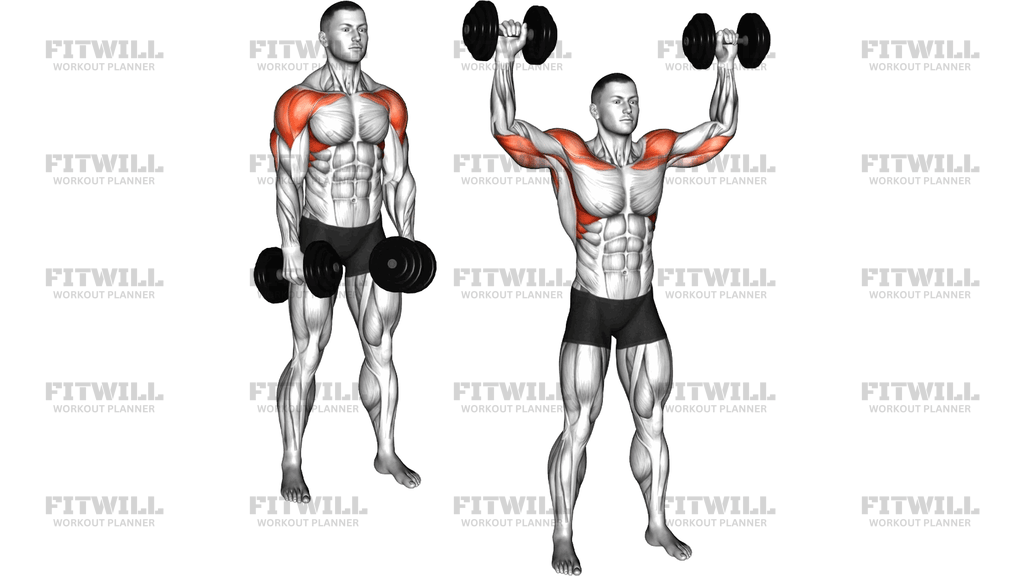
Dumbbell Alternate Side Press is a standing alternating single-arm shoulder press. One arm drives a dumbbell from shoulder height to overhead while the other side stays parked in the rack position, which makes the exercise useful for building shoulder strength without letting both sides rush through the rep together.
The main work comes from the delts and triceps, with the upper chest, upper back, and trunk helping keep the torso stacked. Because only one arm moves at a time, the exercise also exposes side-to-side differences in shoulder control, ribcage position, and how well you resist leaning away from the working arm.
The setup matters more than it looks. Each dumbbell should start around shoulder height with the forearm vertical, wrist stacked over elbow, and the ribs held down instead of flared. A tall stance, soft knees, and glutes lightly engaged help you press overhead without turning the rep into a lower-back arch.
Press one dumbbell straight up until the arm is near full extension and the biceps finish close to the ear, then lower it under control to the shoulder before switching sides or alternating on a steady rhythm. The non-working arm should stay quiet rather than drifting, bouncing, or pulling the torso off center. Exhale through the press and inhale on the way down so each rep stays deliberate.
This version fits well in shoulder strength work, upper-body accessories, or unilateral training blocks where you want cleaner overhead mechanics and better asymmetry control. Use a load that lets you keep the wrist stacked, the head neutral, and the torso still from the first rep to the last. If you have to lean back, shorten the range or reduce the weight before the movement turns into a standing incline press.
[ Workout Log & Planner ]
Put your next workout in Fitwill
Keep your plan and training log ready when you are.


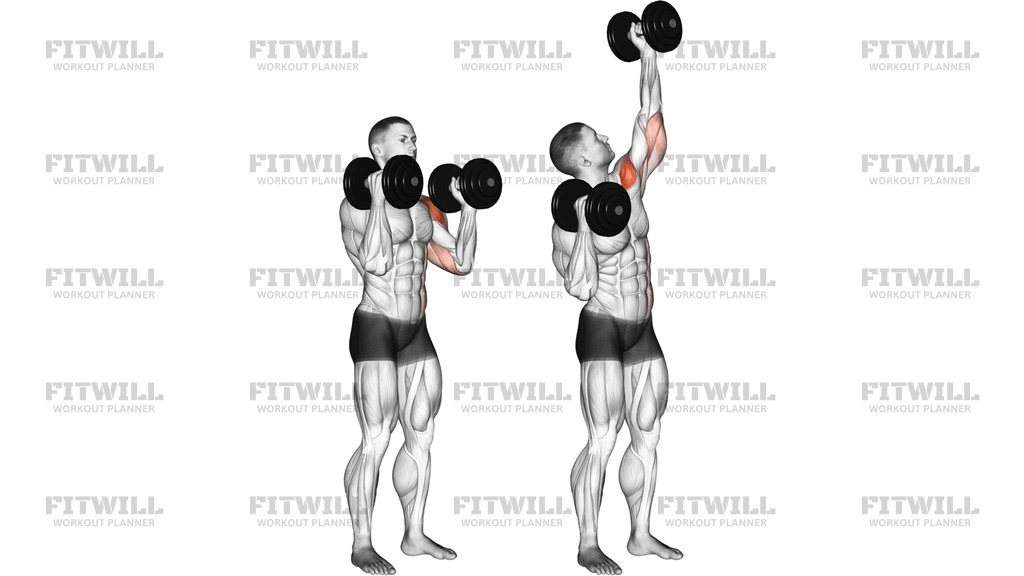
Instructions
- Stand tall with a dumbbell in each hand at shoulder height, palms facing forward or slightly inward, and feet about hip-width apart.
- Set the wrists directly over the elbows and keep both upper arms close to the torso before you start the first rep.
- Brace your midsection, squeeze your glutes lightly, and keep your ribs stacked over your pelvis.
- Press one dumbbell straight up until the arm is nearly locked out and the biceps finish beside the ear.
- Keep the opposite dumbbell fixed at the shoulder while the working side moves.
- Lower the pressed dumbbell back to shoulder height under control without letting the torso sway.
- Finish that side, then press the other dumbbell overhead with the same path and tempo.
- Keep alternating sides for the target reps while maintaining a tall posture and a quiet, controlled breathing pattern.
- Stop the set if the lower back starts to arch, the shoulder shrugs forward, or the dumbbell drifts out in front of the body.
Tips & Tricks
- Keep the pressing forearm vertical so the dumbbell finishes over the shoulder rather than in front of it.
- Lock in the ribs before the first rep; if they flare, the press will turn into a backbend.
- Let the non-working arm stay quiet at shoulder height instead of drifting or relaxing between reps.
- Press in a straight line and finish with the biceps close to the ear, not by shrugging the shoulder forward.
- Use a load that lets you lower each dumbbell all the way back to shoulder height without bouncing.
- If one side is clearly weaker, start the set on that side and match the stronger side to its tempo.
- A slight stagger in the stance can help balance the body, but keep both feet planted and the hips square.
- Exhale as the dumbbell passes eye level and inhale as it returns to the rack position.
Frequently Asked Questions
What muscles does Dumbbell Alternate Side Press work?
It mainly trains the delts and triceps, with help from the upper chest, upper back, and core to keep the torso upright during the alternating press.
Why alternate sides instead of pressing both dumbbells together?
Alternating reduces the chance of rushing both reps at once and makes it easier to notice shoulder control, rib flare, and left-right strength differences.
Should the non-working dumbbell move while the other arm presses?
No. Keep the free arm parked at shoulder height so the torso does not twist or shift to help the pressing side.
How far should I press the dumbbell overhead?
Press until the arm is nearly straight and the upper arm finishes beside the ear, as long as you can keep the ribs down and the shoulder comfortable.
Is Dumbbell Alternate Side Press beginner friendly?
Yes, if you start light and keep the range controlled. Beginners should focus on a vertical forearm and a stacked torso before increasing load.
What is the most common mistake with this press?
The usual mistake is leaning back and turning the lift into a standing incline press instead of a true overhead press.
Can I do this exercise seated instead of standing?
You can, but the standing version demands more trunk control. If standing causes too much sway, a seated version can help you learn the press path first.
When should I stop the set?
Stop when the dumbbell starts drifting forward, the shoulder shrugs up, or you can no longer lower the weight smoothly back to the rack position.