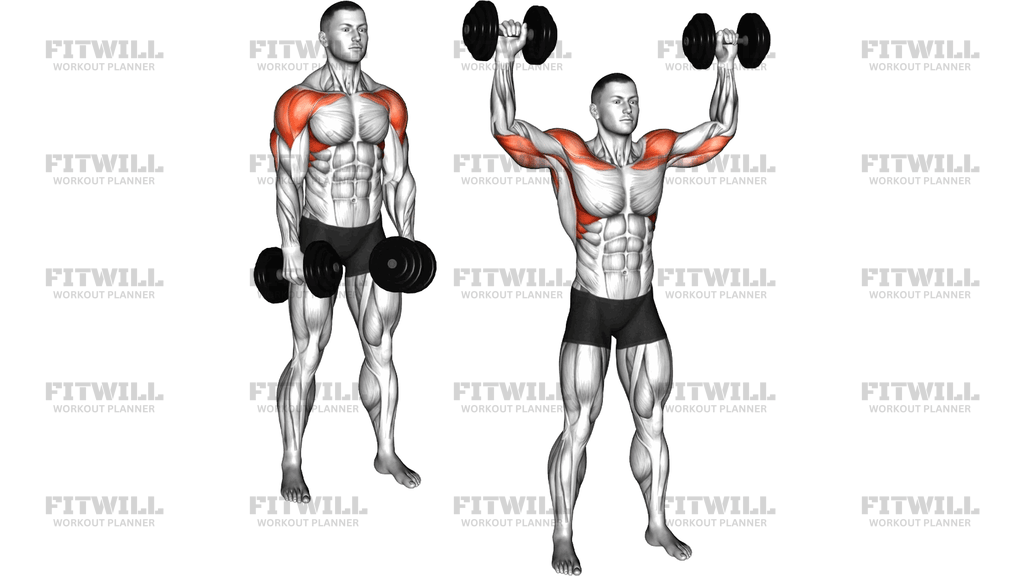
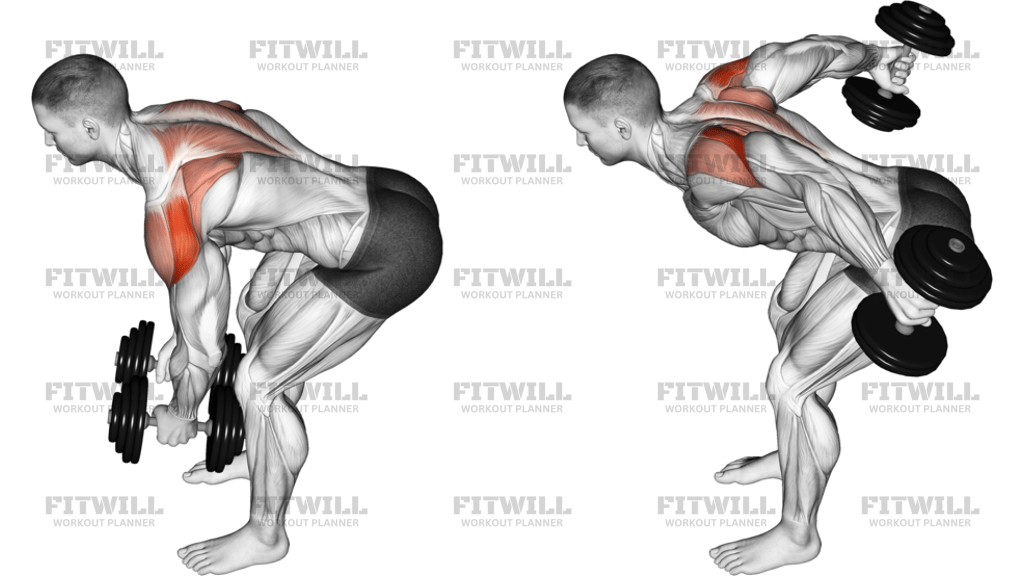
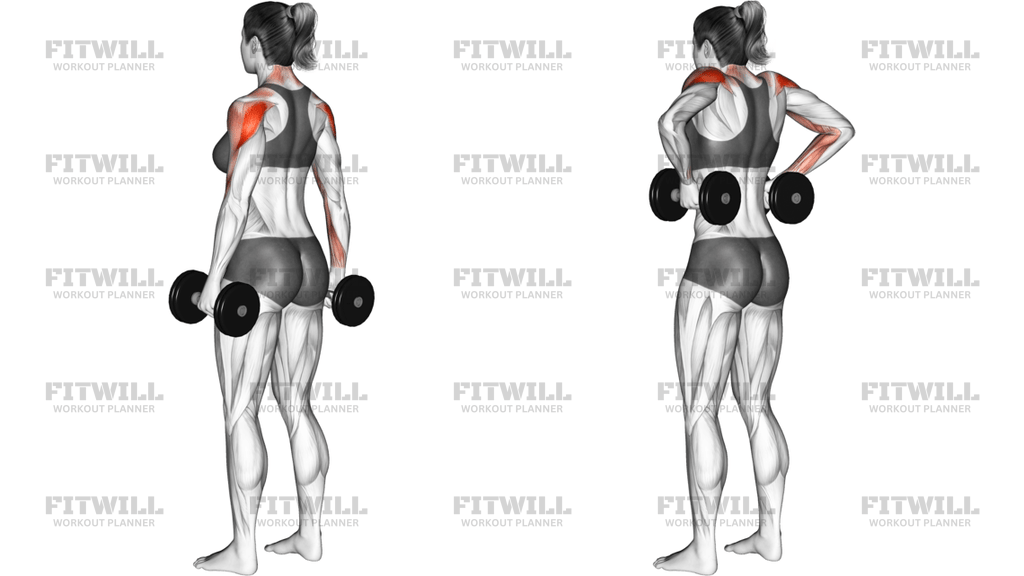
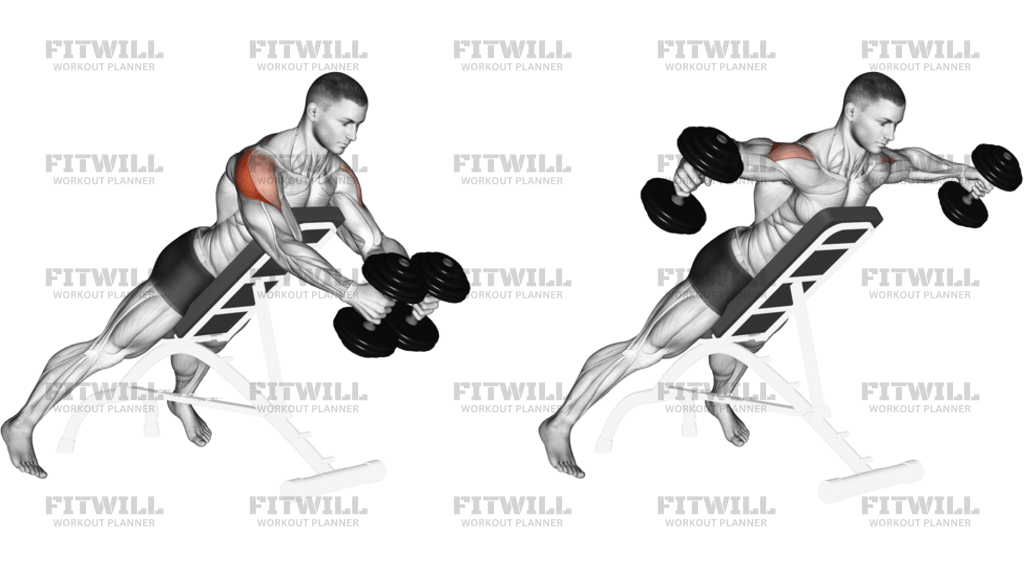
Dumbbell Standing Around World
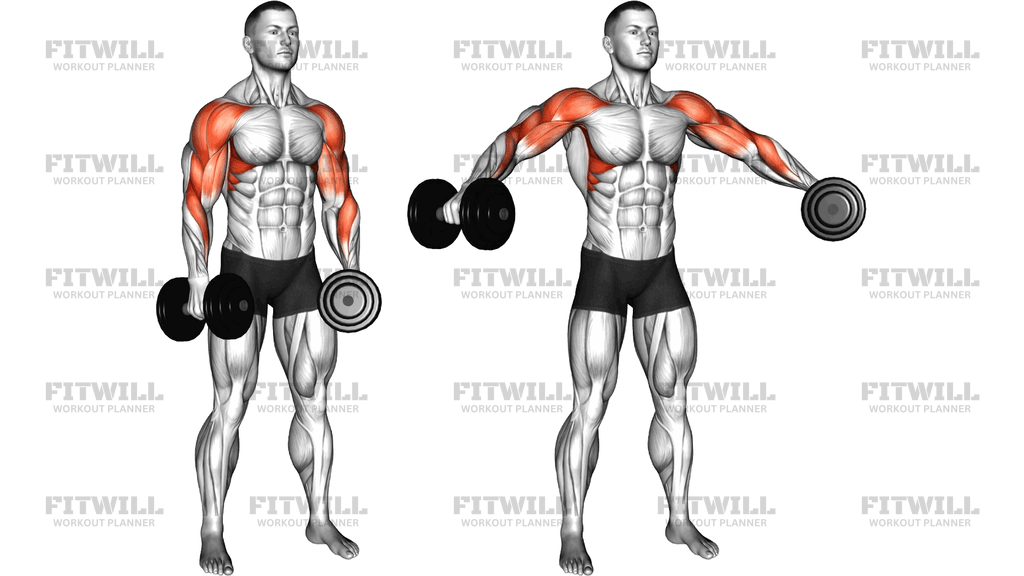
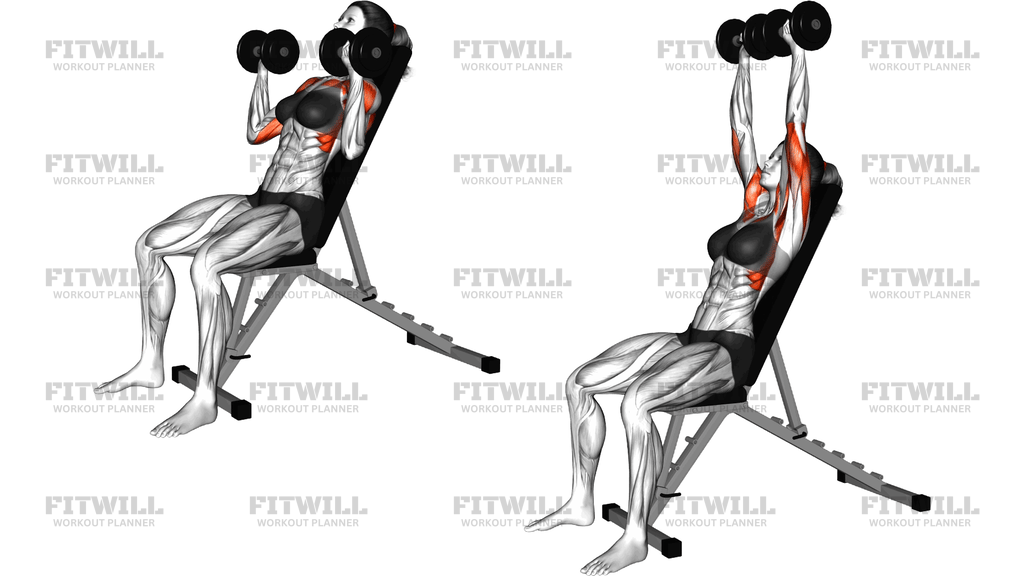
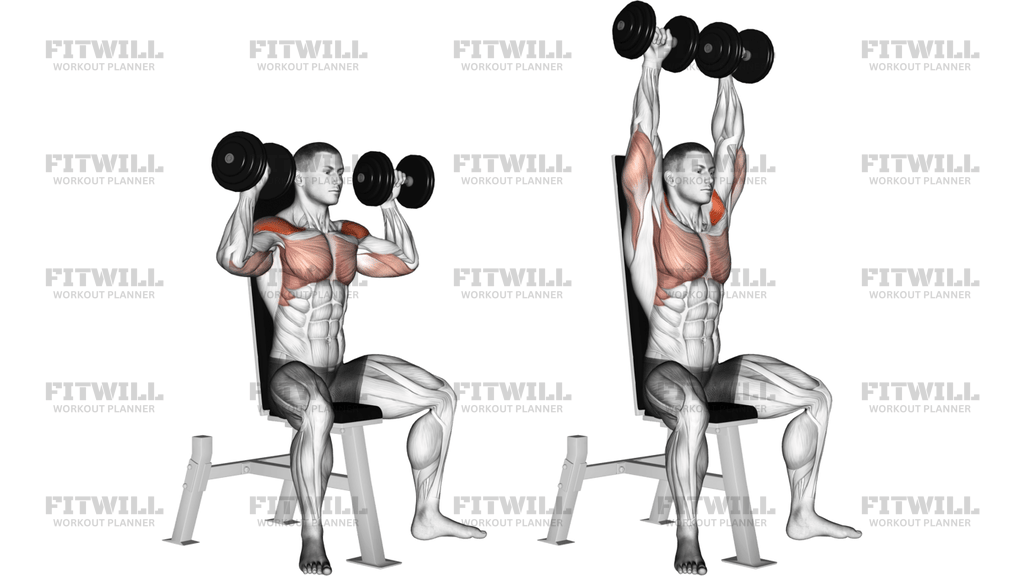
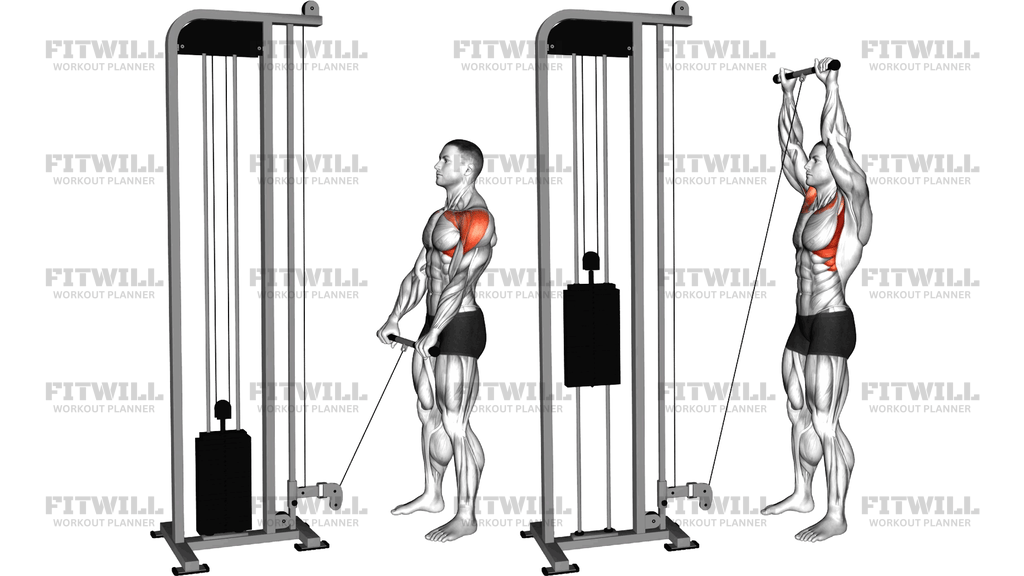
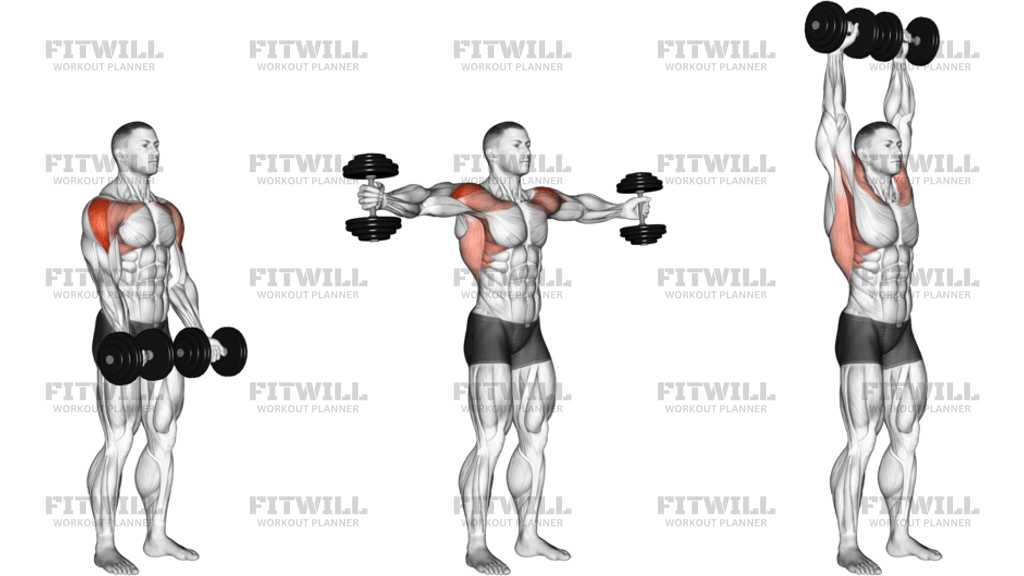
Dumbbell Standing Around World is a standing shoulder-control exercise that moves each dumbbell from the thighs, out to a T position, and then overhead in one continuous arc. It is less about heavy loading and more about smooth shoulder mechanics, scapular control, and staying tall while the arms travel through a large range of motion.
The movement strongly challenges the deltoids, especially the front and side fibers, while the upper traps, rhomboids, triceps, and deep shoulder stabilizers help guide the path and keep the shoulders organized. Because the arms change direction twice in every rep, the exercise exposes shrugging, rib flare, and swinging very quickly, which makes it useful for teaching clean overhead control.
The setup matters. Stand with your feet about hip width apart, hold the dumbbells at your sides with a neutral, relaxed grip, and keep a soft bend in the elbows before the first raise. Brace the trunk without leaning back, and keep the neck long so the shoulders can move without the torso taking over. A good rep starts from stillness, not from a swing.
As you lift, sweep the weights out to the sides to shoulder height, keep the elbows slightly bent, then continue the arc until the dumbbells meet or nearly meet overhead. Lower them back through the same path with control, resisting the urge to drop the shoulders or bend the torso. The goal is a smooth, symmetrical circle that stays in the shoulder girdle and does not turn into a back extension or a bent-arm press.
This exercise is usually best used with light dumbbells in accessory work, warmups, or shoulder-prep sessions where you want coordination and tension more than max strength. It can be a useful option for athletes, lifters, and beginners alike when the load is conservative and the range is pain free. If the overhead position feels pinchy, shorten the arc and keep the motion in the mid-range rather than forcing the finish overhead.
[ Workout Log & Planner ]
Put your next workout in Fitwill
Keep your plan and training log ready when you are.


Instructions
- Stand tall with your feet about hip width apart and hold a dumbbell in each hand at your thighs, palms facing in.
- Keep a soft bend in both elbows, draw your ribs down, and brace your torso before the first rep.
- Lift both arms out to the sides in a wide arc until the dumbbells reach shoulder height.
- Continue the same arc upward so the hands travel overhead without leaning back or shrugging hard.
- Bring the dumbbells close together overhead only if you can keep the shoulders stacked and the neck relaxed.
- Lower the weights along the same path, passing back through shoulder height under control.
- Reset at the thighs without swinging the trunk or letting the weights drop.
- Repeat for the planned number of reps with smooth, even tempo.
Tips & Tricks
- Use very light dumbbells first; this movement gets difficult long before the arms feel heavy.
- Keep the elbows softly bent so the lift stays in the shoulder rather than turning into a straight-arm swing.
- Do not arch the lower back as the hands go overhead; if the ribs pop up, the load is too heavy.
- Stop the raise at shoulder height if the overhead finish causes pinching or loss of control.
- Think about lifting the dumbbells around a smooth circle instead of pressing them up in two separate motions.
- Keep the shoulders away from the ears during the side raise and the overhead finish.
- Move both arms at the same speed so one side does not race ahead of the other.
- Lower the weights slower than you lift them to keep tension on the delts and upper back.
Frequently Asked Questions
What muscles does the standing around world work most?
The deltoids do most of the work, with the upper traps, rhomboids, triceps, and other shoulder stabilizers helping guide the arc.
How should I hold the dumbbells at the start?
Hold them at your thighs with palms facing inward and a slight bend in the elbows so the first rep starts from a stable, neutral position.
Do the dumbbells need to touch overhead?
They can come close together overhead, but only if you can keep the ribs down and the shoulders stacked. If that position feels rushed or pinchy, stop just short of the touch.
What is the biggest form mistake on this lift?
The most common problem is turning the circle into a back arch and shrugging the shoulders up toward the ears to finish the rep.
Can beginners use this exercise safely?
Yes, if the load is light and the range stays pain free. Beginners usually do best with a smaller arc and strict control rather than chasing a high overhead finish.
Should this feel like a press or a raise?
It should feel like a smooth raise and arc, not a shoulder press. The dumbbells travel out and around, with no leg drive or torso lean.
What if my shoulders feel tight overhead?
Shorten the path and keep the dumbbells at or just above shoulder height. You can still get shoulder and upper-back work without forcing the finish overhead.
Where does this fit in a workout?
It fits well in a warmup, shoulder accessory block, or lighter upper-body session where control and coordination matter more than load.