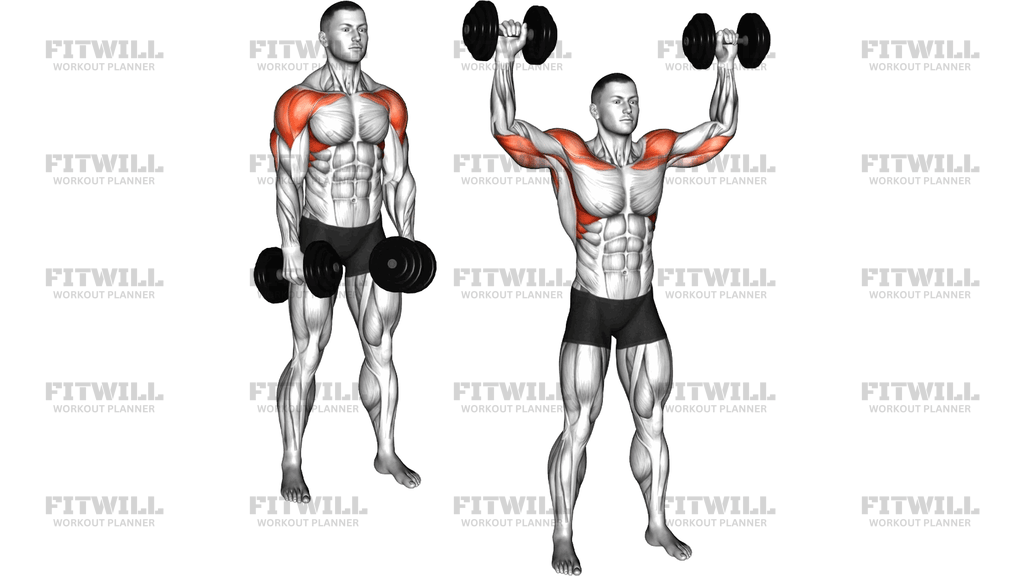
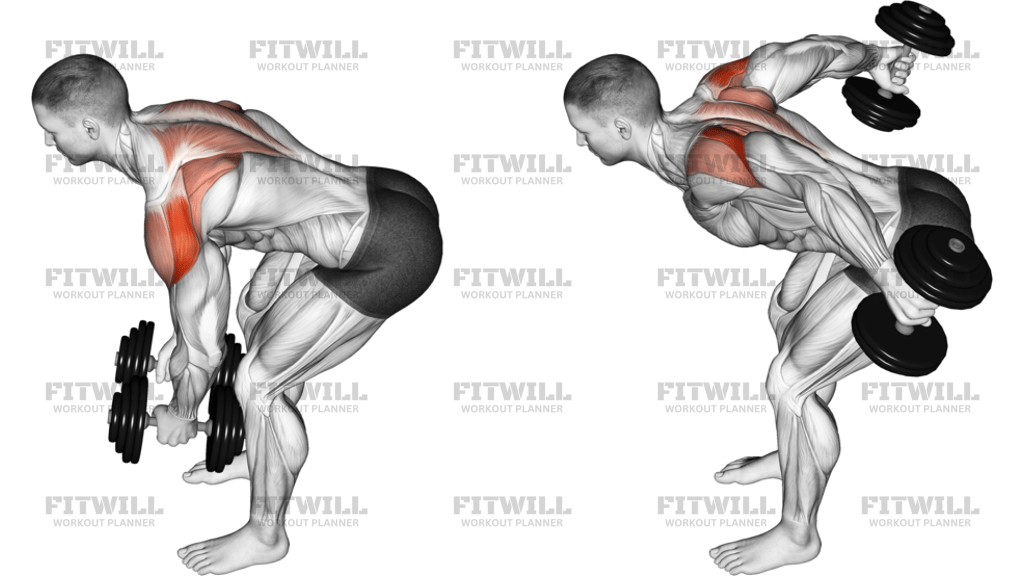
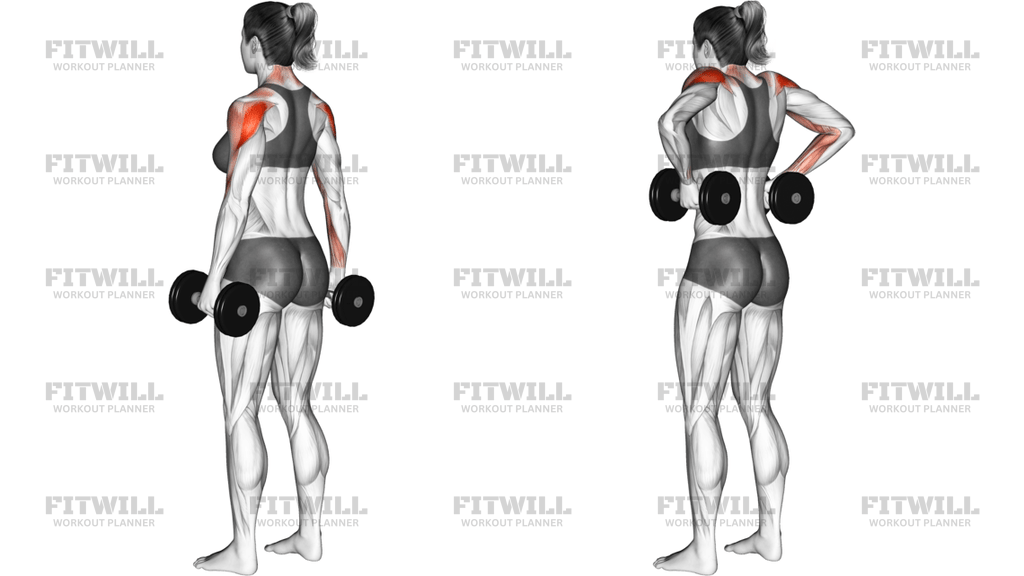
Dumbbell Rear Fly
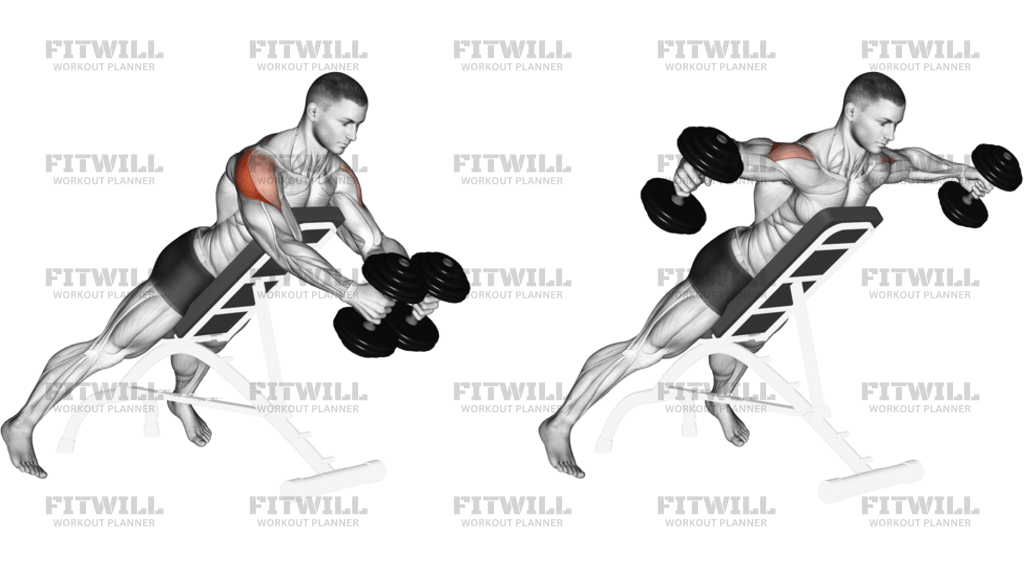
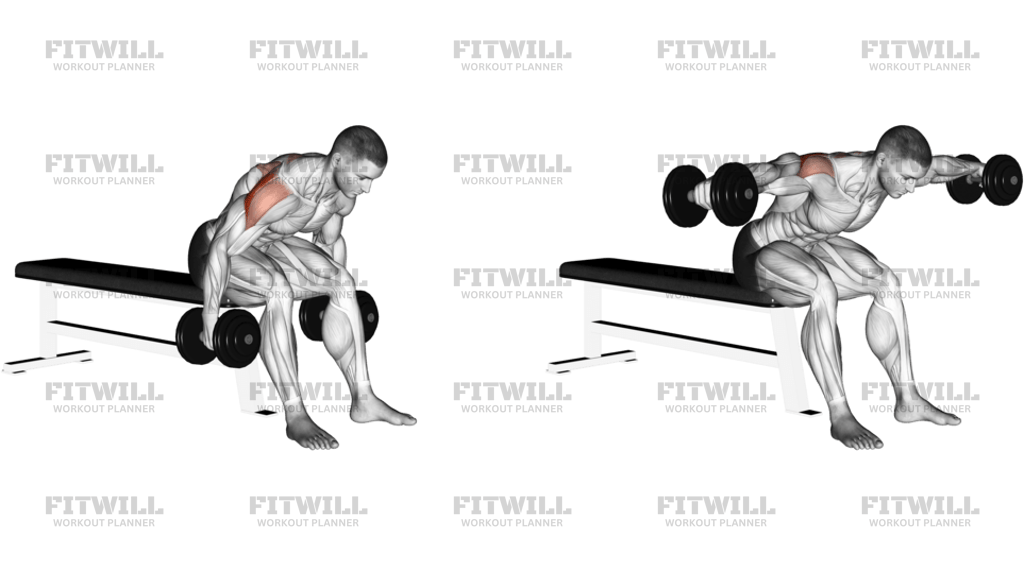
Dumbbell Rear Fly is a rear-shoulder isolation exercise performed here from a seated bent-over position on a flat bench. With the torso folded over the thighs and the dumbbells hanging beneath the shoulders, the movement shifts emphasis away from the front of the shoulder and toward the rear delts, rhomboids, mid traps, and other upper-back stabilizers. The setup matters because a small change in torso angle or arm path can turn the rep into a shrug, a row, or a momentum-driven swing.
This variation is useful when you want clean rear-delt work without standing balance demands. Sitting on the bench helps you keep the torso fixed and makes it easier to compare both sides rep to rep. The elbows stay softly bent, the shoulder blades move naturally, and the hands travel in a wide arc rather than straight behind the body. That arc is what keeps the load on the rear shoulder instead of dumping it into the traps or lower back.
The start position should be deliberate: sit near the edge of the bench, hinge forward until your chest is close to your thighs, and let the dumbbells hang under the shoulders with palms facing each other. From there, raise the arms out and slightly back until the upper arms line up with the torso or just below shoulder height. A brief pause at the top helps you feel the rear delts work without turning the rep into a shrug. On the way down, lower under control and keep the same path rather than letting the weights fall inward.
Use this exercise as accessory volume for shoulder balance, posture, and upper-back development. It pairs well with pressing work, pulldowns, and rows because it targets the smaller muscles that often lag behind in size or endurance. Because the range is small and the target muscles are relatively delicate, load choice should stay conservative. If your torso starts rocking, your neck tenses, or the hands rise by shrugging instead of sweeping out, the weight is too heavy or the tempo is too fast.
Treat Dumbbell Rear Fly as a precision exercise, not a power lift. The best reps are smooth, symmetrical, and controlled from the first inch of the lift to the last inch of the descent. When the bench setup, hinge angle, and elbow path stay consistent, the rear delts get the work they were meant to do, and the upper traps are less likely to take over.
[ Workout Log & Planner ]
Put your next workout in Fitwill
Keep your plan and training log ready when you are.


Instructions
- Sit near the edge of a flat bench and hinge forward until your chest is close to your thighs.
- Hold a dumbbell in each hand with your arms hanging straight down from the shoulders and your palms facing each other.
- Set your neck long, brace your torso lightly, and keep your shoulders down away from your ears.
- Keep a soft bend in the elbows before you start the lift.
- Raise both dumbbells out and slightly back in a wide arc until your upper arms reach about shoulder height or slightly below.
- Pause briefly at the top without letting the shoulders shrug.
- Lower the dumbbells slowly along the same arc until they hang under the shoulders again.
- Reset your torso angle before the next rep so the bench setup stays identical.
Tips & Tricks
- Use a load that lets you keep the chest-on-thighs hinge without straightening up to finish the rep.
- Think about moving the elbows wide, not lifting the hands higher than the shoulders.
- Keep the dumbbells slightly in front of the body at the bottom so the rear delts stay under tension from the start.
- Stop the rep before the upper traps take over and the shoulders creep toward the ears.
- A small pause at the top is enough; a long hold usually turns into a neck shrug.
- Keep the wrists neutral so the dumbbells do not roll or bend the forearms backward.
- If the lower back starts to brace harder than the upper back, reduce the load or sit taller on the bench.
- Slow, even lowering usually works better here than chasing extra weight.
Frequently Asked Questions
What muscles does Dumbbell Rear Fly work?
Dumbbell Rear Fly mainly works the rear delts, rhomboids, and mid traps, with the rotator cuff helping control the shoulder. The seated bent-over setup also challenges your upper-back stabilizers.
Why do I sit on a bench for this rear fly?
Sitting on the bench helps lock in the bent-over position so the rear delts do the work instead of your torso swinging the weight. It also makes the rep easier to repeat cleanly.
How high should the dumbbells come up?
Bring them up until your upper arms are about level with your torso or just below shoulder height. Going much higher usually adds shrugging instead of more rear-delt work.
Should my elbows stay bent the whole time?
Yes. Keep a slight, fixed bend so the movement stays in the shoulder joint and does not turn into a straight-arm swing.
What if I feel it mostly in my traps?
That usually means the weight is too heavy or you are shrugging at the top. Lower the load and think about sweeping the dumbbells out wide while keeping the shoulders down.
Can I do this with one arm at a time?
Yes, a single-arm version can help you isolate side-to-side differences, but keep the same bent-over bench setup and stop the torso from twisting.
Is this more of a shoulder or back exercise?
It is mainly a rear-shoulder exercise with upper-back assistance. The rear delts should drive the motion, while the rhomboids and mid traps help control the shoulder blades.
What is the most common form mistake?
The most common mistake is turning the fly into a shrug or a row by lifting too high and using too much momentum. Keep the arc wide, the tempo controlled, and the torso fixed.