Dumbbell Scott Press
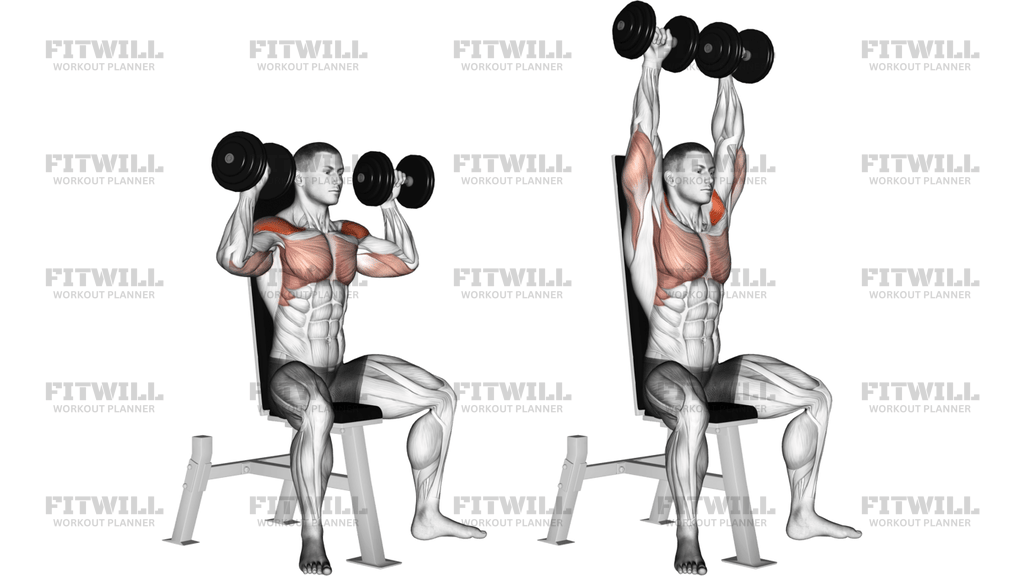
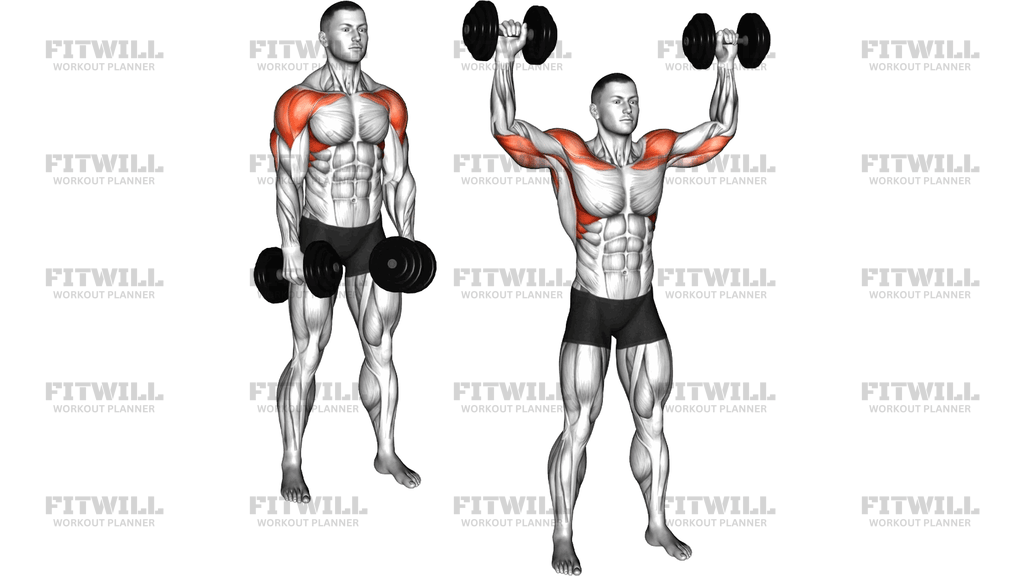
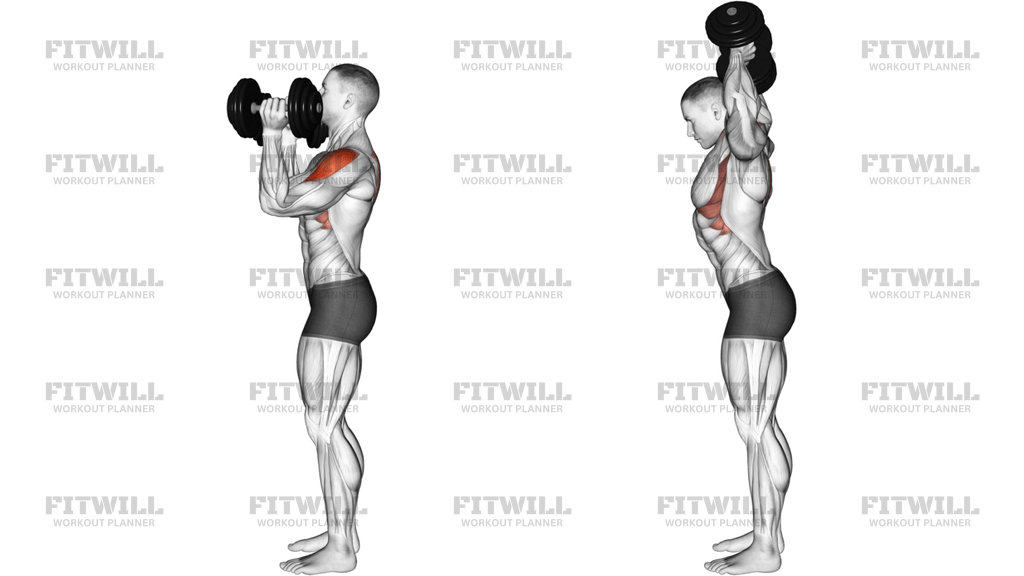
Dumbbell Scott Press is a standing double-dumbbell shoulder press performed from the front-rack position. The image shows the lifter starting with both dumbbells at shoulder height and pressing them overhead together, so the main job is to move the weights in a clean vertical line without leaning back or turning the rep into a push press. It is a straightforward overhead strength and hypertrophy movement for the shoulders, with the triceps, upper back, and trunk helping to keep the press stable.
The main training effect comes from the deltoids, especially when the dumbbells are controlled through the full shoulder-to-overhead range. Triceps brachii assist as the elbows extend, while the upper traps and serratus work to keep the shoulder blades moving upward and around the ribcage. Because the exercise is done standing, the midsection and glutes also have to keep the torso stacked so the dumbbells can finish over the shoulders instead of drifting forward.
The setup matters as much as the press itself. Start with the dumbbells resting near the tops of the shoulders, wrists stacked over elbows, elbows slightly in front of the torso, and feet planted about hip width apart. Keep the ribs down and the pelvis neutral so you can press without flaring the lower back. A stable start gives you the best chance of keeping the path smooth and the shoulders in a strong position from the first rep to the last.
On each repetition, press the dumbbells up and slightly back so they finish above the midfoot with the arms extended and the biceps close to the ears. At the top, keep the neck long and avoid shrugging hard into the ears. Lower the dumbbells on the same path until they return to shoulder height, then reset before the next rep. Breathing should stay simple: brace before the press, exhale through the effort, and inhale as the weights come back down.
This exercise fits well in shoulder-focused sessions, upper-body strength blocks, or accessory work after a main press. It is also useful when you want a strict overhead pattern that exposes rib flare, weak lockout, or poor scapular control. If overhead position causes pinching or you cannot keep the torso quiet, reduce the load, shorten the range slightly, or use a seated variation until the mechanics are cleaner.
[ Workout Log & Planner ]
Put your next workout in Fitwill
Keep your plan and training log ready when you are.


Instructions
- Stand tall with your feet about hip-width apart and hold a dumbbell in each hand at shoulder height.
- Stack each wrist over its elbow, keep the elbows slightly in front of your ribs, and face the palms in or slightly forward.
- Set your ribs over your pelvis, squeeze the glutes lightly, and keep the neck long before the first rep.
- Press both dumbbells upward in a smooth line so they travel just outside shoulder width and finish overhead together.
- Let your head move slightly forward under the weights as the dumbbells pass your forehead, but do not lean your torso back.
- Finish with the arms straight or nearly straight, the biceps close to the ears, and the shoulders active rather than shrugged hard.
- Lower the dumbbells back to shoulder height along the same path with control until the elbows are ready for the next rep.
- Exhale through the press, inhale as the dumbbells descend, and reset your torso position before repeating.
Tips & Tricks
- If your lower back arches on the way up, the dumbbells are too heavy for a strict Scott press.
- Keep the wrists stacked over the elbows at the start so the press begins from a strong forearm angle.
- The dumbbells should finish over the midfoot, not out in front of your face.
- A slight inward angle of the palms often feels better on the shoulders than a fully flared grip.
- Do not start the press by bouncing through the knees; this version is meant to stay strict and standing.
- Let the shoulder blades rotate upward at the top instead of forcing them to stay pinned down.
- Lower the bells slowly to shoulder height so the bottom position stays organized for the next rep.
- Stop the set if one dumbbell starts drifting higher than the other or the torso begins to twist.
Frequently Asked Questions
What muscle does Dumbbell Scott Press target most?
The deltoids are the main target, with the triceps, upper traps, and serratus helping the press finish overhead.
Is this just a standing dumbbell shoulder press?
Yes. The image shows a strict standing double-dumbbell overhead press from shoulder height to lockout.
How should the dumbbells travel during the rep?
They should move up and slightly back so they finish stacked over the shoulders instead of drifting forward.
Should I lean back to get the bells overhead?
No. A small head movement forward is fine, but the torso should stay stacked instead of turning the rep into a back-leaning press.
What grip works best on the dumbbells?
A neutral or slightly turned-in grip usually feels best because it keeps the wrists and shoulders in a comfortable pressing line.
Can beginners use Dumbbell Scott Press?
Yes, as long as the load is light enough to keep the ribs down, the elbows organized, and the dumbbells moving smoothly.
What is a common mistake with this press?
The most common mistake is flaring the lower back and pushing the weights with momentum instead of clean shoulder drive.
What should I do if my shoulders pinch overhead?
Reduce the range, lighten the load, and keep the elbows slightly in front of the torso; if that still hurts, use a seated or more neutral pressing variation.