Dumbbell Rear Lateral Raise
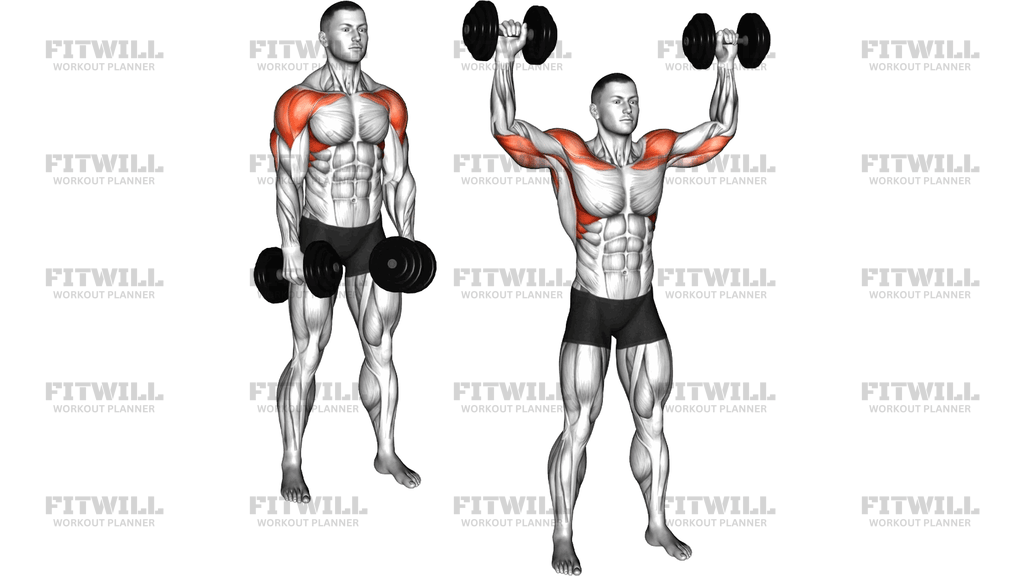
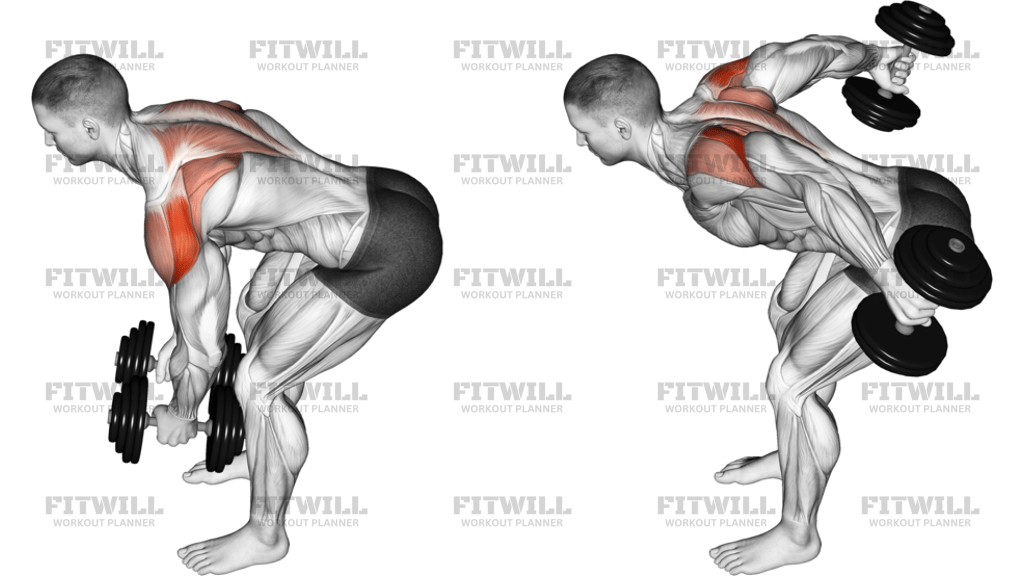
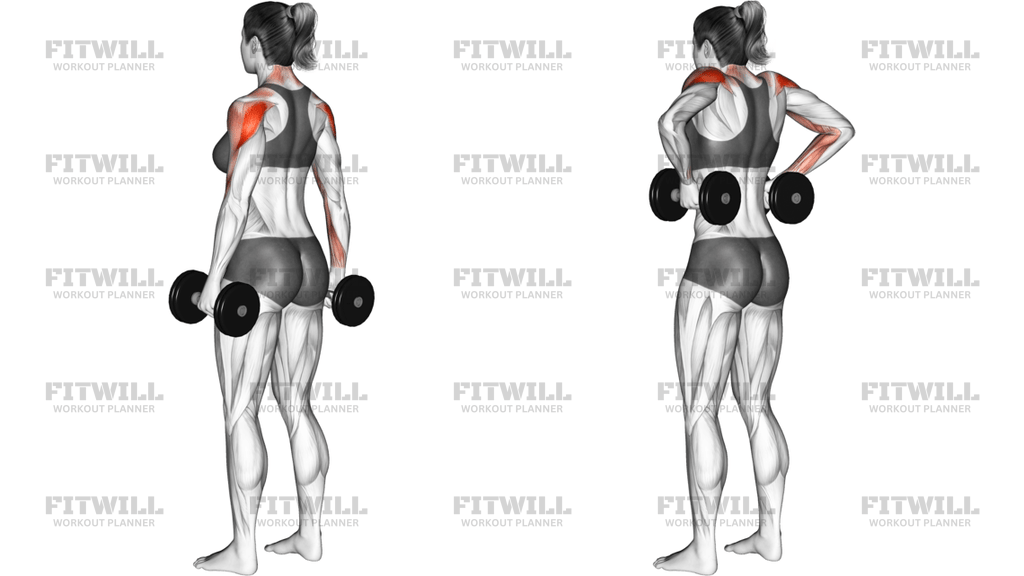
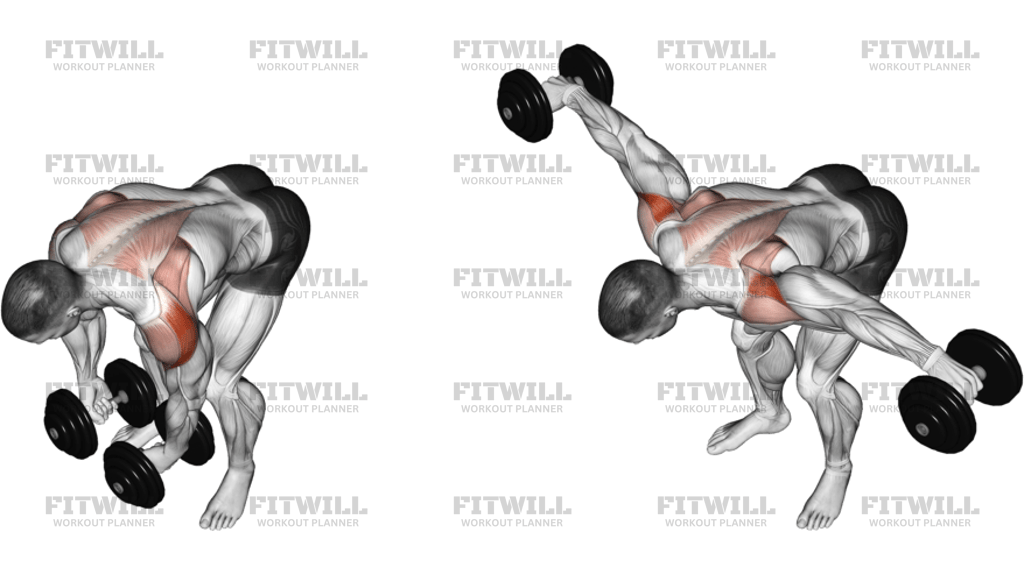
Dumbbell Rear Lateral Raise is a bent-over rear-delt isolation exercise that uses one dumbbell in each hand to train the back of the shoulders, the upper back, and the small stabilizers that control the shoulder blade and upper arm. The image shows a hip hinge with the torso almost parallel to the floor and the arms lifting out in a wide arc, which shifts the effort away from the front delts and toward the rear shoulder.
The setup matters because the torso angle, elbow path, and shoulder position decide whether the movement stays on the rear delts or turns into a trap shrug. Start with the dumbbells hanging below the shoulders, knees soft, neck long, and ribs braced so the torso stays quiet while the arms move.
Each rep should travel from a dead hang under the shoulders to a controlled lift out and slightly back until the upper arms line up with the torso or just above it. Keep a small bend in the elbows, pause briefly at the top, then lower the dumbbells along the same path without twisting, bouncing, or yanking the weights upward.
This exercise is useful for rear-delt size, shoulder balance, posture work, and support work for pressing and pulling lifts. It is usually best as accessory volume after compound upper-body work or on shoulder and back days when the goal is targeted tension rather than heavy loading.
It is safest and most effective with light-to-moderate dumbbells and a strict tempo. If the lower back starts doing the work, reduce the load, shorten the range slightly, or switch to a chest-supported version so the rear delts stay the limiter.
[ Workout Log & Planner ]
Put your next workout in Fitwill
Keep your plan and training log ready when you are.


Instructions
- Stand with a dumbbell in each hand, feet about hip-width apart, and hinge forward until your torso is almost parallel to the floor.
- Keep a soft bend in both knees, brace your midsection, and let the dumbbells hang under your shoulders with your neck long.
- Turn your upper arms slightly out so the elbows point away from your ribs and the palms stay neutral or slightly turned in.
- Begin the rep by lifting the dumbbells out to the sides in a wide arc, leading with the elbows rather than the hands.
- Raise until your upper arms are in line with your torso or just below shoulder height, keeping the shoulders down away from your ears.
- Squeeze the rear delts briefly at the top without swinging, arching, or shrugging.
- Lower the dumbbells slowly along the same path until the arms hang under the shoulders again.
- Reset the brace between reps and keep the torso still for the full set.
Tips & Tricks
- Use dumbbells light enough that the last rep still looks like the first rep.
- If your traps take over, think about reaching wide instead of pulling up.
- Keep the chest open, but do not overextend the low back to get the weights higher.
- A small elbow bend should stay almost fixed; turning it into a curl shifts work away from the rear delts.
- Stop the top range when the arms are in line with the torso if going higher causes shrugging.
- Slow the lowering phase to keep tension on the rear delts instead of dropping into the bottom.
- If grip fatigue ends the set early, use straps or reduce load before the shoulders start compensating.
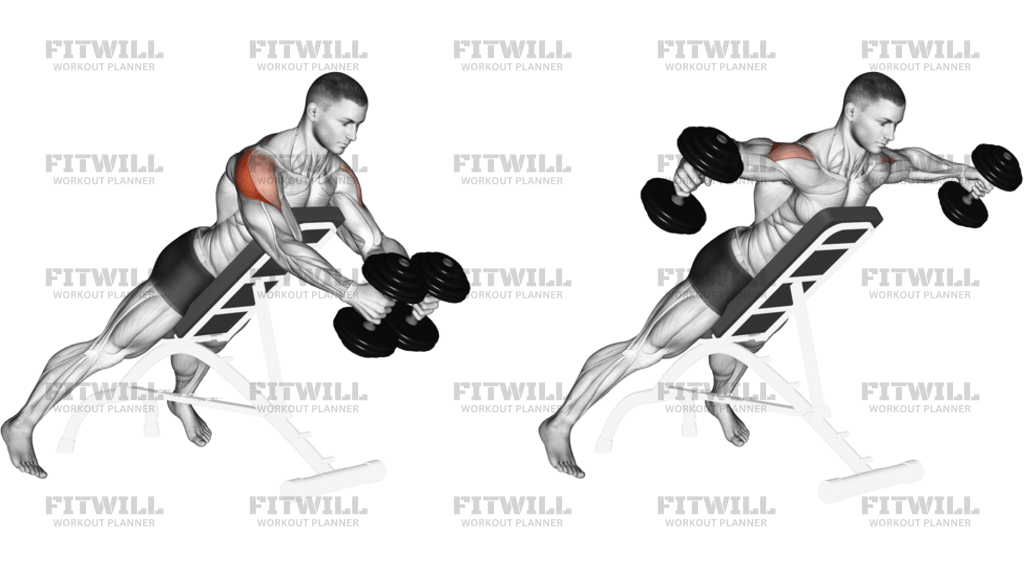
- A chest-supported incline bench version can help if hinging makes you lose position.
Frequently Asked Questions
What muscles does Dumbbell Rear Lateral Raise work?
It mainly works the rear delts, with help from the rhomboids, middle and lower traps, and the muscles that stabilize the shoulder blades.
Is this the same as a bent-over reverse fly?
Yes, the movement is very similar. The key is the same rear-delt arc and controlled hinge position.
Should my torso stay perfectly still?
Yes, as still as possible. A little natural movement is fine, but if your chest rises or your low back arches, the weight is too heavy.
How high should I lift the dumbbells?
Usually until the upper arms are in line with the torso or just above it. Higher is not better if it turns into a shrug.
Can I do this sitting or on a bench?
Yes, a chest-supported incline bench version is a good substitute when you want less cheating and less lower-back demand.
What grip works best?
Neutral or slightly pronated is usually the most comfortable and keeps the rear delts working without stressing the shoulders.
Why do I feel this in my traps more than my rear shoulders?
You are probably shrugging or lifting too high. Reduce the load, keep the shoulders down, and sweep the arms wide instead of straight up.
Is this exercise good for beginners?
Yes, if they start very light and learn the hinge and arm path first. It is a control exercise, not a power lift.