Dumbbell Bench Seated Press
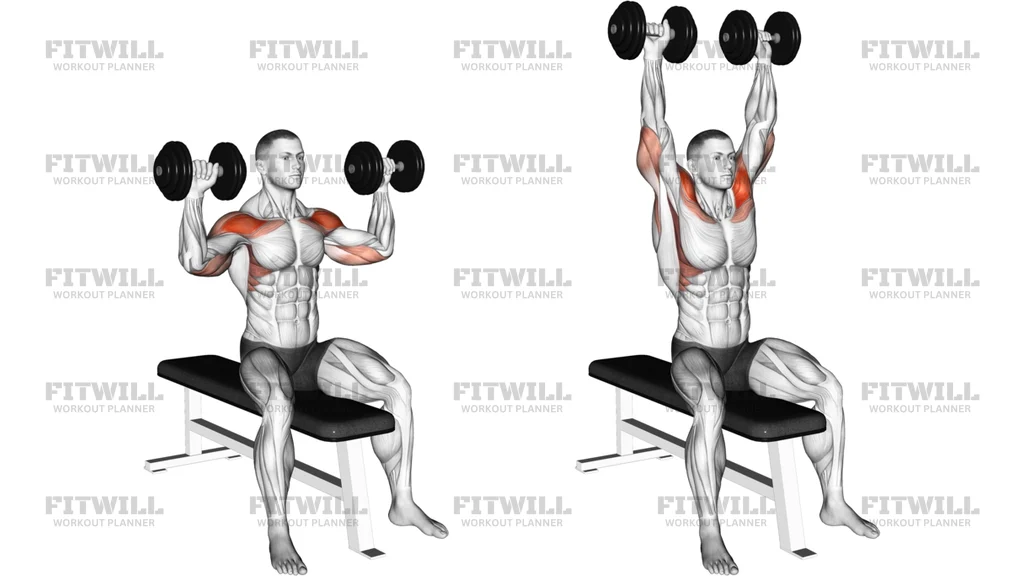
Dumbbell Bench Seated Press is a seated dumbbell overhead press done on a bench, usually with no back support, so the shoulders and arms drive the lift while the trunk works hard to keep the ribs from flaring. The movement is a straightforward way to train shoulder pressing strength with dumbbells, but the bench setup makes a big difference: sitting tall, planting the feet, and keeping the torso quiet lets the delts do the work instead of turning every rep into a lean-back press.
The main training emphasis is on the deltoids, with the triceps helping to finish the lockout and the upper back and core stabilizing the torso. Because the weight starts near shoulder height and travels straight overhead, the exercise rewards clean stacking of the wrist, elbow, and shoulder. If the dumbbells drift too far forward, the shoulders lose leverage; if the lower back takes over, the press becomes harder to control and less useful as a shoulder exercise.
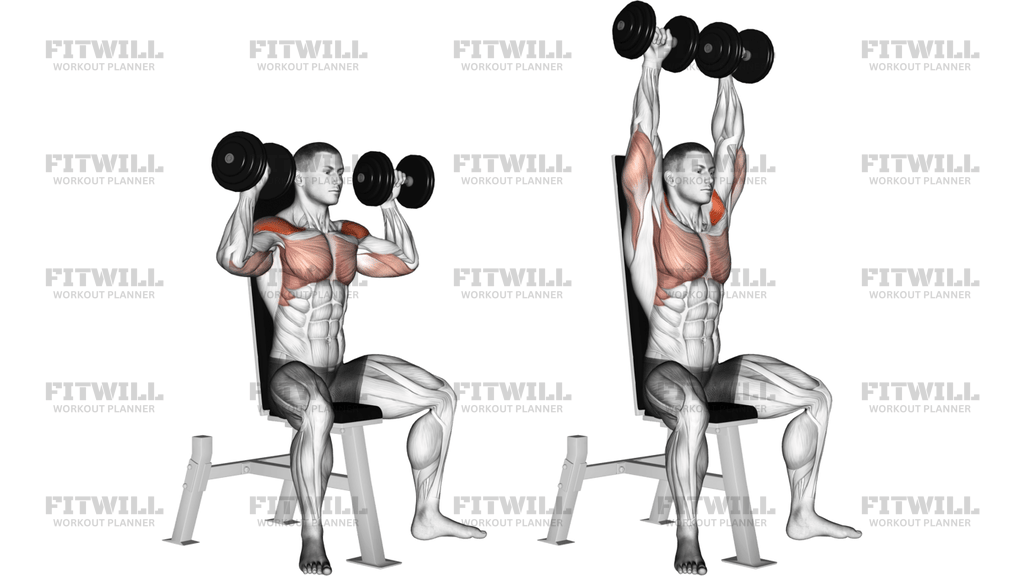
Set the dumbbells at shoulder level with forearms close to vertical, then press them upward in a smooth arc until the arms are straight or nearly straight overhead. The rep should feel like one continuous drive, not a heave from the bench. On the way down, lower the dumbbells slowly to about ear or shoulder height and stop before the elbows collapse behind the torso. Keep the neck long, the chest quiet, and the feet grounded so each rep starts from the same position.
This exercise fits well in upper-body or shoulder sessions when you want an overhead press variation that is simple to load and easy to repeat. It can also be a useful option when standing presses are too unstable or when you want to reduce leg drive and isolate the pressing pattern more directly. Use a range of motion you can own without rib flare, shoulder pinching, or bouncing out of the bottom.
If the bench or torso position changes from rep to rep, the exercise stops being a clean shoulder press and turns into a compensation drill. Keep the setup consistent, choose a load that allows you to pause briefly at the bottom, and stop the set as soon as the dumbbells drift, the elbows flare excessively, or the lower back starts to arch to finish the rep.
[ Workout Log & Planner ]
Put your next workout in Fitwill
Keep your plan and training log ready when you are.


Instructions
- Sit on the bench with your feet flat, torso tall, and the dumbbells resting at shoulder height just outside your shoulders.
- Stack each wrist over its elbow and keep your forearms close to vertical before you press.
- Brace your midsection and set your ribs down so the lower back does not have to arch to start the rep.
- Press both dumbbells upward in a smooth path until your arms are straight or nearly straight overhead.
- Bring the weights slightly in so they finish over your shoulders, not drift far in front of your face.
- Lower the dumbbells slowly until they return to shoulder height and the elbows are back under the hands.
- Keep your neck relaxed and avoid shrugging hard at the top of the rep.
- Exhale as you press and inhale as you lower into the next repetition.
- Reset your shoulder position before each rep if the dumbbells start to wobble or shift forward.
Tips & Tricks
- Keep the dumbbells over the midfoot-to-shoulder line instead of letting them drift forward as you press.
- If your ribs pop up, reduce the load before you try to force more range.
- Lower only to the point where your elbows stay under control and the shoulders feel stable.
- A slight inward path at the top is normal; do not slam the dumbbells together overhead.
- Use a slower lowering phase than the press so the shoulders stay centered on the bench.
- Do not turn the set into a seated incline chest press by leaning back and flaring the elbows.
- Choose a grip that keeps the wrists straight rather than bent back under the dumbbells.
- Stop the set when one dumbbell starts climbing faster than the other or the torso begins to rock.
Frequently Asked Questions
What muscles does Dumbbell Bench Seated Press work?
It mainly works the deltoids and triceps, with the upper back and core helping to stabilize the seated position.
Is Dumbbell Bench Seated Press good for beginners?
Yes, if the weight is light enough to keep the ribs down and the dumbbells controlled from shoulder height to overhead.
Should I keep my back against a pad?
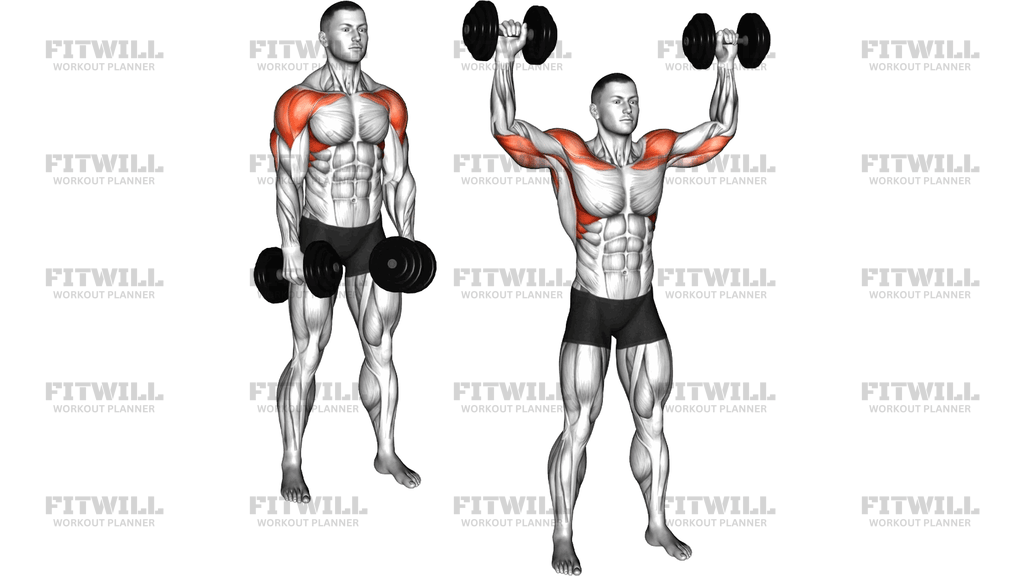
This image shows a bench without back support, so the torso has to stay upright on its own. If you use a backrest, the press becomes more supported and usually easier to load.
How low should the dumbbells come down?
Lower them to shoulder height or just above it, where the elbows stay stacked and the shoulders still feel organized.
What is the biggest form mistake in this press?
Leaning back and turning the rep into a rib-flaring push is the most common problem. Keep the torso tall and let the shoulders press the load.
Can I press one arm at a time?
Yes, but the image shows a two-dumbbell press. A single-arm version usually makes the core work harder to keep the torso square.
Why does the bench matter here?
The bench gives you a fixed seat so you can build overhead pressing power without using your legs for drive.
What should I do if my shoulders pinch?
Shorten the range slightly, lighten the load, and keep the elbows a little closer to the front of the body instead of flaring them wide.