Dumbbell Bent-Over Row With Chest Support
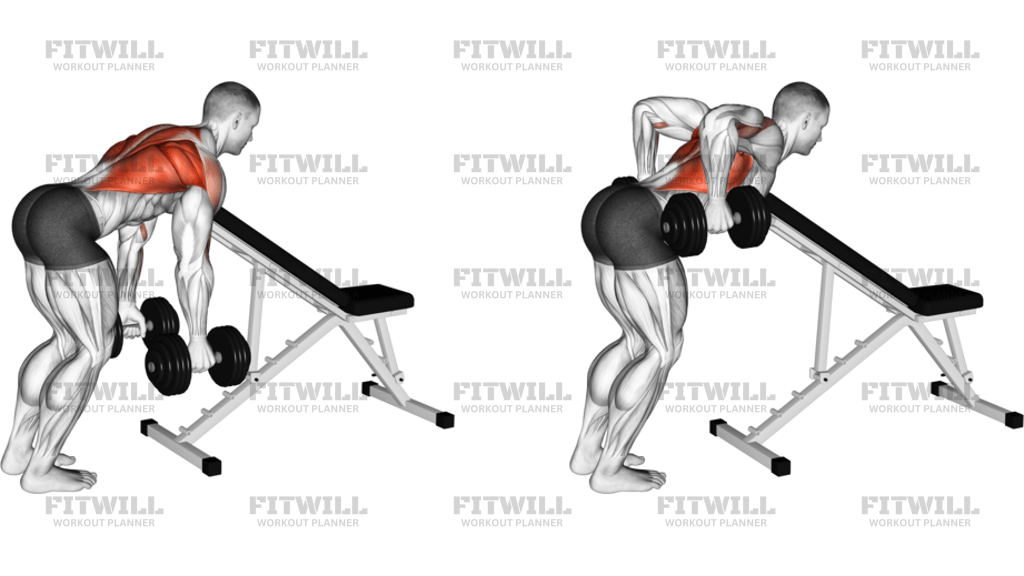
Dumbbell Bent-Over Row With Chest Support is a chest-supported rowing exercise for the upper back, lats, rear delts, and elbow flexors. The bench support removes a lot of body swing, so each rep can stay focused on the pull itself instead of on balancing a hinge position. That makes it a useful option when you want strict rowing work without the low-back fatigue that often limits free-standing bent-over rows.
The setup matters because the chest pad sets your torso angle and controls how much cheating is possible. With the chest pinned into an incline bench, the shoulders can move through a cleaner row path, the spine stays organized, and the dumbbells can travel in a repeatable line from the hang to the top. A stable setup also helps you load the upper back more honestly, since you are not using momentum from the hips or lower back to finish each rep.
Perform the row by keeping the chest in contact with the pad, bracing the midsection, and pulling the elbows back toward the lower ribs or back pockets. The dumbbells should rise in a smooth arc, not flare out high toward the shoulders. At the top, squeeze the shoulder blades briefly without shrugging, then lower the weights under control until the arms are long again and the back has a clear stretch.
This movement fits well in back-focused sessions, upper-body accessory work, and beginner programs that need a supported row pattern. It is especially useful after heavier pressing or hinge work because the chest support reduces systemic fatigue while still training a strong rowing pattern. Keep the load honest, keep the neck relaxed, and stop the set if you start losing contact with the bench or turning the pull into a shrug.
[ Workout Log & Planner ]
Put your next workout in Fitwill
Keep your plan and training log ready when you are.


Instructions
- Set an incline bench to about 30-45 degrees and press your chest and upper abdomen firmly into the pad.
- Plant your feet wide and slightly behind you so your hips stay anchored and your torso does not slide forward.
- Hold a dumbbell in each hand with your arms hanging straight down from your shoulders and your palms facing in or slightly back.
- Draw your shoulders down away from your ears before the first rep and keep your neck long.
- Brace your midsection against the bench and keep steady contact with the pad as you begin the pull.
- Row the dumbbells up and slightly back toward your lower ribs or back pockets, leading with your elbows.
- Pause briefly at the top and squeeze your upper back without letting your shoulders shrug forward or up.
- Lower the dumbbells along the same path until your arms are long again and the lats are stretched under control.
- Breathe out as you row, inhale on the way down, and end the set by setting the dumbbells down with control.
Tips & Tricks
- Keep the chest pad high enough to support the sternum but low enough that your arms can hang freely underneath you.
- A neutral grip usually feels best on the shoulders; use a slightly turned-in grip if a pronated grip feels cramped.
- Think about pulling the elbows toward the hips, not flaring them wide toward the ceiling.
- If the dumbbells rise higher than your torso, the movement usually turns into a shrug instead of a row.
- Let the shoulder blades move naturally at the bottom, but avoid overpinching them hard the whole set.
- Use a 2-3 second lowering phase so the upper back stays under tension instead of bouncing off the bottom.
- Keep your hips glued back against the bench support; rocking usually means the load is too heavy.
- Choose dumbbells that let you keep the chest in contact with the pad on every rep.
- If your neck starts tightening, lower the load and keep the gaze on the floor a few feet ahead.
Frequently Asked Questions
What does Dumbbell Bent-Over Row With Chest Support work most?
It mainly trains the lats, rhomboids, mid traps, rear delts, and biceps, with the chest support reducing lower-back demand.
Why use a chest-supported row instead of a free-standing bent-over row?
The bench removes most of the torso swing, so you can focus on a cleaner pull and give your lower back a break.
Where should I pull the dumbbells?
Pull them toward your lower ribs or back pockets. That path keeps the elbows close and shifts the work toward the upper back and lats.
Should my chest stay on the pad the whole time?
Yes. Light, steady contact with the bench is what keeps the row strict and stops the hips from adding momentum.
What grip works best on this exercise?
A neutral grip is usually the most comfortable, but a slightly turned-in grip also works well if your shoulders prefer it.
How low should the dumbbells go?
Let them hang until the elbows are nearly straight and the upper back has a clear stretch, but do not lose your chest contact or shoulder position.
What is a common mistake with this row?
Shrugging the dumbbells up toward the shoulders is the big one. Keep the shoulders down and row back, not up.
Is this a good exercise for beginners?
Yes. The support makes it easier to learn a strict rowing pattern, as long as the load stays light enough to control.