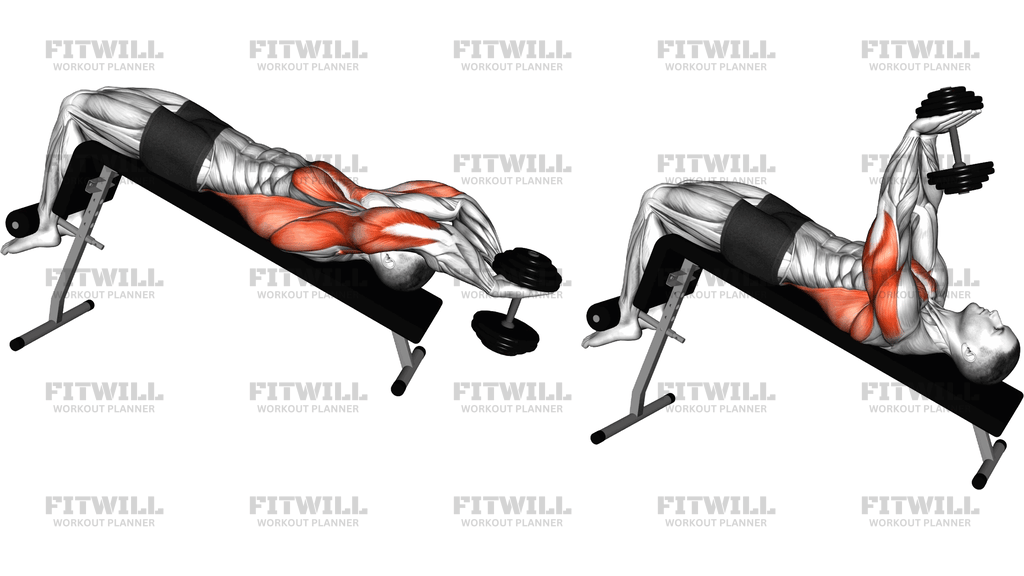
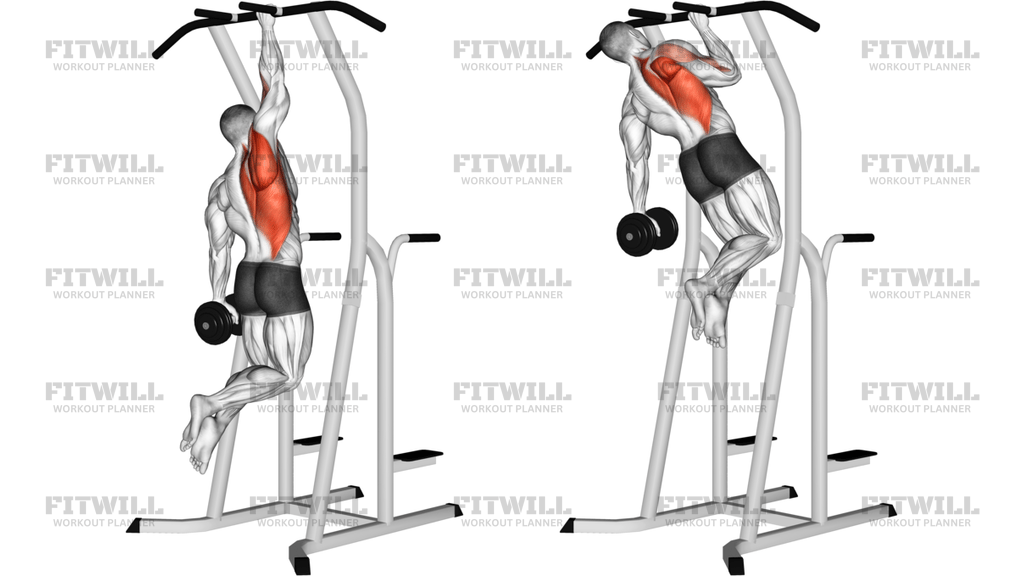
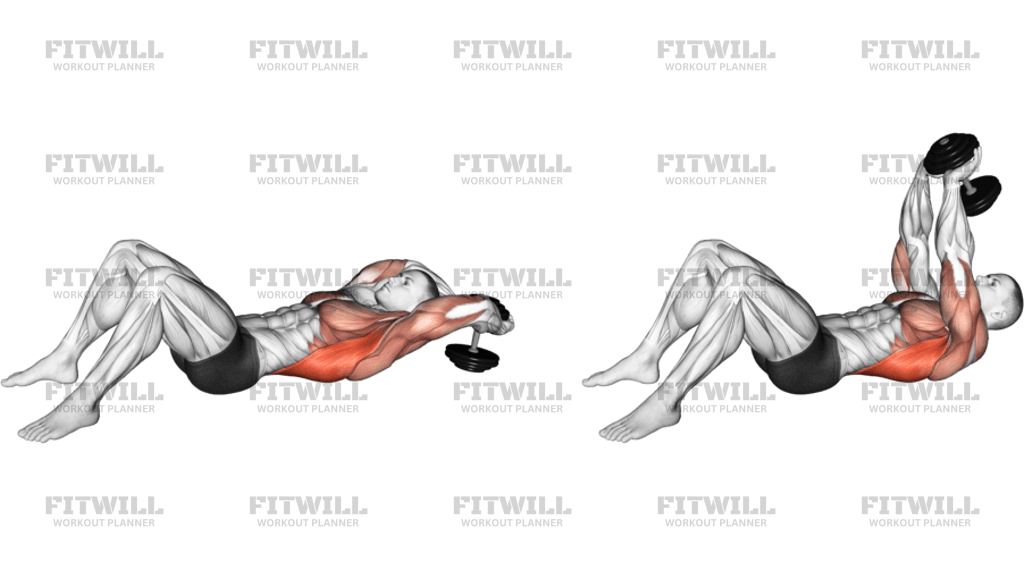
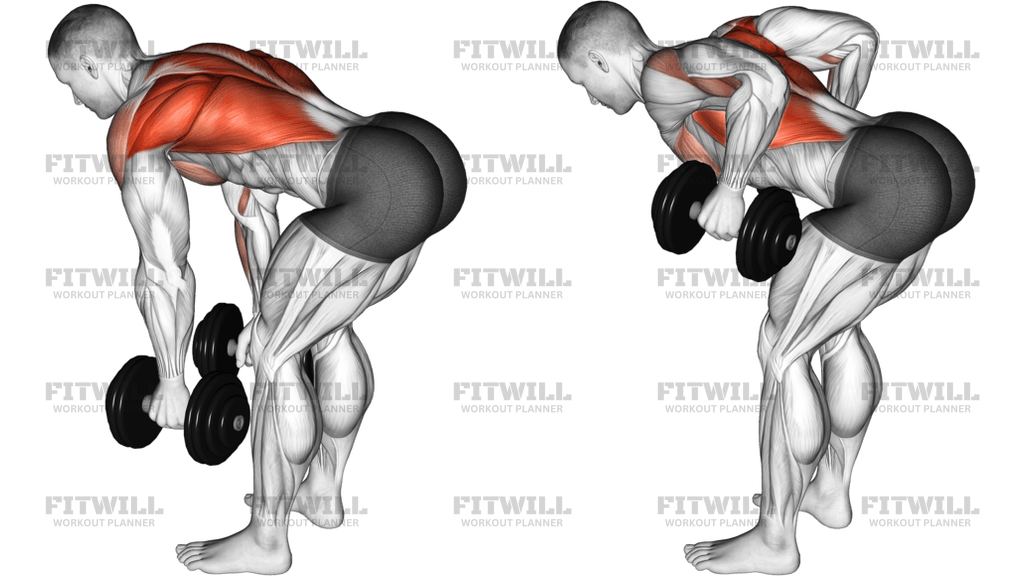
Dumbbell Lying Wide-Grip Row On Rack
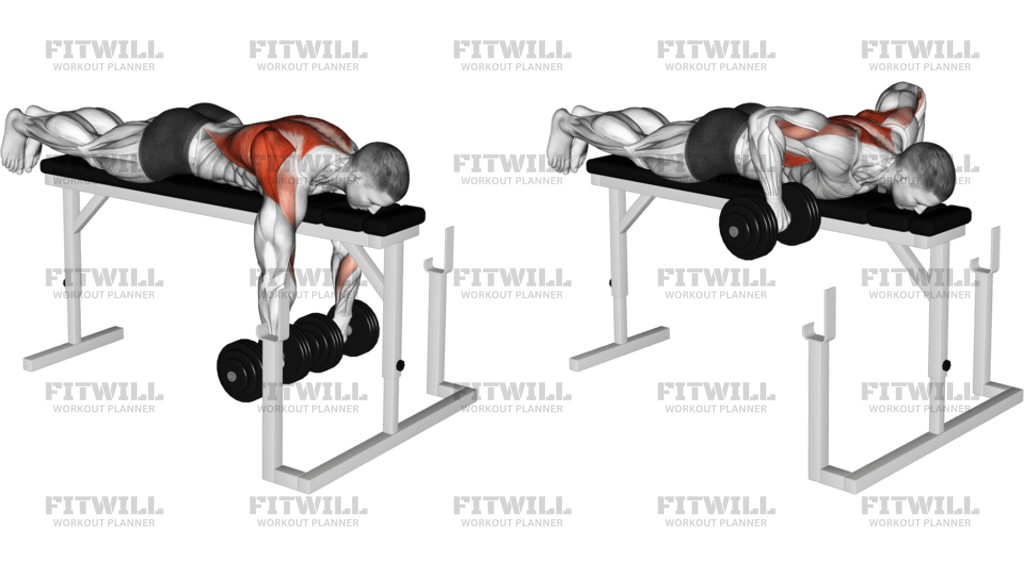
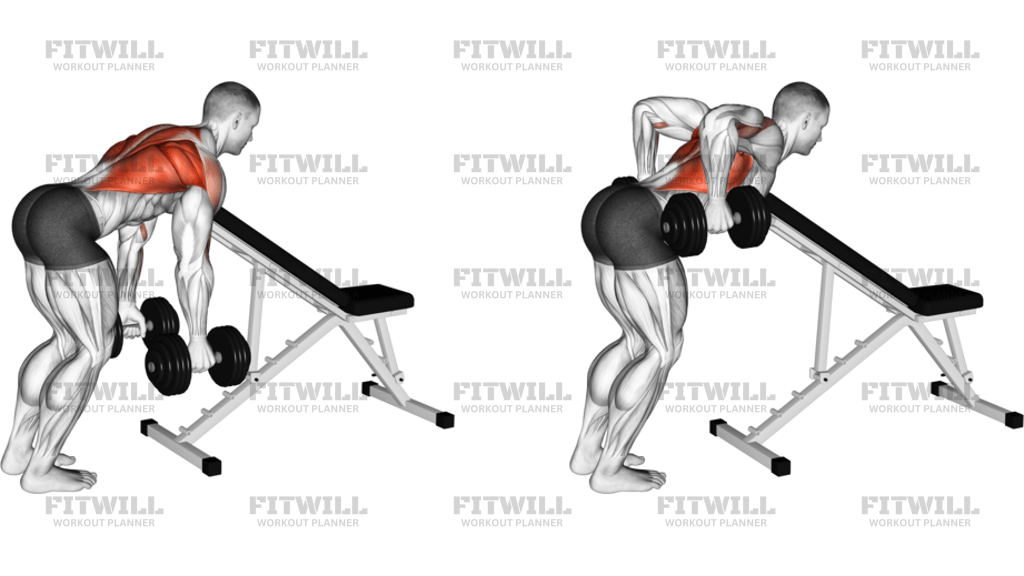
Dumbbell Lying Wide-Grip Row On Rack is a chest-supported rowing variation done face down on a bench with the dumbbells hanging freely below the rack. The bench removes most of the need to brace against body sway, so the repetition becomes a strict upper-back pull instead of a hip-driven cheat row. The wide path also changes the feel of the movement: instead of tucking the elbows tightly into the sides, you pull them out and back so the upper back, lats, and rear shoulder line all have to work together.
The setup matters because it determines whether the dumbbells can travel cleanly and whether your torso stays pinned to the bench. Your chest and stomach stay supported while the arms reach straight down at the start, creating a long stretch through the shoulders and back. If the bench is too high, the weights hit the rack; if it is too low or you lose contact with the pad, the lower back and momentum start to take over.
In a good rep, the shoulders stay controlled while the elbows sweep up in a wide arc toward the outside of the lower ribs or upper waist. The goal is not to shrug the dumbbells upward, but to pull the upper arms back while keeping the neck long and the ribcage quiet. At the top, the shoulder blades come back and slightly down, then the weights lower slowly until the arms are fully extended again.
This exercise is useful when you want a strict pulling variation that reduces cheating and keeps tension on the back through the full range. It works well as an accessory lift for back thickness, rear-deltoid involvement, and scapular control, especially when free-standing rows become too easy to swing. Beginners can use it if they start light and keep the chest glued to the bench, but the movement becomes much less useful once the dumbbells are too heavy to lower under control.
Treat each repetition as a controlled pull from a fixed base. If the weights start banging the rack, the chest leaves the bench, or the shoulders rise toward the ears, the load is too heavy or the setup is off. The best version of this lift is smooth, balanced, and repeatable from the first rep to the last.
[ Workout Log & Planner ]
Put your next workout in Fitwill
Keep your plan and training log ready when you are.


Instructions
- Place a flat bench inside a rack so the dumbbells can hang between the uprights, then lie face down with your chest and stomach supported and your feet braced behind you.
- Hold a dumbbell in each hand with a neutral grip and let both arms hang straight down from the shoulders until the shoulder blades are fully lengthened.
- Keep your neck long, ribs pressed into the bench, and midsection lightly braced so your torso stays quiet before the first pull.
- Drive the elbows up and out in a wide arc, pulling the dumbbells toward the outside of your lower ribs or upper waist.
- Keep the wrists straight and let the forearms stay in line with the dumbbells as the weights travel upward.
- Squeeze the shoulder blades back and slightly down at the top without shrugging the shoulders toward your ears.
- Pause briefly at the top, then lower the dumbbells slowly until the arms are long again and the shoulders reach a controlled stretch.
- Breathe out as you pull and inhale on the return, keeping the same tempo on every rep.
- Set the dumbbells down safely before standing up if the rack or bench setup leaves them below your feet.
Tips & Tricks
- Keep the chest glued to the pad; if your ribs lift, the row has turned into a body English movement.
- Think about driving the elbows wide and back rather than curling the dumbbells with the biceps.
- Stop the pull when the upper arms reach the line of the torso; going higher usually turns the top into a shrug.
- Use a bench height that leaves clear space for the dumbbells at the bottom, otherwise the rack will steal the range of motion.
- A neutral wrist helps the elbow track cleanly; bent wrists usually make the pull feel weaker and less stable.
- Keep the head in line with the spine instead of looking forward, which tends to overload the neck.
- Lower the dumbbells under control; a slow eccentric keeps the upper back working instead of dropping onto the joints.
- Choose a load that lets you pause for a second at the top without jerking off the bottom.
- If one shoulder rolls forward first, reduce the weight and finish each rep with both sides rising evenly.
Frequently Asked Questions
What muscle does Dumbbell Lying Wide-Grip Row On Rack target most?
The lats do the main work, with the upper back, rear shoulders, biceps, and forearms helping through the pull.
Can beginners perform this exercise?
Yes. It is beginner-friendly if the bench is stable, the weight is light enough to control, and the chest stays on the pad.
Where should the dumbbells travel on each rep?
They should move in a wide arc toward the outside of the lower ribs or upper waist, not straight up toward the shoulders.
Should my chest stay on the bench the whole time?
Yes. If your chest leaves the pad, the row usually turns into a momentum lift and the lower back starts helping too much.
Why use a wide-grip path instead of tucking the elbows?
A wider elbow path shifts more stress toward the upper back and rear delts and makes the row feel less like a close-grip lat pull.
What if the dumbbells hit the rack at the bottom?
Raise the bench height, move the bench inside the rack differently, or use smaller dumbbells so you can keep a clean bottom position.
Is this better than a standing dumbbell row?
It is better if you want stricter form and less torso cheating; a standing row may allow more load, but this version keeps tension cleaner.
What should I do if my shoulders feel pinchy at the top?
Lower the load, keep the elbows a little closer to the torso, and stop the pull before the shoulders shrug upward.