Dumbbell Pullover On Floor
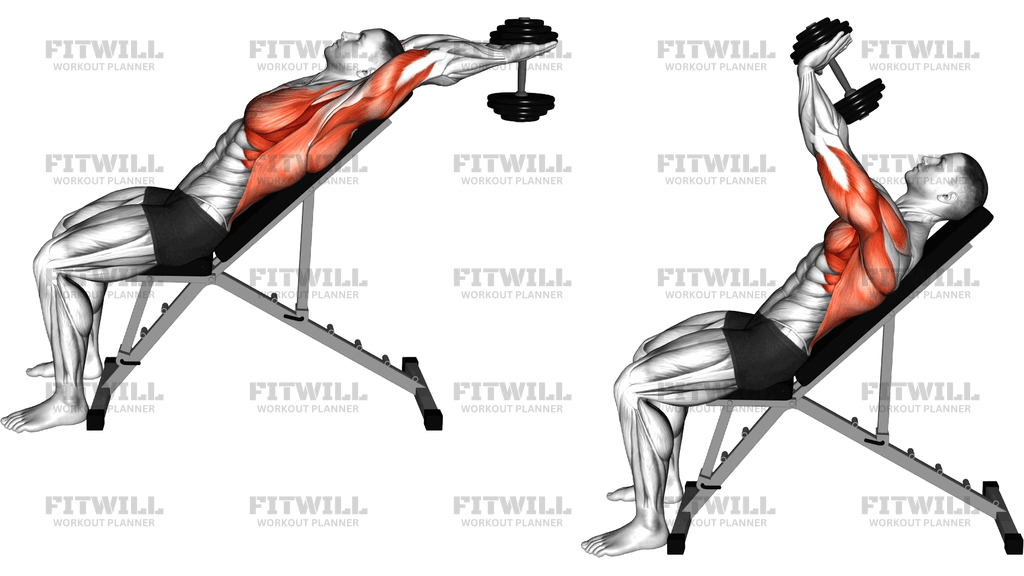
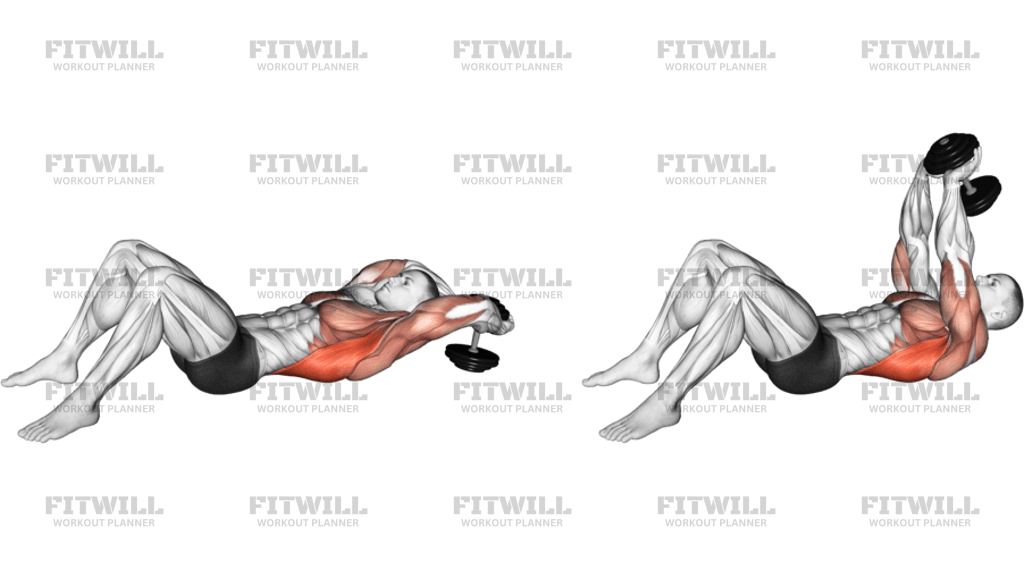
Dumbbell Pullover On Floor is a floor-based pullover that trains shoulder extension and trunk control while keeping the range shorter and more predictable than a bench version. Lying on the floor gives you a clear end point for each rep: when the upper arms touch down, the dumbbell cannot travel farther behind the head, which helps keep the movement strict and easier to repeat.
The main emphasis is on the lats, with the upper back, triceps, forearms, and front-of-shoulder tissues helping stabilize the dumbbell as it moves. In anatomy terms, the latissimus dorsi does most of the work, with support from the rhomboids, biceps brachii, forearm flexors, and anterior deltoids. That makes the exercise useful when you want to train the pull-through overhead pattern without turning it into a full pressing or rib-flaring exercise.
Because the floor limits the range, setup matters more than load. Lie flat with your knees bent, feet planted, and your head resting on the floor. Hold one dumbbell with both hands above the chest, keep a soft bend in the elbows, and keep your ribs from popping up as the weight travels behind you. The goal is not to force the dumbbell farther back; the goal is to keep the shoulder joints moving smoothly while the torso stays organized.
This exercise works well as accessory back work, as part of an upper-body session, or as a controlled pulling drill when you want to feel the lats through a long lever. It is also a good option for beginners who need a clearer end range and less shoulder extension than a pullover on a bench. Keep the reps smooth, pause when the upper arms meet the floor, and avoid turning the movement into a rib-cage arch or a straight-arm press.
If the shoulders feel pinched, shorten the lowering range and reduce the load. A clean floor pullover should feel like a controlled stretch and pull through the side of the torso, not a jolt in the front of the shoulder. Choose a weight you can move evenly from the first rep to the last, and stop the set when the elbows start bending more or the lower back starts to take over.
[ Workout Log & Planner ]
Put your next workout in Fitwill
Keep your plan and training log ready when you are.


Instructions
- Lie on your back on the floor with your knees bent, feet flat, and your head resting down.
- Hold one dumbbell with both hands above the middle of your chest, keeping a soft bend in the elbows.
- Set your shoulders down and back lightly, and keep your ribs from flaring upward.
- Inhale and lower the dumbbell in a smooth arc back over your face and toward the floor.
- Let the arms travel only until your upper arms or elbows touch the floor.
- Pause briefly on the floor without bouncing the weight.
- Exhale and pull the dumbbell back to the start by driving through the lats and upper arms.
- Keep the elbows at the same angle as you return and stop short of locking the elbows hard.
- Reset the dumbbell above the chest before the next rep and repeat with the same tempo.
Tips & Tricks
- Keep the lower back in light contact with the floor; if your ribs are popping up, the load is too heavy.
- Use the floor as your range limit instead of trying to chase a deeper stretch with your shoulders.
- Keep the elbows slightly bent and fixed; turning the move into a press changes the exercise.
- Hold the dumbbell securely with both hands so the wrists stay stacked and the weight does not wobble behind the head.
- Lower slowly so the lats stay loaded all the way to the floor contact, then reverse without bouncing.
- If the front of the shoulder pinches, shorten the arc and keep the dumbbell closer to the line of the chest.
- A moderate load usually works better than a heavy one because floor contact already makes the movement strict.
- Finish the rep when the upper arms touch down cleanly; extra range usually comes from the shoulder joints, not better back work.
Frequently Asked Questions
What muscle does Dumbbell Pullover On Floor target most?
The lats are the primary target, with the upper back, triceps, and forearms helping to stabilize the dumbbell.
Can beginners perform this exercise?
Yes. The floor makes the range easier to control, so beginners can learn the pullover pattern with a light dumbbell and short, strict reps.
How far should the dumbbell go behind my head?
Only as far as you can lower it before the upper arms touch the floor. The floor is the end point, so you do not need to chase extra range.
Should I keep my elbows straight?
No. Keep a small, fixed bend in the elbows so the movement stays in the shoulders and lats instead of becoming a triceps press.
Why do it on the floor instead of a bench?
The floor shortens the bottom range and gives you a hard stop, which makes the rep easier to control and can reduce the tendency to over-arch.
What should I feel working during the rep?
You should feel the lats and side of the torso working to bring the dumbbell back up, with the upper back and arms helping to stabilize the load.
What is the most common mistake?
Letting the ribs flare and turning the rep into a big shoulder stretch. Keep the torso quiet and let the floor control the depth.
Can I use this as a warm-up?
Yes, if you keep the load light and the reps smooth. It can work well as a shoulder and lat activation drill before heavier pulling.