Dumbbell Decline Bench Press
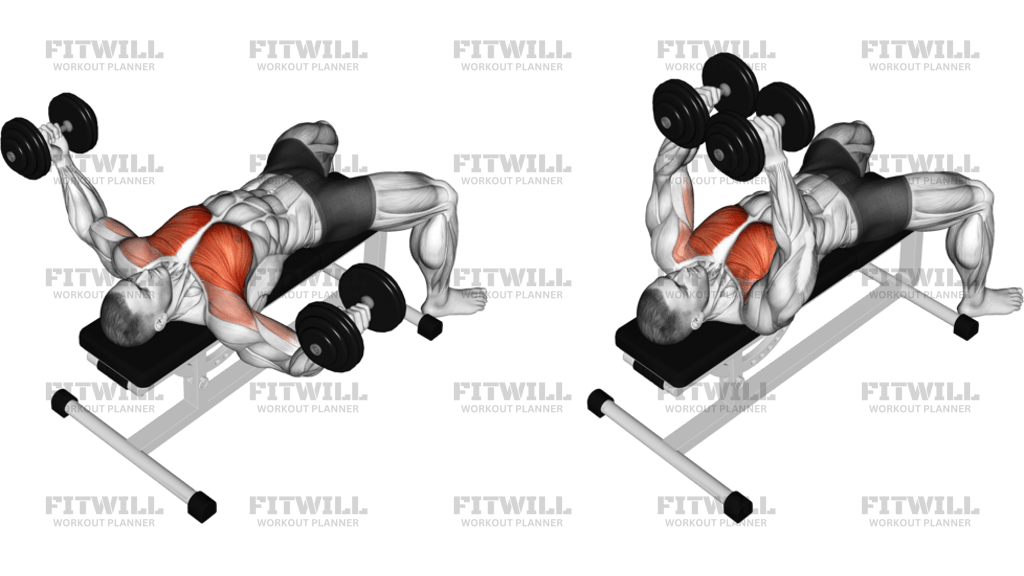
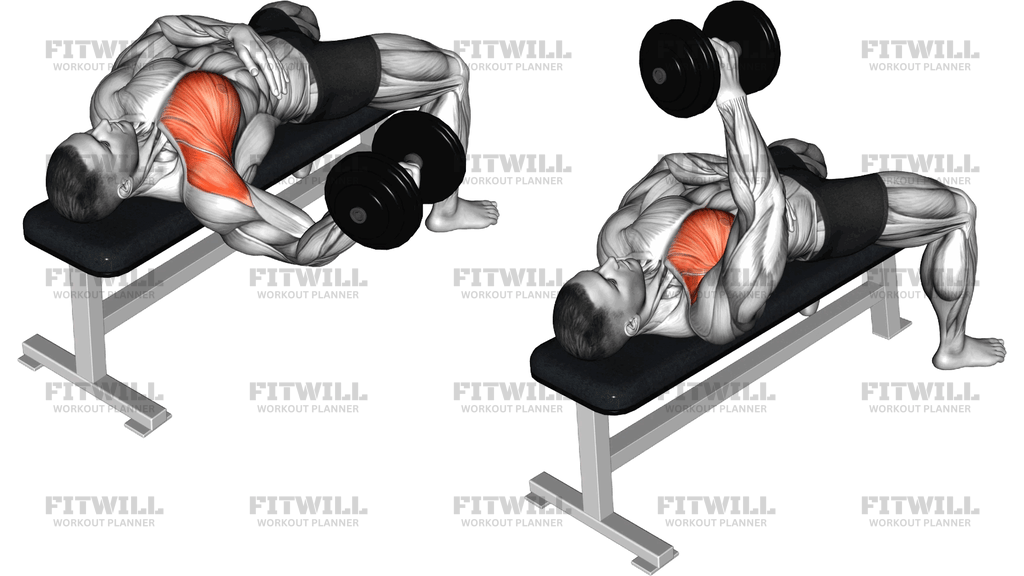
Dumbbell Decline Bench Press is a horizontal pressing exercise performed on a decline bench with a dumbbell in each hand. The decline angle shifts more work toward the lower fibers of the chest while still training the triceps and front delts to finish the press. The image shows the lifter secured on the bench with the feet anchored, which is important because the setup keeps the torso stable and lets the dumbbells travel cleanly from the lower chest to full extension.
This exercise is useful when you want a chest press that feels slightly different from a flat bench press without abandoning the basic pressing pattern. Because each arm works independently, the Dumbbell Decline Bench Press also exposes side-to-side differences in control, wrist position, and pressing path. That makes it a good choice for lifters who want to build strength while keeping the shoulders honest and the rep quality visible.
The setup matters more here than in many dumbbell exercises because the decline bench changes how your body stays fixed. Anchor the feet, keep the hips and upper back settled into the pad, and keep the shoulder blades pulled down and back before the dumbbells leave the rack position. A firm upper-back position gives you a stable pressing shelf and helps keep the elbows from flaring or the shoulders from rolling forward as fatigue sets in.
Each rep should travel in the same smooth arc. Lower the dumbbells under control toward the lower chest or upper sternum, pause briefly if needed, then press them back up until the arms are straight without crashing the weights together. The movement should feel like a strong press, not a shrug or a bounce. If the dumbbells drift behind the wrists, the elbows open too wide, or the shoulders pinch at the bottom, shorten the range or reduce the load.
Dumbbell Decline Bench Press is a practical strength builder for chest-focused sessions, upper-body hypertrophy work, and athletes who want a pressing variation that is joint-friendly when performed well. It also helps lifters practice even force production, since each dumbbell must be controlled separately. Keep the reps crisp, use a bench angle and load you can own, and treat the bottom position as the point where the press must stay organized rather than rushed.
[ Workout Log & Planner ]
Put your next workout in Fitwill
Keep your plan and training log ready when you are.


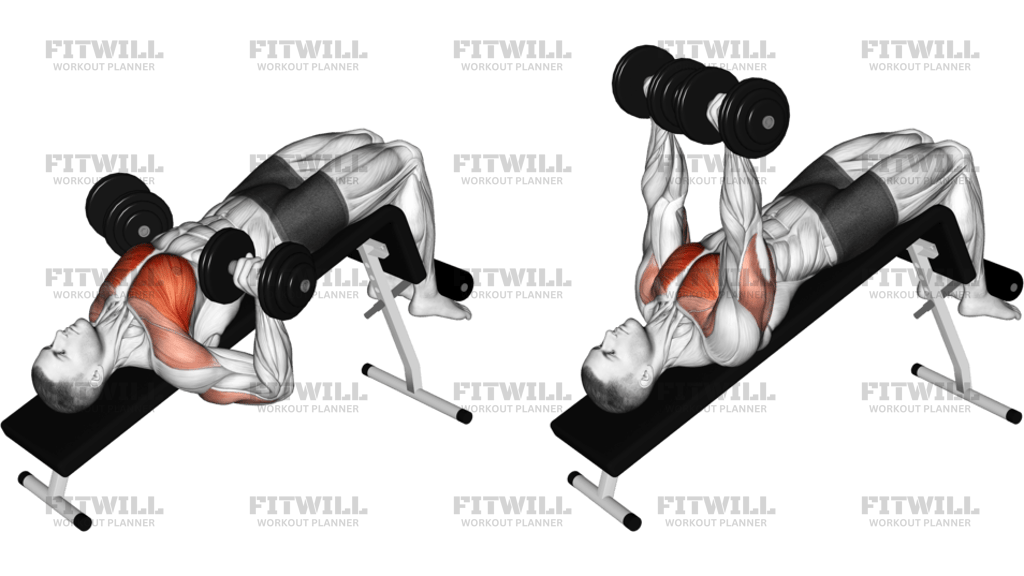
Instructions
- Lie back on a decline bench and hook your feet under the pads so your body stays fixed on the seat.
- Hold a dumbbell in each hand at the sides of your chest with your palms facing forward or slightly angled inward.
- Plant your upper back into the bench, keep your chest lifted, and set your shoulder blades down before you start.
- Stack each wrist over its elbow so the dumbbells sit over the lower chest line rather than drifting toward the face.
- Press both dumbbells upward together until your arms are straight but not locked hard at the top.
- Bring the dumbbells slightly inward as you finish the press, but do not clang them together overhead.
- Lower the weights slowly back to the lower chest or upper sternum, keeping the elbows from flaring too far out.
- Pause briefly in the bottom position if you can still stay tight, then drive back up on the next exhale.
- Stop the set if your shoulders roll forward, your wrists bend back, or the bench position starts to slip.
- Return the dumbbells to your thighs or the floor safely after the final rep.
Tips & Tricks
- Use a bench angle that lets your feet lock in securely; if you slide around, the press will turn into a full-body struggle.
- Let the dumbbells travel to the lower chest line, not the upper chest, or the movement starts to look more like a flat press.
- Keep the elbows slightly tucked on the way down so the shoulders do not take over at the bottom.
- Do not press so high that the shoulders shrug toward the ears at lockout.
- A neutral or slightly turned-in dumbbell angle is often easier on the shoulders than forcing the palms perfectly forward.
- If one dumbbell rises faster than the other, reduce the load until both arms can match through the full range.
- Stop the descent a little higher if the bench angle and shoulder mobility create a pinch near the bottom.
- Use a slower lowering phase than the pressing phase so the chest stays loaded instead of the dumbbells dropping.
- Keep the chest lifted against the bench without over-arching the lower back to chase a bigger range.
- For heavier sets, have the dumbbells positioned so you can start each rep without twisting your shoulders to get them into place.
Frequently Asked Questions
What muscles does Dumbbell Decline Bench Press work?
Dumbbell Decline Bench Press mainly works the chest, especially the lower portion, along with the triceps and front delts. The upper back, grip, and core help keep the bench position stable.
Is Dumbbell Decline Bench Press good for beginners?
Yes, as long as the bench setup feels secure and you start light enough to control the bottom position. Beginners should master the path and shoulder position before chasing heavy dumbbells.
How should I set up on the decline bench for Dumbbell Decline Bench Press?
Lock your feet under the pads, settle your upper back into the bench, and keep your shoulder blades pulled down before the first rep. If you feel yourself sliding, the setup is not tight enough.
How low should the dumbbells go in Dumbbell Decline Bench Press?
Lower them to the lower chest or upper sternum as long as your shoulders stay packed and the dumbbells do not pull the wrists behind the elbows. Stop higher if the bottom position feels unstable.
Should my elbows flare out in Dumbbell Decline Bench Press?
No. A small tuck usually keeps the shoulders happier and helps the chest drive the rep. If the elbows are flaring hard, reduce the load and narrow the path.
What is the most common mistake in Dumbbell Decline Bench Press?
Letting the dumbbells drift too wide or too high so the shoulders take over. The press should track from the lower chest up and slightly inward, not straight out toward the face.
Can I use a neutral grip for Dumbbell Decline Bench Press?
Yes. A slightly turned-in grip is often more comfortable on the shoulders and still trains the chest well, especially on a decline bench.
How do I know if the weight is too heavy?
If your wrists bend back, the dumbbells shake at the bottom, or you lose the bench position, the load is too high for clean reps. Drop the weight until the path stays smooth.
How is Dumbbell Decline Bench Press different from flat dumbbell pressing?
The decline angle shifts the emphasis slightly lower on the chest and usually reduces how much shoulder flexion you need. Many lifters also feel more stable through the press when the feet are locked in.