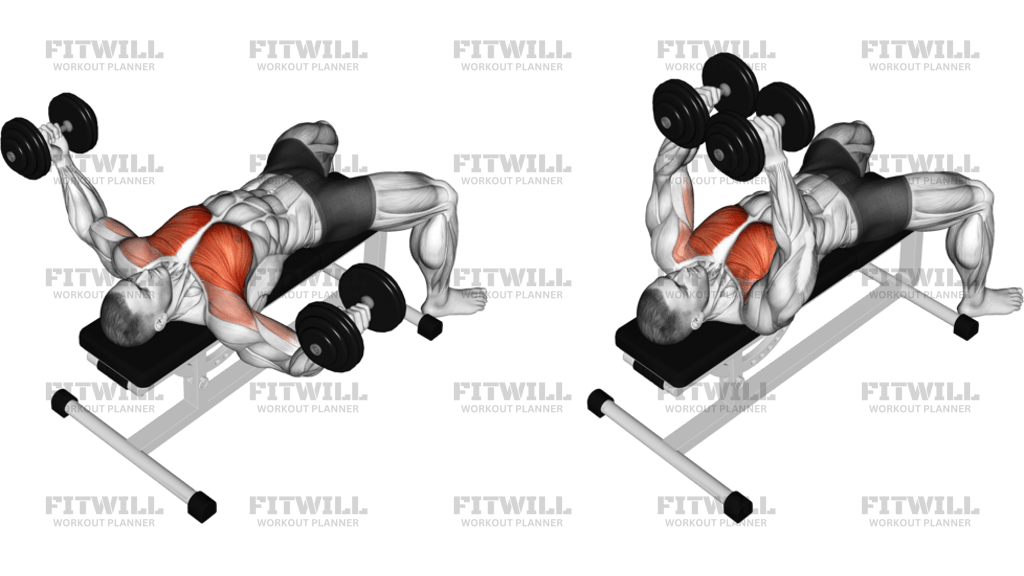
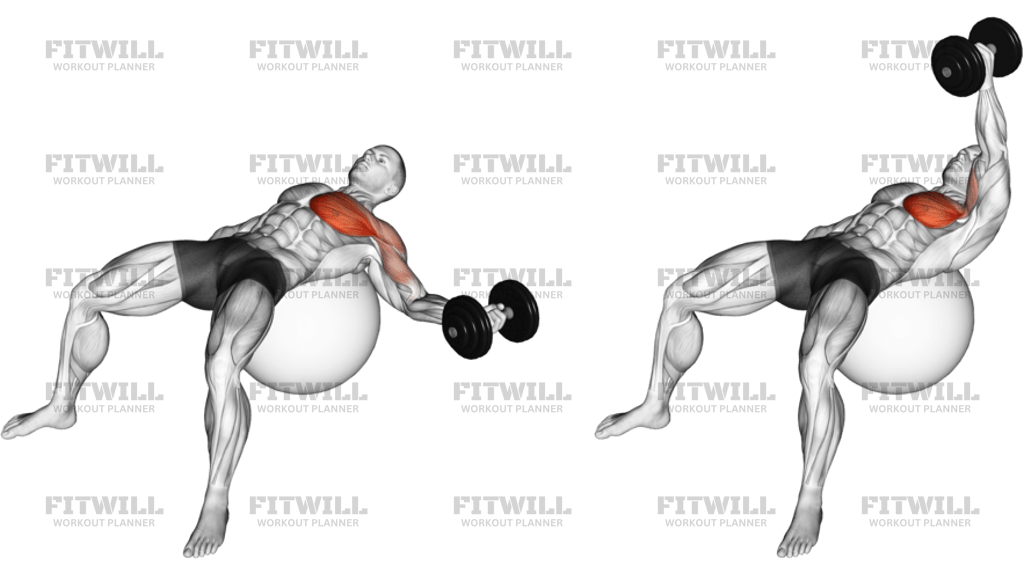
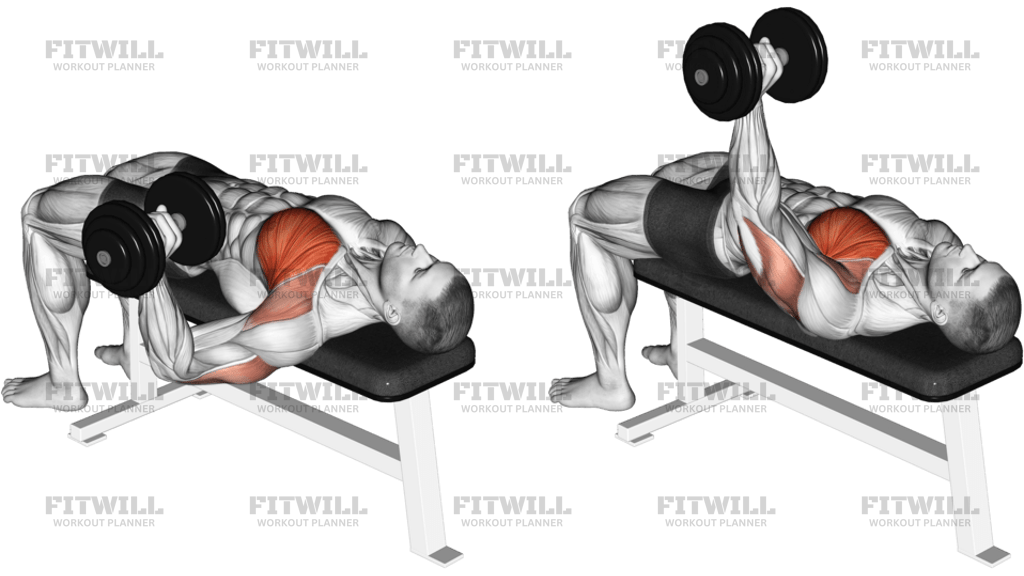
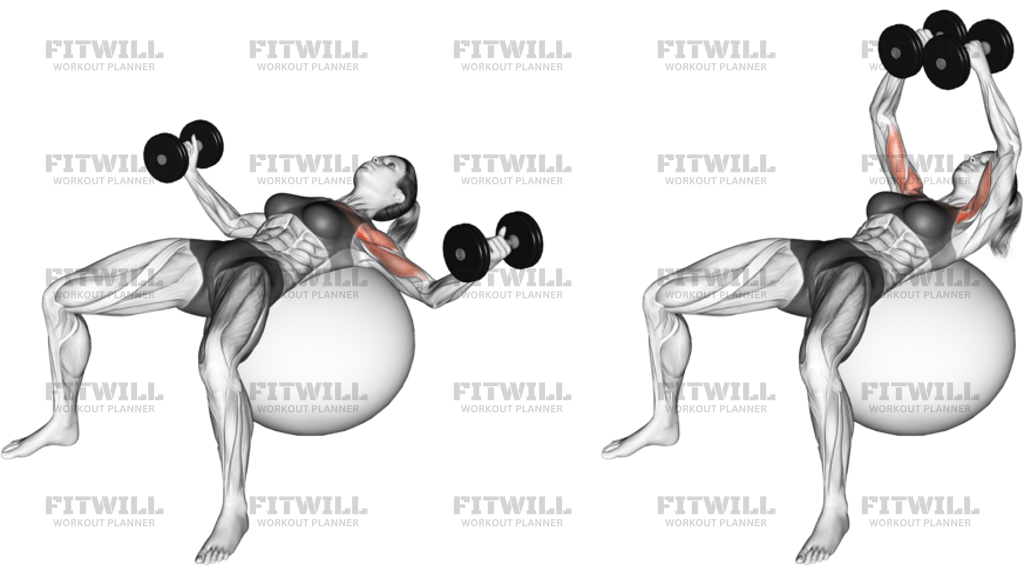
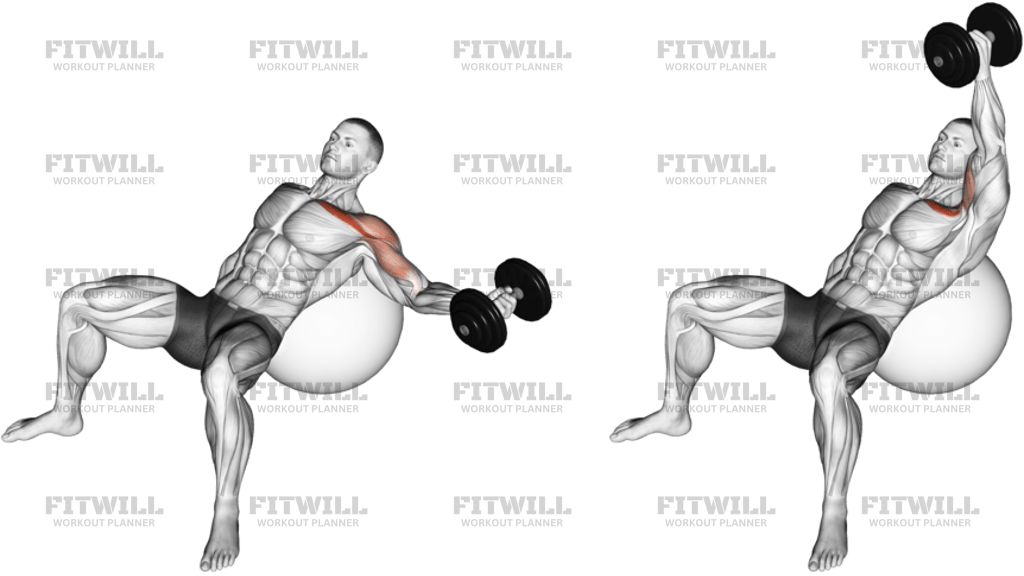
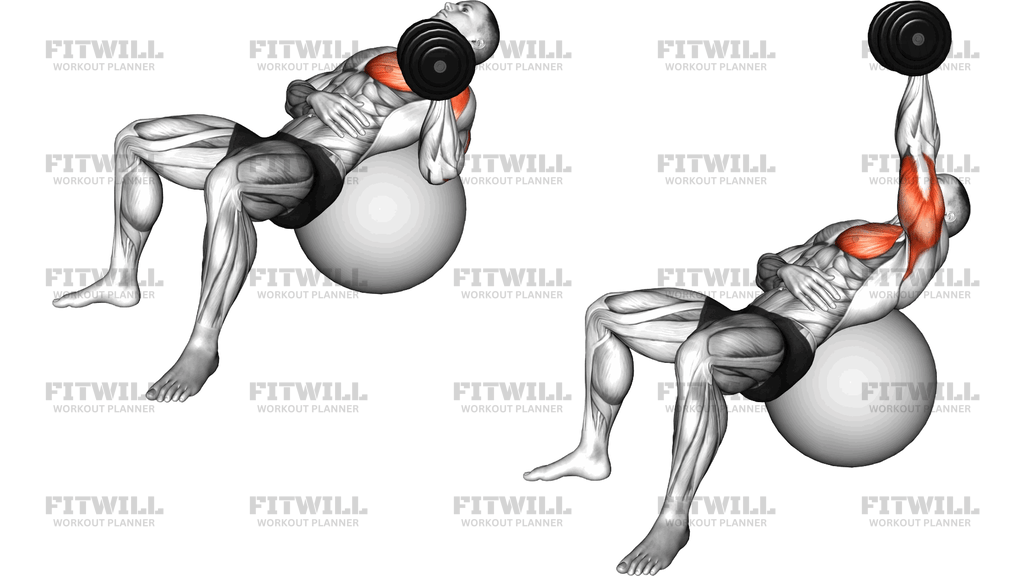
Dumbbell One-Arm Fly On Exercise Ball
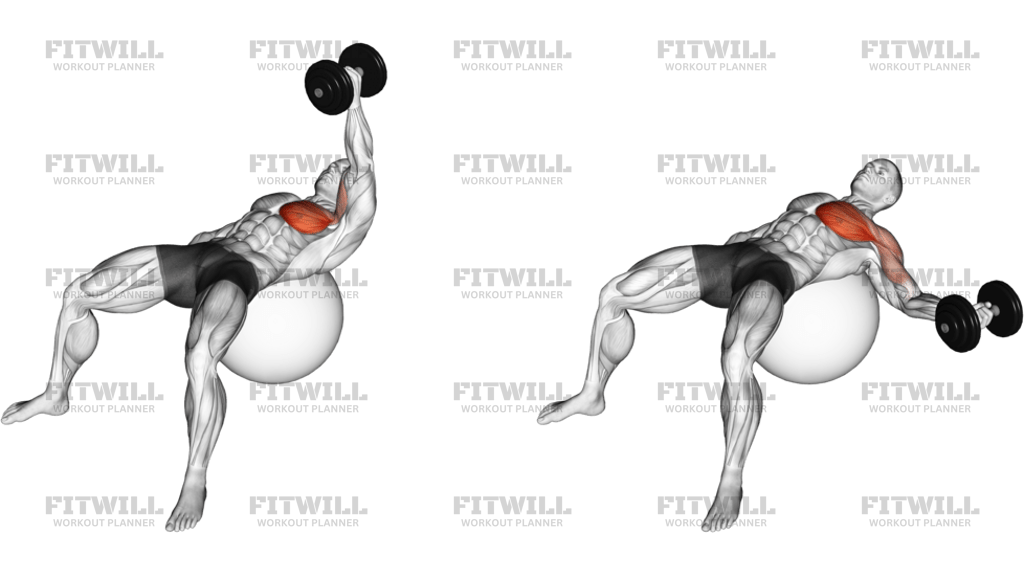
Dumbbell One-Arm Fly On Exercise Ball is a chest-focused isolation exercise that uses an exercise ball for support and instability while one arm moves a dumbbell through a wide arc. The ball changes the feel of the rep immediately: your upper back has to stay organized, your ribs need to stay controlled, and the shoulder has to do its job without letting the torso twist or the lower back over-arch. That makes the movement useful for building chest strength, shoulder control, and clean pressing mechanics without turning the set into a heavy press.
The main target is the pecs, especially the pectoralis major, with the front shoulder, triceps, and core helping steady the body. Because only one arm is working at a time, the exercise also exposes side-to-side differences in control. If one side is stronger or more coordinated, the ball will make that obvious right away, so the setup and tempo matter more here than they would on a stable bench.
Set the upper back on the ball with both feet planted firmly and the hips high enough to keep the torso level. Hold the dumbbell above the chest with a soft elbow, then lower it in a smooth semicircle until the chest opens and the shoulder stays packed. The working arm should move like a fly, not a press: the elbow angle stays almost fixed, the wrist stays stacked, and the shoulder blade does not roll forward at the bottom. Bring the dumbbell back over the chest by squeezing the pec and tracing the same path in reverse.
This is a good accessory movement when you want chest work with lighter loading, more stretch, and more positional control than a bench fly or machine press. It can also help lifters practice staying stable through the ribcage and shoulders while the arm moves independently. Because the ball adds instability, the best results come from conservative loading, clean reps, and a controlled range that stops before the shoulder feels pinched.
Use it as a technique-focused chest builder, not a momentum exercise. The rep should feel smooth, deliberate, and balanced from start to finish. If the torso starts to rotate, the hips sag, or the shoulder loses its shape at the bottom, the weight is too heavy or the range is too deep. Treated well, this movement gives you strong pec tension and a good stretch without needing much load.
[ Workout Log & Planner ]
Put your next workout in Fitwill
Keep your plan and training log ready when you are.


Instructions
- Sit with the dumbbell on your thigh, then roll onto the exercise ball until your upper back and shoulders are supported and both feet stay flat on the floor.
- Keep your knees bent and your hips level so your torso stays roughly parallel to the floor instead of arching over the ball.
- Hold the dumbbell directly above your chest with a neutral wrist and a slight bend in the working elbow.
- Set your shoulder blades back and down, then brace your ribs and glutes to keep the ball from shifting.
- Lower the dumbbell in a wide arc away from your midline until your chest feels a strong stretch and your shoulder still feels packed.
- Keep the elbow angle almost fixed as the arm opens; do not turn the descent into a press or let the wrist fold back.
- Exhale and sweep the dumbbell back over the chest along the same arc, squeezing the pec to finish the rep.
- Stop when the weight is stacked over the shoulder and the torso stays square, then repeat for the planned reps before switching sides.
Tips & Tricks
- Start lighter than you would on a flat bench; the ball makes this movement less stable and the chest will still fatigue quickly.
- Keep the working elbow softly bent and nearly frozen through the whole rep so the chest, not the triceps, controls the arc.
- If the dumbbell drifts toward your face or hip instead of opening out to the side, reset the shoulder before the next rep.
- Keep both feet planted and press lightly through the floor to stop the ball from sliding as the arm moves.
- Do not let the ribs flare to chase range; the best stretch comes from the chest opening, not from overextending the lower back.
- Lower only until the shoulder still feels stable and the front of the chest stays in control.
- Move the dumbbell at a steady tempo so the bottom position stays controlled instead of bouncing off the stretch.
- If one side feels shaky, shorten the range and keep the torso square rather than forcing a bigger arc.
Frequently Asked Questions
What does the one-arm fly on an exercise ball train most?
It mainly targets the chest, especially the pectoralis major, while the front shoulder and core help stabilize the position.
Why use an exercise ball instead of a flat bench?
The ball adds instability, so you have to keep the ribs, hips, and shoulder organized while the arm moves through the fly.
How heavy should the dumbbell be for this movement?
Use a light load that lets you keep a soft elbow and a smooth arc without twisting off the ball.
How deep should I lower the dumbbell?
Lower only until you feel a strong chest stretch and the shoulder still stays packed; do not force a deeper range if the front of the shoulder pinches.
Should my elbow stay bent the whole time?
Yes. Keep a small bend in the elbow and keep that angle mostly fixed so the movement stays a fly rather than a press.
What is the biggest form mistake on the ball?
Letting the ribs flare and the hips sag to create fake range is the most common problem. That usually turns the set into a low-back compensation exercise.
Can beginners do this exercise safely?
Yes, but only with a very light dumbbell and a short range until they can keep the torso square on the ball.
How is this different from a dumbbell press?
A press bends and straightens the elbow under load, while this fly keeps the elbow angle nearly fixed and loads the chest through the opening and closing arc.