Dumbbell Chest Fly
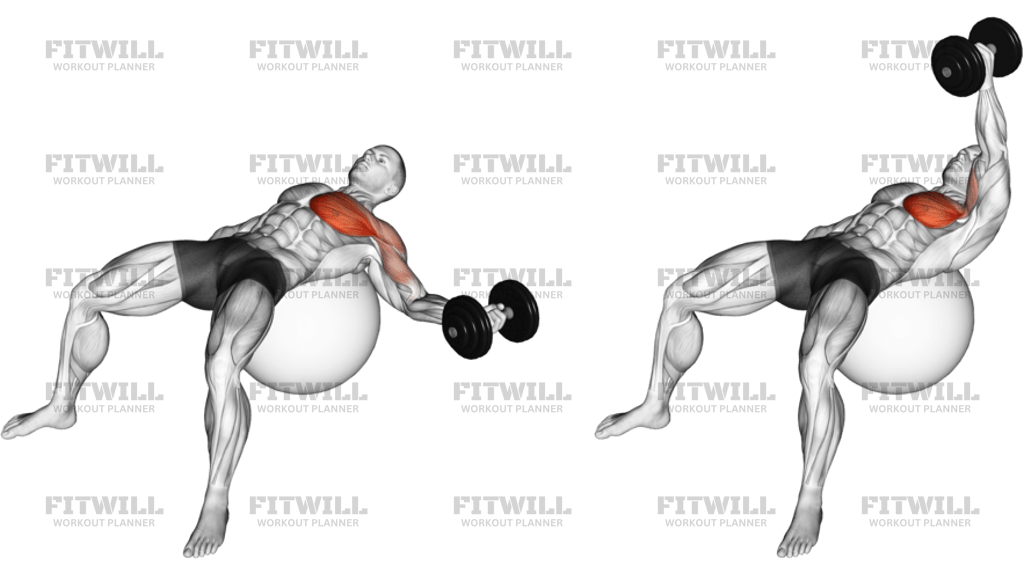
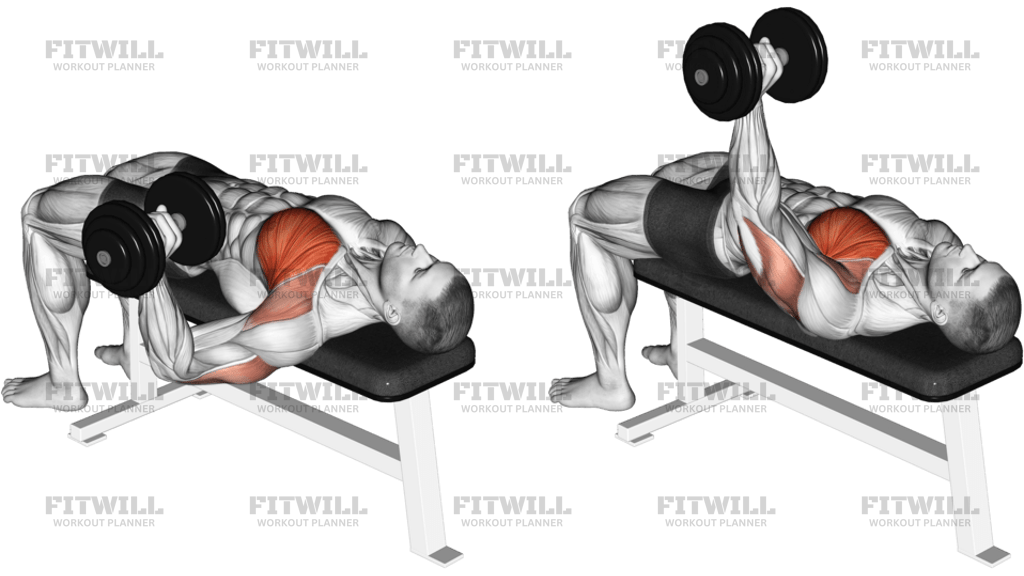
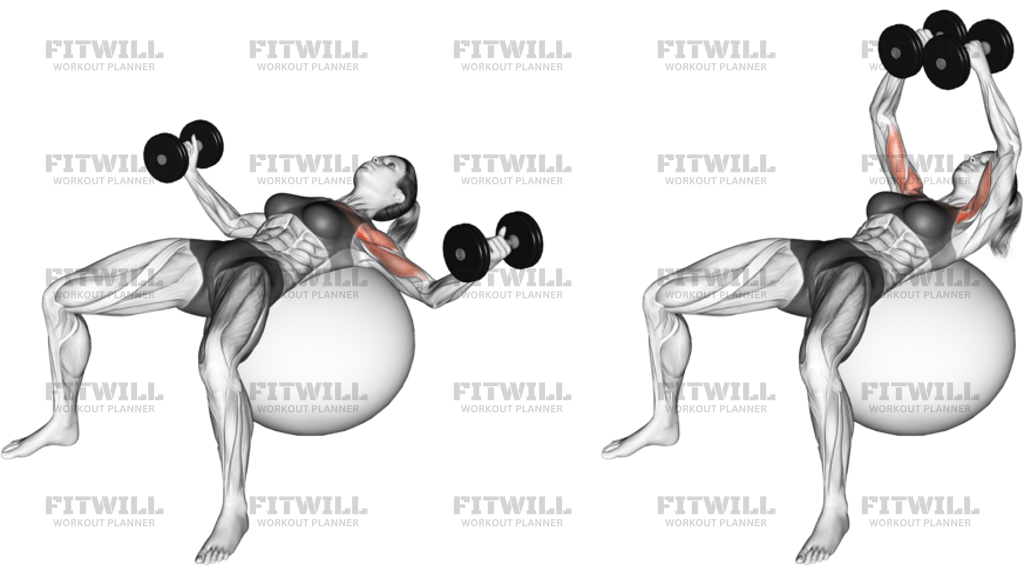
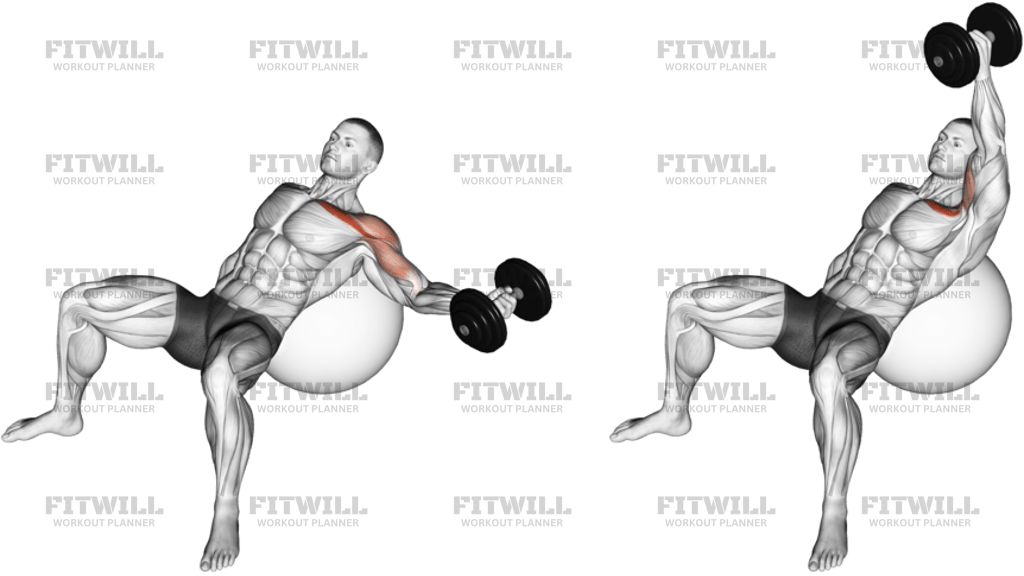
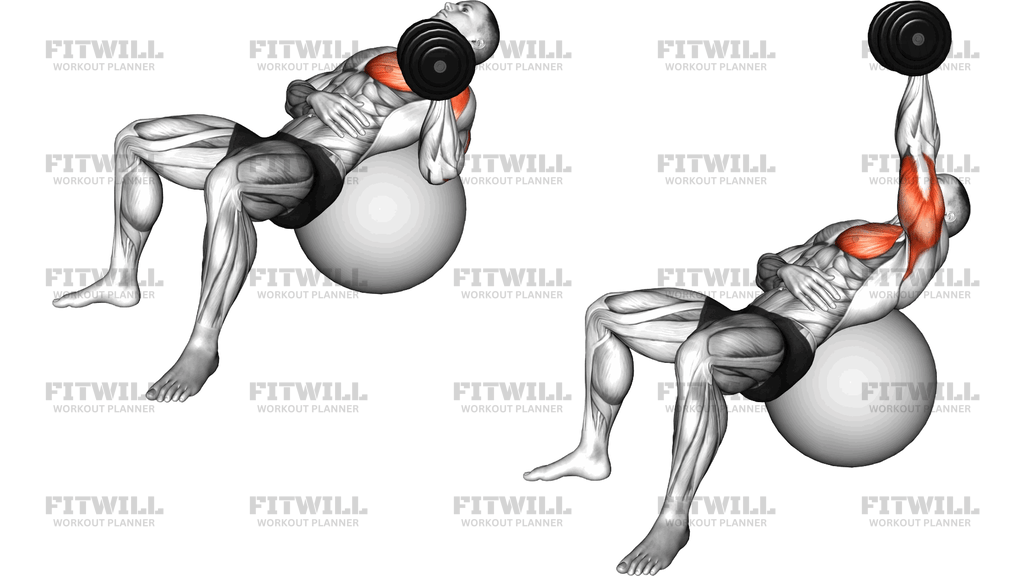
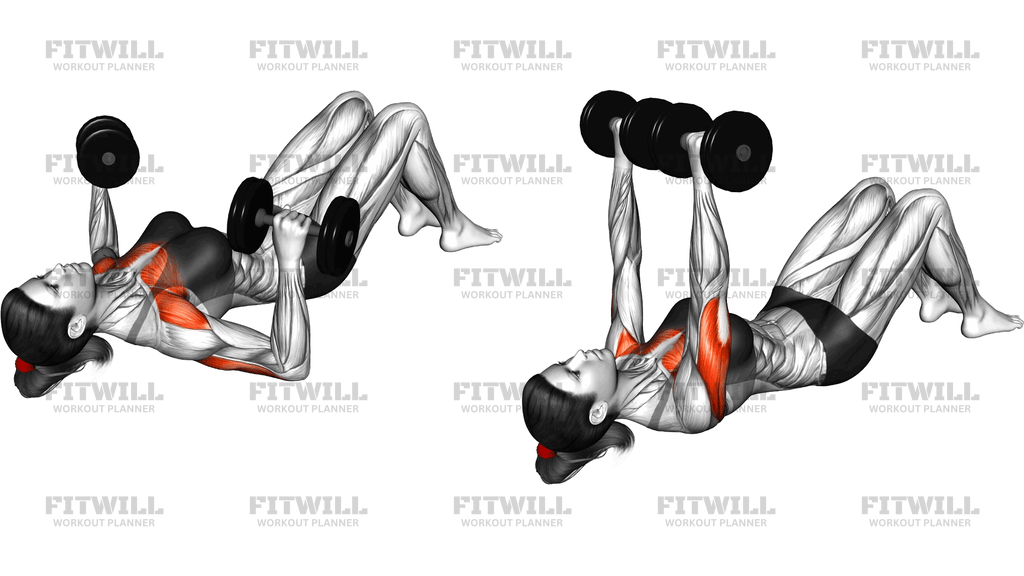
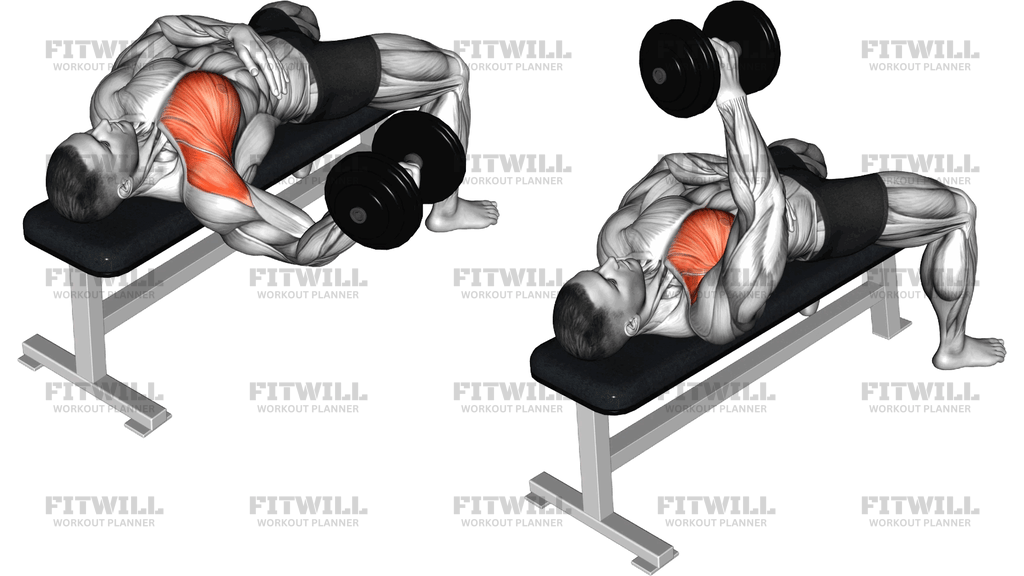
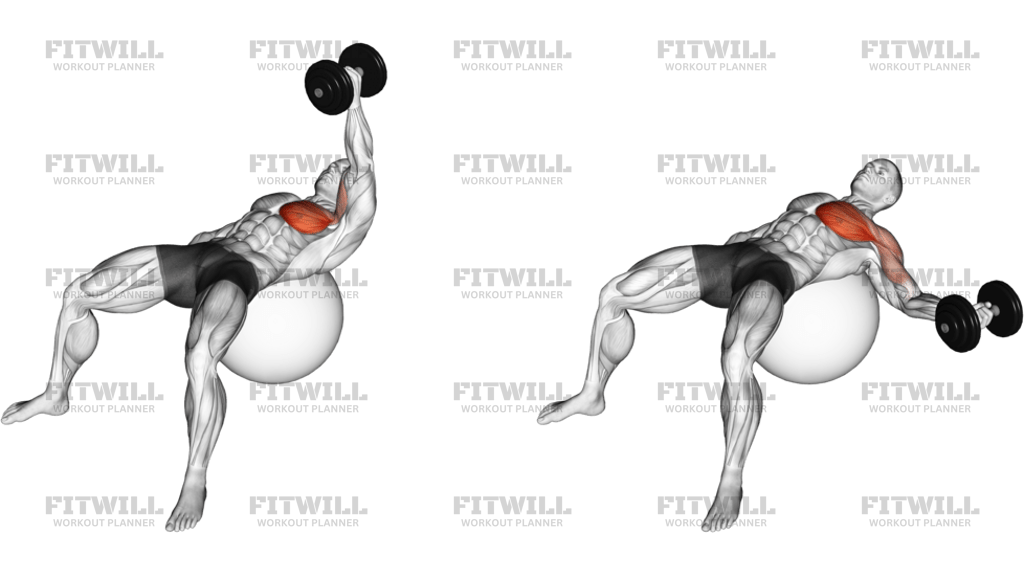
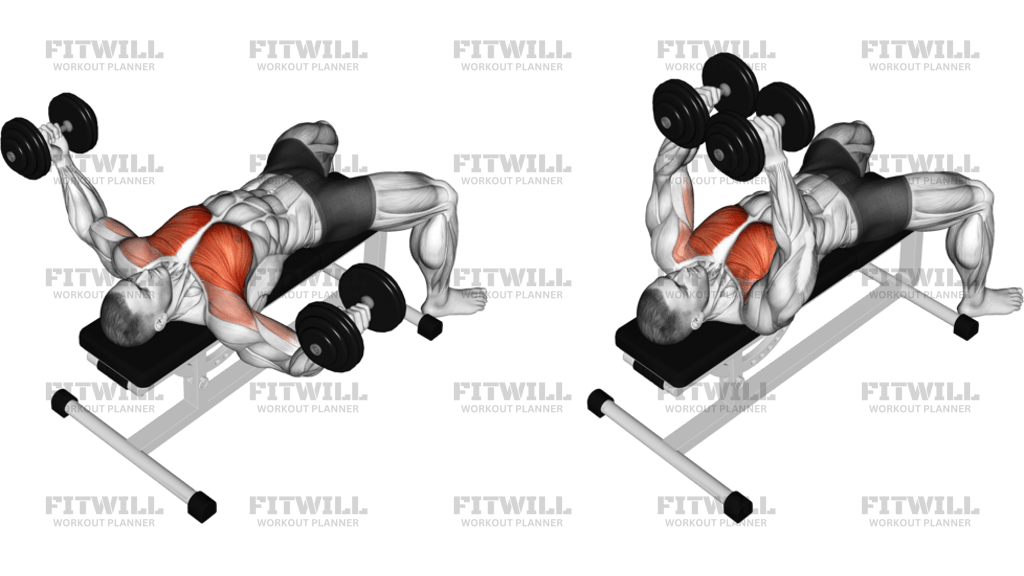
Dumbbell Chest Fly is a flat-bench dumbbell isolation exercise built to load the chest through a wide, controlled arc. The image shows the lifter lying on a bench with the shoulders open, feet planted, and the dumbbells moving out and back together above the chest. That path matters: this is not a press, and the rep should feel like the arms are opening and closing around the shoulder joint while the chest stays under tension.
The main training focus is the pecs, with help from the front shoulders and the muscles that stabilize the scapulae, elbows, wrists, and trunk. Because the arms move in a long lever, the exercise punishes sloppy setup quickly. A small bend in the elbows, a fixed bench position, and neutral wrists help keep the load where it belongs and prevent the movement from turning into a shoulder-dominant swing.
Set the dumbbells over the chest, lower them in a wide semicircle, and stop the descent when the chest is stretched but the shoulders still feel organized. The bottom position should be controlled, not bounced. From there, squeeze the dumbbells back together over the chest without locking the arms or crashing the weights into each other. The goal is to keep the same arc on every rep so the chest does the work instead of momentum.
This movement is most useful as accessory work after pressing or when you want to train chest size and mind-muscle connection without adding more heavy joint compression. It works best with moderate loads, deliberate tempo, and a range of motion that matches your shoulder mobility. If the front of the shoulder pinches, the dumbbells drift too low, or the elbows keep changing angle, reduce the range and reload the set with cleaner mechanics.
[ Workout Log & Planner ]
Put your next workout in Fitwill
Keep your plan and training log ready when you are.


Instructions
- Lie on a flat bench with your head, upper back, and hips supported, and plant both feet firmly on the floor.
- Hold a dumbbell in each hand directly above the chest with palms facing each other or slightly turned in.
- Pull your shoulder blades gently back and down so the chest stays open against the bench.
- Keep a soft bend in both elbows and freeze that elbow angle before the first rep starts.
- Lower the dumbbells out to the sides in a wide arc until you feel a controlled stretch across the chest.
- Stop the descent before your shoulders roll forward or the upper arms drop below a safe range.
- Reverse the motion by squeezing the dumbbells back together over the center of the chest along the same arc.
- Finish the rep with the dumbbells close together without locking out hard or clacking them together.
- Breathe in as the arms open, then exhale as you bring the dumbbells back over the chest.
- Reset the shoulder blades between reps if the bench position or elbow angle starts to change.
Tips & Tricks
- Choose a lighter load than you would use for dumbbell pressing; the long lever makes this exercise much harder than it looks.
- Keep the bend in your elbows nearly fixed from the top to the bottom so the movement stays a fly, not a pressing hybrid.
- Lower only until the chest is stretched and the shoulders still feel packed; depth that depends on joint laxity is too low.
- Think about bringing the upper arms together, not the hands, so the chest drives the arc instead of the forearms.
- Keep the wrists stacked over the elbows rather than letting the dumbbells tip backward toward your head.
- Do not let the dumbbells drift behind the line of the bench unless your shoulders can tolerate that range comfortably.
- Use a smooth tempo on the way down and a slightly firmer squeeze on the way up to keep tension on the pecs.
- If your shoulders take over, shorten the range, slow the rep, or reduce the load before the set gets messy.
Frequently Asked Questions
What muscles does Dumbbell Chest Fly work?
Dumbbell Chest Fly mainly works the chest, especially the pecs, with assistance from the front shoulders and upper-body stabilizers. The elbows, wrists, and trunk also work to keep the dumbbells on a stable arc.
Is Dumbbell Chest Fly good for beginners?
Yes, if you start very light and keep the range of motion conservative. Beginners should treat it as a controlled accessory movement, not a strength lift.
How should the dumbbells move during the rep?
They should travel in a wide semicircle out to the sides and then back together over the center of the chest. If the path starts looking like a press, the setup or load is off.
How low should I lower the dumbbells?
Only as low as you can keep the shoulders comfortable and the chest controlled. The bottom position should feel like a stretch in the pecs, not a pinchy reach in the front of the shoulder.
Should my elbows bend more as I lower the weight?
No. Keep the elbow bend nearly the same throughout the rep so the chest can move the load through the fly path instead of turning the exercise into a press.
What is the most common mistake in Dumbbell Chest Fly?
Using too much weight and letting the shoulders roll forward at the bottom. Both mistakes shorten the chest tension and raise the chance of shoulder irritation.
Should Dumbbell Chest Fly feel painful?
No. A chest stretch is normal, but sharp shoulder pain, pinching, or loss of control means you should stop and shorten the range.
How can I progress Dumbbell Chest Fly without losing form?
Add reps, slow the lowering phase, or slightly increase the load only if the same arc and elbow angle stay consistent from start to finish.