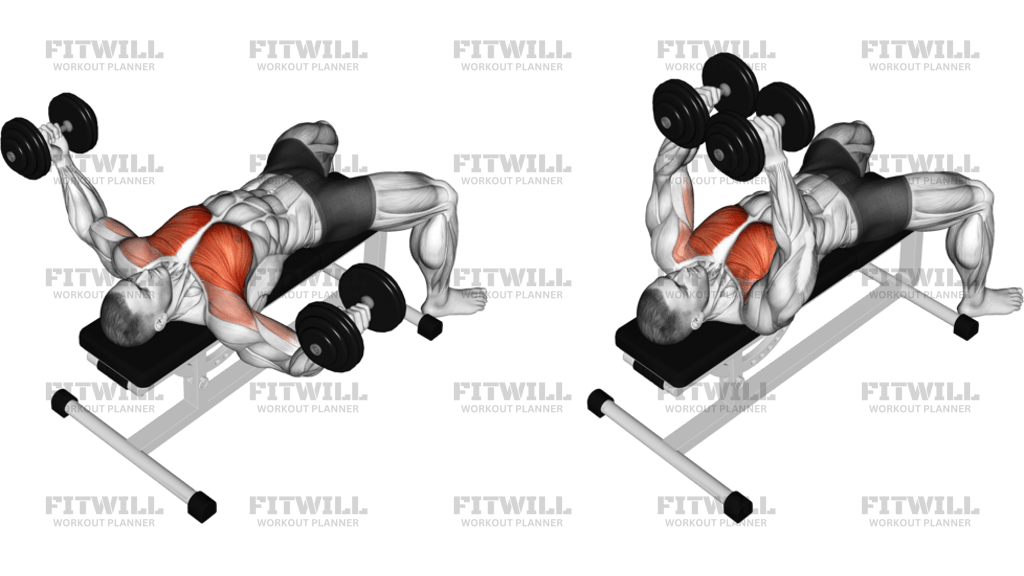
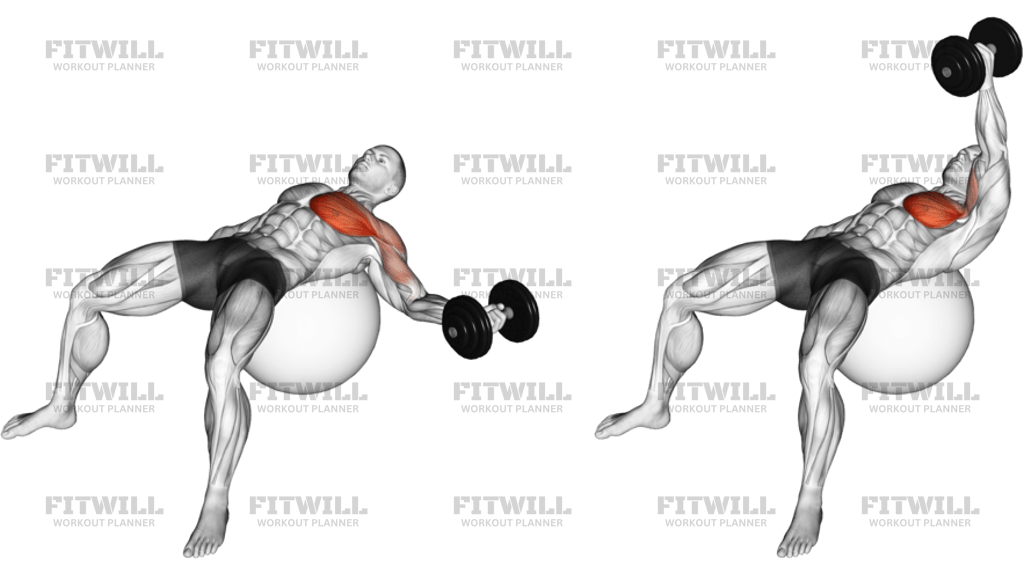
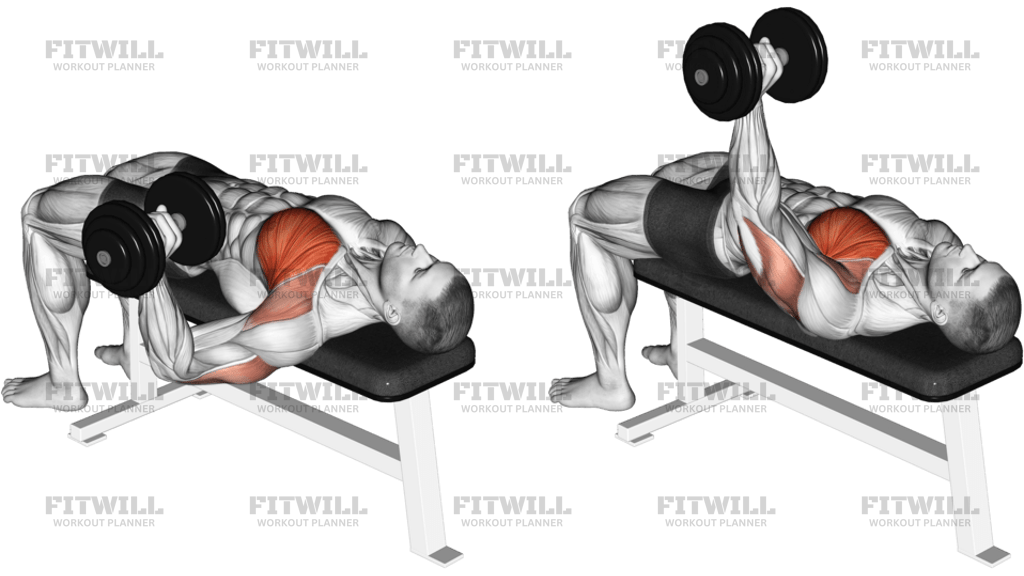
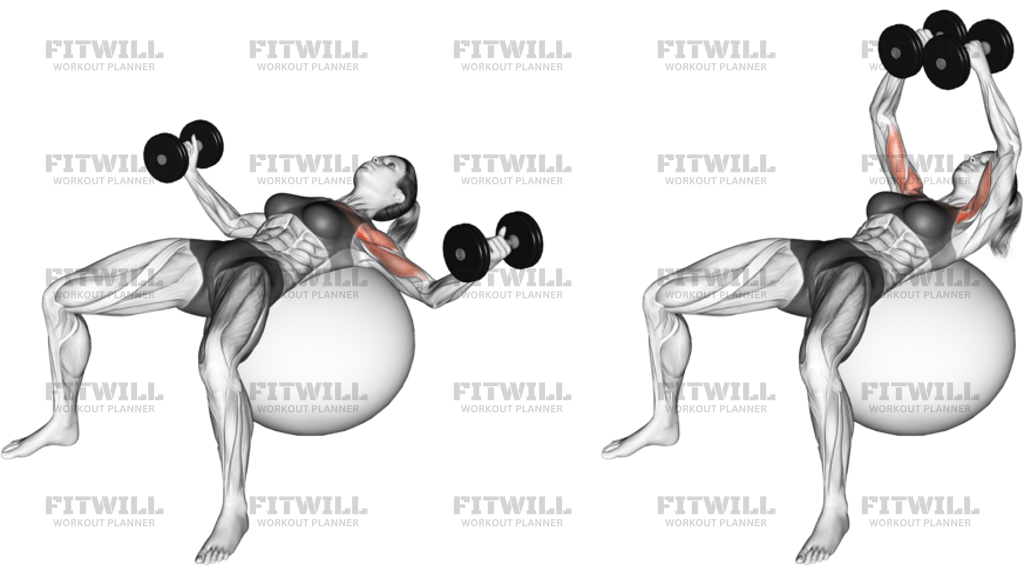
Dumbbell Floor Chest Press
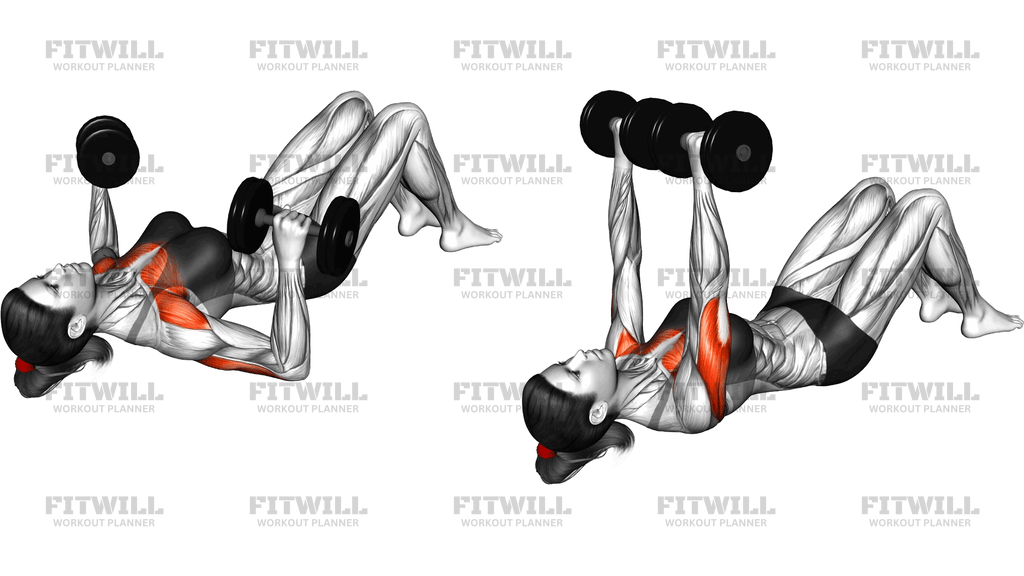
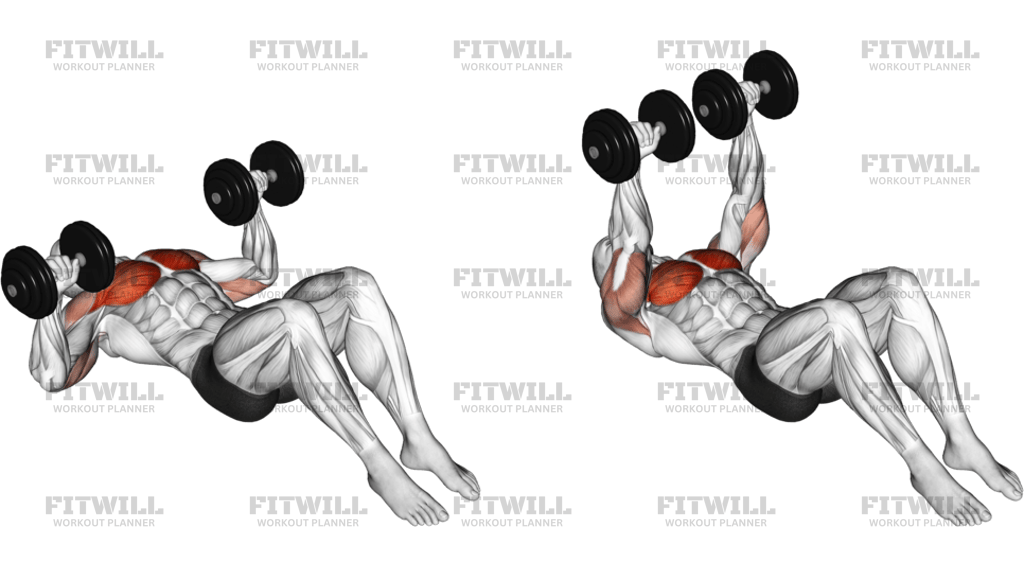
Dumbbell Floor Chest Press is a floor-based pressing exercise that trains the chest while also loading the triceps and front shoulders. Lying on the floor shortens the range of motion compared with a flat bench press, which makes the movement feel more controlled and usually easier to keep honest when the load gets heavier. The floor also gives you a clear end point for the descent, so each rep finishes at a predictable depth instead of drifting lower as fatigue builds.
The main action is horizontal pressing from a stable supine position. The chest, or pectoralis major, is the primary mover, with the anterior deltoids and triceps brachii assisting as the dumbbells travel upward. Because the upper arms rest on the floor between reps, the movement reduces shoulder extension at the bottom and shifts the emphasis toward strong pressing mechanics, wrist stacking, and smooth force transfer through the forearms.
Setup matters more here than it does in many simple dumbbell presses. Lie flat with the knees bent, feet planted, and the shoulder blades gently set into the floor. Start with the dumbbells over the lower chest or shoulder line, wrists stacked over elbows, and upper arms touching the floor before each rep begins. That position keeps the shoulders from wandering forward and gives you a repeatable start point for every repetition.
Press the dumbbells upward in a slight inward arc until the elbows are fully extended above the chest, then lower them under control until the upper arms meet the floor again. Keep the elbows from flaring aggressively, keep the ribs from popping up, and let the floor stop the descent instead of trying to force extra range. Breathe out as you press, inhale as you lower, and keep the tempo smooth enough that the dumbbells do not bounce or drift out of line.
This is a useful option for chest strength work, accessory hypertrophy work, and shoulder-friendly pressing when the bench press range feels too deep. It also works well as a technique drill for beginners who need a simpler way to learn dumbbell pressing mechanics. Choose a load that lets every rep reach the same bottom position and end with the dumbbells stable above the chest, not wobbling or touching together.
[ Workout Log & Planner ]
Put your next workout in Fitwill
Keep your plan and training log ready when you are.


Instructions
- Lie on your back on the floor with your knees bent, feet flat, and a dumbbell in each hand resting beside the chest line.
- Set your shoulder blades gently into the floor, keep your ribs down, and stack each wrist directly over its elbow before the first rep.
- Hold the dumbbells with palms facing forward and upper arms on the floor so the start position is identical on both sides.
- Press the dumbbells upward until your arms are straight over the chest, letting the weights travel in a slight inward arc.
- Keep the forearms vertical as you press so the wrists do not fold back and the dumbbells stay over the shoulder line.
- Pause briefly at the top with both dumbbells steady and the elbows fully extended without locking hard into the joints.
- Lower the weights slowly until the upper arms touch the floor again, using the floor as the same depth marker on every repetition.
- Exhale as you press and inhale as you lower, then reset the shoulders and brace before the next rep.
Tips & Tricks
- Let the upper arms touch the floor softly; the floor should stop the rep, not a bounce from the dumbbells.
- Keep the elbows around 30 to 45 degrees from the torso so the press stays chest-dominant and the shoulders stay happier.
- If the dumbbells drift toward your face, lower the load and press slightly more toward the ceiling than toward your head.
- Keep your wrists stacked over the forearms; bent wrists usually mean the dumbbells are too heavy or the start position is too low in the palm.
- Plant the feet and keep the knees bent so your lower body stays quiet instead of driving the rep with leg movement.
- Do not let the shoulders roll forward off the floor at the bottom; keep the shoulder blades lightly pinned back and down.
- Choose a range that ends with the upper arms on the floor before any shoulder discomfort appears.
- Stop a set when the dumbbells start touching, wobbling, or losing symmetry over the chest.
Frequently Asked Questions
What muscles does the Dumbbell Floor Chest Press train most?
The chest is the main target, with the triceps and front shoulders helping drive the press.
Why do the dumbbells stop on the floor?
The floor limits the bottom range so the shoulders do not drop deeper than they need to and each rep starts from the same depth.
How low should the dumbbells go on each rep?
Lower until the upper arms lightly touch the floor, then press again without letting the weights sink or bounce.
Should my elbows flare out during the press?
No. Keep them slightly tucked so the dumbbells travel smoothly and the shoulders stay in a stronger position.
Is this easier on the shoulders than a flat bench press?
Often yes, because the floor cuts off the deepest part of the descent and reduces stress at the bottom of the press.
Can I use a neutral grip instead of palms facing forward?
Yes, a neutral grip can be a useful shoulder-friendly variation if the standard grip feels awkward or painful.
What is the most common setup mistake?
People often start with the dumbbells too far from the shoulder line or let the wrists bend back before the first rep.
Can beginners do the Dumbbell Floor Chest Press?
Yes. The shorter range of motion and fixed bottom position make it a good entry point for learning dumbbell pressing.