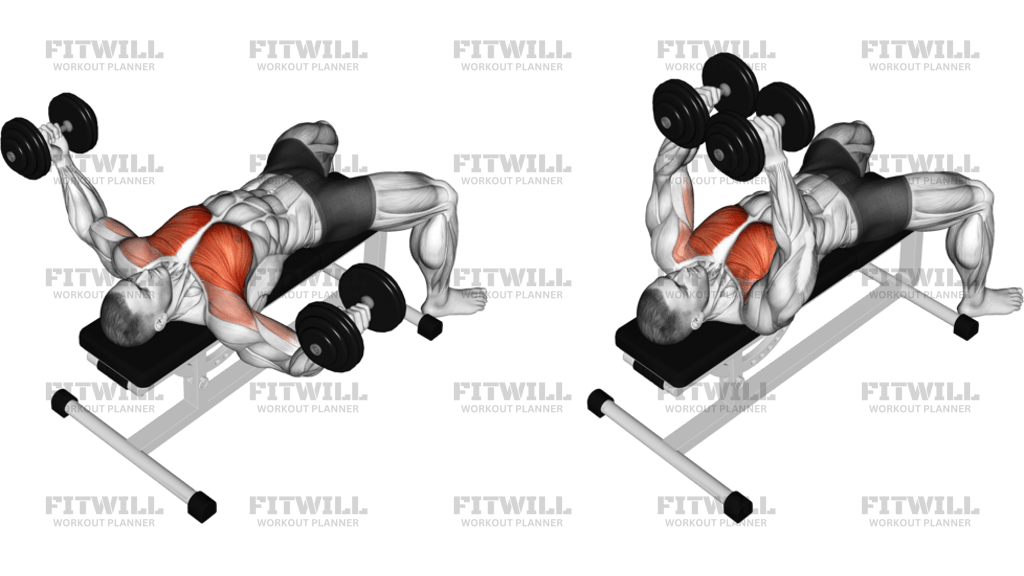
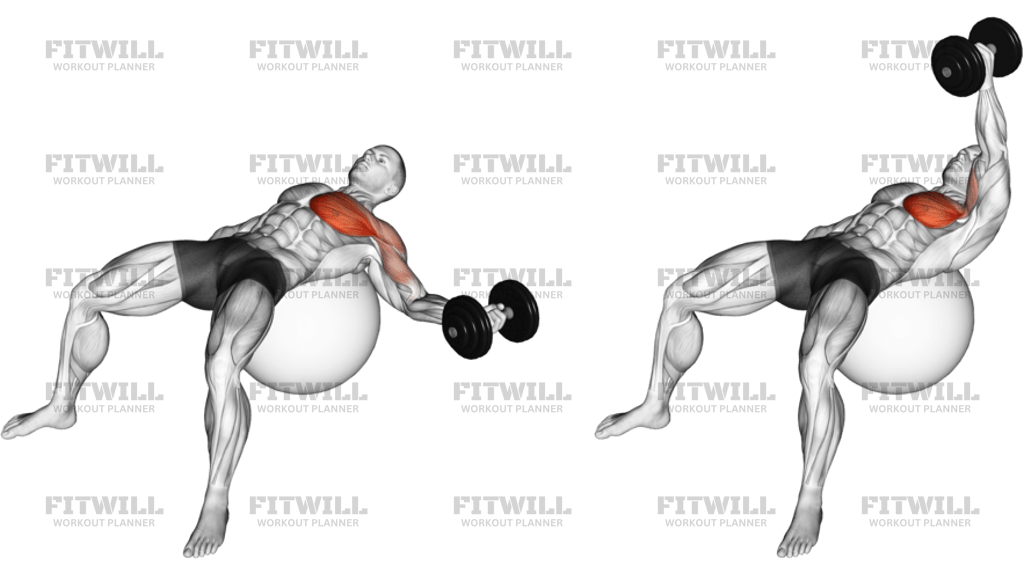
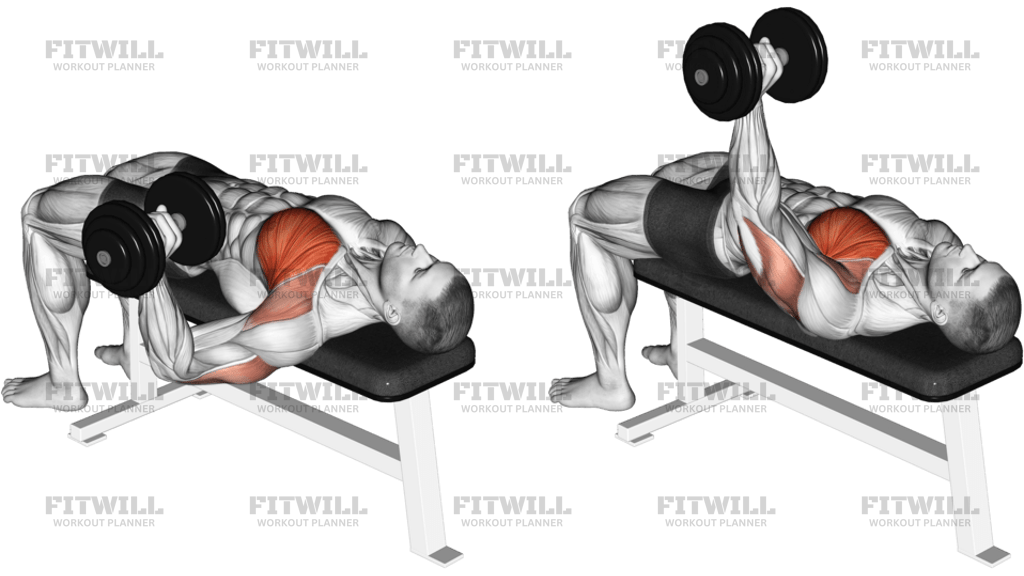
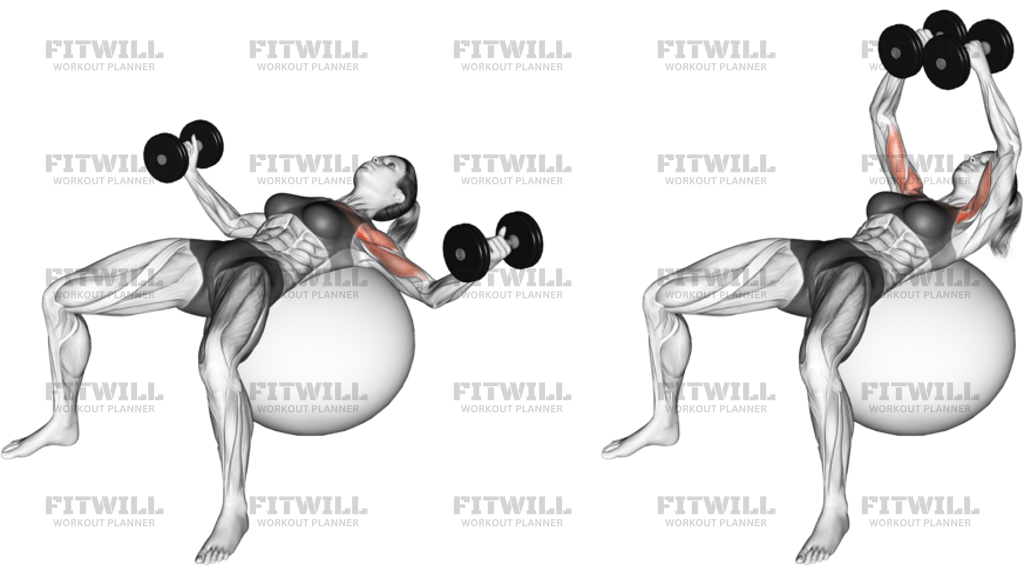
Dumbbell One-Arm Decline Chest Press
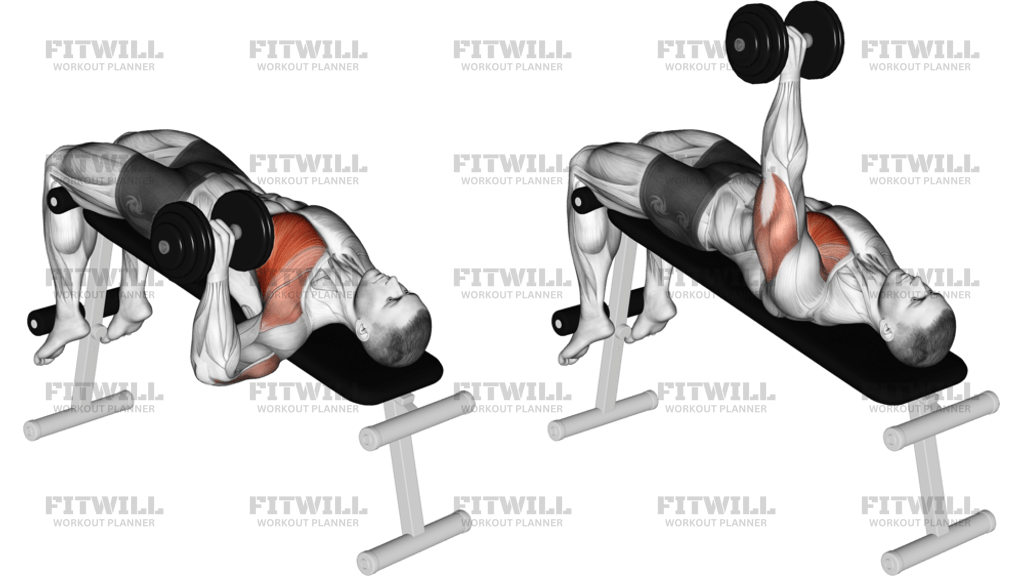
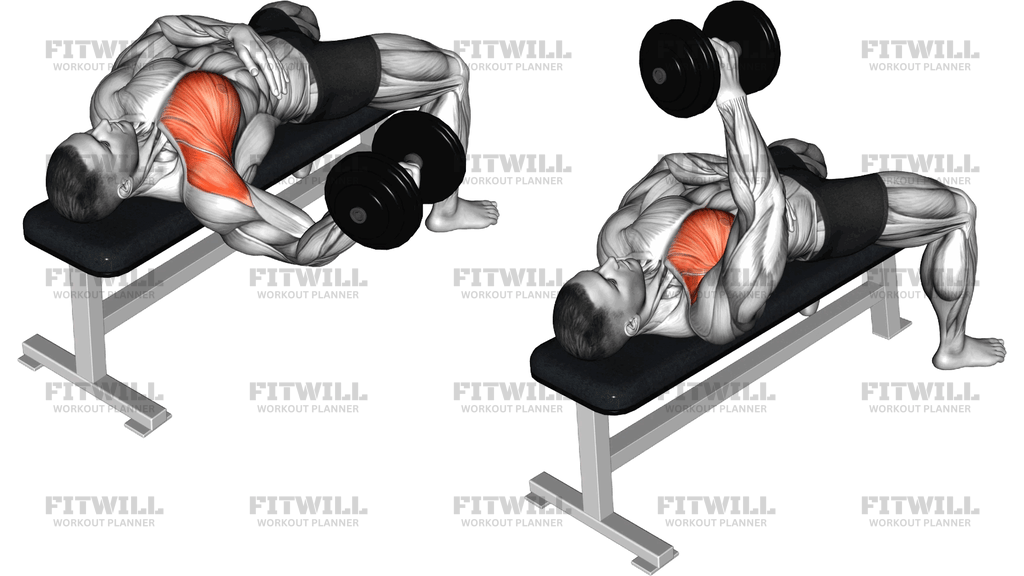
Dumbbell One-Arm Decline Chest Press is a unilateral pressing exercise done on a decline bench with one dumbbell moving from the lower-chest line to a vertical lockout. The decline angle and single-arm setup change the demand compared with a standard flat press: the chest still does the main work, but the shoulders, triceps, and trunk have to keep the torso from twisting as the load moves.
This exercise emphasizes the pecs, especially the lower and middle fibers that contribute to pressing from a declined angle, while the anterior deltoid and triceps help finish the rep. Because only one side is loaded, the rectus abdominis and obliques also have to resist rotation so the rib cage and hips stay square on the bench. That makes the movement useful when you want chest work plus a clear anti-rotation challenge.
The bench position matters. Lie back far enough that the head, upper back, and hips stay supported, and lock the feet under the bench pads so the body does not slide as the dumbbell lowers. Keep the shoulder blade of the working side set on the bench, with the wrist stacked over the elbow and the elbow tracking at a moderate angle rather than flaring straight out. A stable setup lets the chest drive the press instead of the shoulder joint taking over.
On the way down, lower the dumbbell in a controlled arc toward the outer line of the lower chest or upper ribcage on the working side. The elbow should stay slightly tucked so the forearm remains vertical near the bottom. Press back up by driving through the chest and triceps until the arm finishes over the shoulder, then stop short of losing rib and shoulder position. Exhale through the press, inhale as the dumbbell lowers, and reset the shoulder before each repetition.
Use this movement as an accessory press, a unilateral strength builder, or a way to address side-to-side differences in control and output. It is especially useful if you want a pressing variation that feels stable on the bench but still requires more coordination than a two-arm dumbbell press. Start with a conservative load, because the one-arm decline position often exposes rotation and shoulder control issues before raw strength becomes the limit. If the deep bottom position irritates the front of the shoulder, shorten the range slightly and keep the rep smooth rather than forcing extra depth.
[ Workout Log & Planner ]
Put your next workout in Fitwill
Keep your plan and training log ready when you are.


Instructions
- Lie back on a decline bench with your feet secured under the pads, your head and upper back supported, and the dumbbell held in the working hand above the lower chest line.
- Set the working shoulder blade down and back on the bench, and keep the free side quiet so your torso starts square to the bench.
- Stack the wrist over the elbow with the palm facing forward or slightly inward, and hold the dumbbell directly above the shoulder before you lower it.
- Lower the dumbbell in a controlled arc toward the outer lower chest or upper ribcage on the working side.
- Keep the elbow slightly tucked so the forearm stays near vertical and the shoulder does not roll forward at the bottom.
- Press the dumbbell up and slightly inward until the arm is straight over the shoulder, without drifting the weight toward your face or across the body.
- Exhale as you press and inhale as you lower, keeping the rib cage down and the hips anchored to the bench.
- Reset the shoulder position before each rep and repeat for the planned number of repetitions, then switch sides and match the same tempo.
Tips & Tricks
- Keep the shoulder blade of the working side pinned to the bench; if it slides forward, the front of the shoulder will usually take over.
- A moderate elbow tuck is usually safer here than a wide flare, especially near the bottom stretch on the decline bench.
- Use less load than you would for a two-arm decline press, because the anti-rotation demand is part of the exercise.
- If the dumbbell drifts toward your face on the way up, bring it back over the shoulder so the pecs and triceps finish the rep.
- Do not bounce off the bottom of the rep; the pause should be brief and controlled, not a hard rebound from the chest line.
- Keep the free hand relaxed on the torso or bench instead of reaching or pulling on the body to create extra stability.
- Let the wrist stay stacked over the elbow so the dumbbell does not fold the hand backward under load.
- Shorten the range if the decline position creates a sharp front-shoulder pinch, and keep the rep smooth rather than forcing depth.
- Match the tempo on both sides so the weaker side does not get rushed just to keep pace with the stronger side.
Frequently Asked Questions
What muscle does Dumbbell One Arm Decline Chest Press target most?
The pecs are the primary target, with the front deltoid, triceps, and trunk muscles helping to stabilize and finish the press.
Why use a decline bench for a one-arm chest press?
The decline angle changes the pressing line and usually makes the lower-chest side of the rep feel more natural while still loading the full pressing chain.
What should my elbow do on the way down?
Keep it slightly tucked so the forearm stays close to vertical and the shoulder does not flare open at the bottom.
How is this different from a regular decline dumbbell press?
Only one arm is loaded, so the torso has to resist rotation and each side has to control the rep on its own.
Can beginners do this exercise safely?
Yes, but only with a light dumbbell and a short, controlled range until they can keep the bench position and shoulder path steady.
Where should the dumbbell travel at the bottom?
It should descend toward the outer lower chest or upper ribcage on the working side, not straight out toward the shoulder.
What is the most common mistake with this movement?
Twisting the torso or bouncing out of the bottom are the biggest issues, because both reduce chest tension and make the press less stable.
What if I feel the front of my shoulder more than my chest?
Reduce the load, keep the shoulder blade pinned to the bench, and shorten the bottom range until the press feels smoother.