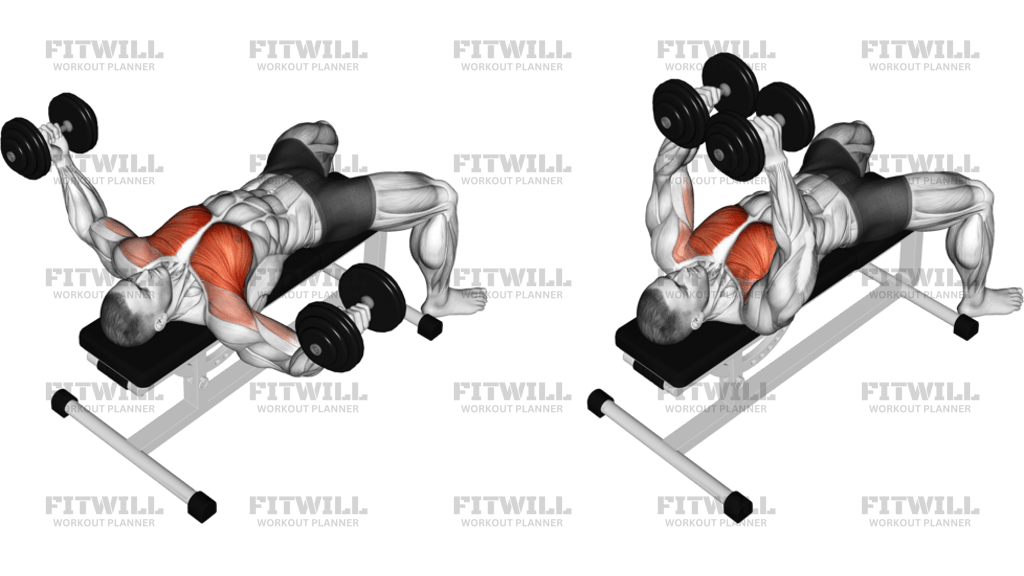
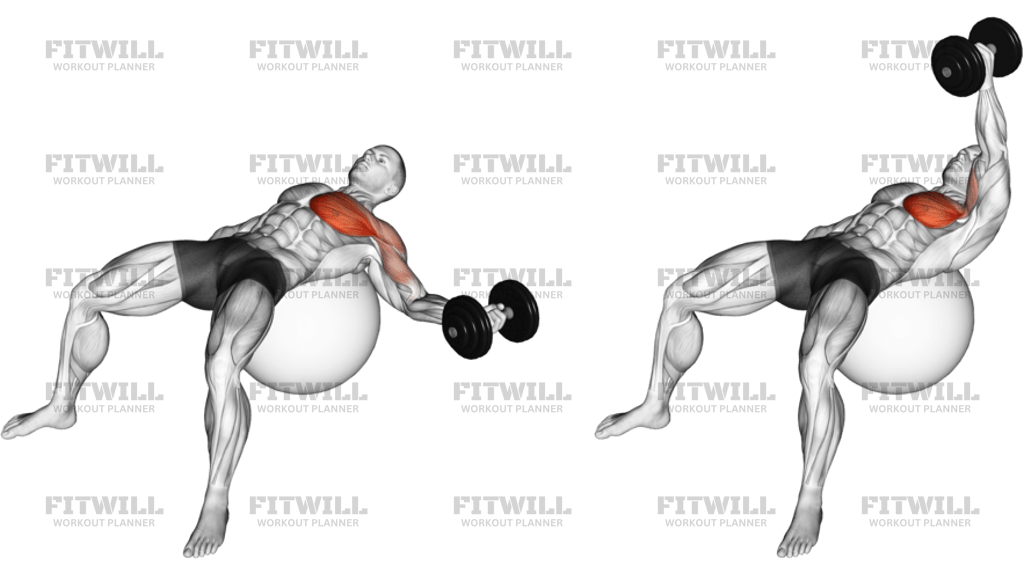
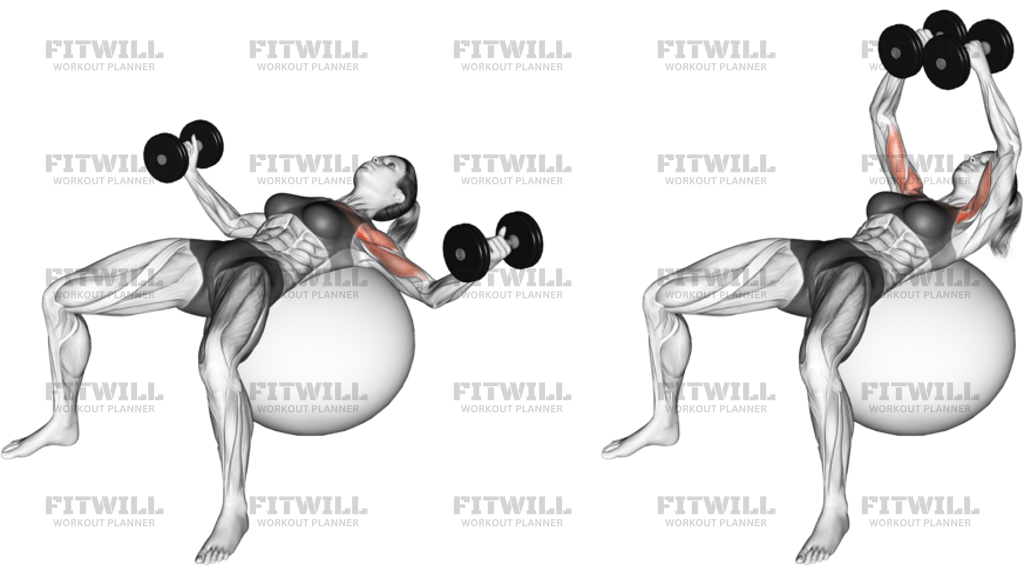
Dumbbell Lying One-Arm Press Version 2
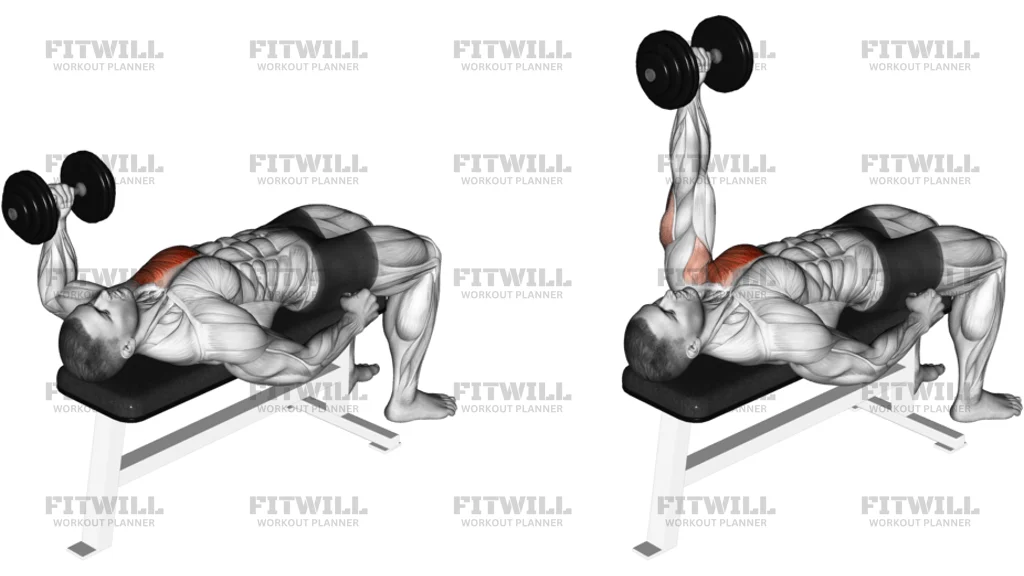
Dumbbell Lying One-Arm Press Version 2 is a flat-bench, single-arm dumbbell press for the chest, triceps, and front shoulders. Because only one arm is pressing, the torso has to resist rotation while the working shoulder stays stacked and controlled. That makes this variation useful when you want unilateral pressing strength without turning the rep into a fast, body-driven heave.
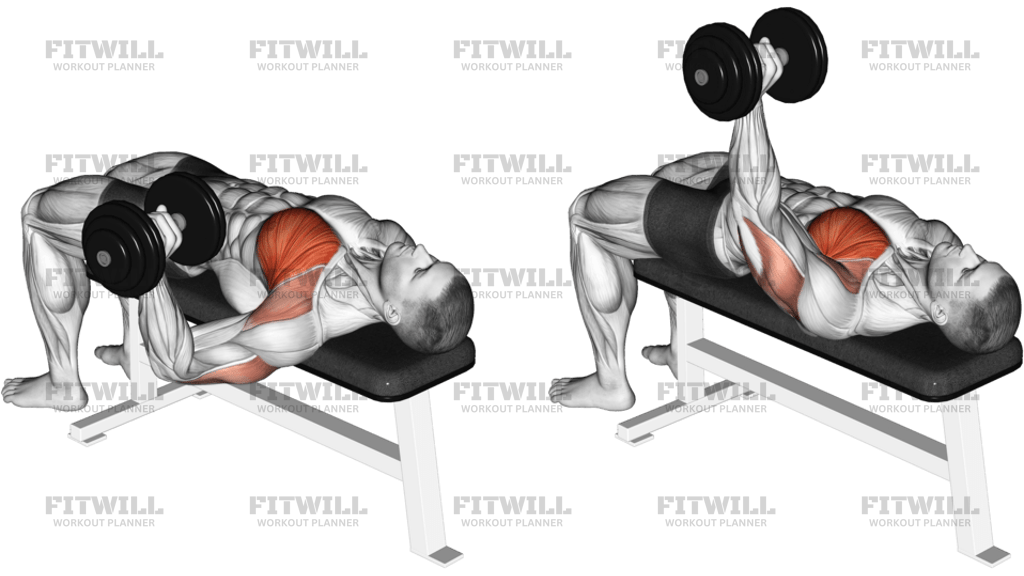
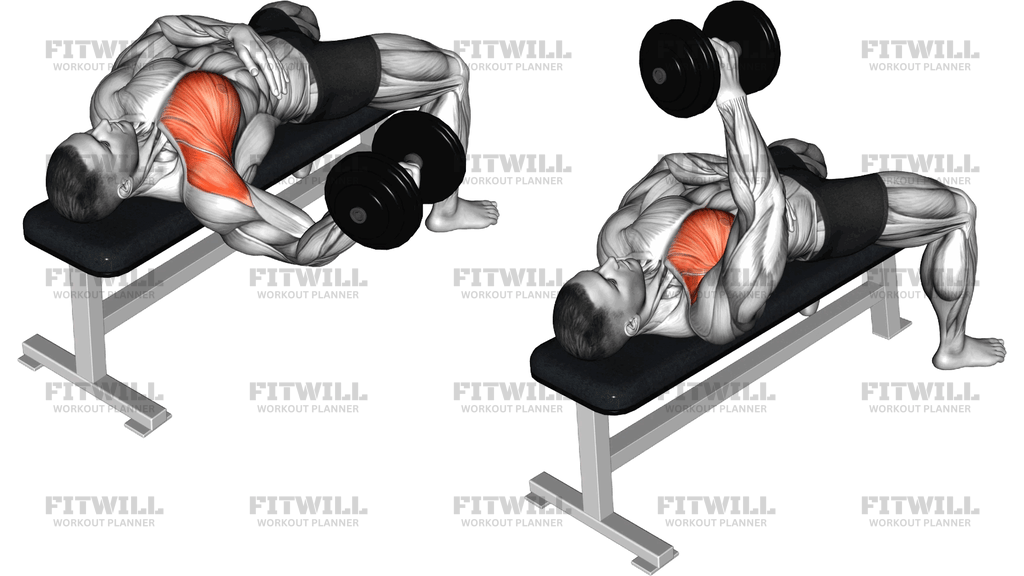
The image shows the lifter lying on a flat bench with one dumbbell over the chest and the free hand helping steady the body. The bench, feet, and shoulder blades should all create a stable base before the dumbbell leaves the bottom position. If the ribs flare or the hips twist, the load stops going where the name says it should go and the rep turns into a compensation drill.
Set the shoulder blades down and back, plant the feet, and keep the free hand light on the bench or torso so it supports balance without pushing the body off the bench. The pressing arm should stay slightly tucked, with the wrist stacked over the elbow and the forearm close to vertical. From there, lower the dumbbell toward the outer chest with control and press in a smooth line back over the shoulder. The path should look quiet and repeatable, not like the dumbbell is searching for a different route on every rep.
This press is especially useful when one side needs more work, when you want to limit total load while keeping pressing intensity high, or when you want a stronger anti-rotation challenge than a two-arm dumbbell press provides. It also exposes side-to-side differences quickly, so the lighter side should not be forced to match a heavier path or a looser trunk. For that reason, it often works best as an accessory after your main press or as a controlled strength builder on days when your shoulders need a less aggressive option.
Treat range of motion as earned, not automatic. Go only as deep as you can without the shoulder rolling forward, the lower back arching hard, or the dumbbell drifting off line. A clean rep should feel like the chest and triceps are driving the press while the rest of the body stays braced and still. If the bench starts to feel unstable, reduce the load, shorten the range a little, and keep the rep strict instead of forcing a bigger press.
Fitwill
Log Workouts, Track Progress & Build Strength.
Achieve more with Fitwill: explore over 9600 exercises with images and videos, access built-in and custom workouts, perfect for both gym and home sessions, and see real results.
Start your journey. Download today!




Instructions
- Lie flat on the bench with one dumbbell in the pressing hand and the free hand lightly bracing the bench or resting on the torso.
- Plant both feet firmly and square your hips and ribs to the bench before the first rep.
- Set the shoulder blades down and back so the pressing shoulder starts packed, not shrugged.
- Stack the wrist over the elbow and keep the forearm close to vertical under the dumbbell.
- Lower the dumbbell slowly toward the outer chest with the elbow tucked a little away from the ribs.
- Keep the free hand light so it helps balance the body without pushing you off the bench.
- Press the dumbbell upward in a smooth arc until the arm is straight but not forcefully locked out.
- Pause briefly at the top, then lower again with the same path instead of bouncing from the bottom.
- Finish the set with control and reset the shoulders before switching sides.
Tips & Tricks
- Keep the pressing shoulder pinned down; shrugging usually means the dumbbell is too heavy or the bench setup is loose.
- Let the free hand steady you, but do not push so hard that your torso rolls away from the working side.
- Use a slightly tucked elbow so the dumbbell travels over the outer chest instead of flaring straight out from the shoulder.
- Exhale as the dumbbell passes the hardest part of the press, then inhale on the way down.
- If your ribs pop up, reduce the load and keep the bench contact points heavier through the feet and upper back.
- Pause for a beat at the top so each rep starts from a controlled shoulder position, not momentum.
- Do not let the dumbbell touch down and rebound; the bottom should feel supported, not springy.
- A slower lower gives you better control and makes side-to-side differences easier to spot.
Frequently Asked Questions
What muscles does Dumbbell Lying One-Arm Press Version 2 work?
It mainly trains the chest, triceps, and front shoulders. The obliques, upper back, and deep trunk muscles also work hard to keep the torso from rotating on the bench.
Why do I press with only one dumbbell at a time?
Pressing one arm at a time forces the trunk to resist rotation and exposes side-to-side strength differences. It also lets you focus on a cleaner path for the working shoulder and elbow.
Should my free hand hold the bench or rest on my torso?
Either can work if the hand stays light and does not help push the body around. The goal is balance and stability, not using the free arm to cheat the press.
How deep should the dumbbell go?
Lower it only until you still have control and the shoulder stays packed against the bench. If the front of the shoulder rolls forward or pinches, shorten the range.
What is the most common mistake on this one-arm bench press?
The biggest error is letting the torso rotate and turning the rep into a half-supported twist. Too much arching, flaring, or shrugging usually means the load is too aggressive.
Is the bench angle important?
Yes. This version is shown on a flat bench, which keeps the press focused on the chest and makes the one-arm stability challenge easier to control than an incline setup.
Is Dumbbell Lying One-Arm Press Version 2 good for beginners?
Yes, if you start light and keep the body square on the bench. Beginners should use a range they can control without twisting or losing shoulder position.
What should I do if my shoulder feels cramped at the bottom?
Shorten the range, tuck the elbow slightly more, and reduce the load. If the pinch stays, switch to a floor press or another press variation that lets the shoulder stay more comfortable.
How do I progress this exercise?
First make the reps smoother and more stable, then add small jumps in weight, pauses at the top, or extra reps per side. Do not increase load until the torso stays quiet on the bench.