Dumbbell Front Raise
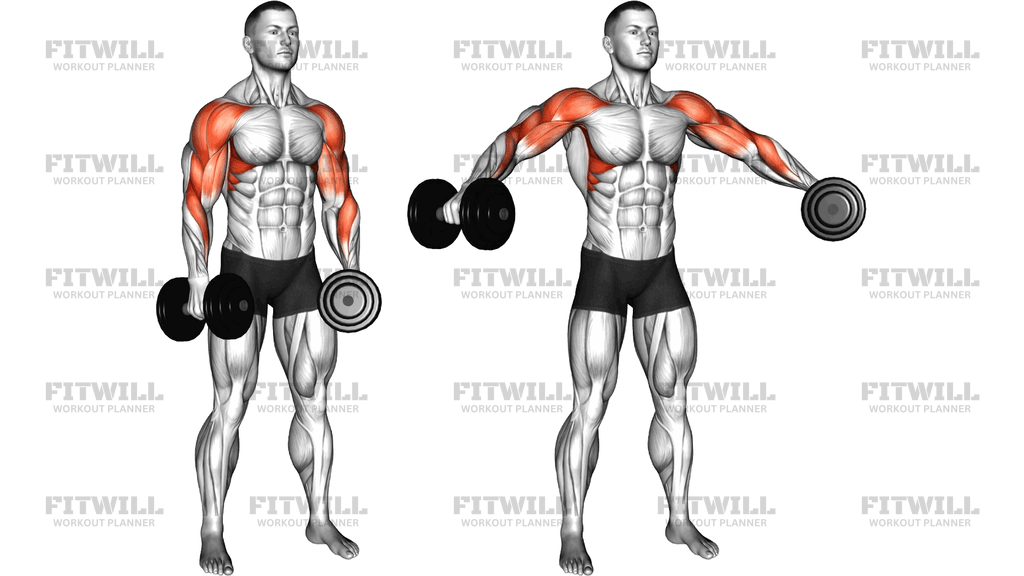
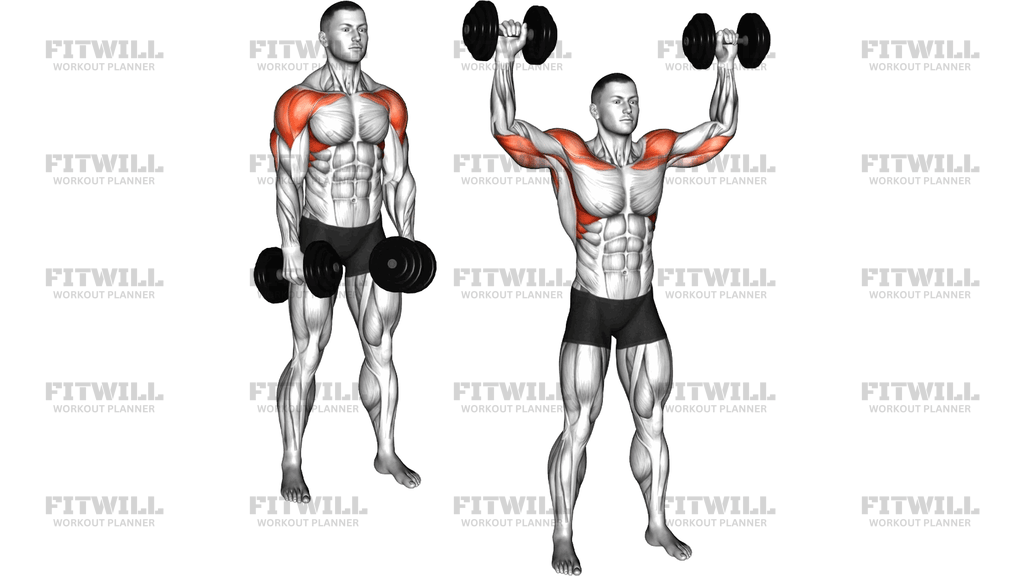
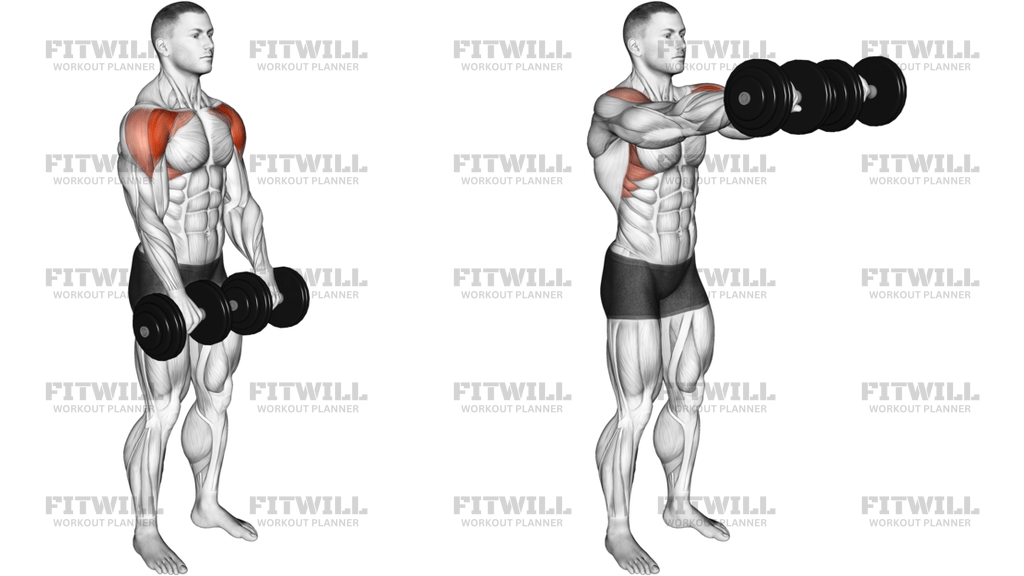
Dumbbell Front Raise is a straightforward shoulder isolation exercise that loads the front of the delts with a controlled forward lift. In the image, the dumbbells travel from the thighs to roughly shoulder height while the torso stays upright and the elbows remain only slightly bent. That simple path is the point of the exercise: you are training the shoulder to raise the arm in front of the body without turning the rep into a swing.
This movement is usually used to build or maintain anterior delt strength and size, and it can also involve the upper chest, serratus, and upper back muscles as stabilizers. Because the load hangs in front of the body, the shoulders and trunk have to stay organized the whole time. If the rib cage flares, the lower back arches, or the shoulders creep up toward the ears, the front delts lose tension and the movement shifts into compensation.
Set up by standing tall with your feet about hip width apart and a dumbbell in each hand at your thighs. Keep the palms facing your legs or slightly inward, soften the elbows, and let the weights rest under control before the first rep. Brace lightly through the midsection, keep the chest lifted without leaning back, and make sure the shoulders are down and wide before you start the raise.
Each rep should move in a clean arc straight forward. Lift the dumbbells until the hands are level with the shoulders, then pause for a moment without shrugging or swinging. Lower the weights slowly back to the thighs and reset the shoulders before the next rep. Breathing should stay calm and predictable, usually exhaling as the weights rise and inhaling on the way down.
Dumbbell Front Raise is best treated as an accessory exercise, not a max-effort lift. It works well after pressing work, in shoulder-focused sessions, or when you want to emphasize front-delt control with very light to moderate loading. Choose a weight that lets you keep the same torso angle, elbow bend, and hand path on every repetition. If you need to lean back, kick the weights, or shorten the range to keep going, the set is too heavy or too fatigued to stay productive.
[ Workout Log & Planner ]
Put your next workout in Fitwill
Keep your plan and training log ready when you are.


Instructions
- Stand tall with your feet about hip width apart and a dumbbell in each hand resting against the front of your thighs.
- Keep the palms facing your legs or slightly inward and soften the elbows before the first rep.
- Set the shoulders down away from the ears and brace the midsection without leaning back.
- Lift both dumbbells forward in a smooth arc until your hands reach about shoulder height.
- Keep the elbows slightly bent and higher than the wrists as the weights travel up.
- Pause briefly at the top without shrugging, jerking, or letting the torso sway.
- Lower the dumbbells slowly back to the thighs along the same path.
- Reset your posture before the next rep and keep each repetition identical.
Tips & Tricks
- Choose a load that lets you lift without leaning backward or using momentum off the hips.
- Stop at shoulder height; going higher usually shifts tension away from the front delts.
- Keep the rib cage stacked over the pelvis so the lower back does not take over the rep.
- Lead the movement with the elbows and keep the hands just slightly in front of them.
- A soft elbow bend is enough; locking the elbows makes the raise feel harsher on the joints.
- Keep the shoulders depressed and wide so the traps do not dominate the top half of the lift.
- Lower the dumbbells slowly enough that you can feel the front delts working through the descent.
- If the shoulders pinch near the top, shorten the range or reduce the load immediately.
Frequently Asked Questions
What muscles does Dumbbell Front Raise work?
Dumbbell Front Raise mainly trains the front delts. The upper chest, serratus, and upper back help stabilize the shoulder girdle and torso.
Is Dumbbell Front Raise good for beginners?
Yes, as long as the weight is light and the rep stays strict. Beginners should keep the raise to shoulder height and avoid any body swing.
Should I raise both dumbbells at the same time or one arm at a time?
Both are valid. Raising both together is more symmetrical, while alternating can help you stay stricter if fatigue makes you sway.
How high should the dumbbells go?
Raise them until your hands are about level with your shoulders. Going much higher usually adds more trap and upper-back involvement than front-delt work.
What grip works best for the front raise?
A palms-in or slightly angled grip is usually the friendliest on the shoulders. Keep the wrists neutral and avoid letting them bend back.
Why do I feel this in my traps instead of my shoulders?
That usually means the shoulders are creeping toward the ears or the load is too heavy. Use less weight and keep the shoulder blades down as the arms rise.
Can I do Dumbbell Front Raise seated?
Yes. Seated front raises make it easier to prevent hip drive and back lean, which can help if you struggle to stay strict standing.
What should I do if the top position bothers my shoulders?
Shorten the range slightly, use lighter dumbbells, or switch to one-arm raises. Sharp pain or pinching is a sign to stop and adjust, not push through.