Dumbbell Hammer Curl
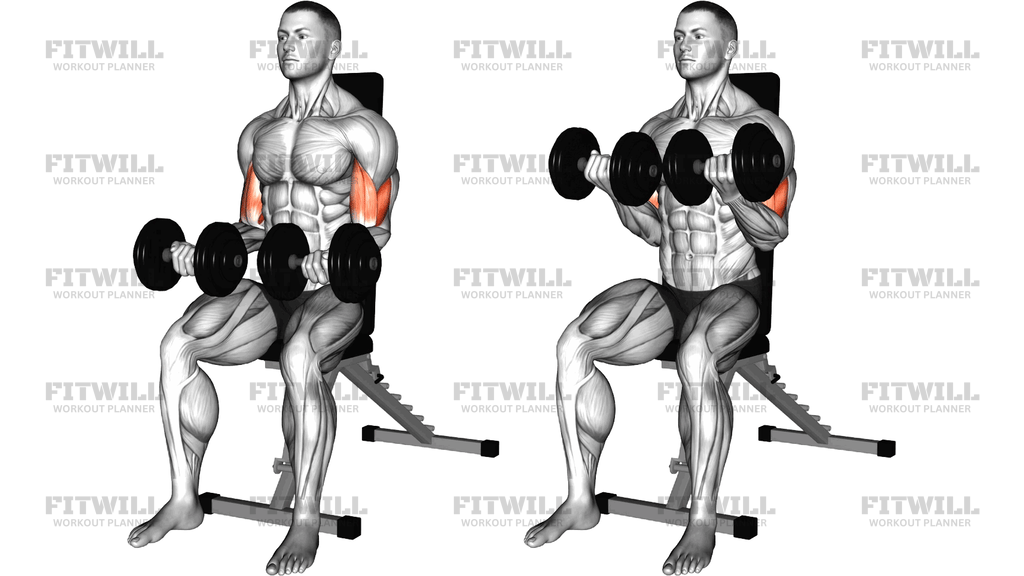
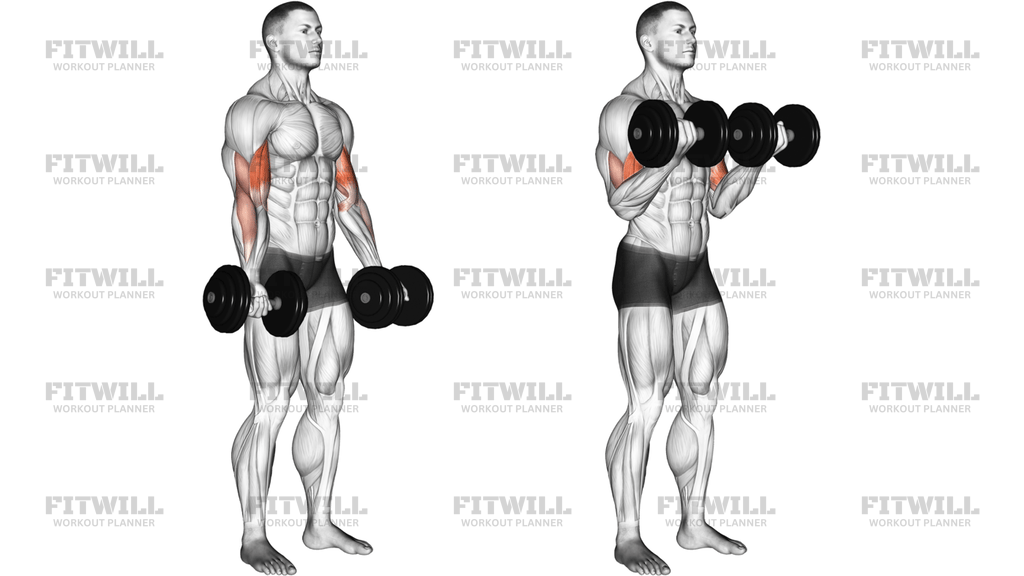
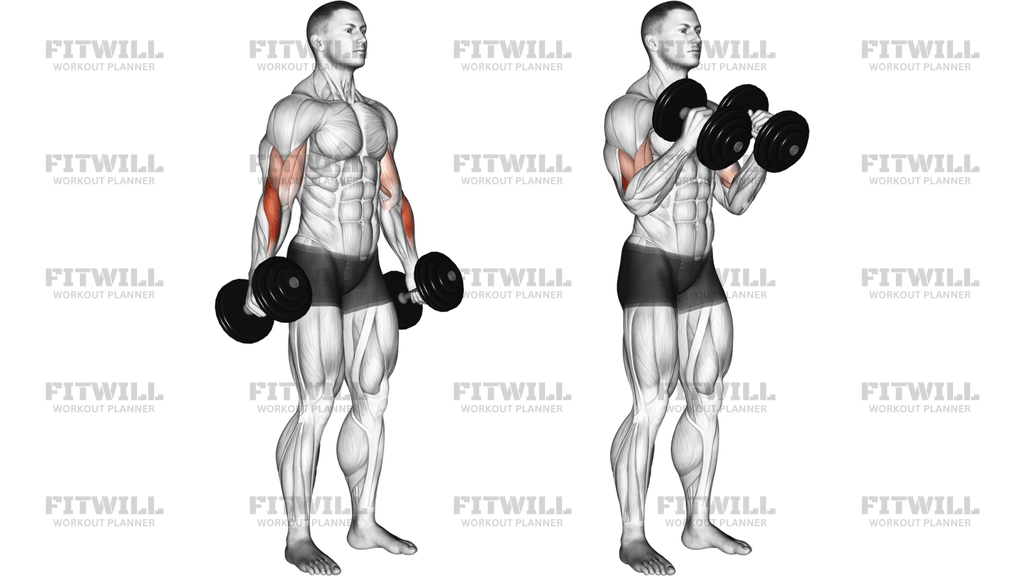
Dumbbell Hammer Curl is a standing dumbbell arm exercise built around a neutral grip, with the palms facing each other from the bottom of the rep to the top. That hand position shifts some of the work away from the classic supinated curl pattern and puts more demand on the brachialis and brachioradialis while still training the biceps and forearms hard.
The exercise is most useful when you want thicker upper arms, stronger elbow flexion, or a curl variation that feels a little friendlier on the wrists and elbows than a fully rotated curl. It also fits well as accessory work after presses, rows, or pull-ups because it builds arm size without requiring a lot of setup or momentum.
The setup matters because Dumbbell Hammer Curl only works well when the shoulders stay quiet and the elbows stay close to the ribs. Stand tall with the dumbbells hanging at your sides, ribs stacked over the pelvis, and wrists straight so the forearms can drive the curl instead of the shoulders or lower back helping out. A stable stance keeps the load on the target muscles and makes the rep path easy to repeat.
Each repetition should look clean and direct: curl the dumbbells upward by bending the elbows, keep the upper arms nearly vertical, and stop when the forearms are close to the shoulders without letting the elbows shoot forward. Lower the bells under control until the arms are almost straight, then reset for the next rep. The top position should feel like a strong squeeze, not a shrug or a swing.
Dumbbell Hammer Curl is a practical choice for beginners and experienced lifters alike because the movement is simple to learn, easy to load progressively, and easy to scale with one arm or both arms at once. It works best when the rep quality stays strict, the wrist stays neutral, and the dumbbells move on the same path every time.
[ Workout Log & Planner ]
Put your next workout in Fitwill
Keep your plan and training log ready when you are.


Instructions
- Stand tall with a dumbbell in each hand, arms straight at your sides, palms facing your thighs, and feet about hip-width apart.
- Set your ribs over your pelvis, soften your knees, and keep your shoulders down so the dumbbells hang still beside your legs.
- Lock your wrists in a neutral position and keep your elbows close to your torso before you start the first rep.
- Curl both dumbbells upward by bending the elbows while keeping the palms facing in toward each other the whole time.
- Bring the dumbbells up toward the front of your shoulders without letting the elbows drift forward or the upper arms swing back.
- Pause briefly near the top and squeeze the upper arm without shrugging your shoulders.
- Lower the dumbbells slowly until your elbows are almost straight and the weights return to your sides.
- Match the same tempo on every rep, then set the dumbbells down with control when the set is finished.
Tips & Tricks
- If your shoulders creep forward, reduce the load and keep the upper arm pinned closer to your ribs.
- A slight bend in the knees helps prevent you from rocking the torso to finish the curl.
- Keep the dumbbells stacked over the forearm; if the wrists fold back, the forearms take over and the curl gets sloppy.
- Use a slower lowering phase than the lifting phase to keep tension on the brachialis and forearms.
- Stop the rep before the elbows travel far in front of the body; that usually turns the movement into a front-delt swing.
- Heavy dumbbells are only useful if you can still keep the palms facing in and the handles steady from bottom to top.
- If one arm curls faster than the other, match the slower side and let both dumbbells follow the same rhythm.
- Switch to alternating reps if bilateral curls make you shrug or sway with every repetition.
Frequently Asked Questions
What muscles does Dumbbell Hammer Curl work?
Dumbbell Hammer Curl mainly works the brachialis, brachioradialis, biceps, and forearms. The shoulders and trunk mainly stabilize while the elbows do the lifting.
Is Dumbbell Hammer Curl good for beginners?
Yes. The neutral grip is easy to learn, and the standing setup is simple as long as you keep the torso still and use a light enough load to avoid swinging.
Should I keep my palms facing in during Dumbbell Hammer Curl?
Yes. The neutral grip is the defining feature of Dumbbell Hammer Curl, and turning the hands into a full supinated curl changes the exercise.
Why do my elbows move forward during Dumbbell Hammer Curl?
That usually means the dumbbells are too heavy or you are trying to finish the rep with the front shoulders. Keep the elbows close to your sides and shorten the load before the elbows travel forward.
Is Dumbbell Hammer Curl easier on the wrists than a regular curl?
Often yes, because the neutral grip keeps the wrists in a more natural position. If the wrists still ache, check that you are not bending them back as you lift.
Can I do Dumbbell Hammer Curl one arm at a time?
Yes. Alternating reps can help you stay strict if both arms start to swing together, and it makes it easier to match the range on each side.
How far should I raise the dumbbells in Dumbbell Hammer Curl?
Raise them until the forearms are close to the front of the shoulders, but stop before the elbows roll far forward or the shoulders shrug.
What should I do if I feel it mostly in my shoulders?
Lower the weight, keep the ribs stacked, and pin the upper arms closer to your sides. If the shoulders still dominate, slow the curl and stop the rep before the elbows drift forward.