Dumbbell Seated Bicep Curl
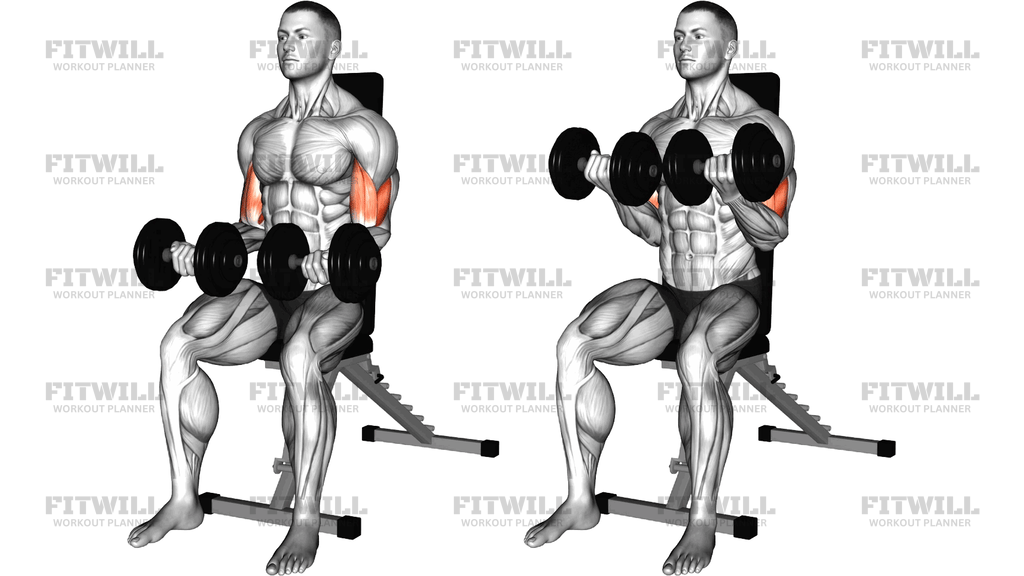
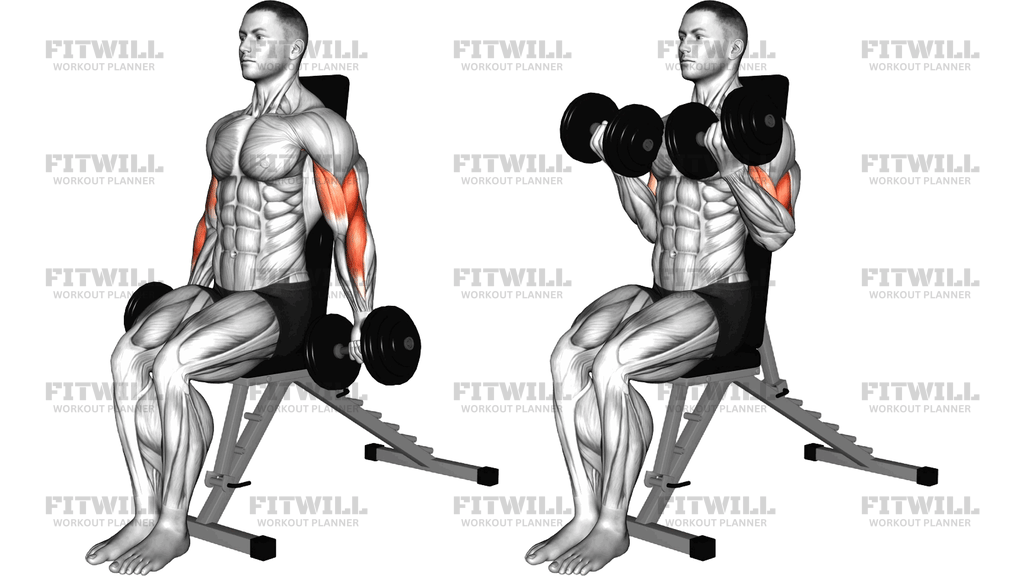
Dumbbell Seated Bicep Curl is a strict arm-building movement that keeps the torso quiet so the biceps have to do the work. Sitting down removes a lot of the leg drive and body swing that can turn a curl into a cheat rep, which makes this version useful for isolation work, beginner practice, and higher-quality accessory volume.
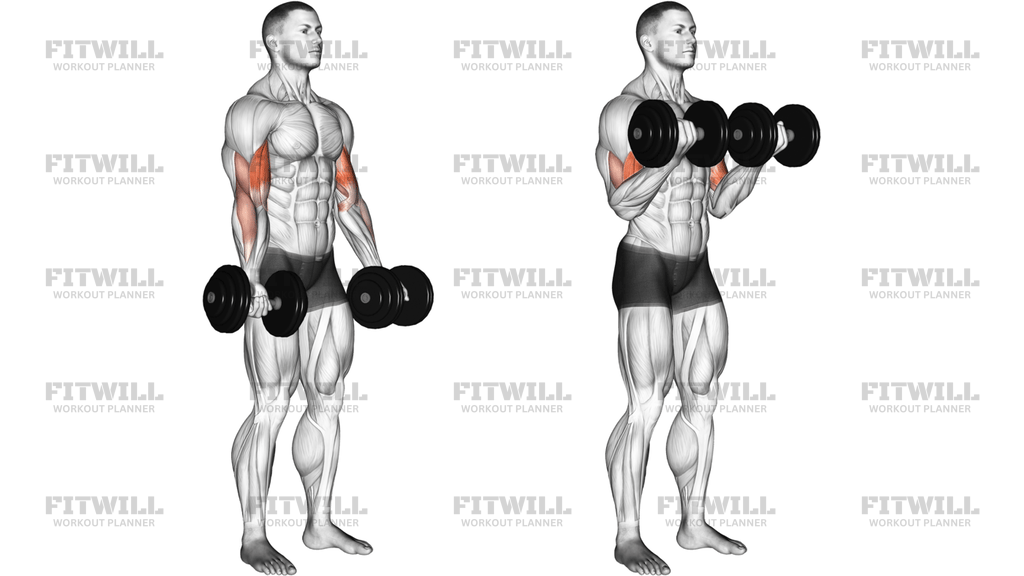
The exercise primarily targets the biceps while brachialis, brachioradialis, and forearm flexors help stabilize the elbows and grip the dumbbells. Because the arms hang by your sides and the shoulders stay mostly still, the curl tension stays on elbow flexion rather than on momentum from the hips or lower back.
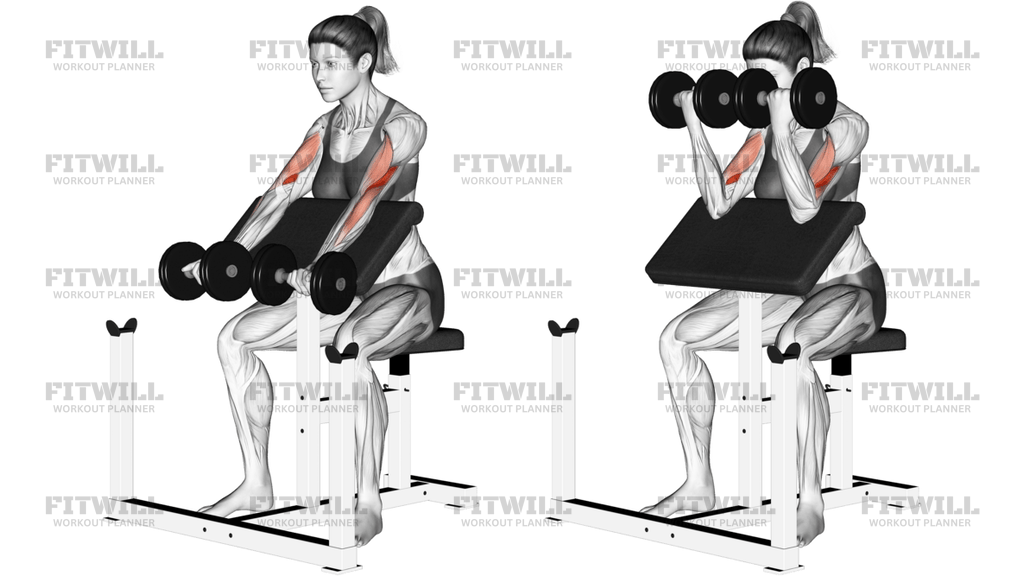
Set up on a bench with both feet flat and the dumbbells resting beside your thighs before the first rep. A tall chest, neutral wrists, and elbows close to your ribs create a clean starting line, while a lightly braced midsection keeps the torso from rocking as the weights get heavier.
Each rep should curl smoothly toward the front of the shoulders, then lower under control until the elbows are nearly straight again. Turn the palms up as you rise if that feels natural, but keep the upper arms mostly fixed so the biceps shorten and lengthen without the shoulders rolling forward.
This version works well for moderate reps, arm-focused finishers, or any session where you want tension without needing a lot of load. It is usually friendly for beginners because the seated position makes the pattern easier to learn, but it still rewards careful tempo, full range, and load selection that does not force you to swing or shrug.
[ Workout Log & Planner ]
Put your next workout in Fitwill
Keep your plan and training log ready when you are.


Instructions
- Sit upright on a bench with your feet flat, knees bent, and a dumbbell in each hand hanging at your sides with palms facing in.
- Set your chest tall, tuck your shoulders down, and keep your upper arms close to your ribs before you start.
- Brace your abdomen lightly so your torso stays still and the curl comes only from the elbows.
- Curl both dumbbells toward the fronts of your shoulders, rotating the palms up as the forearms turn.
- Keep your wrists straight and avoid letting the elbows drift far forward or out to the sides.
- Squeeze briefly at the top with the dumbbells near shoulder height and the biceps fully shortened.
- Lower the weights slowly until your arms are almost straight and the dumbbells return beside your thighs.
- Reset your shoulders and breathing between reps if needed, then finish by placing the dumbbells down safely on the floor or rack.
Tips & Tricks
- If your back starts to arch, sit against the bench pad and reduce the load.
- Keep the pinky side of each hand from collapsing backward; a neutral wrist makes the curl smoother.
- Stop the curl when the elbows are still pinned near the ribs instead of chasing height by rolling the shoulders forward.
- Use a 2-3 second lowering phase to keep tension on the biceps instead of dropping the dumbbells.
- If one dumbbell rises faster, slow the stronger side and match both hands at the top.
- A slight pause near the bottom helps remove momentum when the next rep starts.
- Choose a weight that lets you finish the set without shrugging or kicking the dumbbells up.
- Exhale as the dumbbells travel upward and inhale as they return to the start.
Frequently Asked Questions
What muscle does Dumbbell Seated Bicep Curl target most?
It mainly trains the biceps, with help from brachialis, brachioradialis, and the forearm flexors.
Is the seated version harder than standing curls?
It is usually stricter, not necessarily heavier, because the seated position reduces body swing.
Do I need to lean back against the bench?
A light back contact is fine, but avoid turning it into a reclining curl; stay tall enough that the elbows can move only at the elbow joint.
Should both arms curl at the same time?
Yes, that is the usual setup for Dumbbell Seated Bicep Curl, and it helps keep the tempo even from side to side.
Why do my elbows drift forward at the top?
The weight is probably too heavy or you are trying to get extra range; keep the upper arms close to your sides and stop when the biceps are fully contracted.
Can beginners use Dumbbell Seated Bicep Curl?
Yes, the seated position makes it easier to learn wrist, elbow, and shoulder control with light dumbbells.
What can I use instead if I do not have a bench?
A sturdy chair works if it lets you sit upright with your feet planted and the dumbbells clear your thighs.
How low should I lower the dumbbells?
Lower until the arms are nearly straight and you still feel control in the shoulders and elbows; do not bounce out of the bottom.