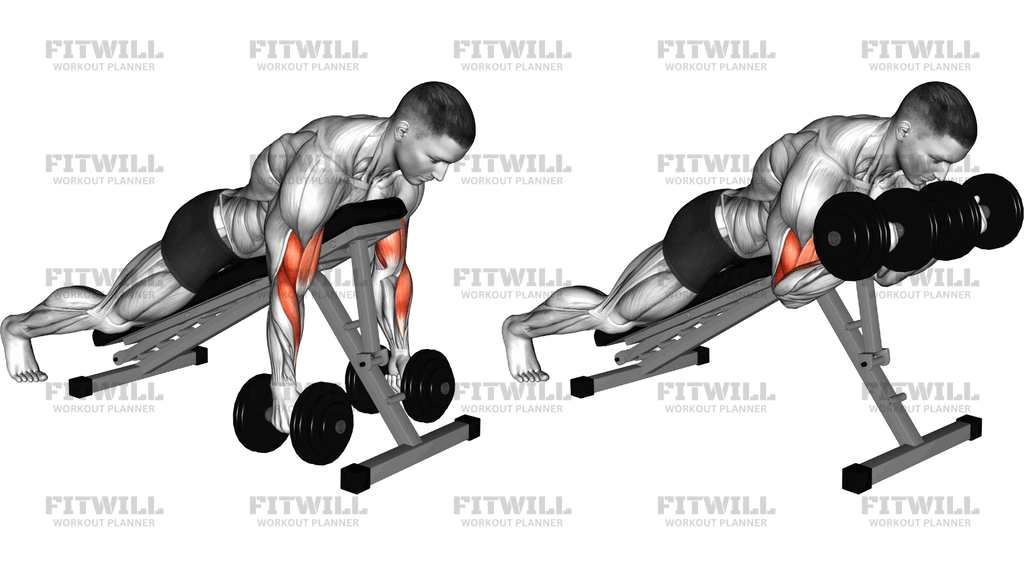
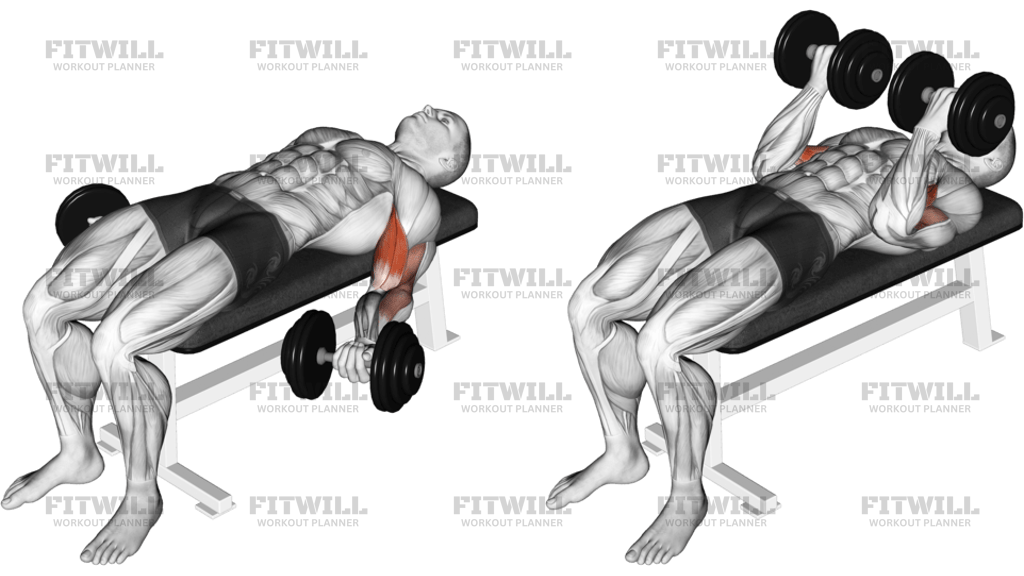
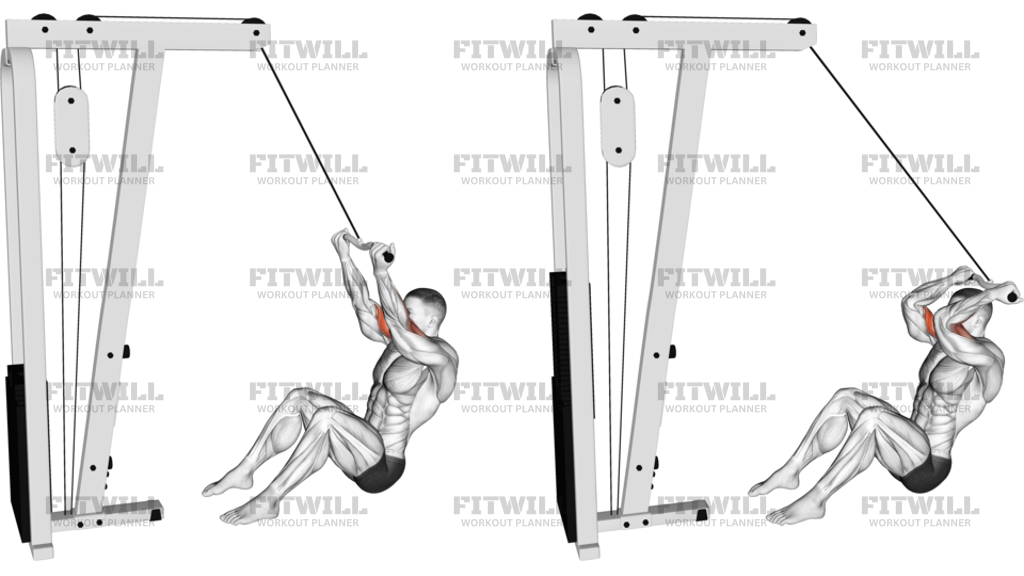
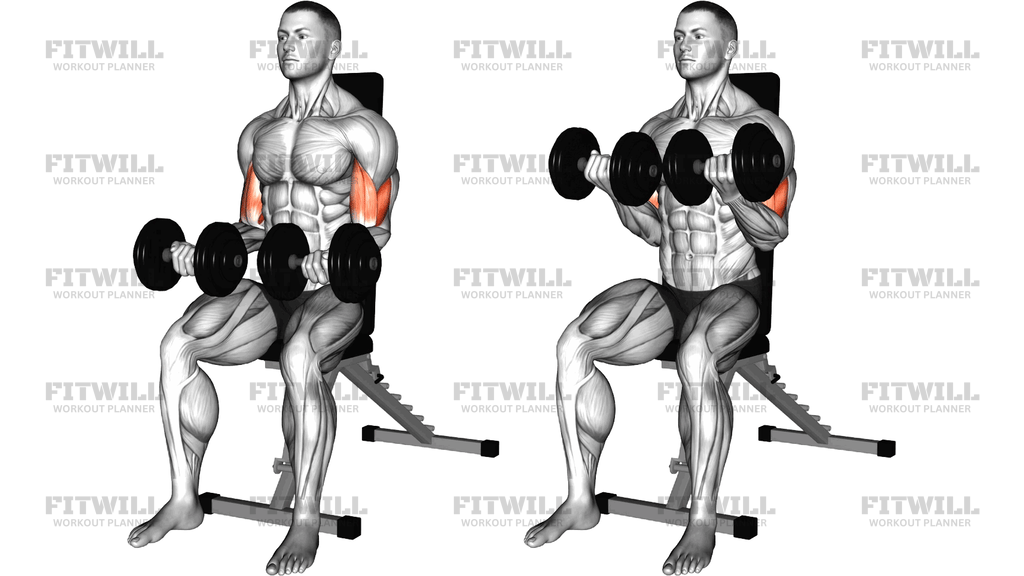
Dumbbell Incline Biceps Curl
Dumbbell Incline Biceps Curl is a strict dumbbell curl performed with your back supported on an incline bench and your arms hanging slightly behind your torso. That setup puts the biceps under a longer stretch at the bottom of each rep, which is why this variation feels different from a standing curl and why bench angle and arm position matter so much.
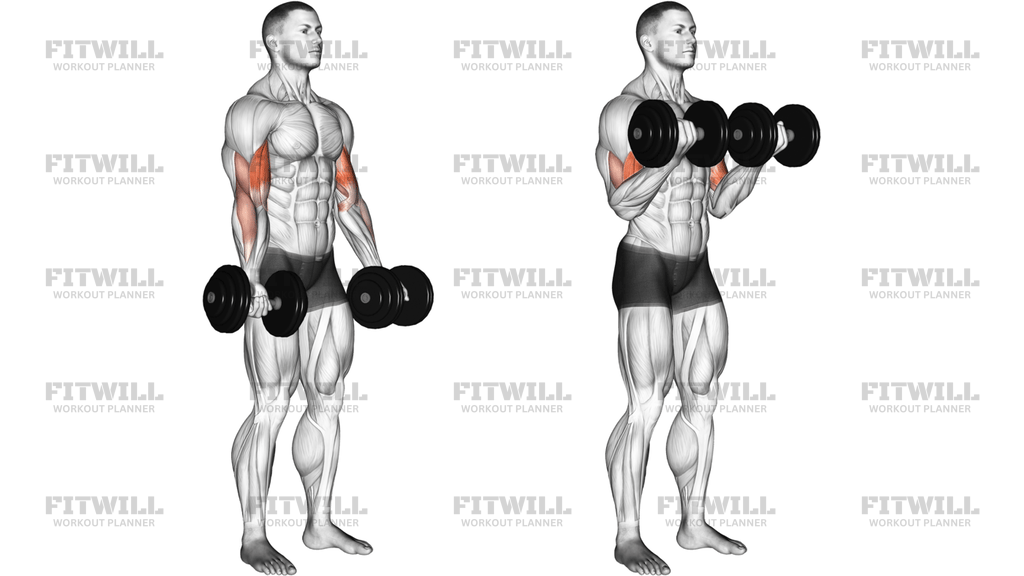
The exercise mainly targets the biceps brachii, with help from the brachialis and brachioradialis as the elbow flexes. Because your shoulders are pinned back against the bench, the movement should come from the elbow joint rather than from swinging the torso, rolling the shoulders forward, or turning the lift into a momentum exercise.
A good setup starts with the bench set to a moderate incline, not a near-vertical seat. Sit all the way back, plant your feet, let the dumbbells hang at your sides, and allow the upper arms to stay a little behind the ribcage. Keep the wrists stacked over the forearms and the shoulders relaxed so the stretch stays in the biceps instead of transferring into the front delts or lower back.
During each rep, curl the dumbbells by bending the elbows and keep the upper arms quiet. The dumbbells should travel in a smooth arc toward the front of the shoulders without the elbows drifting forward. At the top, squeeze briefly without shrugging or losing the bench contact, then lower the weights slowly until the elbows are nearly straight again.
This variation is useful for focused biceps work, especially when you want strict tension and a controlled stretch on the long head of the biceps. It fits well in arm sessions, pull days, or accessory work after heavier back training. Choose a load that lets you keep the same elbow path, the same wrist position, and the same tempo from the first rep to the last.
If the bench is too steep, the movement becomes closer to a standard seated curl and the stretch decreases. If the dumbbells are too heavy, the shoulders start to roll forward and the torso will try to help. Keep the repetition smooth, stop short of painful elbow extension, and treat the lowering phase as part of the exercise rather than a reset between reps.
Fitwill
Log Workouts, Track Progress & Build Strength.
Achieve more with Fitwill: explore over 9600 exercises with images and videos, access built-in and custom workouts, perfect for both gym and home sessions, and see real results.
Start your journey. Download today!




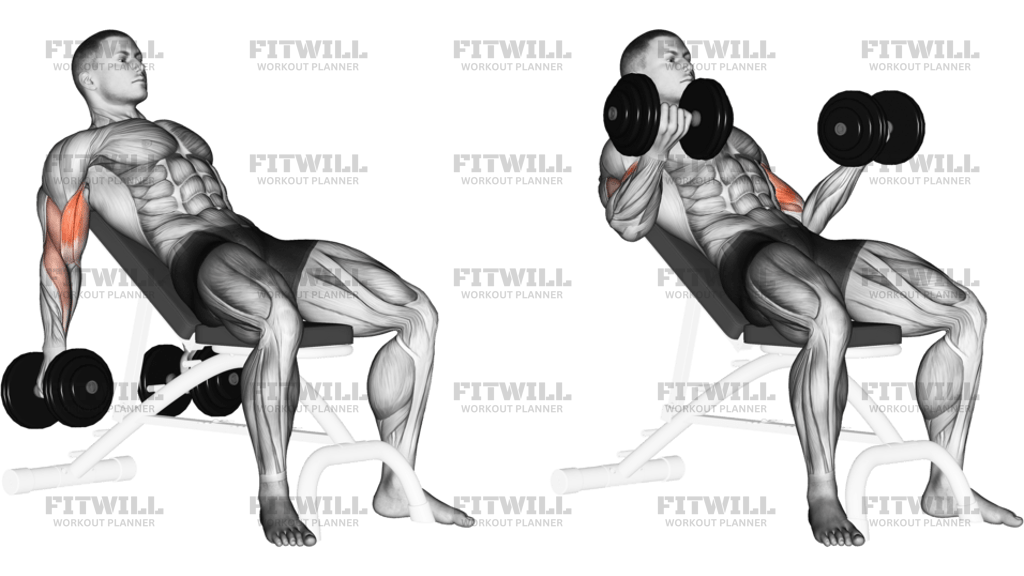
Instructions
- Set a bench to a moderate incline and sit all the way back with your head, upper back, and hips supported.
- Hold a dumbbell in each hand with your feet flat and your arms hanging beside the bench, slightly behind your torso.
- Keep your shoulders down, chest open, and wrists stacked over your forearms before the first rep.
- Curl both dumbbells upward by bending the elbows while keeping the upper arms still.
- Bring the weights toward the front of your shoulders without letting the elbows drift forward.
- Pause briefly near the top and keep the shoulders from rolling toward the ears.
- Lower the dumbbells slowly until the elbows are nearly straight and you feel the biceps lengthen again.
- Repeat with the same path and stop the set if you have to swing, lean, or shorten the range to finish.
Tips & Tricks
- Choose an incline that keeps your upper arms slightly behind your torso; a too-steep bench reduces the stretch you are trying to create.
- Keep your elbows quiet. The more they travel forward, the less this becomes an incline curl.
- Let the dumbbells hang under control at the bottom instead of bouncing out of the stretched position.
- Use a neutral wrist or only a small amount of supination so the dumbbell stays centered over the forearm.
- Lowering should be slower than the lift; the eccentric phase is where this variation earns most of its value.
- If your shoulders start rounding forward, the load is too heavy or the bench angle is too steep.
- A small pause at the top helps remove momentum and keeps the reps honest.
- Stop a rep or two before form breaks down so the last curls do not turn into torso-driven swings.
Frequently Asked Questions
What muscles does Dumbbell Incline Biceps Curl work?
It primarily works the biceps brachii, with strong help from the brachialis and brachioradialis. The bench position also makes the shoulders and grip work as stabilizers.
Is Dumbbell Incline Biceps Curl good for beginners?
Yes, if the bench is set to a moderate incline and the weight stays light enough to keep the upper arms still. Beginners should start with a slower tempo and shorter sets.
How should I position the incline bench?
Use a moderate incline, usually around 30 to 45 degrees. Too steep and the movement becomes more like a regular seated curl; too low and the setup can be awkward.
What is the most common mistake in Dumbbell Incline Biceps Curl?
The biggest mistake is letting the elbows drift forward and turning the rep into a shoulder-assisted curl. Using too much weight also makes people lose the stretch at the bottom.
Should I fully straighten my arms at the bottom?
Lower until the elbows are nearly straight, but do not lock out hard if that creates elbow irritation. Keep tension on the biceps and control the stretched position.
How heavy should the dumbbells be?
Heavy enough to challenge the biceps, but light enough that you can keep the shoulders pinned back and the torso quiet. If you need to swing, the load is too high.
Why does this curl feel harder than a standing curl?
Because your arms start behind the torso, the biceps begin the rep from a longer stretch. That makes the bottom half of the movement especially demanding.
Can I alternate arms instead of curling both at once?
Yes, but keep the inactive arm hanging still and avoid twisting toward the working side. The key is still to keep the upper arm fixed against the bench angle.