Dumbbell Biceps Curl With Arm Blaster
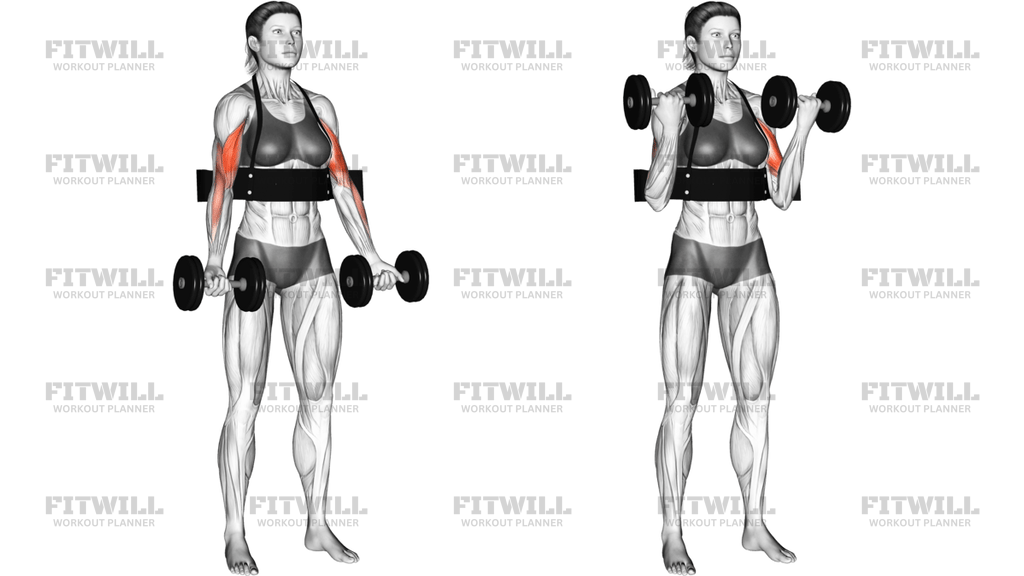
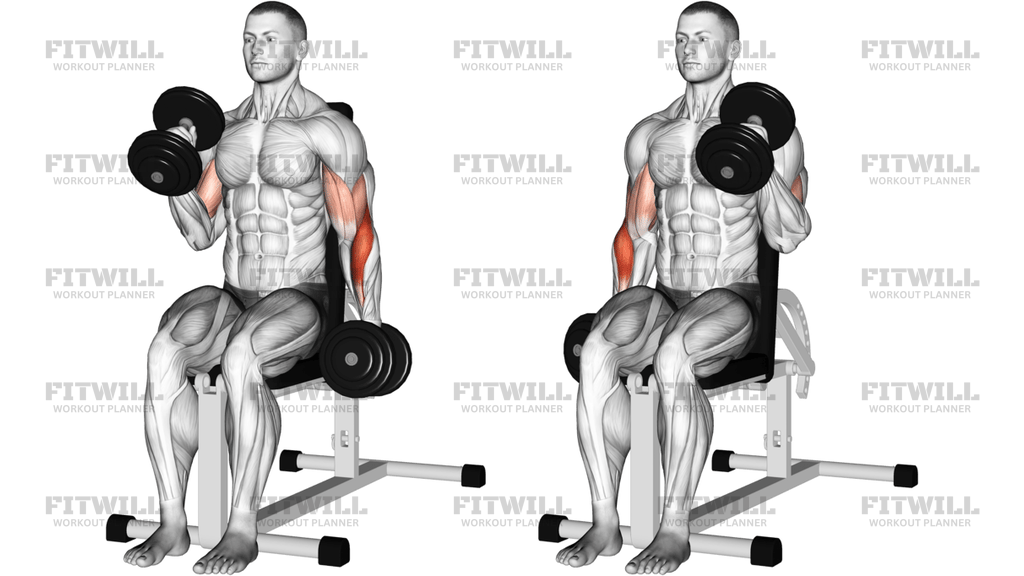
Dumbbell Biceps Curl With Arm Blaster is a strict standing curl that locks the upper arms against a padded arm blaster so the biceps have to do the work without shoulder swing or torso drive. The image shows both dumbbells curling from the thighs up toward the shoulders while the elbows stay fixed close to the ribs, which is exactly why this variation is useful: it turns a familiar curl into a much stricter arm-builder.
The arm blaster changes the exercise from a loose free-standing curl into a guided elbow-flexion drill. By pinning the upper arms in front of the torso, it reduces cheating, limits forward elbow travel, and makes it easier to feel the biceps shorten through the top half of the rep. That also shifts the training stress toward cleaner tension in the biceps and brachialis, with the forearms and grip helping to stabilize the dumbbells.
Setup matters more here than in a regular curl. The plate should sit centered and snug against the torso, with the strap secure enough that the elbows stay planted on the pad without digging into the shoulders. Stand tall, keep the chest lifted without over-arching the lower back, and let the dumbbells hang with straight wrists before you start. If the blaster sits too low or too loose, the elbows drift and the movement turns back into a normal standing curl.
Each rep should travel in a clean arc from full elbow extension to a hard, controlled squeeze near shoulder height. The upper arms stay quiet while the forearms rotate and flex the elbow; if the shoulders roll forward, the torso leans back, or the dumbbells bump away from the line of the body, the load is too heavy. Lower the weight deliberately so the biceps stay loaded on the way down, and keep breathing steady so the brace does not turn into a grind.
This variation fits well in arm-focused workouts, accessory work after pressing or pulling, or any program where you want strict biceps work without momentum. It is especially useful for lifters who tend to swing curls, shorten the range, or let the elbows drift forward. Beginners can use it safely with light dumbbells, but the blaster makes the movement feel harder than it looks, so start conservatively and earn the right to add load only when the elbows stay pinned and every rep looks identical.
[ Workout Log & Planner ]
Put your next workout in Fitwill
Keep your plan and training log ready when you are.


Instructions
- Stand tall with feet about hip-width apart and place the arm blaster centered against your torso so the padded section supports both upper arms.
- Let the dumbbells hang at your thighs with your palms turned forward, wrists straight, elbows resting on the blaster, and shoulders relaxed down.
- Brace your abs lightly and keep your ribcage stacked over your pelvis before the first curl so your torso does not lean back.
- Curl both dumbbells upward by bending only at the elbows while keeping your upper arms pressed into the pads.
- Continue lifting until the dumbbells reach shoulder height and your forearms are close to vertical.
- Squeeze the biceps briefly at the top without letting the elbows slide forward or the shoulders shrug.
- Lower the dumbbells slowly until the elbows return to full extension and the arms are still pinned to the blaster.
- Inhale as the weights lower, exhale as you curl up, and reset your posture before the next rep.
Tips & Tricks
- Use lighter dumbbells than you would for a regular standing curl, because the blaster removes momentum and makes the rep much stricter.
- Keep the strap snug enough that the elbows stay pinned, but not so tight that it forces the shoulders forward or digs into the neck.
- Let the wrists stay stacked over the forearms instead of curling backward as the dumbbells rise.
- Keep the upper arms quiet; if the elbows drift away from the pad, the set has turned into a cheat curl.
- Do not lean back to finish the last few inches of the rep. If you need to lean, the load is too heavy.
- Lower the dumbbells under control for a full eccentric so the biceps stay loaded after the peak squeeze.
- Keep the chest proud without flaring the ribs, because over-arching the back steals tension from the arms.
- Stop the set when the blaster starts sliding or the elbows no longer stay in the same track.
Frequently Asked Questions
What muscles does the Dumbbell Biceps Curl With Arm Blaster work?
It primarily targets the biceps, with help from the brachialis, brachioradialis, and forearm grip muscles.
Why use an arm blaster for dumbbell curls?
The blaster keeps the upper arms fixed against the torso, which reduces swinging and makes the curl much stricter.
Should the elbows move forward during the curl?
No. The elbows should stay pressed into the blaster so the dumbbells move by elbow flexion instead of shoulder drive.
Can I curl both dumbbells together or should I alternate?
Both work. The image shows a simultaneous curl, but alternating reps can be useful if you want more focus on one arm at a time.
How heavy should the dumbbells be?
Usually lighter than your regular curl weight, because the arm blaster removes momentum and exposes sloppy form quickly.
What is the most common mistake with this variation?
Letting the torso lean back or the elbows drift forward, which turns the movement into a cheat curl.
Is this a good exercise for beginners?
Yes, if the dumbbells are light and the blaster is adjusted so the elbows can stay comfortably pinned.
Where should I feel the rep most?
The tension should stay in the front of the upper arms, with the forearms and grip working mainly to hold the dumbbells steady.
Can I use an EZ bar or barbell instead?
Yes, some lifters use the same blaster with a barbell or EZ bar, but this payload is the dumbbell version shown in the image.