Dumbbell Incline Biceps Curl
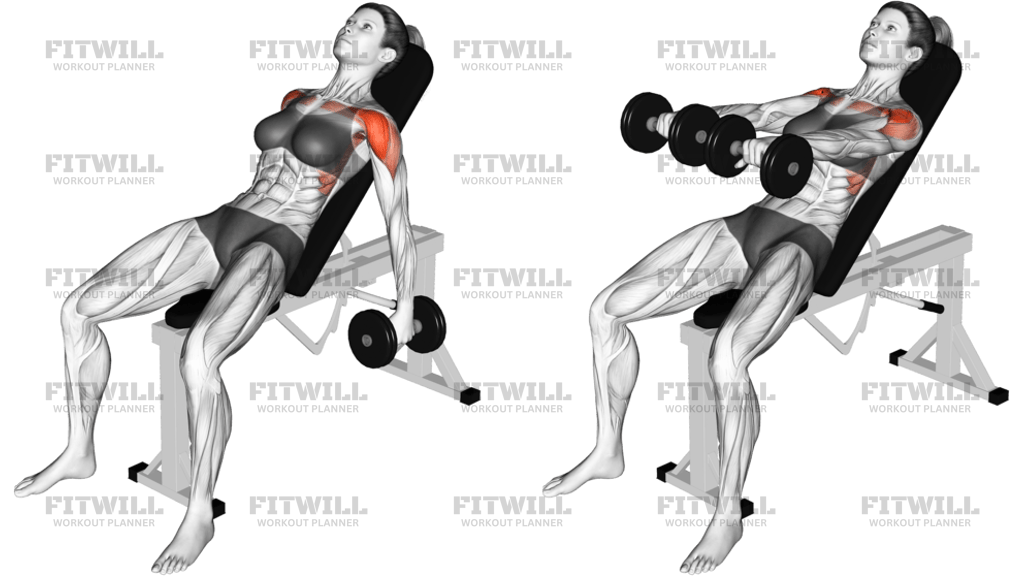
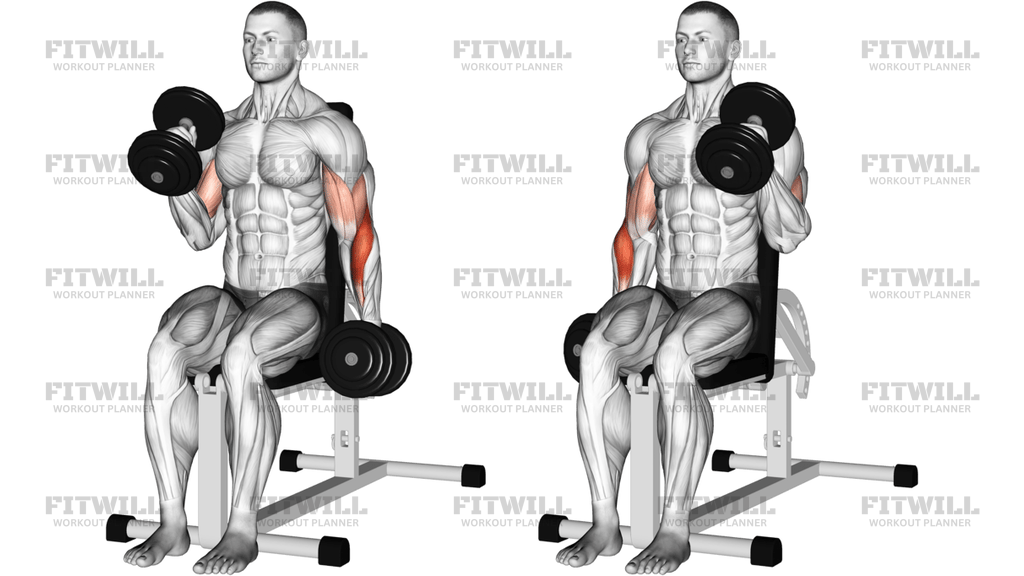
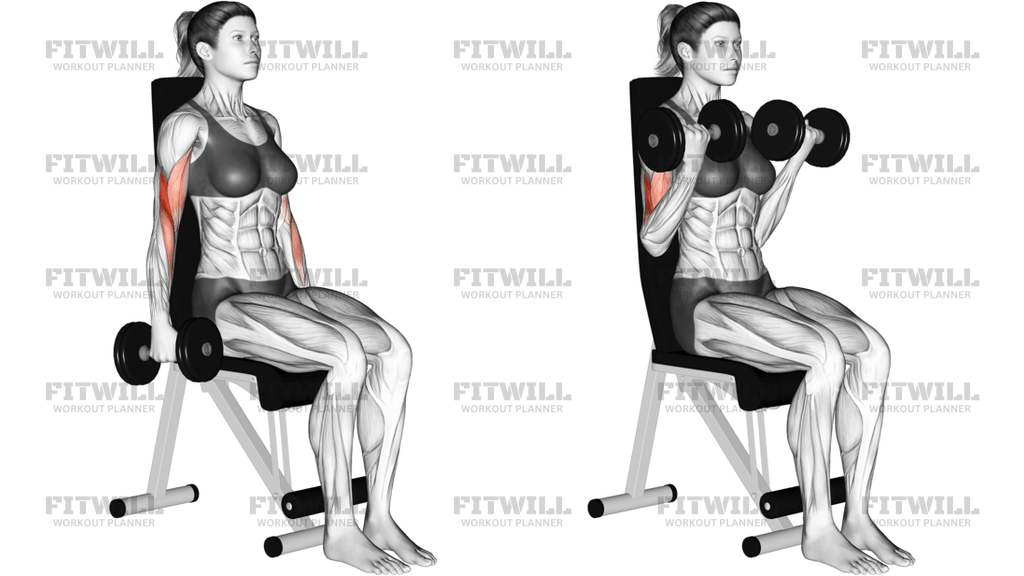
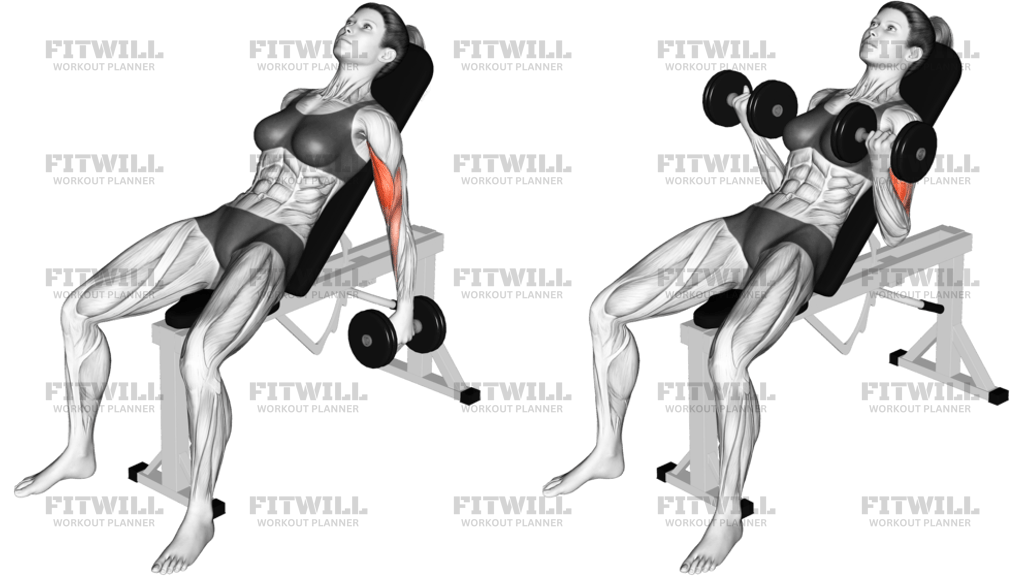
Dumbbell Incline Biceps Curl is a strict arm exercise performed with the back resting on an incline bench while the dumbbells hang slightly behind the torso. That bench angle matters because it puts the biceps in a longer starting position than a standing curl, which makes the first part of each rep more demanding and reduces the chance of swinging the weight. It is a good choice when you want direct biceps work with a clear stretch at the bottom and a cleaner path than a free-standing curl.
The movement primarily targets the biceps, with the brachialis and brachioradialis helping to finish the elbow flexion. The incline position also asks the shoulders and upper back to stay quiet so the arms do the work instead of the torso. If the elbows drift forward or the chest collapses, the set turns into a different pattern and the biceps lose the long-length tension that makes this version useful.
Set the bench at a moderate incline, keep the head and upper back supported, and let the arms hang long with the palms turned forward. From there, curl the dumbbells without rolling the shoulders or flaring the elbows. The upper arm should stay close to the same angle throughout the rep, the wrists should stay stacked over the forearms, and the dumbbells should travel in a smooth arc toward the front of the shoulders before lowering back under control.
Dumbbell Incline Biceps Curl fits well as accessory work after pressing or pulling sessions, or as a focused arm movement when you want less momentum and more tension on the biceps. It usually works best with moderate to lighter loads and a deliberate lowering phase, because the stretched start position makes cheating very obvious. That also makes it useful for lifters who want to clean up curl mechanics and keep the reps honest.
If your shoulders feel crowded, reduce the bench angle or use a slightly narrower arm path so the hands stay in front of the body without forcing the shoulder back too far. Keep the feet planted, the rib cage down, and the motion smooth from the first rep to the last. When the set ends, lower the dumbbells carefully rather than letting the arms snap straight, because the bottom position is where this exercise is most likely to lose control.
[ Workout Log & Planner ]
Put your next workout in Fitwill
Keep your plan and training log ready when you are.


Instructions
- Set an incline bench to about 30-60 degrees, sit back with your head and upper back supported, and plant both feet flat on the floor.
- Hold a dumbbell in each hand with your arms hanging straight down and your palms facing forward.
- Let your shoulders stay back and down against the pad so the dumbbells start slightly behind your torso.
- Brace lightly through your midsection and keep your chest open without arching your lower back.
- Curl both dumbbells upward in a smooth arc while keeping your upper arms mostly still.
- Keep your elbows pointed down and avoid letting them drift forward as the weights rise.
- Turn the palms to finish the rep with the dumbbells near the front of your shoulders and the wrists stacked over the forearms.
- Squeeze the biceps briefly at the top, then lower the dumbbells in 2-3 seconds until your arms are almost straight and you feel the stretch again.
- Exhale as you curl up, inhale as you lower, and reset the shoulders before the next rep if they start to roll forward.
- When the set is finished, lower the dumbbells to your thighs before standing up from the bench.
Tips & Tricks
- A moderate incline usually works better than a steep one because it keeps the biceps stretched without turning the position into a shoulder exercise.
- If your elbows travel forward, the set gets easier but the biceps lose tension at the bottom.
- Keep your palms turned up through the whole rep; letting the wrists extend back is a fast way to irritate the forearms.
- Use a lighter pair of dumbbells than you would for a standing curl, because the incline removes a lot of body English.
- A slower lowering phase makes the long-length part of the rep do more work than a quick drop.
- Stop the curl just before the shoulders start to shrug or the chest starts to lift off the pad.
- If both arms start to out of sync, alternate reps so you can keep the shoulder position cleaner.
- If the bottom position bothers your shoulders, shorten the range slightly or lower the bench angle.
Frequently Asked Questions
What does Dumbbell Incline Biceps Curl work most?
It mainly trains the biceps, with the brachialis and forearms helping during the curl. The incline also makes the stretched part of the rep more challenging.
Why use an incline bench for Dumbbell Incline Biceps Curl?
The incline places the arms behind the torso at the start, which increases the biceps stretch and makes it harder to cheat with momentum.
Is Dumbbell Incline Biceps Curl good for beginners?
Yes, as long as the bench angle is moderate and the weight is light enough to keep the upper arms still. Start conservatively and learn the bottom position first.
Should my elbows move during Dumbbell Incline Biceps Curl?
A little natural movement is normal, but they should not swing forward as you curl. If they do, the load is probably too heavy or the bench angle is too steep.
Can I do Dumbbell Incline Biceps Curl one arm at a time?
Yes, alternating arms can make it easier to control the shoulder position and keep each rep strict. It is a useful option if both arms drift or cheat together.
What if my shoulders feel tight on the bench?
Lower the incline a bit and keep the arms slightly in front of the body instead of forcing them far behind the torso. If discomfort persists, switch to a seated or standing curl variation.
How heavy should I go on Dumbbell Incline Biceps Curl?
Use a load that lets you keep the elbows quiet and the lowering phase controlled for every rep. If you need to swing, the weight is too heavy for this variation.
What is the biggest mistake on Dumbbell Incline Biceps Curl?
Letting the chest pop up and the elbows travel forward to turn the curl into a partial front-delt assist. The rep should stay anchored to the bench and driven by elbow flexion.